
Portugal’s Algarve may best be known for golfing holidays and beach life but it’s also great for exploring at your own pace, with smaller towns connected by a good public transport network – although planning ahead is a good idea.
So having been based in Lagos for a couple of days, it seemed the right time to venture out. The Algarve rail line connects much of the region, but if you want to head to the extreme southwestern tip of mainland Europe you’ll need a bus.
My route of choice today is the 47, which runs between Lagos and Sagres, a popular town around 30 kilometres away, There are faster buses that will take you there in about 30 minutes, but the local 47 winds its way through a number of small and charming villages, giving you time to see more of the Portuguese landscape.
Sagres is today probably known for the beer brand named after it, though it is not brewed here nd probably never has been. Still, it makes for cheap furnishings for all the local outdoor bars. The bus stops outside a tiny tourist information office, and before you see the beach, you’ll see one of Portugal’s national heroes. And it’s not Ronaldo.
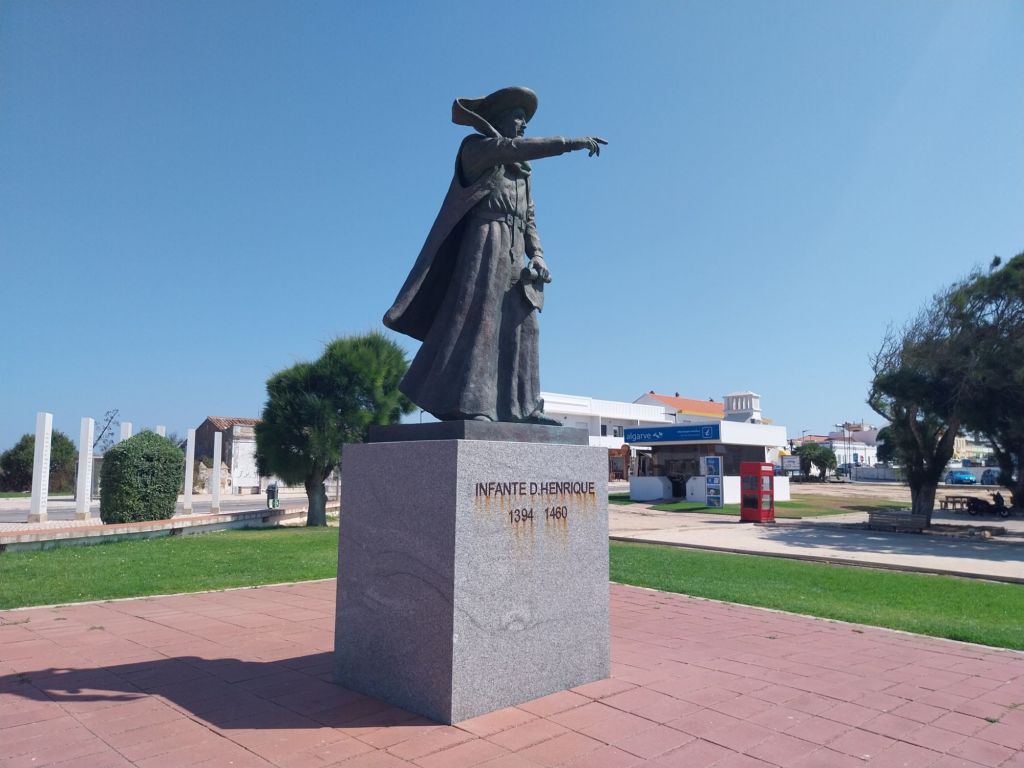
This is Prince Henry the Navigator, mostly associated with Portugal’s “age of discovery”, which is a police way of finding places to invade and capture. One of his most famous missions was to take Ceuta, a Muslim city in Northern Morocco. My visit to Sagres – in August 2026 – comes just weeks after thousands of Moroccans briefly broke through the border to modern-day Ceuta, now ruled by the Spanish. History has a habit of repeating itself.
The headland at Sagres is almost the most southwesterly point of Mainland Europe, though that record is reserved for the Cabo de Sao Vicente, a few kilometres further along the coast. Just two buses per day go all the way, so I settle for theequally dramatic cliff top views from here.
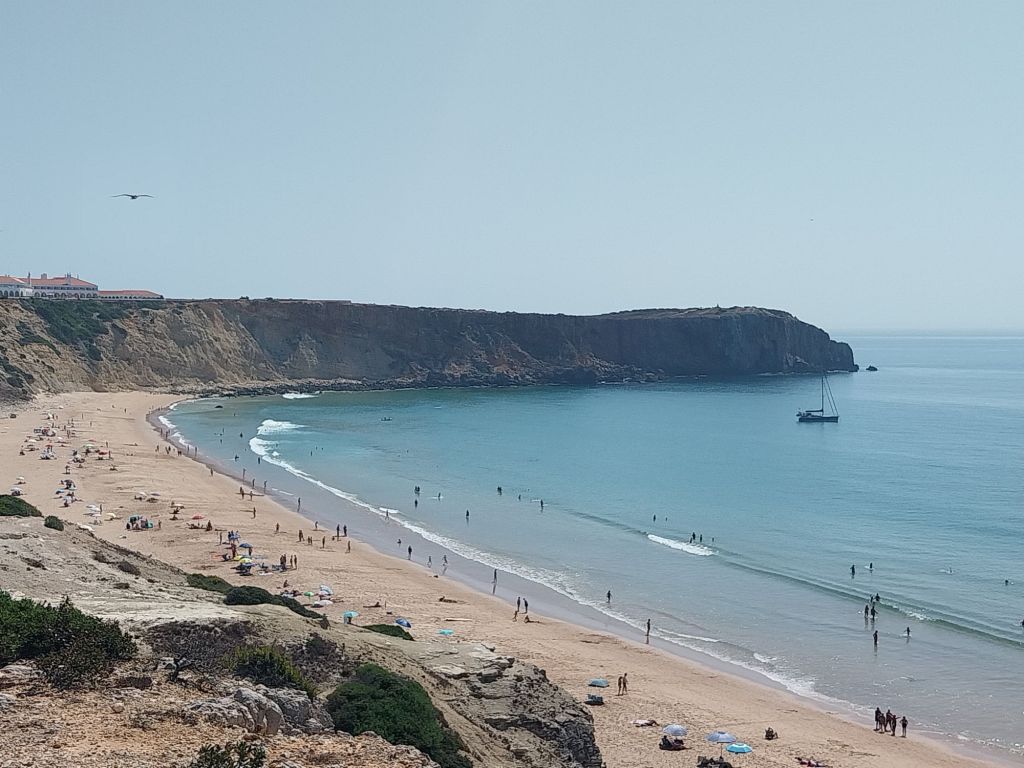
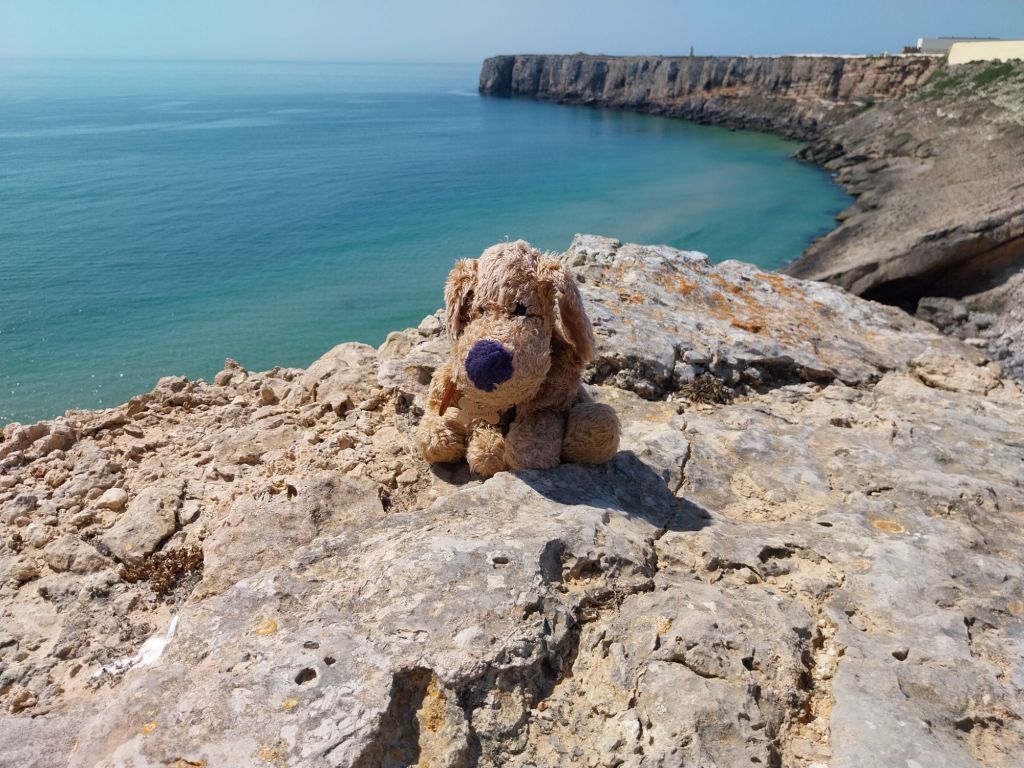
Just out of sight is the fortress of Sagres. The site is again associated with Henry the Navigator – though the original structure has been replaced and strengthened over the centuries; in 1755 it was badly damaged by an earthquake which struck Lisbon. The fact that the capital city is over 300 kilometres to the north demonstrates how s powerful it was.
After Henry’s time, the fortunes of Sagres dwindled. There is a small port here but the majority of the town’s business is around tourism connected to the beach. Small surf shops, bike hire places and little cafes are on every street. And although I can see hundreds of people enjoying the beach itself, the place feels far less crowded than Lagos, or many beach resorts you’ll find elsewhere in Europe.
Everything appears to be laid back, inlcuding the craft beer pub that’s attempting to break the ubiquitos “local but not local” brand. Although for a lunchtime in August it could probably do with a few more customers.
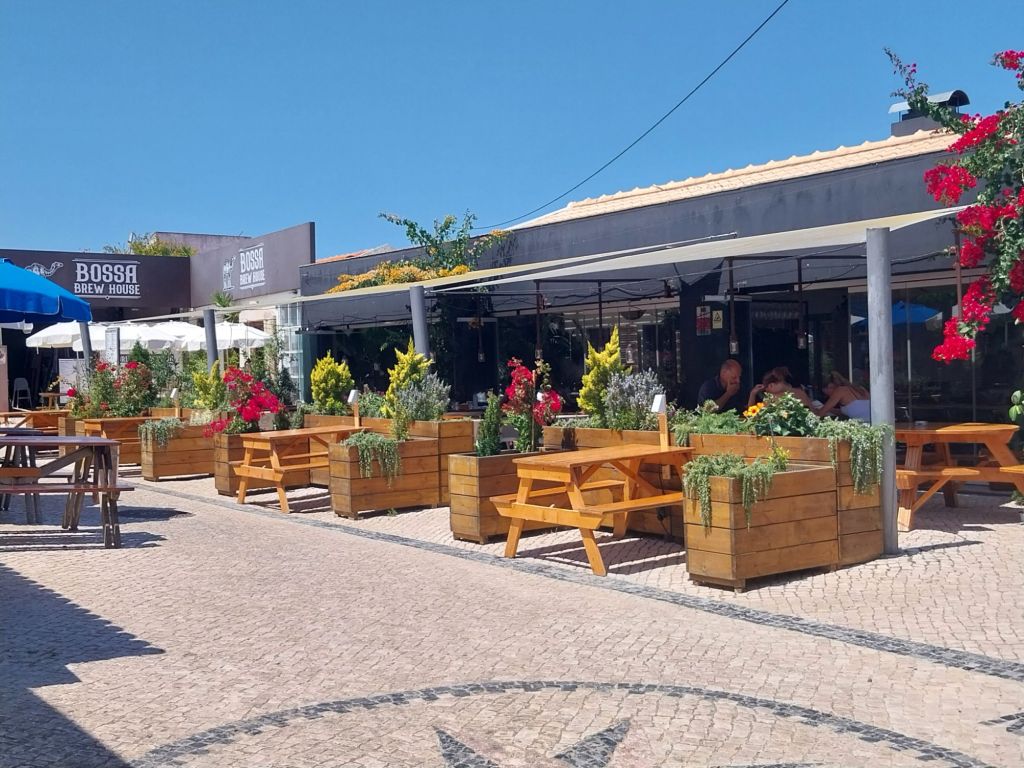
This isn’t a criticism; the quiet atmosphere makes Sagres feel more off the beaten track than it actually is, which is entirely a good thing. On the return 47 bus, two elderly women are conversing loudly. They may well be complaining, it’s hard to tell. But they are certainly not happy when the Vamus service comes to a halt in the small town of Vila De Bispo, around 20 minutes from Sagres.
“There is a problem with the bus,” announces the driver to his five passengers. “I cannot say when we will be going again,” he adds, completely non committal. The women are immediately in charge, demanding to know why the bus has broken down, why the company can’t organise a taxi – and a host of other incomprehensible things in Portuguese. The only other two people on board are a teenage boy who says nothing, and an ageing surf dude with silver blonde hair and no front teeth.
It does not make for an afernoon of convivial conversation.
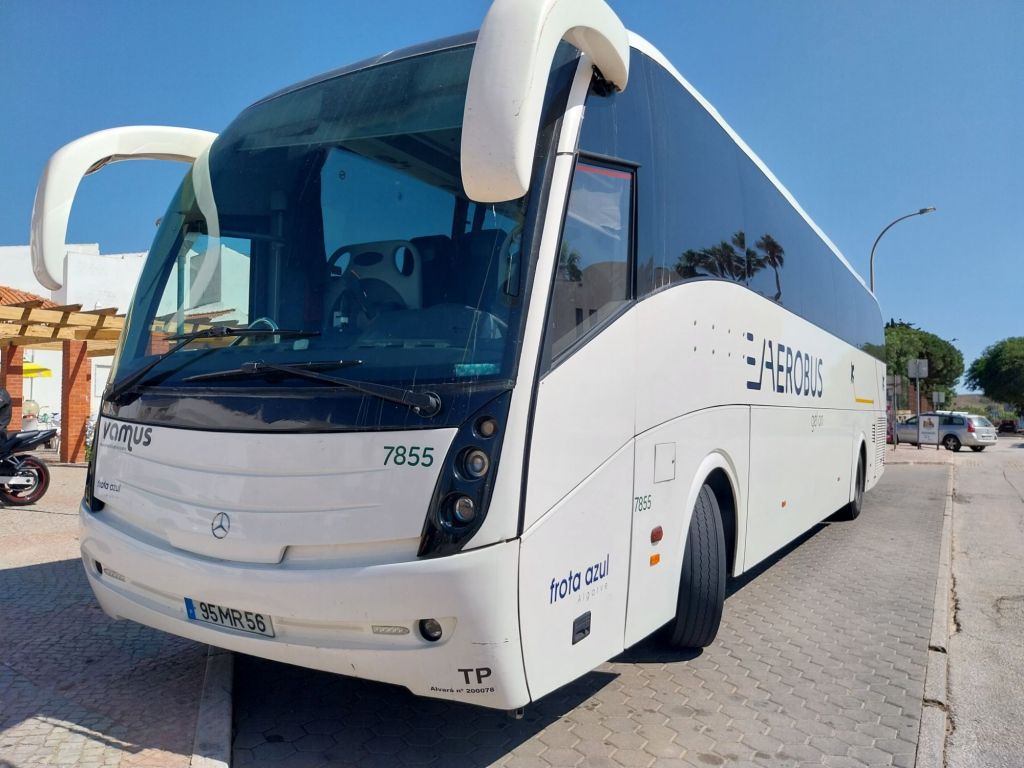
Of course, these things are all part of the fun of independent travel, I try to tell myself. With no functioning engine, there’s no air conditioning either. The good news is the bus came to a halt in the centre of Vila de Bispo, where there are two small cafes grateful for a bit of extra business.
Even better are the prices; I attempt to pay for my cheese toastie and cold drink with my card, only to be told transactions of less than €5 must be done in cash. It’s the middle of summer, the town is full of visitors, but nobody here is attempting to rip them off.
For beaches and hiking, Sagres is well worth a day of your time. Even in the high season the place isn’t crowded, at least not by day. There are lots of hotels and rentals here, not to mention an abundance of motor homes in some of the cliff top car parks. The surrounding countryside have numerous signs for golf courses – another big attraction of the Algarve. But, pleasantly, nothing seems overly busy or expensive. It’s just a couple of hours from the bustle of Faro, but it feeels like another world.
TravelCaster Tips
Getting here : Sagres is around 30km from Lagos on the southwestern tip of Portugal. From Lagos, take the Number 47 bus which runs several times per day. This unofficial site provides useful timetable information which is updated frequently. A round trip from Lagos costs €12.80, but buy your ticket sin advance, as only cash’s is accepted on the bus.
Orientation : In Sagres, alight the bus at the tourist office – it’s a pretty obvious place next to a big car park overlooking the sea. This main road contains an array of small cafes and surf shops – head back the way the bus came for town centre facilities, or simple walk along the cliff top to Sagres Fort.
Public Transport : Sagres is a relatively small town so easily walkable. Localised public transport is infrequent – and only two buses per day run to Cabo de Sao Vicente – one option is to take the 47 all the way to Cabo and walk back – taking about an hour or so.
Food and drink : Small, friendly cafes are dotted around the town and there are a couple of larger seafood restraurants immediately next to the main car park. A simple small plate – often featuring sardines – costs around €7. A coffee and pastel del nata is as little as €5. It’s worth noting that many places prefer cash.


Leave a comment