
Arrival
Raul likes fast cars and motorbikes. He enjoys taking a risk. But it’s hard to do these days with a wife and daughter, and a second child on the way. Which may well explain why he’s working as a transfer driver on Potugal’s Algarve.
It’s my first trip here, and I’m pleased with things so far. My Irish passport got me through immigration at Faro Airport in less than 15 minutes, my bags arrived swiftly and Rauel was waiting, as advertised, with a bright yellow sign with my name on. If the rest of this trip runs as smoothly, I’ll be very happy indeed.
Six days in the Algarve isn’t my regular choice of holiday; the ideal of a pool and beaches sounds far too pedestrian for me. But I’ve been promised plenty of choices of things to do and places to explore. Time is limited, so I’ve taken a budget flight from East Midlands to Faro; with a couple of extra days, I would have much preferred taking the slow train via Paris, Biarritz, Madrid and Lisbon.
I’m staying in an apartment that is so large it spans several postcodes. This is entirely my choice as the property belongs to Alex, and old friend who now lets out his holiday home. And it’s a very impressive place which even has some companions for NewsMutt – though I am keeping him away from the cat.
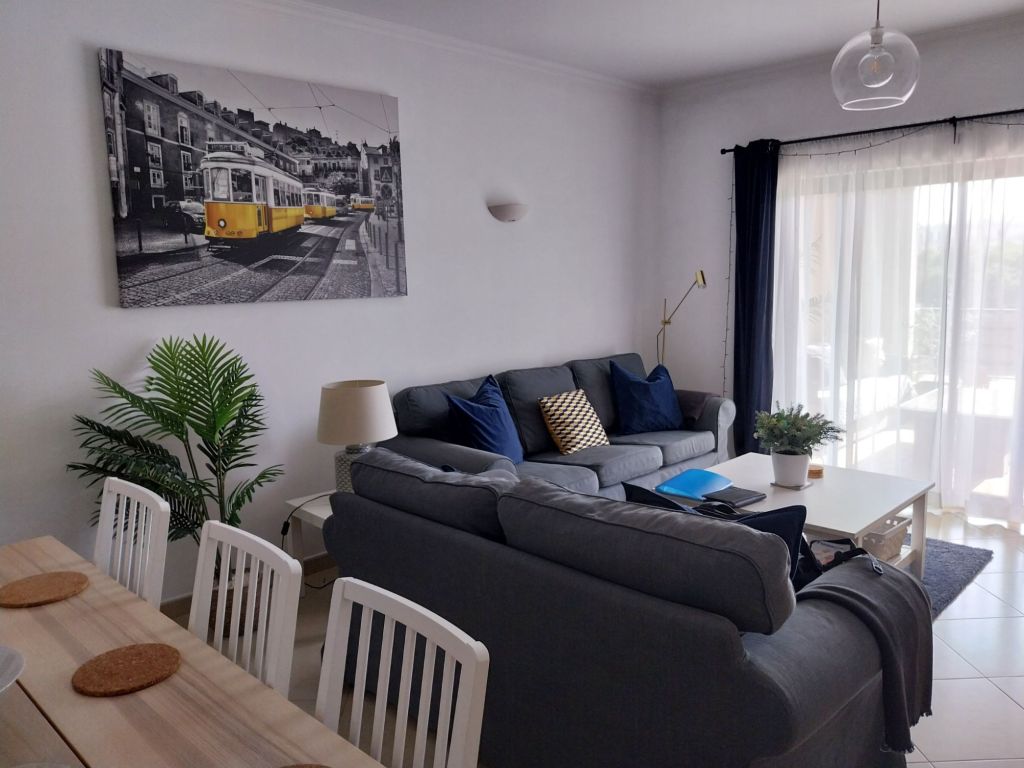

Lagos by night
Lagos has a population of around 36,000 and it’ growing all the time. My apartment is across the road form yet another new block being built. The town is cut in two by a long estuary and marina flowing into the Atlantic Ocean, and on a hot early evening in the middle of August, a walk along the main road all looks rather agreeable – at least in one direction.
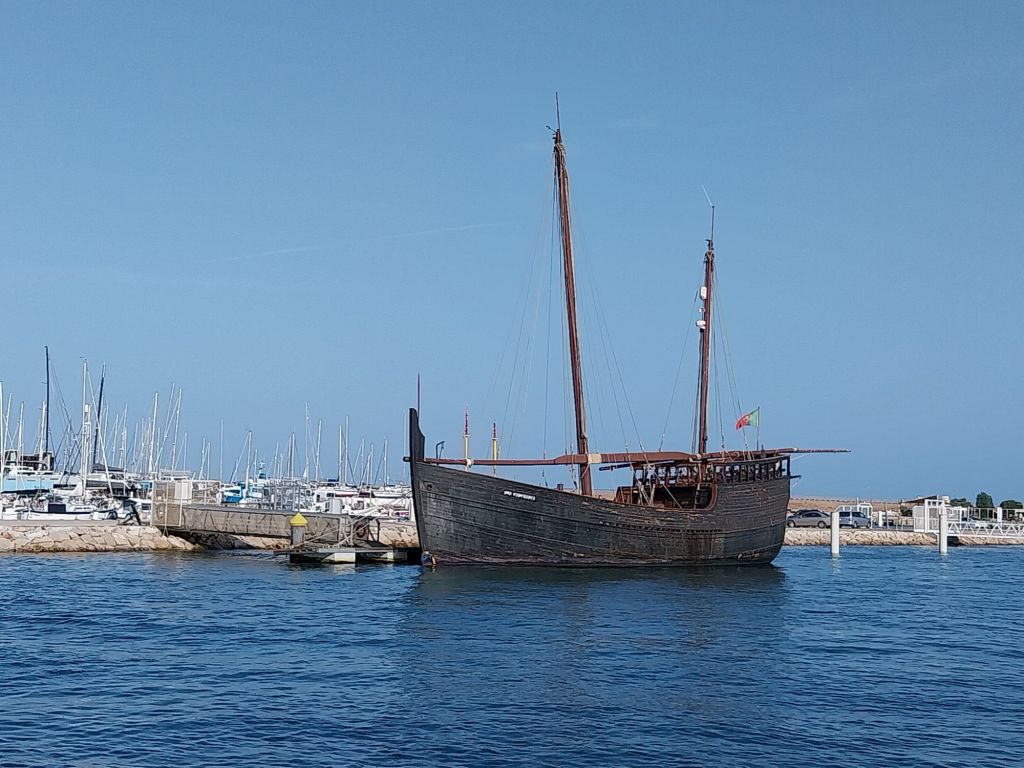
I won’t show you the other direction because it’s basically a line of stalls selling fifty versions of the same boat trips (more of which later) and a touristy outdoor market selling things you never realised you needed. However, this is August in the Algarve – there’s no escaping it.
Lagos’ old town is where many of the crowds gather into the evening. Yes, it’s busy – people of all ages, many with families of children, squeeze into the narrow streets. Thankfully there’s no shortage of restauarants, though some are of disappointing quality. Seafood is in plentiful supply, but for the meat eaters there’s lots of choice – the Portuguese like their pork and beef steaks, grilled or stewed.
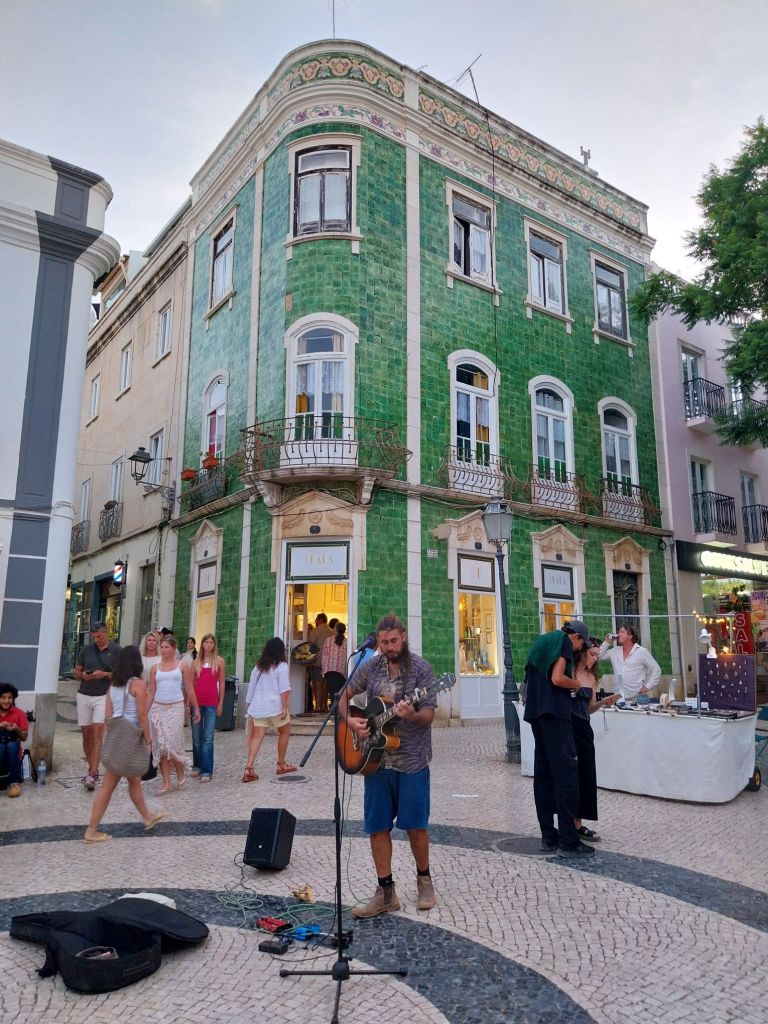
There is no specific centre of Lagos, but Praca Luis de Camóes is a good landmark from which to navigate the old town. On summer evenings there’s live music and other forms of entertainment – though as I later discover, it’s pretty much the same rota of performers most nights, And while dining on the pavement restauarnts nearby gives you a good enough view, beware that each performer will come round at the end of their set and ask for tips.
My own tip would be to avoid such establishments altogether, as there are plenty of delights on the side streets. On the Rua Primeirio de Maio is Calypso, an unassuming bar with narrow outdoor seating. On an adjacent corner is the Cervejaria Ferradura, one of the most authentic seafood restaurants you’ll find. Together they make for a great evening out of simple food and great value drinks.
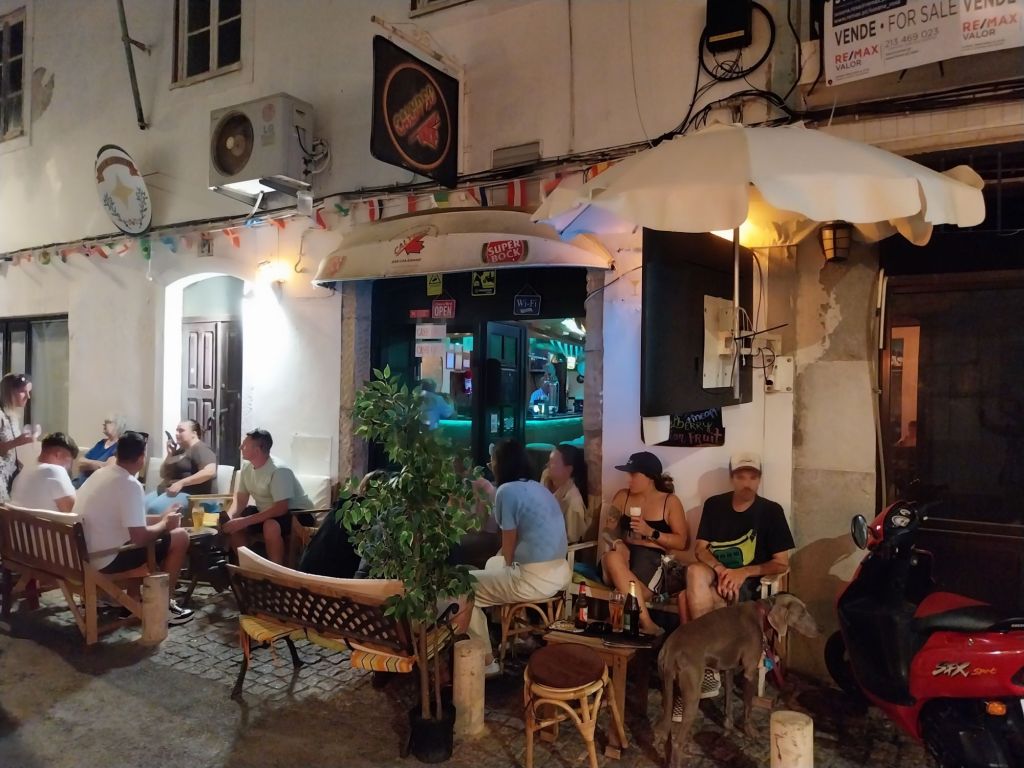
One thing to bear in mind here is that many smaller places only take cash, or will insist a minimum spend if using a card. Cash is stil king in these parts – and you’ll find the same when using local buses. Don’t rely on the credit card.
Lagos by day
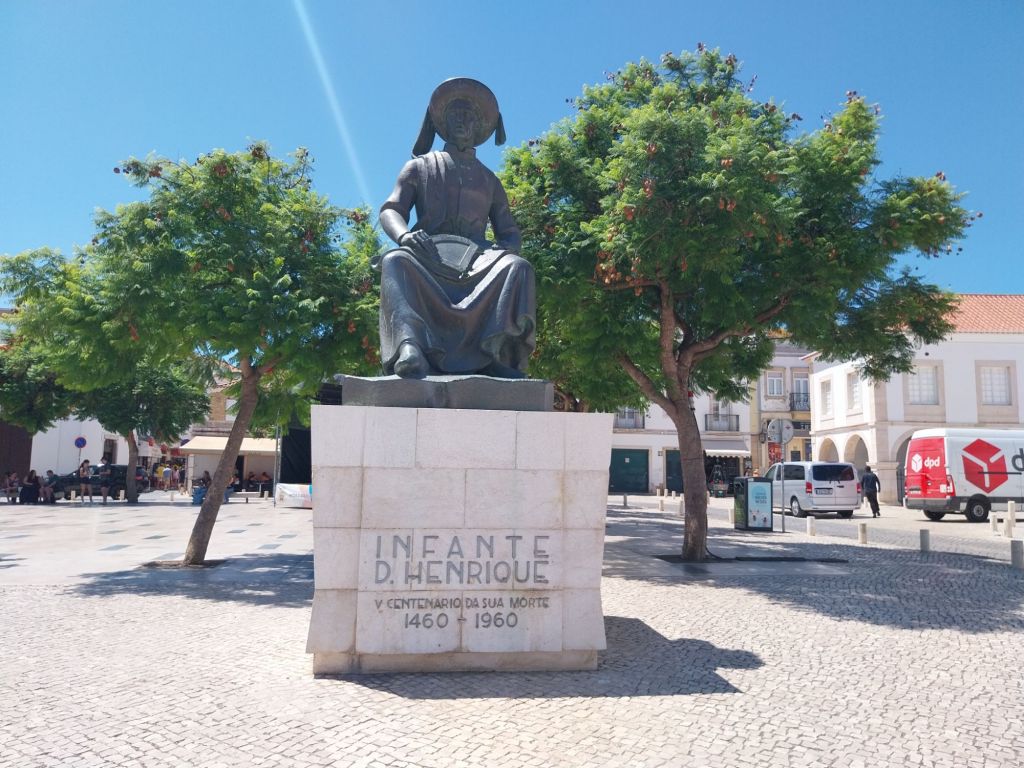
Despite the abundance of tourist related stuff here, Lagos has plenty of history. The names of the streets and squares pay homage to the likes of Prince Henry the Navigator and Gil Eanes – both connected to Portugal’s Age of Discovery in the fifteenth century. Voyages to Africa, and then India, created one of Europe’s first global trading centres, transporting spices from the East. Today, a large statue of Prince Henry stands just off the sea front
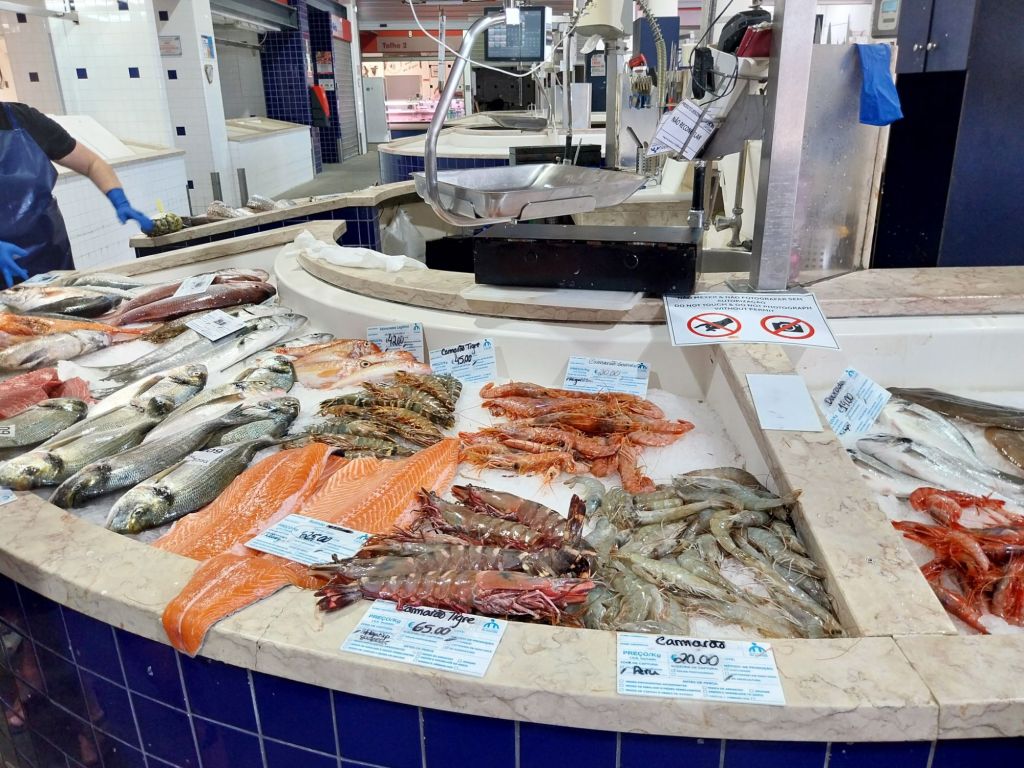
Maritime trade is still a big thing today in the form of fishing. The fleets may be smaller these days, but Lagos and many other locations along the Algarve still have working fishing ports. The Municipal Market has probably seen better days, but it still attracts healthy numbers of customers. If you’re looking for something to cook yourself, come here earlier in the morning for the best catch of the day.
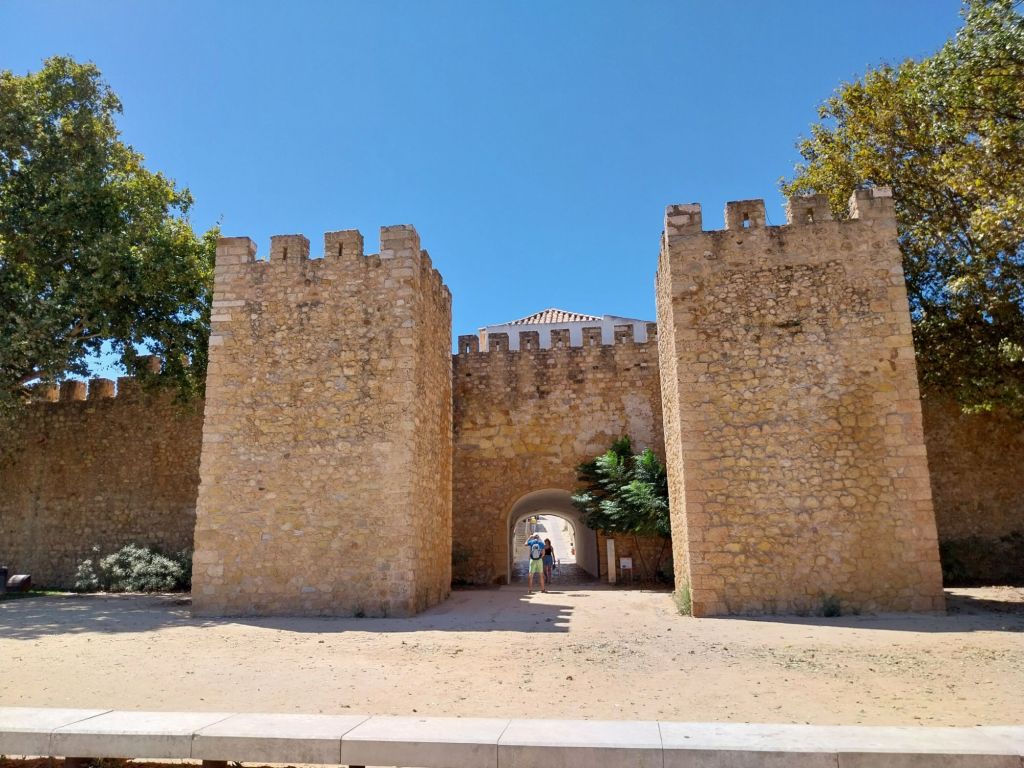
Lagos has always been strategically important as a port, and the impressive medieval own walls serve as a reminder of the need to defend the place. The walls surrounded the castle -most of which is gone today. But the main city gate remains, separating the Old Town from the sea. On the waterfront, a large fort stands at the entrance to the harbour.
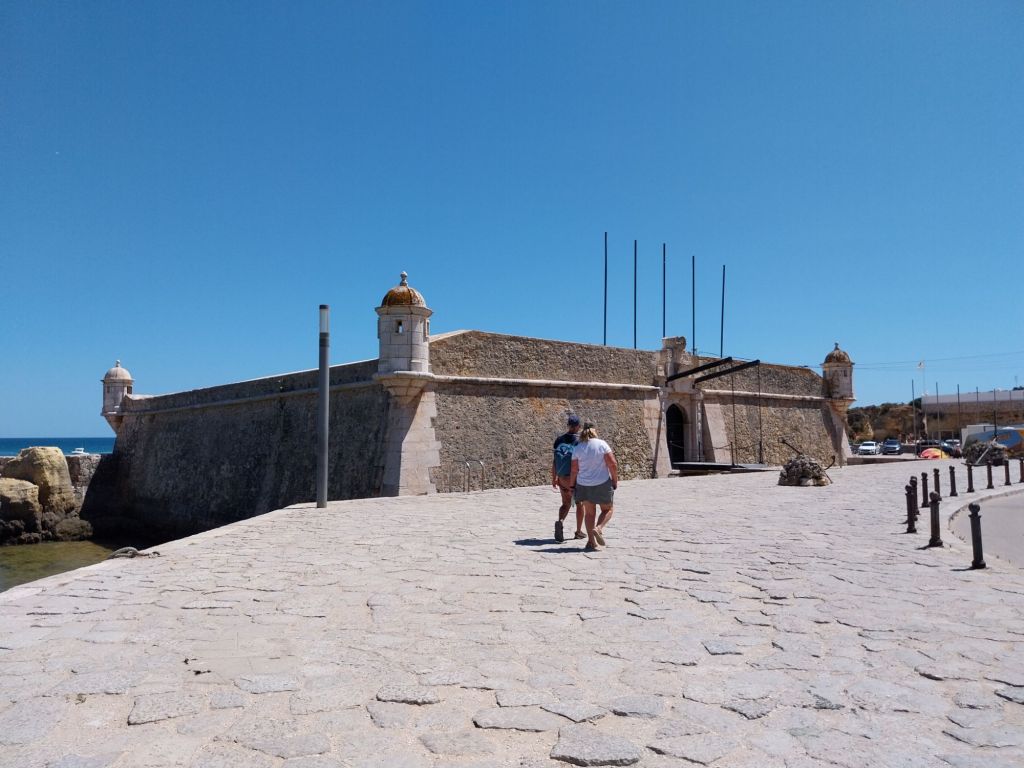
Although there are plenty of visitors here, Lagos seems less crowded that other places in Europe. Perhaps it’s the fact that you have to make a little extra effort to get here from the hub of Faro airport. The town is busy enough, but it’s easy to find spaces that are virtually deserted. Just beyond the fort is a small but busy beach – the sea wall above it is the perfect place for a view of the Atlantic. Pleasure boats of all descriptions pass by on their way to and from the marina.
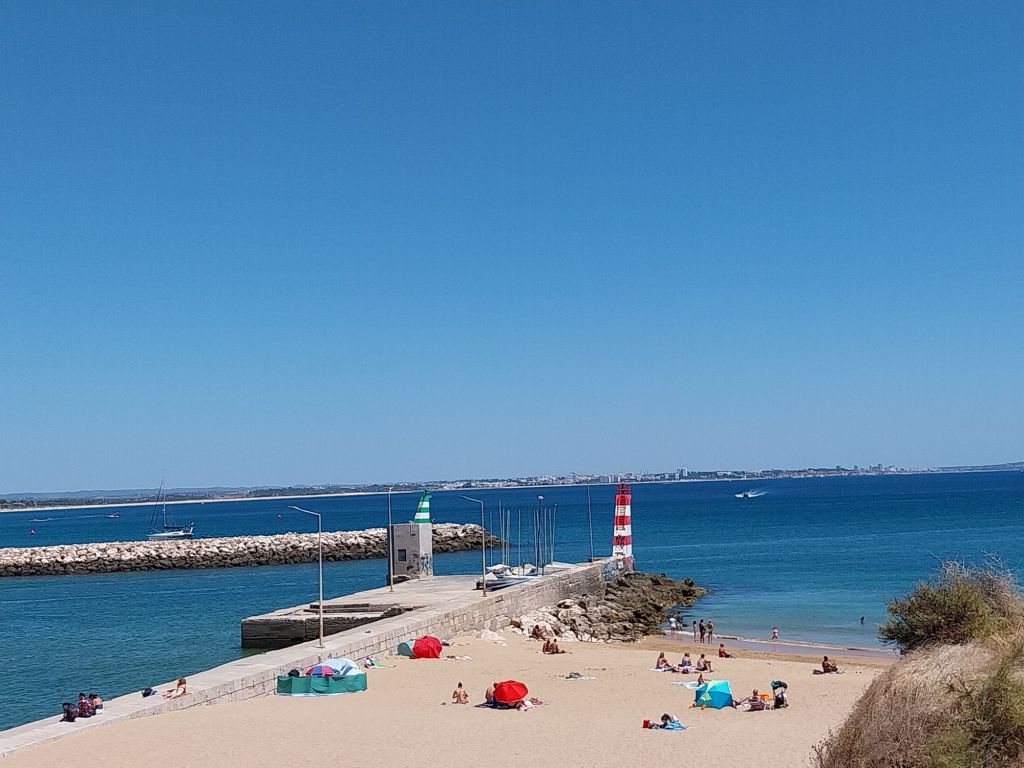
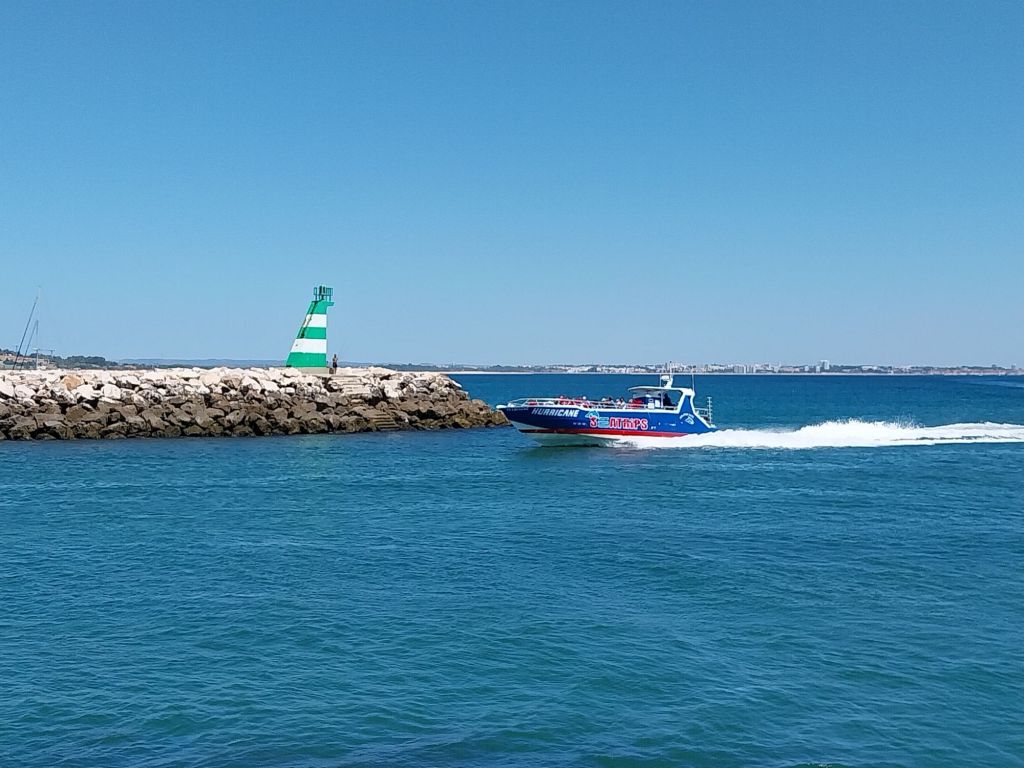
The marina itself is a district all of its own. This is where the majority of the pleasure boats leave from, and through the day long queues of eager visitors await to board a catamaran, a dinghy or even a speedboat. There are numerous companies running trips, some of which you can find here.
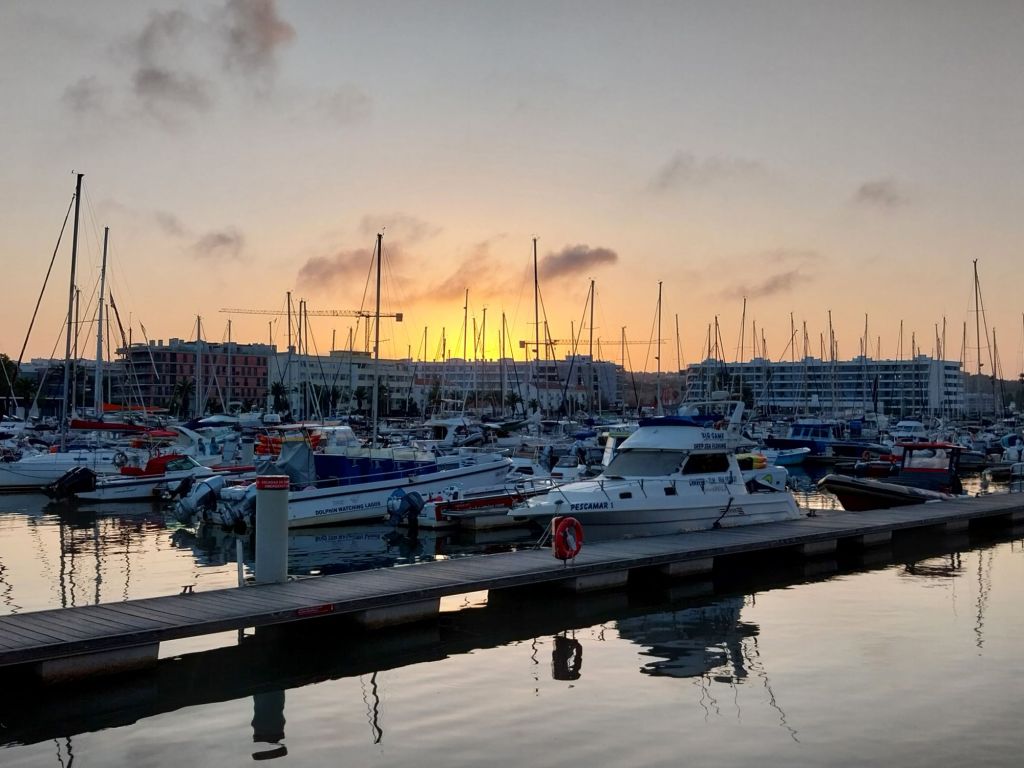
Along with escapes for the day, the marina is also the centre of social life for those staying at the marina resort or the scores of apartment complexes East of the estuary. Cafes and bars are open from breakfast til beyond midnight – and it’s a great location to catch the sunset.
A day out of town
The Algarve is famed for two things – golf and beaches. If you’re not a fan of either this could be a problem. But when it comes to beaches, there’s such a choice here – with many fairly close together – that it’s possible to soak in the atmosphere while getting some exercise at the same time.
The Number 2 local bus travels between many of the beaches from Meia Praia to the East and Porta de Mos in the West. Meia Praia is the place to go for wide open spaces, spreading for am impressive three kiolometres along the coast. The place is so popular it has its own railway station, though the buses are more frequent. However, I’m in search of a walk – and Porta de Mos is a good place to start.
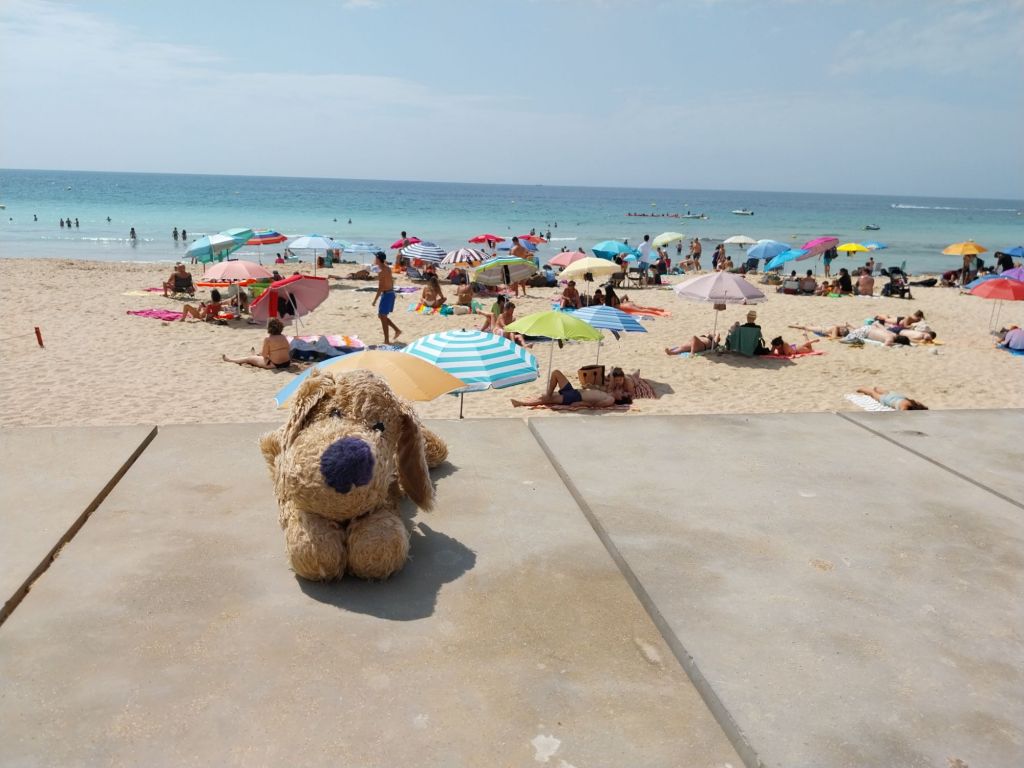
My plan has been to climb up from the beach and walk along the cliffs to one of the area’s most popular sights. An AI search told me there’s an obvious wide dirt track from the end of the beach, but as I climbed the steps there were lots of foreboding signs saying “private access only”. I would have continued anyway, but a local man stopped me and says “cliffs are not possible… to dangerous… there is an abyss…”.
This means an annoying detour of about 20 minutes back up the steep road, and then via a street full of swanky spa resorts, before rejoining the coastal path. But the extended walk was worth it.
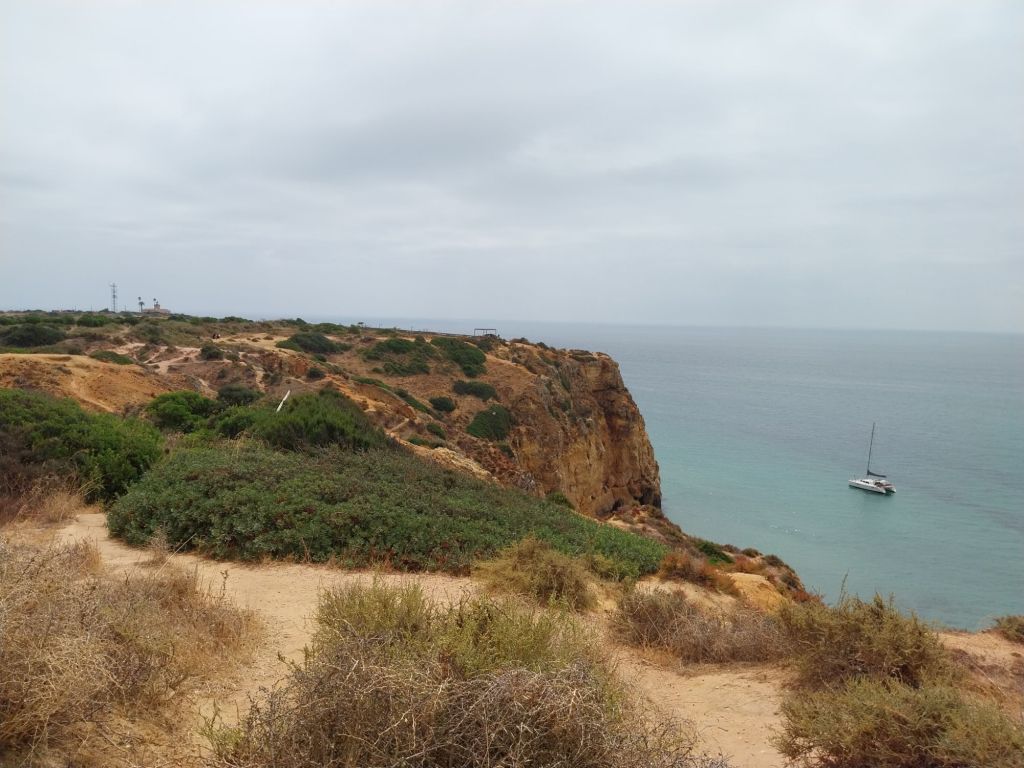
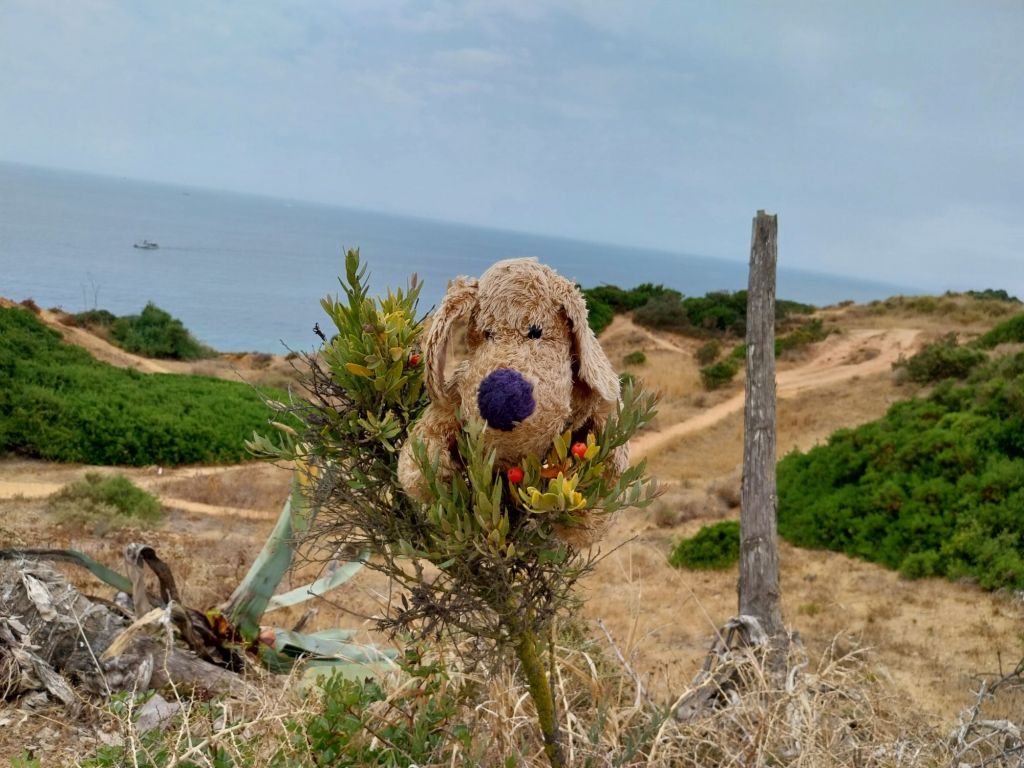
The cliff path is well paved throughout, with tempting sandy trails taking you right to the edge. It’s a gloriously warm day in August, and there are hardly any people here; at least on this section. As I continue back towards Lagos, things get decidedly busier. The Ponta da Piedade is a geological delight; soft rocks carved by the sea over centuries. For those familiar with Dorset’s Jurassic Coast, this is like Lulworth Cove but on steroids.
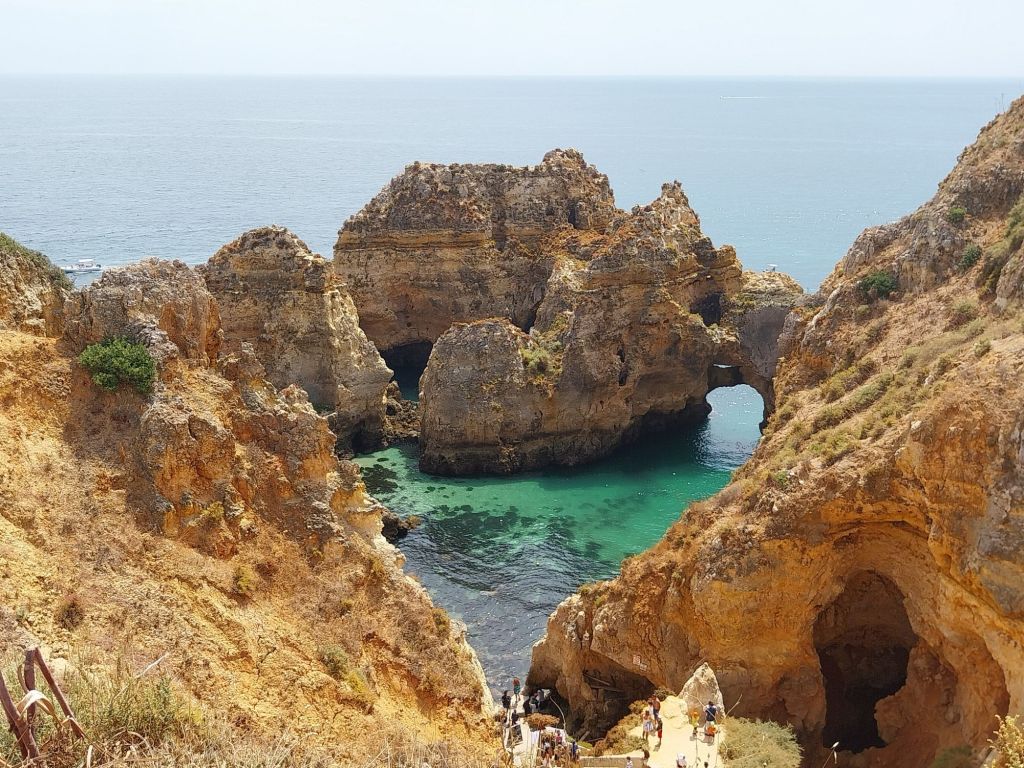
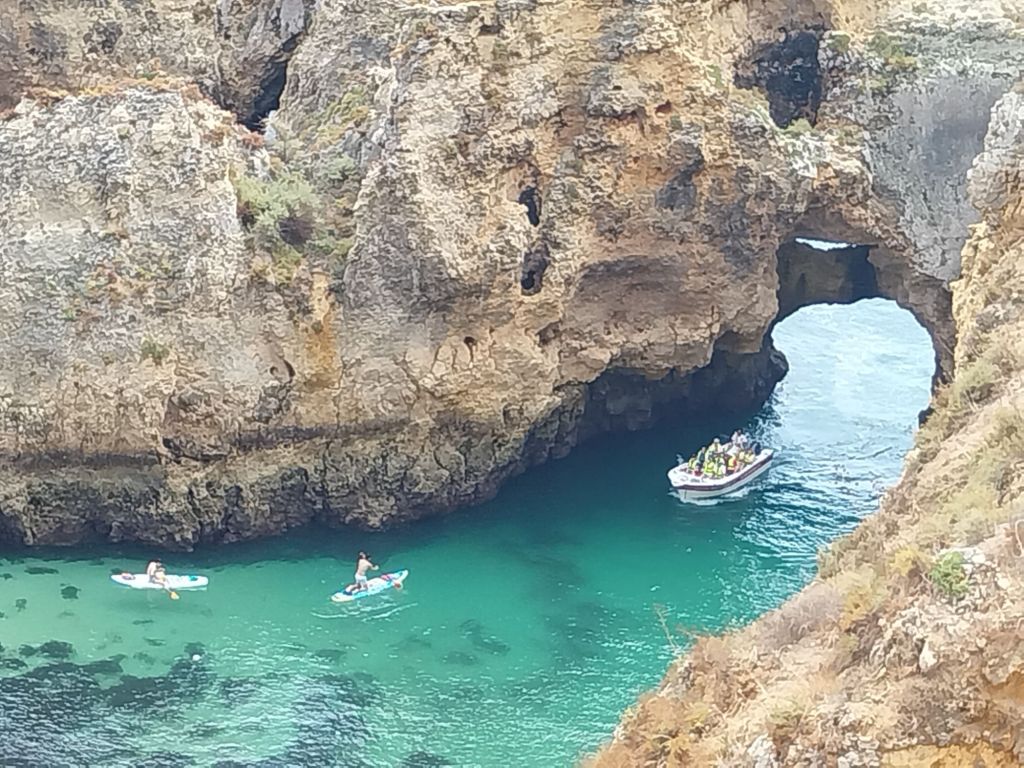
The camera angles here don’t tell the whole story; I’m surrounded by hundreds of other people trying to take the same tranquil photos. The good thing is that the authorities here know how to organise things. Several kilometres of boardwalks have been built to give everyone a good view whilst also protecting the landscape. It all makes for an easy and accessible experience.
At Praia Dona Ana, there is drama at the only refreshment kiosk in town. A young girl is taking an extended and ever changing order from an impatient family while her colleague tries to connect a new barrel of Sagres beer to the pump. There is much hissing from the C02 gas hose and much shrugging from the young girl. After a lengthy conversation with a much older man – who looks to be the grandfather of the business – the customers have to make do with bottles instead. I would leave a negative review but there’s nowhere else to go.
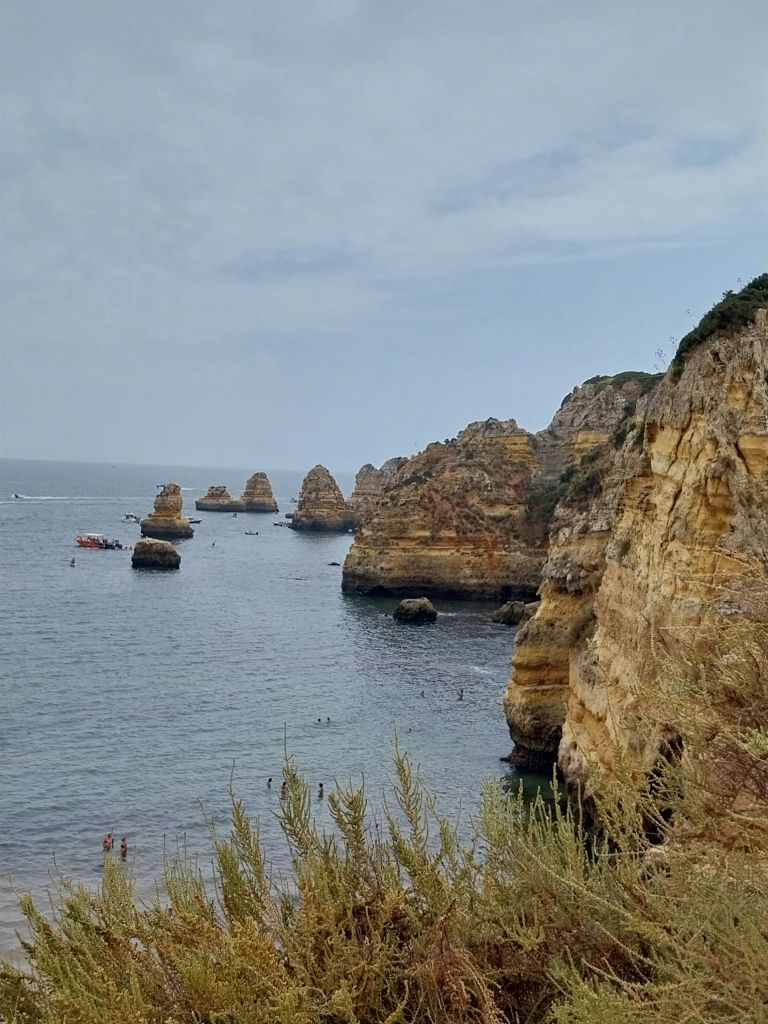
Hiking had not been on my list of things to do in Portugal, but with a coastline as stunning as this, it would be a crime to laze about on the sand.
TravelCaster Tips
Getting here : Lagos is around 90km southwest of Faro Airport, which operates international flights to many destinations including UK regional airports. This website has links explaining the three main ways to travel from Faro to Lagos – by private transfer, bus or train. If you’re using the train you’ll need to get from Faro airport to the town’s train station.
Orientation : Lagos is divided into two main areas by the estuary and marina. The Old Town is centred to the West of the marina and is partly pedestrianised. However, it can get very crowded at night in the high season. The marina also has a great selection of cafes and restaurants, and is also the place where guided boat trips depart.
Public Transport : There is a good network of local buses in Lagos to surrounding areas like beaches or smaller towns. The operator’s website, however, is only any good if you know your start and finish points.
Food and drink : You’ll find an enormous choice of informal cafes and more elegant restaurants throughout Lagos. In the high season, the most popular can have long queues and in some places it’s advised to make a reservation. A main course will cost around €15-30, though much cheaper options can be found. A large local beer should be no more than €4.50 – though you’ll pay more for premium imports.


Leave a Reply