
Italy’s lakes are stunning, and getting to them is remarkably easy. The nineteenth century first attracted visitors from Germany and Austria, and later it became the temporary home of the writer DH Lawrence. Being from Nottingham, I decided to read his collection of essays written around Lake Garda. Twilight In Italy is considered by some to be the first travelogue of the area. I just found too many big words and elongated descriptions that told me nothing, so I decided to see it for myself. I’ve always been uncultured.
So on a hot Sunday it was time to take the train from Verona for the short 30-minute ride to Desenzano, one of several towns on the southern end of the country’s biggest inland waterway. Lake Garda stretches for more than 70 kilometres south to north, and at its widest point spans ove 16 kilometres.
Desenzano is one of the easiest locations to reach, at its railway station is just 15 minutes on foot from the lakefront. The two woman at the Giardientto Hotel are among the freindliest staff I’ve ever encountered, keen to show off their annoyingly perfect English when I check in. On a sunny afternoon, the town was also doing its best to show off.
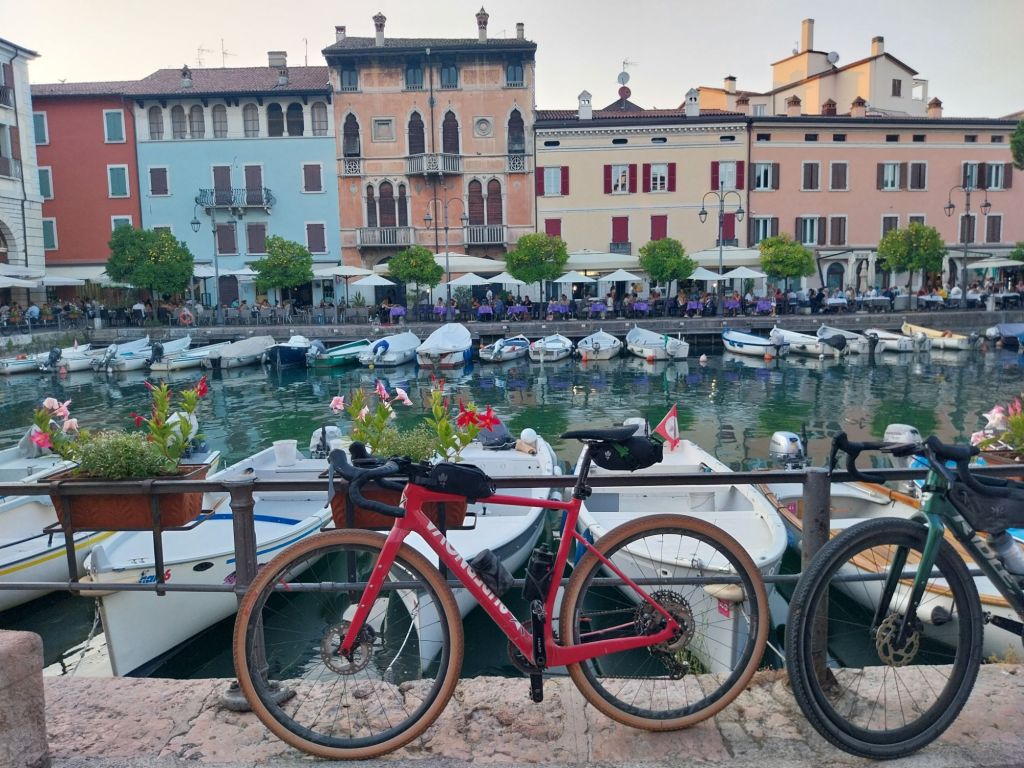
The pristine inner harbour glistens by day and night, with a collection of touristy cafes and restaurants. While travelling, I usually like to hang out where the local go, but it quickly becomes apparent that the whole town – and indeed, the whole region – is almost entirely driven by tourism. So be prepared to/slum it with everyone else.
I jest, because today everyone is in a good mood. It’s too hot to grumble about the temperatures, so spritzes and gelato are consumed by the gallon – at least it seems that way judging by the size of some people here. But we are not here to judge.
The waterfront looks as though it was lifted straight from a Victorian British seaside resort, with attractive flower beds, various memorials to local heroes and families happily promenading, admiring the boats in the outer harbour or the artwork, which today comes with an extra attraction,

And while there are cafes and bars by the dozen, there is less of the tackiness you find at home; no amusement arcades or takeaways. If you want to eat, you are expected to eat in (or outside, but you get the point.)
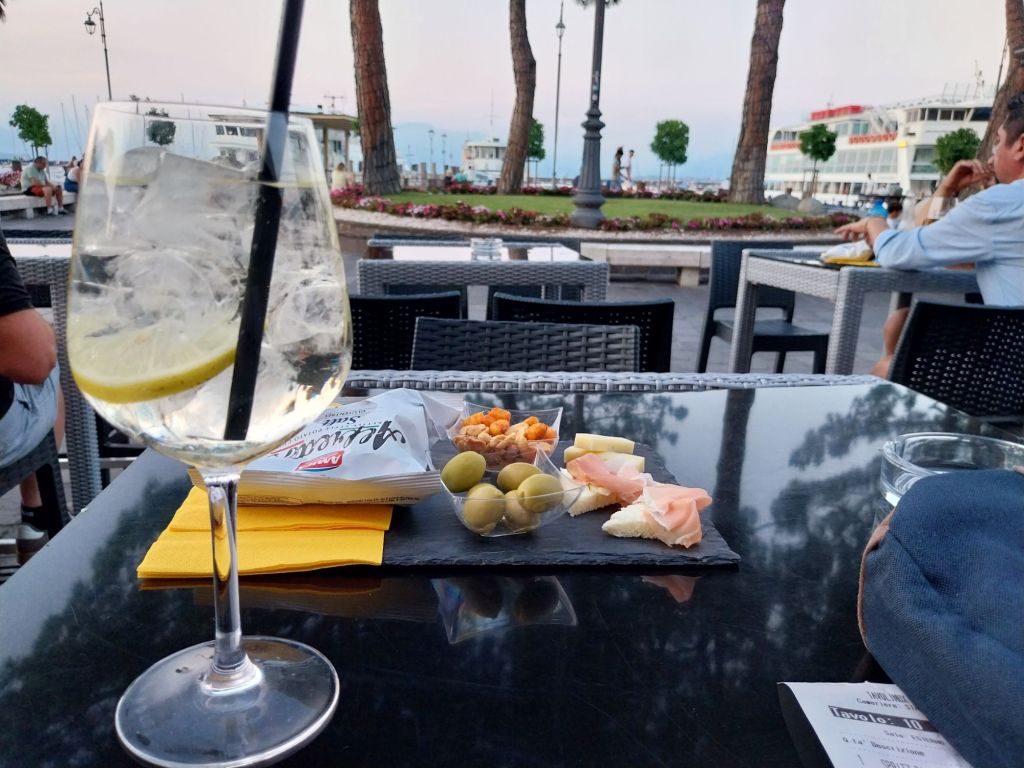
Desenzano is not a party town, but people still make their own fun at night. Order a Spritz for €6 and you’ll almost always get free snacks – a typically Italian thing to do, but it’s the little things that make the difference. And it’s these simple pleasures that make watching the sunset at the Circus Cafe a delight. No effort required.
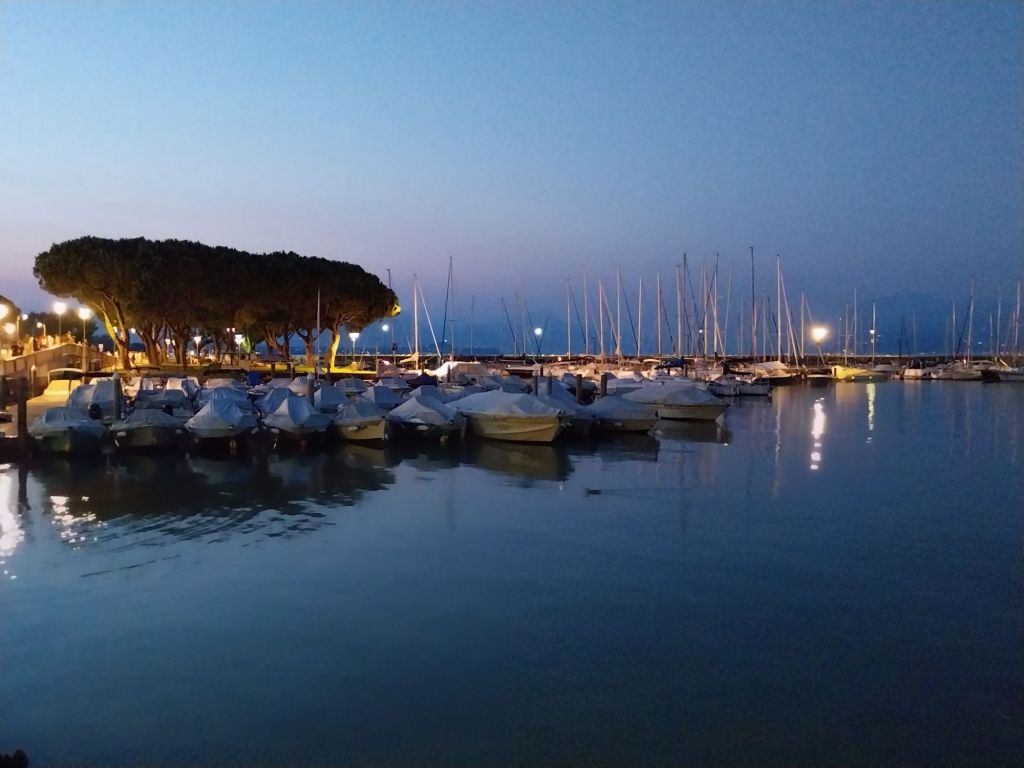
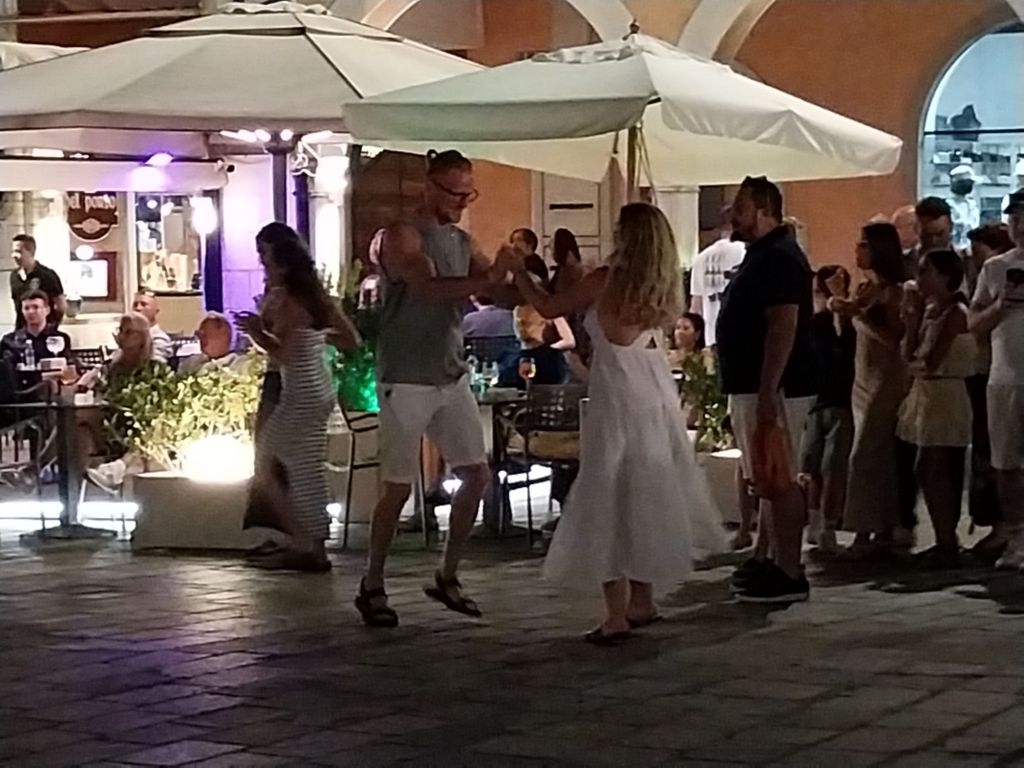
Being July, the town is busy, but it still somehow manages to feel tranquil. Unless you happen to encounter a really good busker in the main square. He has a violin and a backing track – again, nothing complicated – but it’s enough to stop people in their tracks and get them dancing.

Of course, the real attraction here is the lake itself. For over 100 years, steamers have been transporting people up and down the water. It is possible to travel the whole length, though the journey can take over four hours. An easier option is to plan a route around the southern stretch to explore the various towns and villages.
Some of today’s passengers have boooked tickets online, but the vast majority buy on the day from the kiosks at each stop. There are day passes, though in practice it’s easier to pay for each leg of the journey, which is charged depending on the distance. On yet another scorchingly hot day, it’s good to get out on deck and survey the view.
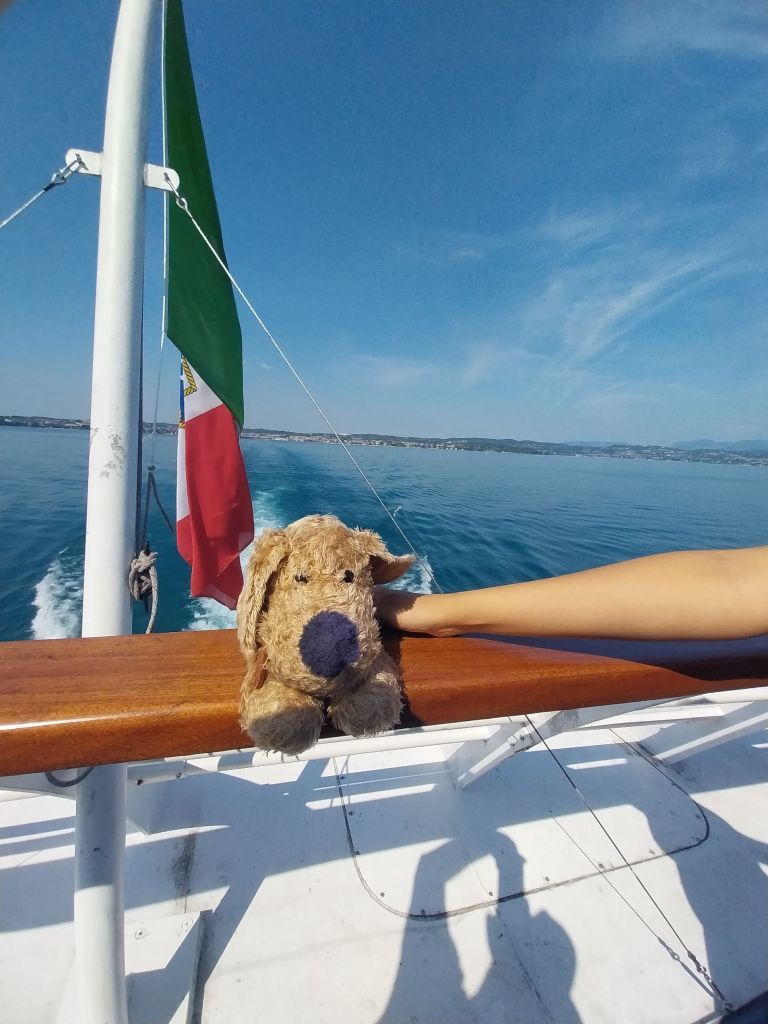
My first stop of the day is Bardolino – the boat also stops at the more popular Sirminoe, where there are already early morning crowds waiting to board. Bardolino is also getting busy in the sunshine.
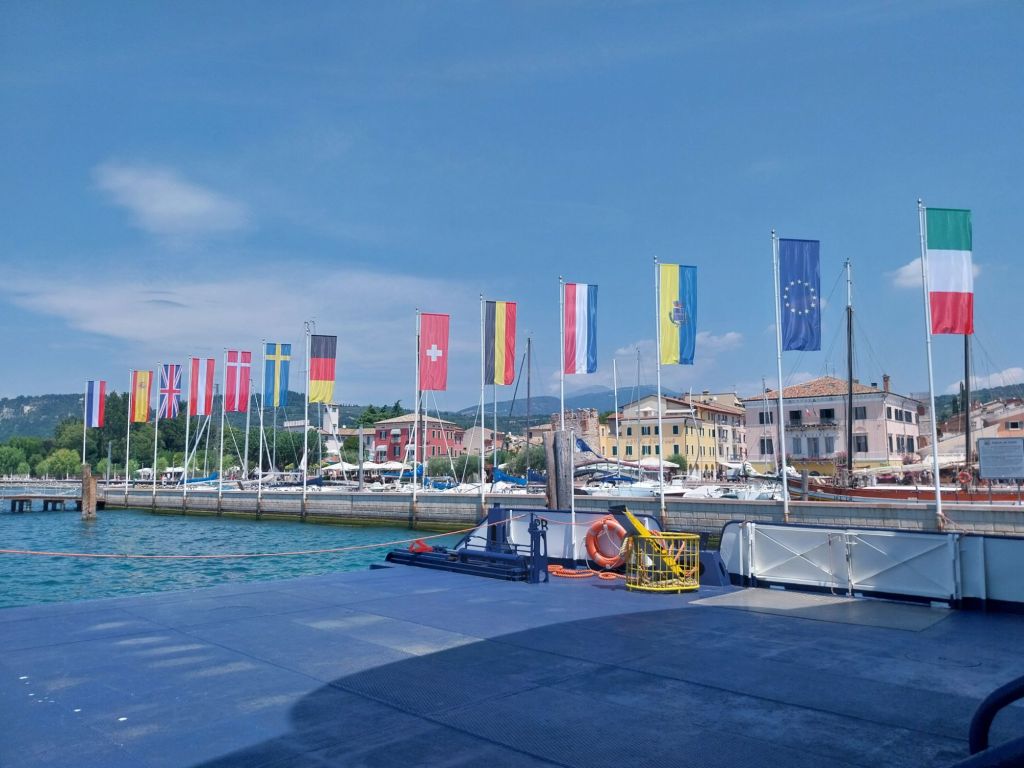
The flags of the European Union are a common feature at all the ports around Garda. Many have benefitted from EU funding, with Bardolino’s quayside modernised in 2014. The investment presents a clean feel to places that were once tiny fishing villages. Very little fishing goes on today, unless it’s being served in one of the many restaurants.
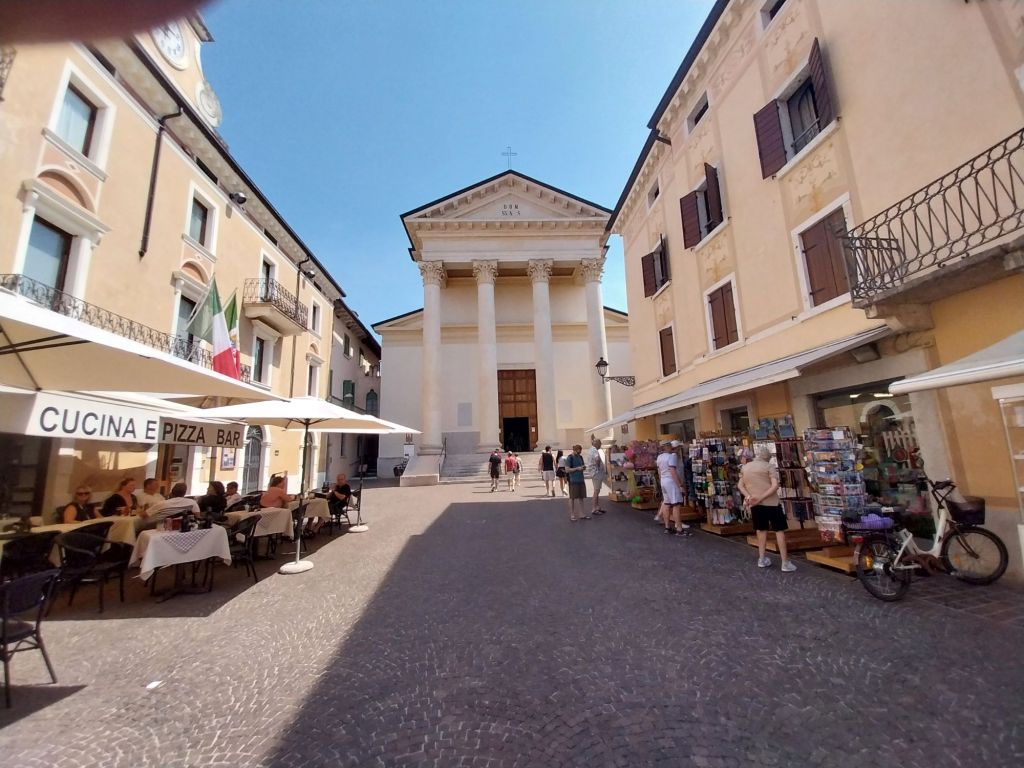
Although this photo gives the impression of a quiet town, that soon changes with the arrival of more boats from further north along the lake. The place is bustling, but like Desenzano there are no enormous historical or cultural attractions here, apart from the church you see at the end of the street. This is a place to eat and spend money on souvenirs.
It’s a similar picture in Garda town – one of the larger places around the lake, where attractive cobbled streets around the harbour are ruined by wall to wall gift shops. You can get leather bags and jewelry at any other tacky resort in the world; the only item of real interest may be the local wine.
After a day on the water I decide to skirt around the lake with a short trip from Desenzano to Peschiera (pronounced PESK-EE-era), suggesting a fishy connection. The rail connections here are pretty straightforward with an hourly train going towards Verona. There’s also a bus that skirts along the shoreline, though today the published timetables are works of fiction; summer traffic on the narrow roads here is heavy, and every second passenger seems to be entirely confused about using a contactless card to pay for their fares.
A 45 minute journey brings me to Peschiera, and for some reason I managed to exit two stops before the town centre. However, this turns out to be a good thing, as the walk brings me to the outer entrance of the town’s walls – an impressive defensive structure that played a key part in Peschiera’s history.
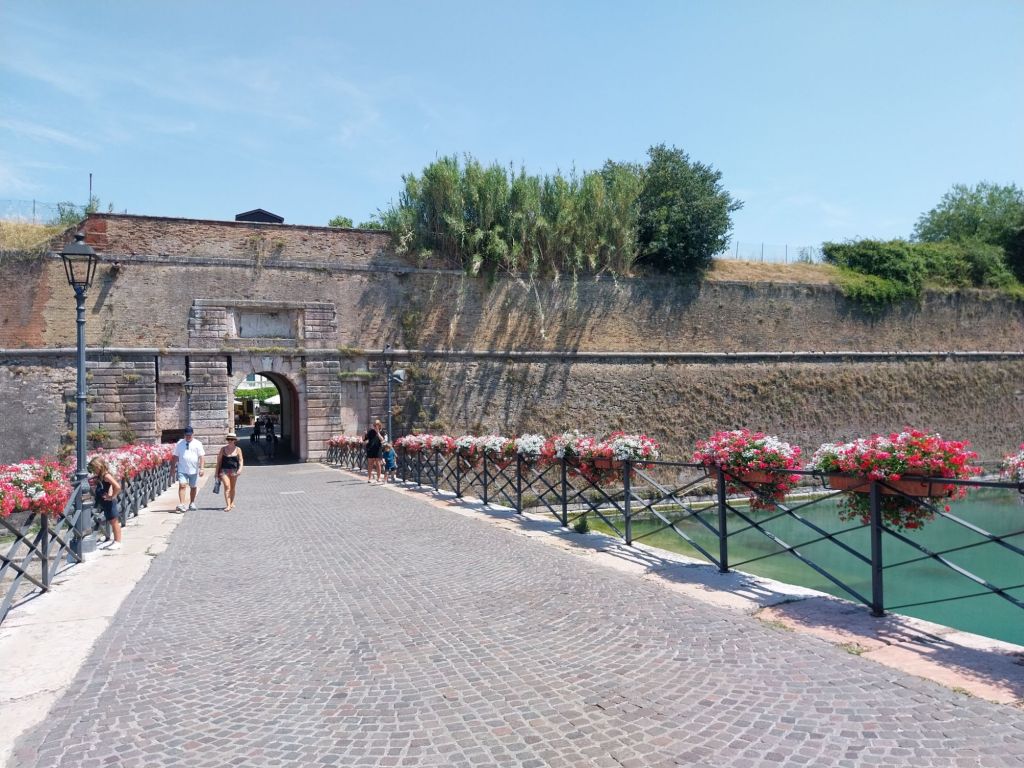
The original fortfications were built during Roman times – but the curret structures date back to the sixteenth century, when the walls were a key part of the Venetian defence; Peschiera sits on the border between the Veneto and Lombardy regions, so it was a strategically important location. Signs of military activity are scattered across the town in the buildings and street art.

As well as the huge stone walls, Peschiera was protected by another border – the Mincio River which is an outlet of Lake Garda. In Peschiera it forms an attractive place to soak in the sights and grab a bite. That said, the restaurants along here are, of course, the more expensive; you”ll pay a premium for your waterside view.
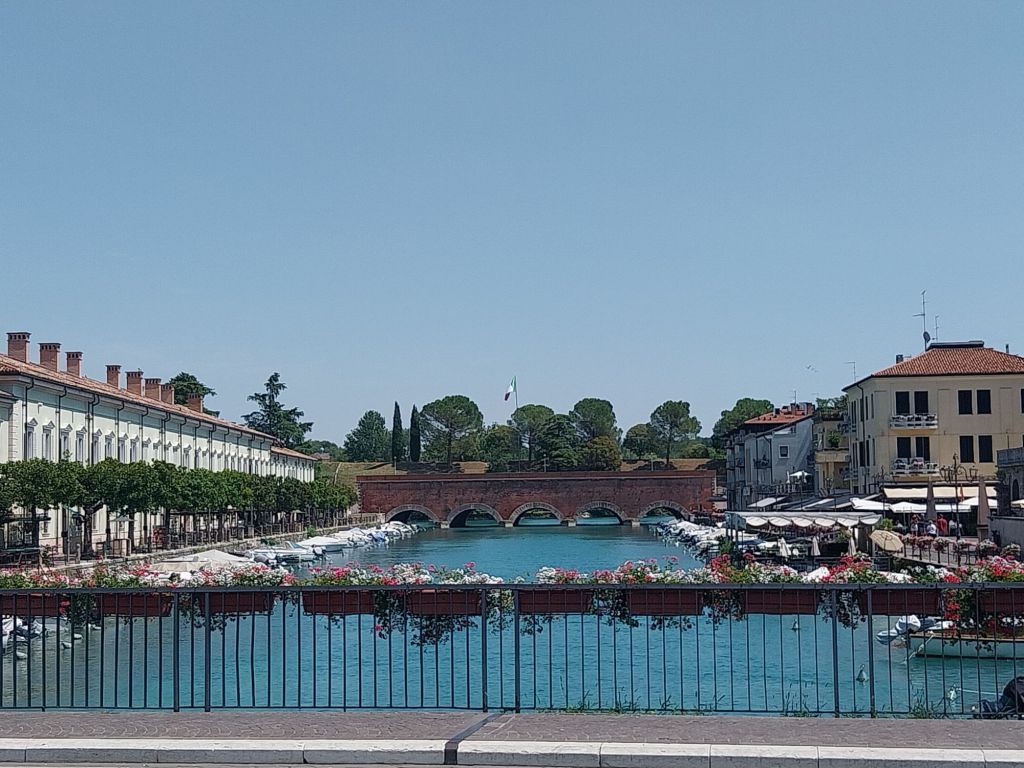
You can’t complain too much about commercialism; people here have been making big money since the mid nineteenth century when the Milan to Verona railway was completed. A few kilometres away is the Gardaland theme park, The boats, the cafes and accessibility make this whole area family friendly. And in the height of summer that means the place gets busy. A small park overlooking the port shows just how much activity is happpening on and around the lake.
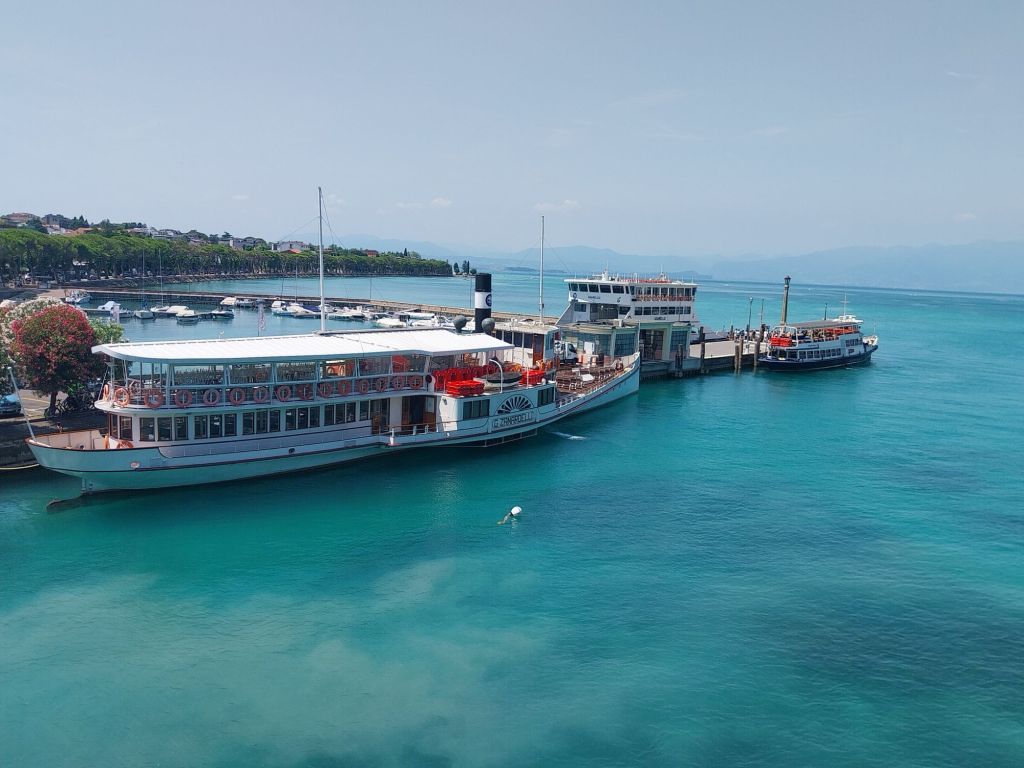
And yes, that’s a paddle steamer docked up. The Zanardelli was built in Zurich in 1903 and is today run as a rental service for private events. You’d have thought there was enough interest to operate this as a regular boat for tourists, but clearly the Navigazione Laghi – which appears to have a monopoly on boat services here – know what they’re doing.
Lake Garda shines with pride, and rightly so. Its size means that even with tens of thousands of visitors in every resort every day, it doesn’t seem overly crowded. It can be used as a base over several days, or easily reached from several cities. The real star, or course, is the water and the stunning landscapes around. Avert your gaze away from the tacky tourism in the towns, and let the scenery do the talking.
TravelCaster Tips
Getting here : Lake Garda is easily accessible from Verona and Milan by rail. The TrenItalia website lists times and prices – for the most part the regional TrenNord services are better value than the fast Freccerossa ones. There are also regular coach connections to and from Bergamo airport.
Orientation : From Desenzano station, walk directly across the road and down Via Cavour which will get you to the lakeshore in around 20 minutes. Almost all accommodations are within walking distance, though local taxi services are available.
Public Transport : Local buses are all run by Arriva and this simple guide shows the main routes. Buy tickets from any nearby Tabacchi shop (look for the big “T” symbol outside, on board or download the Arriva Italy app – beware the latter takes a few steps to resister your details so so it in advance. Boats on Lake Garda are all run by Navagazione Laghi – the timetables are fairly strict so during busy times turn up around 20 minutes before departure. Tickets can be bought at kiosks at each stop. Day passes are available though are only really useful if doing very long journeys.


Leave a Reply