
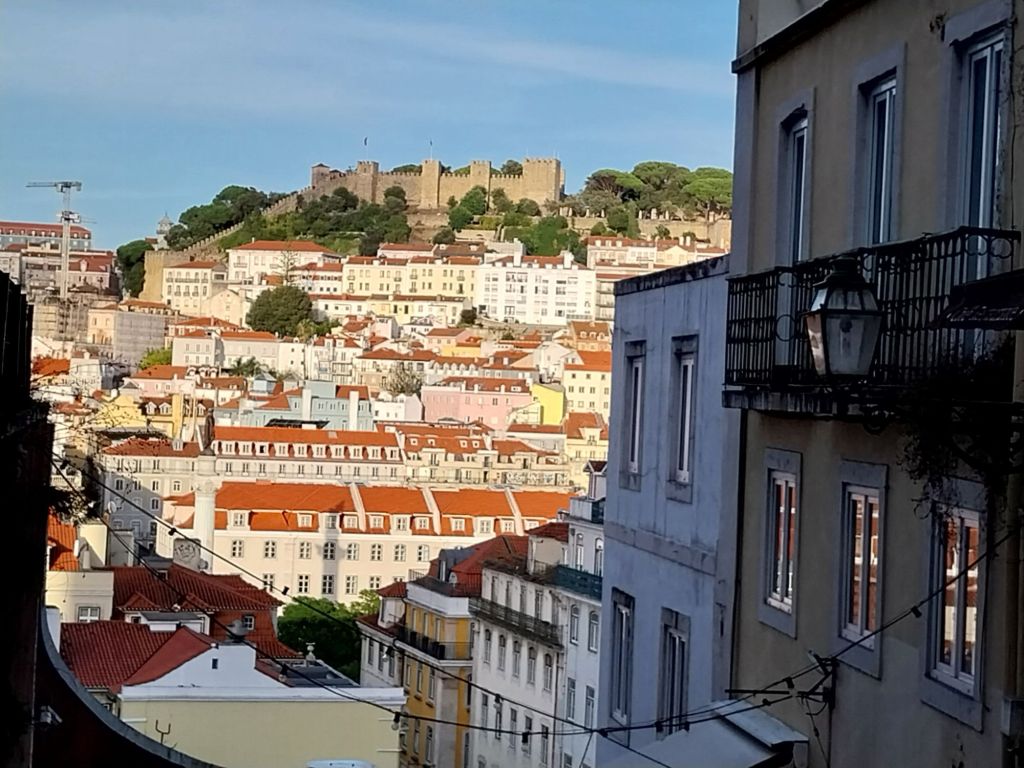
It’s nearly eight years since my first trip to Lisbon, so after five days in the Algarve it seemed a good time to visit once again. I had originally planned a luncthime departure from Lagos but that would have wasted a good afternoon when I could be seeing some of the Portuguese capital.
Trains here are efficient, and a first class ticket covering more than 300 kilometres came in at just over €30. The first part of the trip – along the Algarve line – has only one class of travel. But a change at Tunes for the remaining two hours to Lisbon brought about a more comfortable experience.
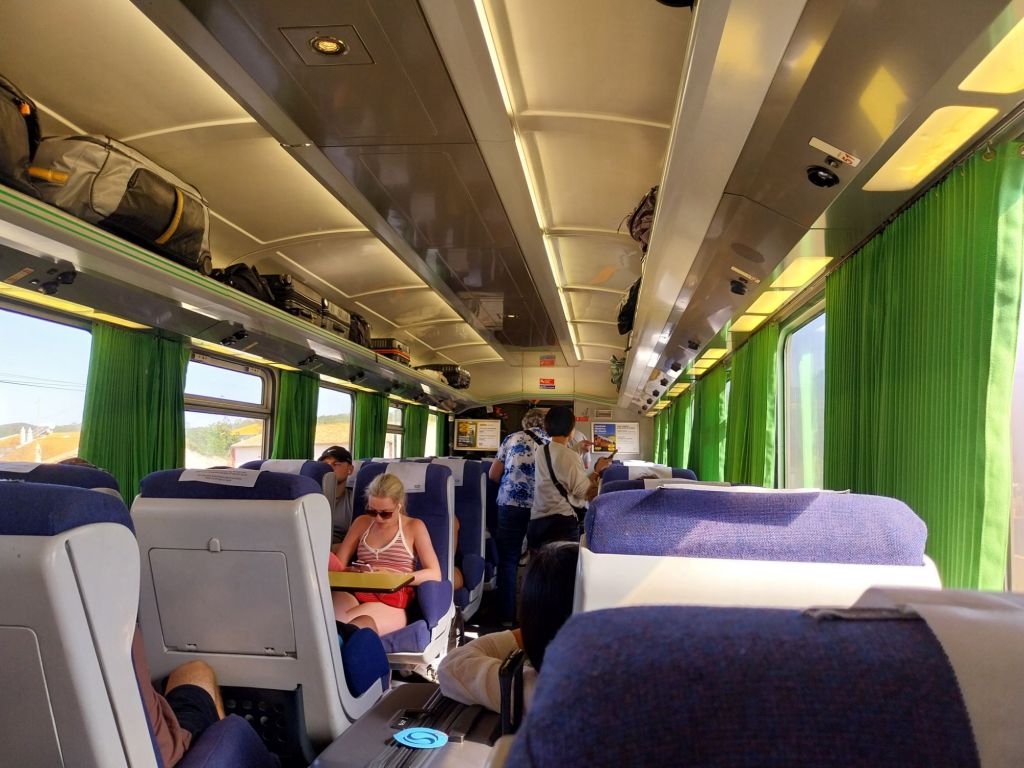
First class on Portuguese intercity trains are arranged in a 2 + 1 seating plan, which means plenty of width and room to stretch the legs. Travelling in mid-August, it’s also pretty busy with nowhere near enough luggage space. But the ride is smooth and comfortable.
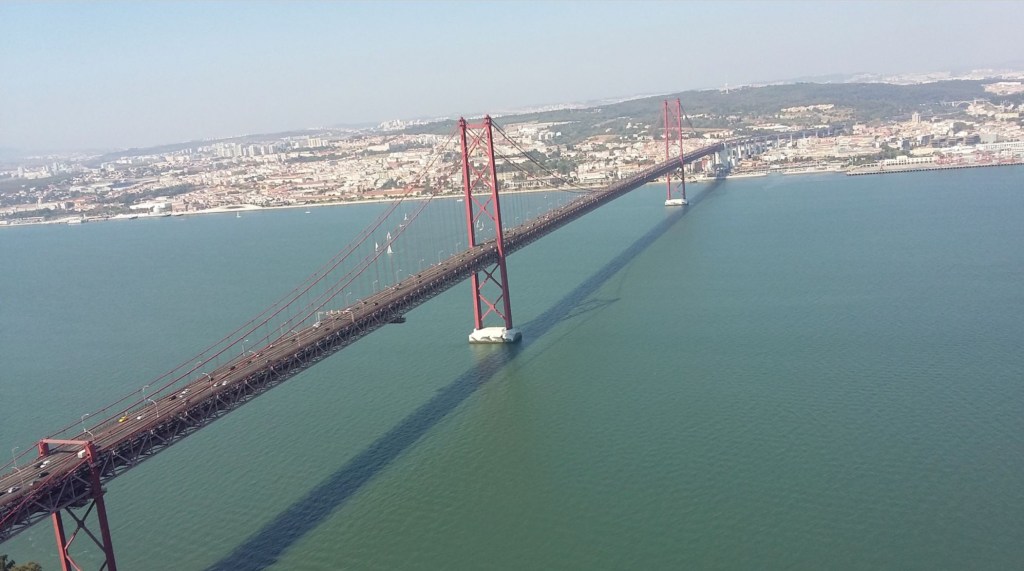
The approach to Lisbon from the south is spectacular, crossing the bridge with links the main city with the Almada district. The crossing itself is special. But even more so with views of the towering statue of Christ the Redeemer to the east. Viewed on my previous trip – from the top of Jesus himself – it resembles a modern day Golden Gate Bridge.
The bridge is not the only resemblance to San Francisco. Lisbon is built on hills, and just like its American counterpart, its famous trams help you up and down them. One of the most notable routes is the 28, running on a circuit from Martim Moniz Square around the Alfama district, which houses the city’s main castle and cathedral. But beware, because on a summer Saturday afternoon you’ll likely face quite a line to get on board.
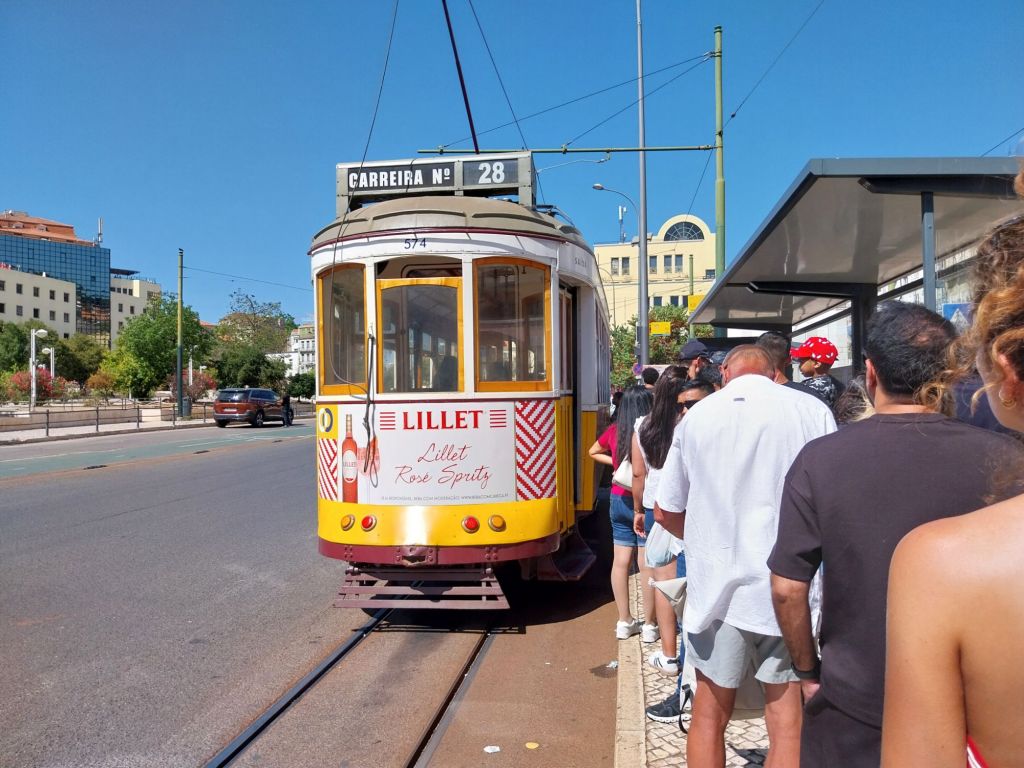
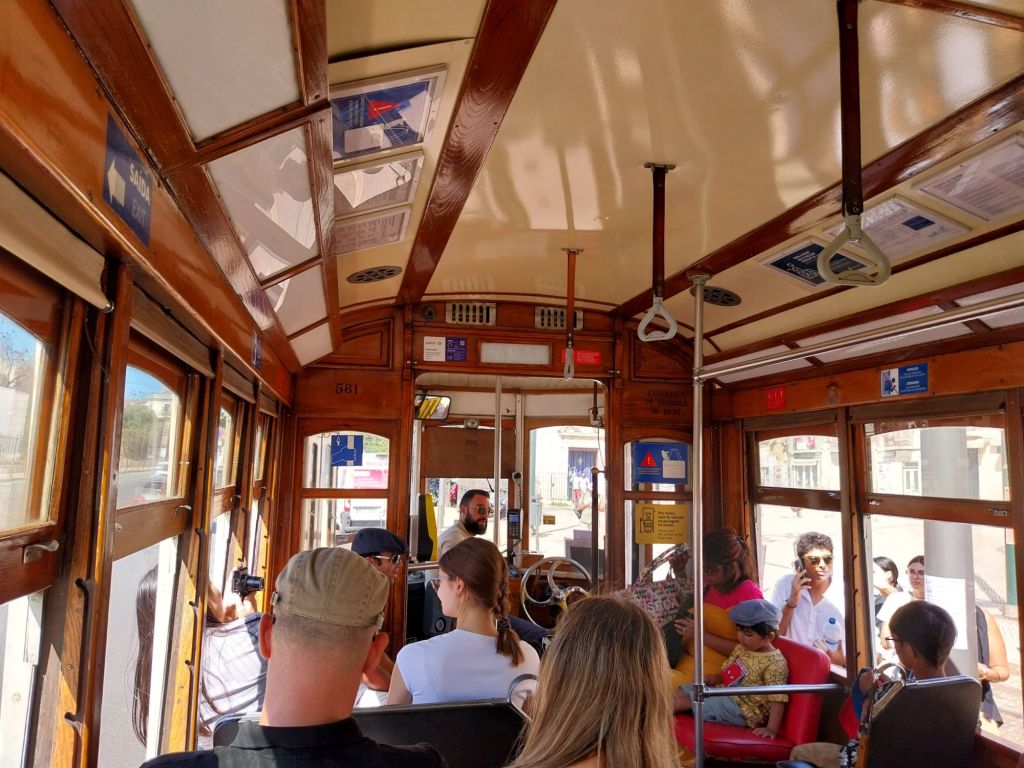
The ride is fun and, at times, frightening. The old streetcars climb the steeo hills, rounding hairpin bends and taking priority over cars, tuk tuks, trucks and anything else that might get in the way. At times, another tram rattles in the opposite direction, so close that you can speak to and touch passengers on board.
A good option is to alight at the Castle and walk down the narrow streets back to the main city centres. This is best done in early evening – a sunset stroll allowing you to take in some of the great sights when there are fewer people around.
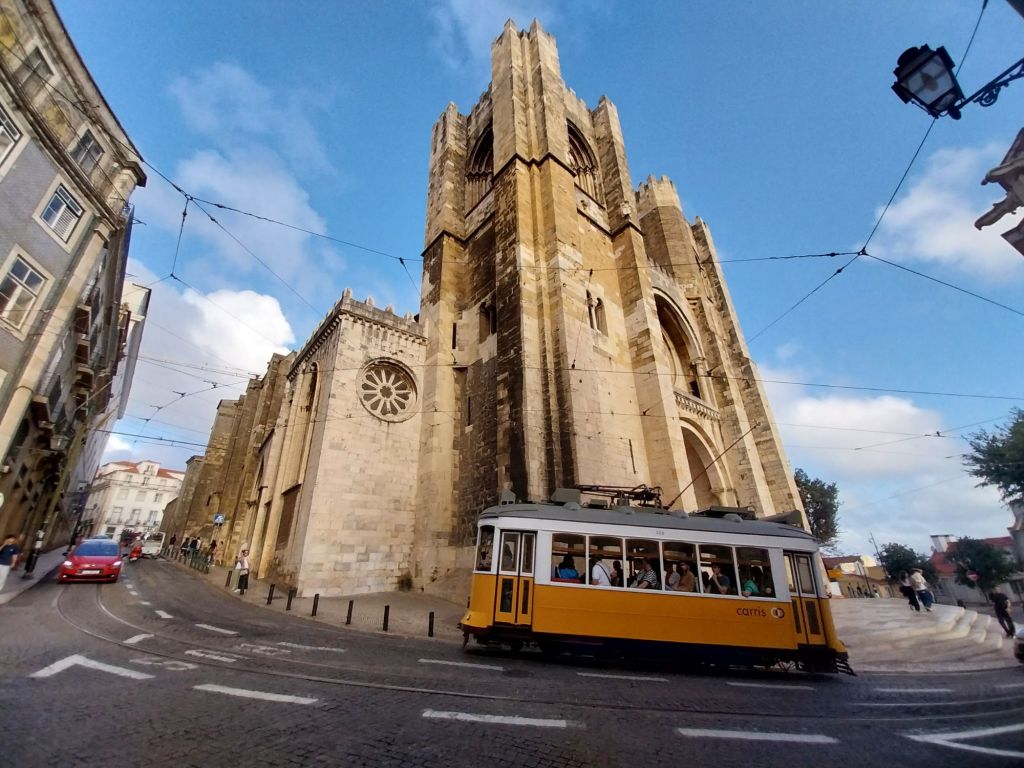
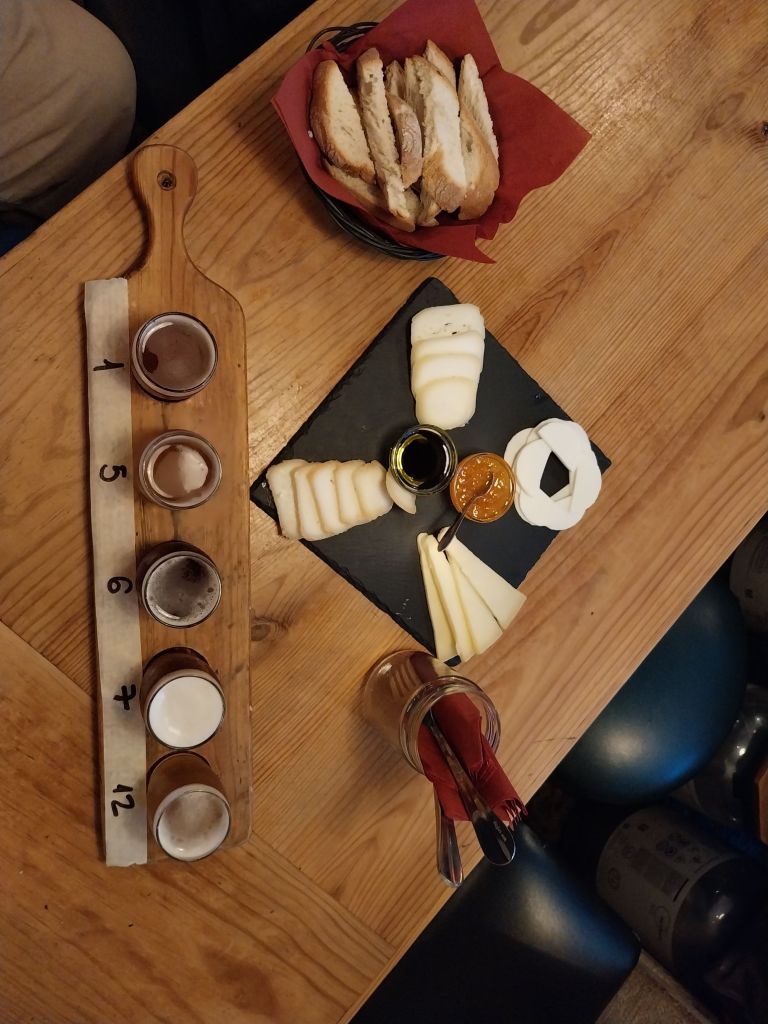
Alfama also has a huge selection of places to eat and drink. By their very nature, many are tucked away on side streets. There is the usual mix of traditional Portuguese restaurants and quirkier cafes and bars. At Crafty Corner, it’s all about the craft beer – which is sometimes accompanied by acoustic live music, and best served with something local, like a cheeseboard.
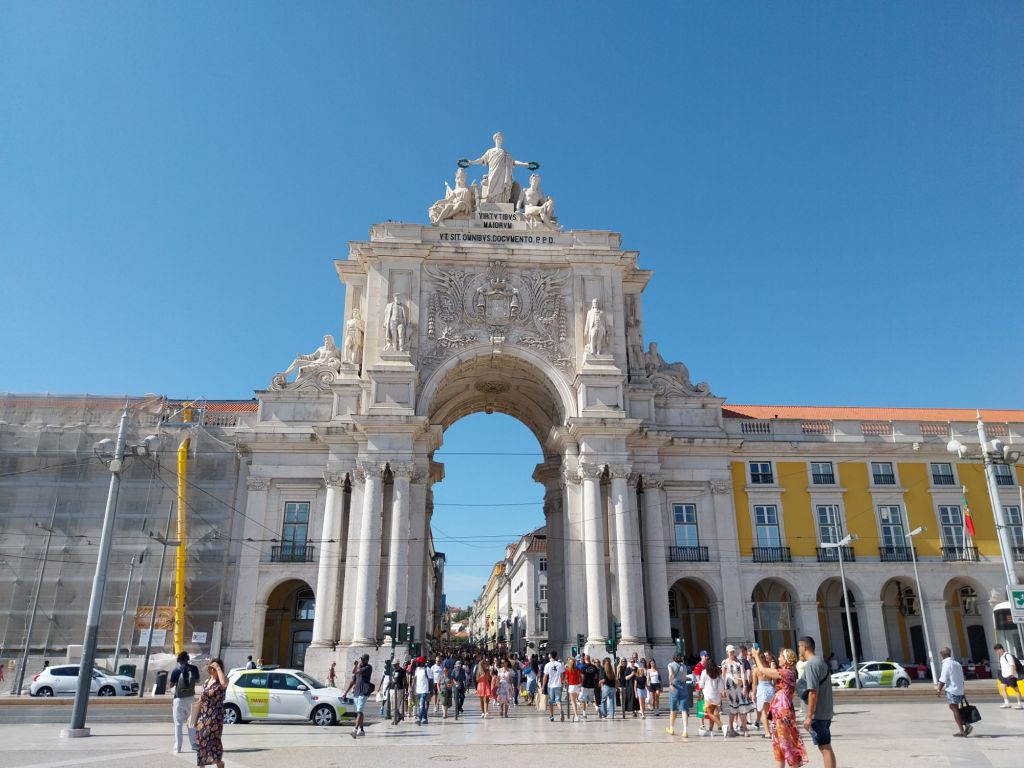
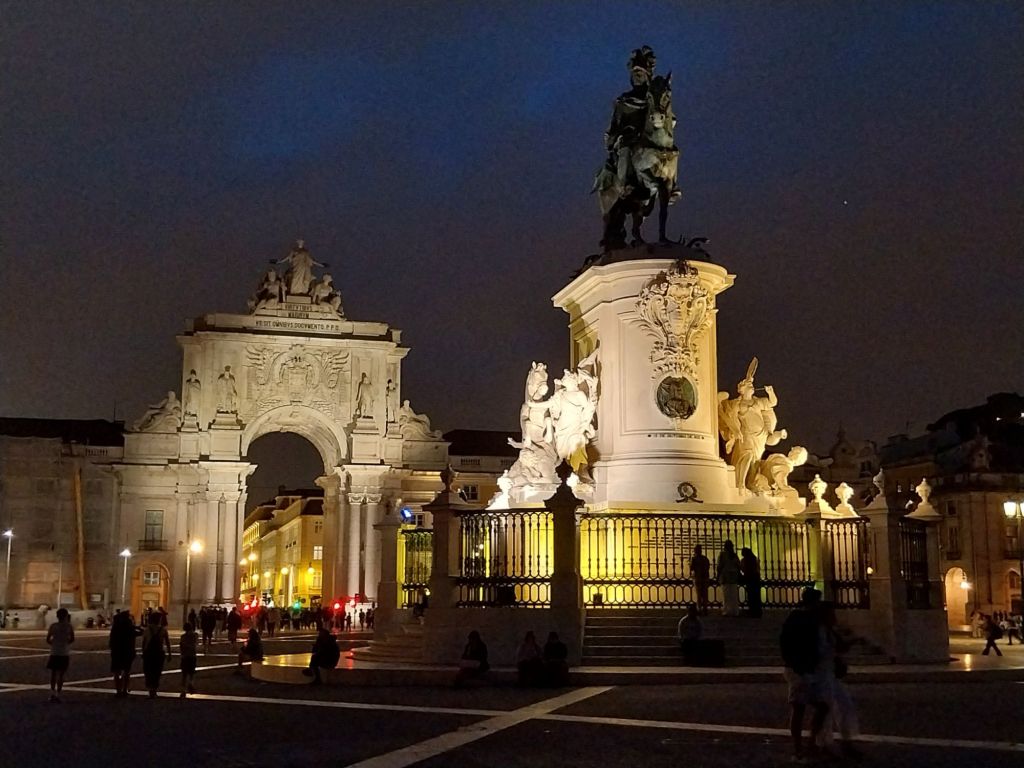
In 1755, an estimated 50,000 people died when a huge erarthquake hit Lisbon. It’s force was so great that buildings were destroyed as far south as the Algarve. The city was defiant, and as a symbol of its resurrection built a number of impressive monuments. The most notable of which is the arch at the foot of Rua da Augusta, which looks equally impressive by day and by night.
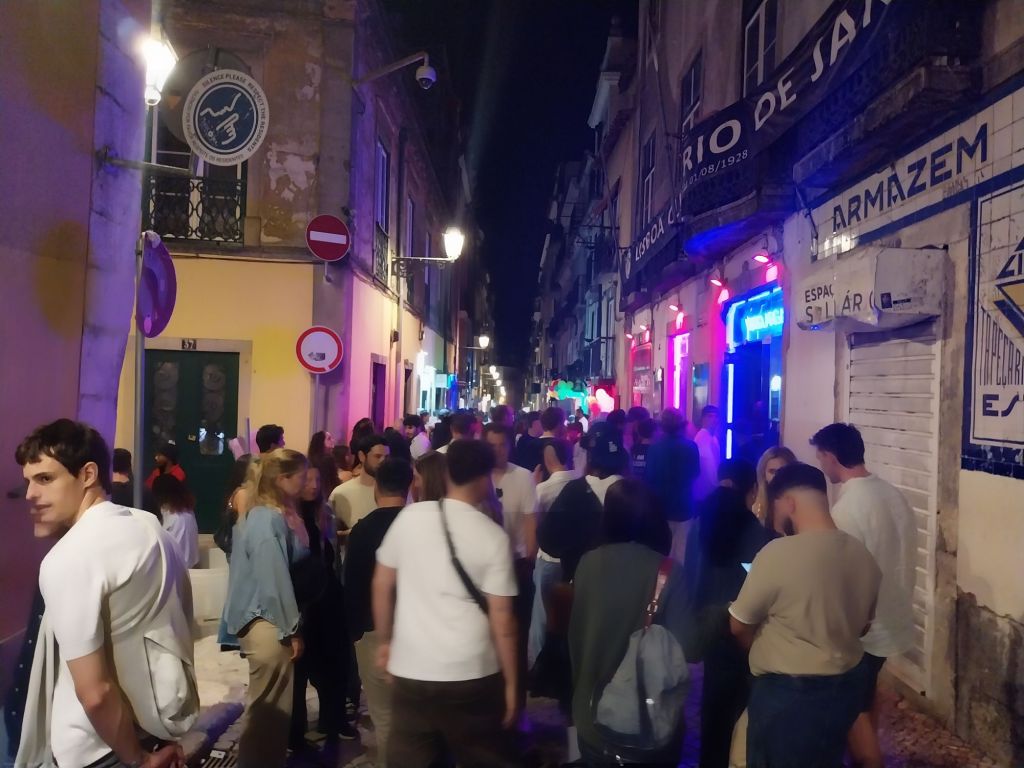
If Alfama offers a laid back choice of evening entertainment, perhaps symbolised by its saintly cathedral, then the Bairro Alto represents the tempting devil on the other shoulder. This tight set of narrow, steep streets is the party district, especially at weekends. There is little point getting here before 9pm, where happy hours offer cheap cocktails and beers.
The contrast of what happens here is possibly demonstrated by the Cheers Irish Pub. It is neither traditional nor Potguese, but one of its bars features live acoustic music; tonight, a girl on a guitar banging out pub classics with the accompaniment of an older man with a simple drum kit, The other bar is a sea of karaoke madness which starts off at a fairly sedate pace, but builds into a crescendo of drunk (mainly young) people shouting at the mic, the DJ and each other. By 1am, there is no sign of anybody wanting to go home.
Bairro Alto was famously connected with the lower town by two funicular railways and the Santa Justa elevator – a remarkable piece of machinery that brought the crowds up and down. But in September 2025, 16 people died and over 20 were injured when the Gloria funicular crashed down the hill. At the time of writing, these classic forms of transport have been suspended indefinitely. There are a couple of bus replacements in place, but these only run until 9pm, meaning a steep walk or a cab ride.
Soggy Sintra
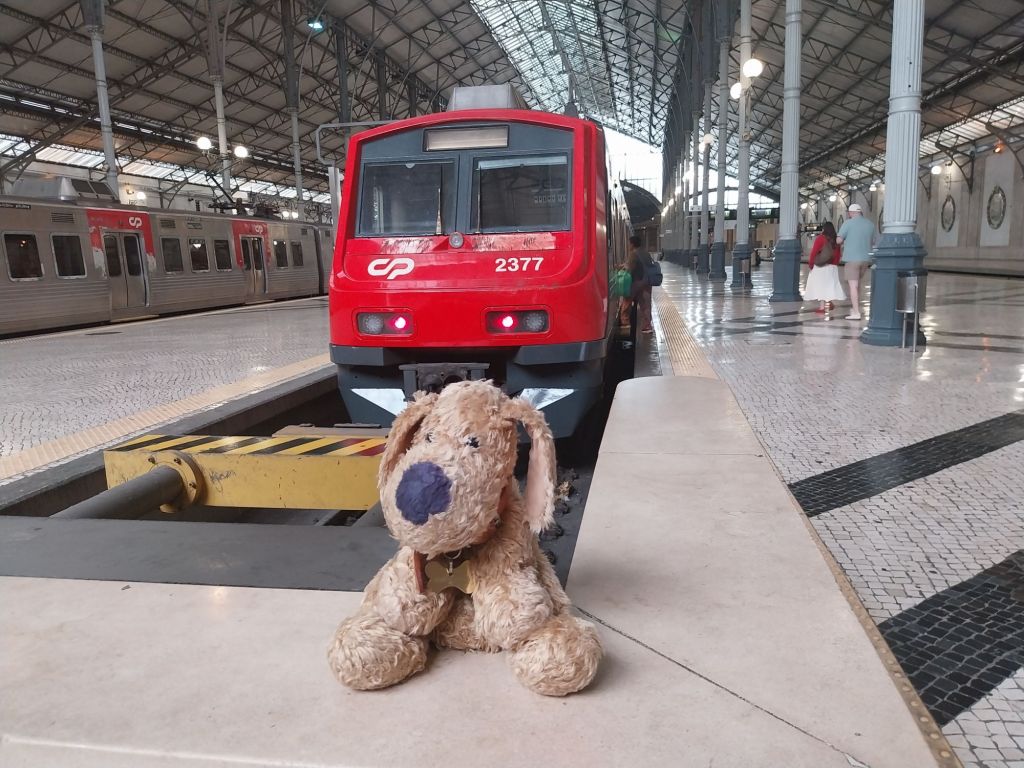
Lisbon is so much more than it’s main city centre, and thanks to a fantastic public transport network it’s easy to explore the wider area. Sintra – around an hour from the cent by train – is often listed as one of the prettiest towns in Portugal. So it seemed a good idea to hop on a train to have a look.
Unfortunately this was the nicest part of the experience. You see, Sintra is built on hill even steeper than those in Lisbon. There’s a castle, a palace and other fairytale buildings to be seen. But it is also known as the “Misty Town”, due to the humid air created by the forests and trees all around. And on this particular Sunday, it was the “Absolutely Pissing It Down Town” as a heavy storm engulfed the region.
At first, the fine rain at Benfica station – where we changed trains – felt quite refreshing; the Summer of 2026 had been one of Europe’s hottest and driest on record, so a couple of showers seemed just what was needed to freshen up the air. But it didn’t stop. All day.
You’ll need your wits about you at Sintra station, where tourism is run like a military operation. I’m immediately bombared by offers of rides in tuk tuks, a touristy land train or even a taxi to travel the 4 kilometres up steep and winding roads to the main attractions here. These are expensive and best avoided in favour of the 434 circular bus route; that said, the specifically curoious fare of €10.96 seemed as steep at the terrain itself – though this is a 24 hour hop on, hop off fare which soon proves to be useful.
It’s fair to say that the views were not as pretty as in the tourist blurb.
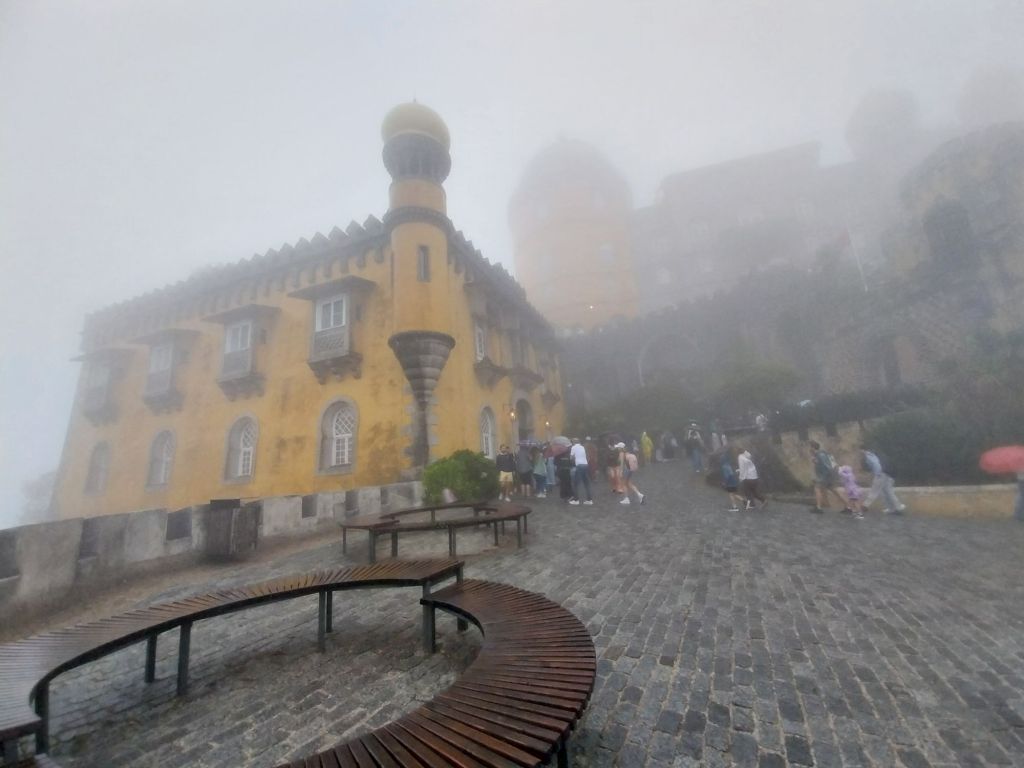
The Pena Palace and the nearby Moorish Castle are one of the most visited places in the whole of Portugal. What you can’t see through the mist is the huge line of people queuing to get in. The entrance system is a military operation – when you buy a ticket you’re given a specific time slot to get in. On a regular day, this would give you time to explore the beautiful gardens and hidden trails around the estate.
Today the most memorable views were families fighting over ponchos, attempting to take a selfie by a viewpoint with no view, and removing entirely unsuitable shoes to walk barefoot through the ever-growing puddles.
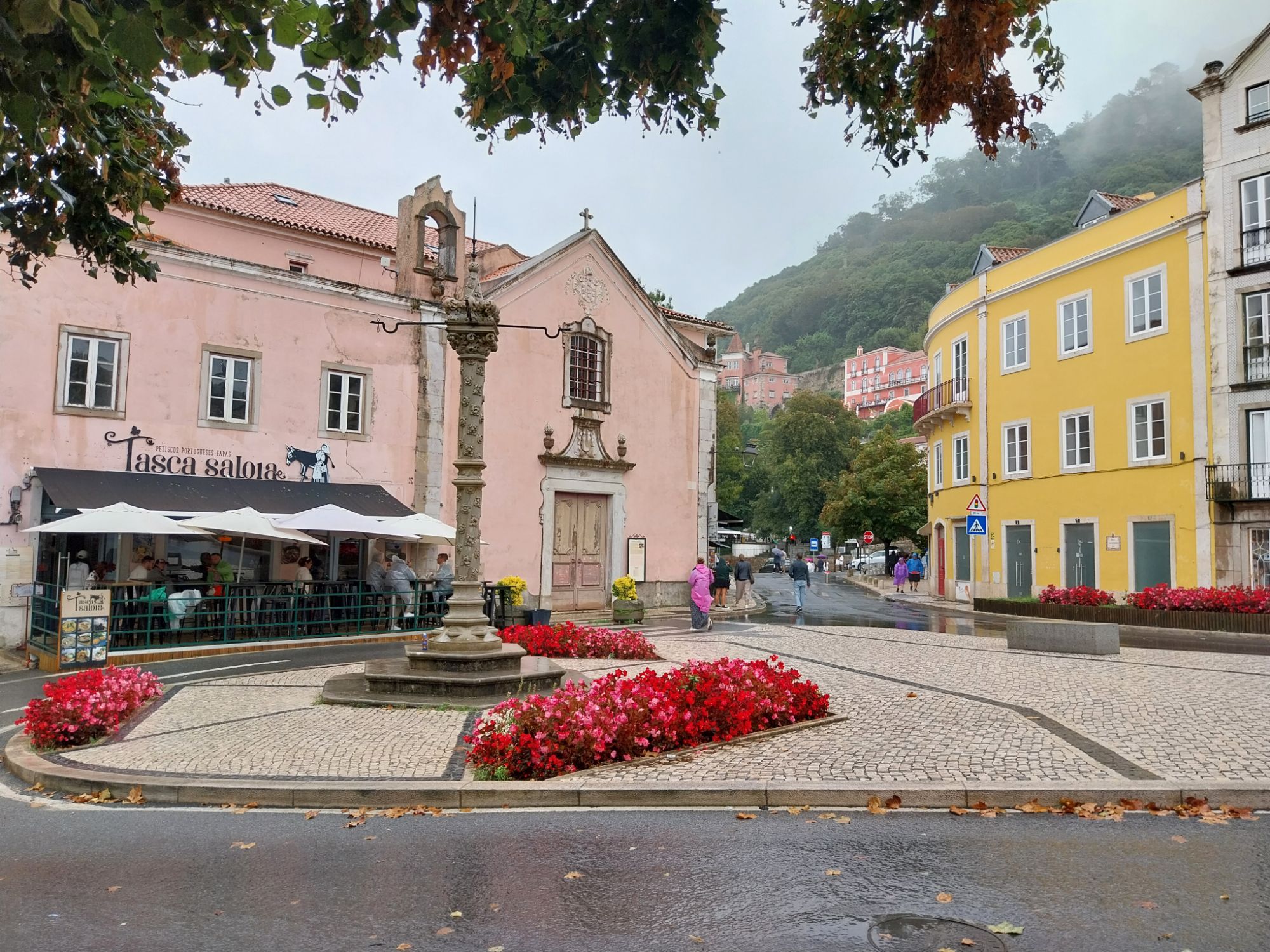
Sintra town centre was equally soggy; the Tasca Soloia being a good sanctuary in which to dry off and have a rather nice lunch – two courses and a drink for less than €30 seemed good value in the middle of August. This included the classic Sintra pastry; lesss famous than the Portuguese pastel, the Travesseiro is a pillow shaped flaky affair with an egg and almond filling. And it’s rather nice.
Royalty and Religion
The rain barely stopped all night and continued into Monday morning. Fortunately, Lisbon has plenty of indoor attractions to occupy a few hours and one of the best places to do this is the Belem neighbourhood.
A 20 minute bus ride from the city centre takes you up further steep streets to the Ajuda National Palace, which became the official residence of the Portuguese royal family from the middle of the 19th century. It had been originally commissioned after the 1755 earthquake but it was almost a hundred years before it was complete enough to be habitable, at leats by royal standards. The interior is an elegant mix of lavish decoration and curious gifts given to the King and Queen by visiting dignitaries, including a modest rug for the bedroom.
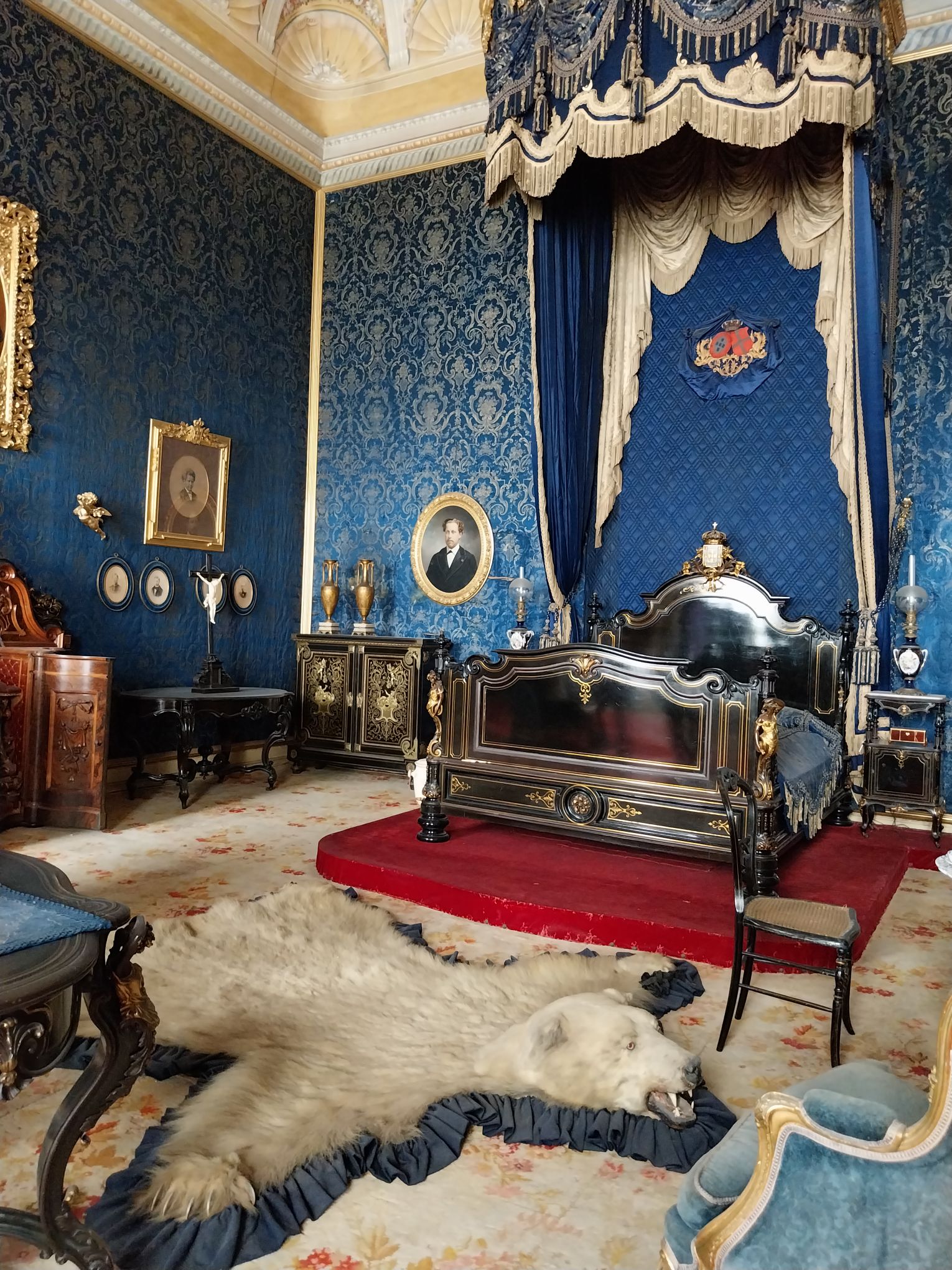
The monarchy in Portugal was abolished in 1910 but this and other palaces are well preserved for today’s visitors.
With a slightly wider channel in the River Tagus, Belem was – and still is – the real centre of Lisbon’s maritime activities. The Jernonimos Monstary, built in 1502, served as a refuge for seafarers. And it was also the birthplace of Portugal’s most famous sweet treat.
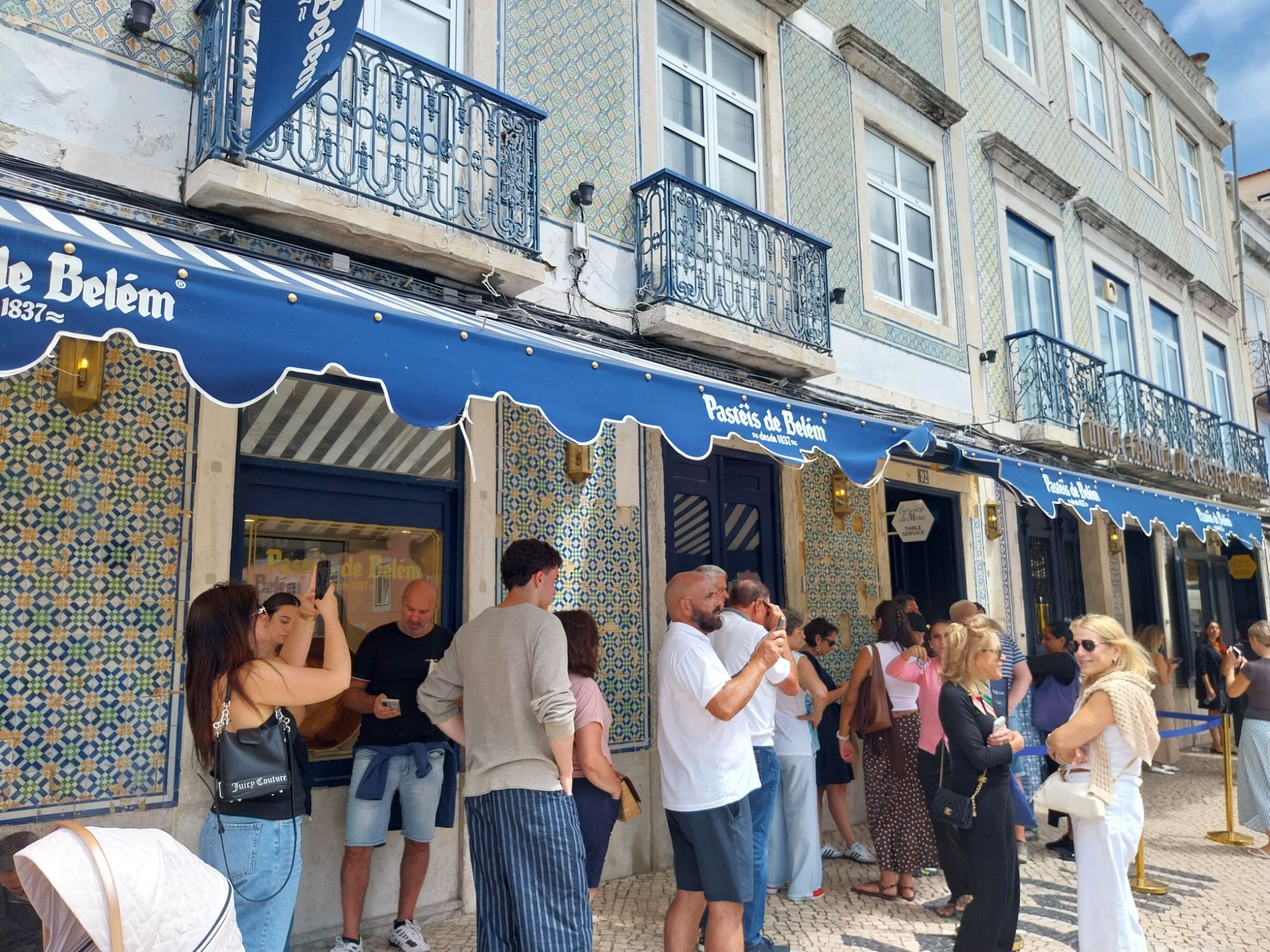
The Pastel del Nata is eaten everywhere here, but it was the monks of Belem who first mixed together a few leftovers to create the classic pastry. As a result, the town now has several bakeries claiming to serve the best version. And there are queues to prove it; though personally I can’t tell the difference between the €1.60 version sold here and the supermarket ones for €0.69.
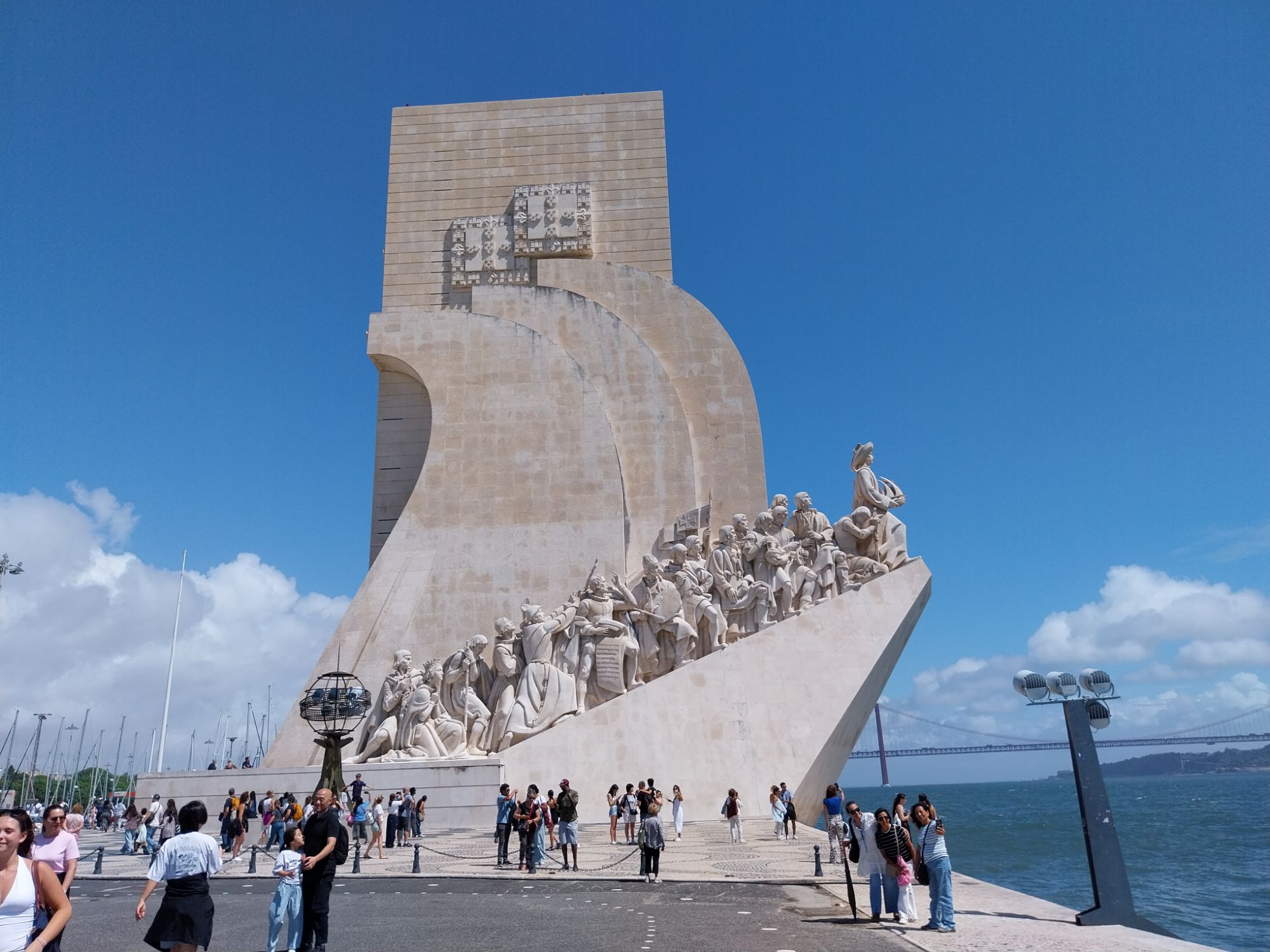
Travel is all about discovery. So it seems appropriate that my journey ends at the Monument of the Discoveries on the Belem waterfront. It was completed in 1960 – after an earlier version, built for Portugal’s World Exposition – has been demolished. Today’s version towers into the air and pays tribute to those who first set off from these waters to venture south and east.
Even in the height of the summer season, Lisbon feels like a city that can manage its numbers. It has a sense of being less crowded than places like Venice – probably because there’s more space to spread out. And notably, like the rest of Portugal, prices for drinks and meals are relatively low compared with the rest of Western Europe. Enjoy it while you can.
TravelCaster Tips
Getting here : Dozens of airlines offer direct flights to Lisbon from the UK and other places across Europe. Lisbon Airport is seven kilometres from the city centre and is served by buses as well as the metro system. Portuguese Trains provide frequent connections to other cities in the country. International travel is possible, though getting to Madrid, for example, will require a couple of changes en route.
Orientation : Lisbon is a sprawling city but most of the visitor activity happens towards the southern point where it meets the River Tagus. The Baixa (Low Town) is in the middle, with the Bairra Alto (High Town) to the west and Alfama to the East. Sintra is a one hour trip by train.
Public Transport : The main operator, Carris, runs all of Lisbon’s bus and tram services, except the red “tourist tram” which is best avoided. The Metro is operated by a different company, but all public transport can be accessed with a Navigante card. Machines at Metro stations allow you top top up either by ticket, specified amounts of cash (eg €10) or 24 hours, which costs €7.25. There is an initial fee of €0.50 for the card itself.
Food and drink : You won’t go hungry in Lisbon, with a multitude of dining and drinking options. The Crafty Corner near the cathedral offers excellent small plates and charing options. In Baixa, The Chicago Room arguably serves up one of the best steaks in town. For a real party atmosphere, try a bar hop in Bairro Alto, where Portas Lagos is among the dozens of bars with live music at weekends.
 TravelCaster
Leave a comment