
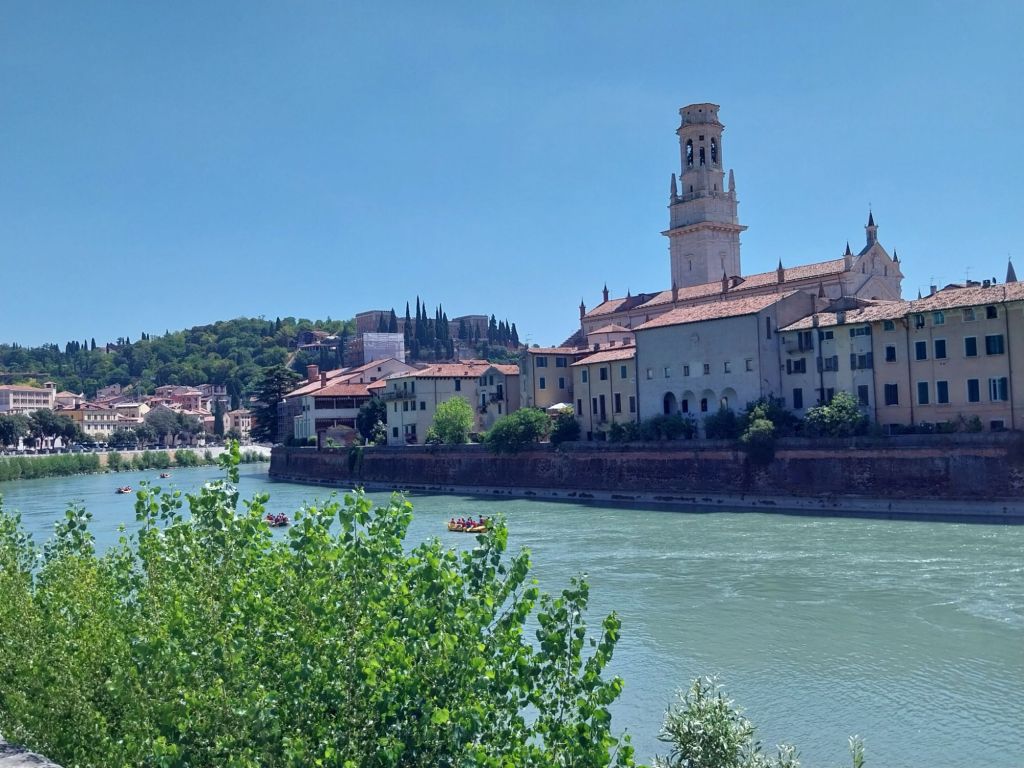
It’s not yet 10am but already the temperature is almost 30c. On the whole, Verona is a walkable city, but I decide to firstly take a bus from the southern end to the northern part. And it doesn’t disappoint.
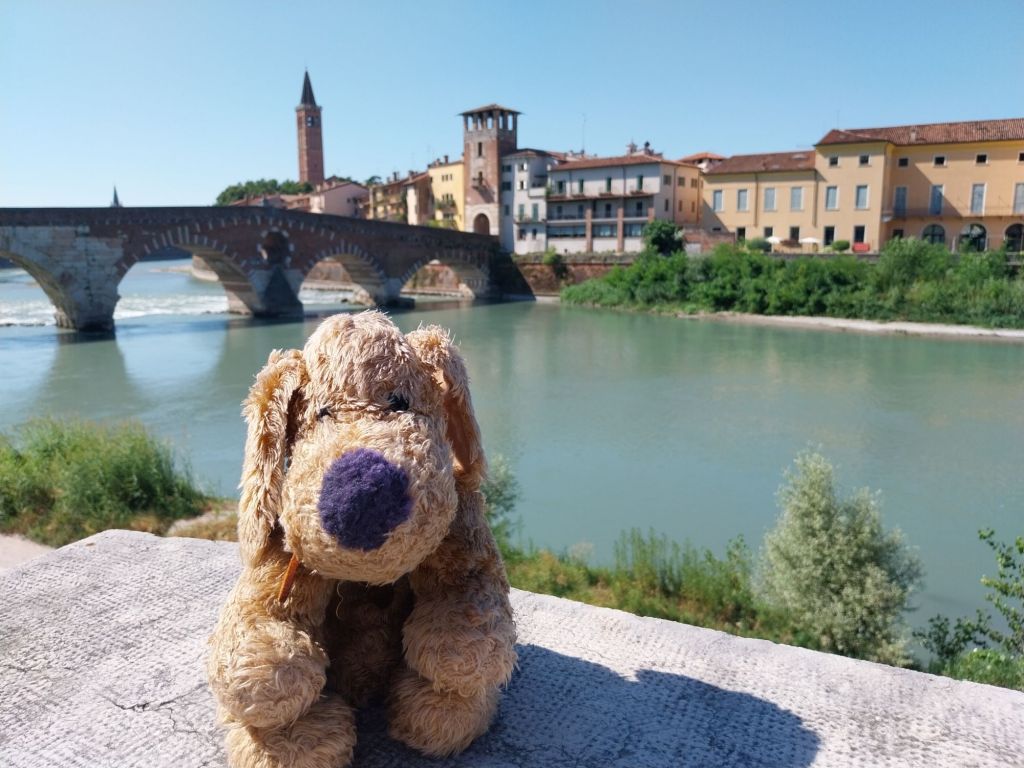
The oldest bridge and the oldest church
The Santo Stefano church sits just next to the River Adige which winds through Verona, and is one of the oldest parts of the city. The Ponte Pietra (literally the Roman for Stone Bridge) is the oldest over the river, dating back to the first century. There are tourists here, but not quite as many as those in the centre. And this time of the morning is pefect to get a view from above, using the Saint Peter’s Funicular.
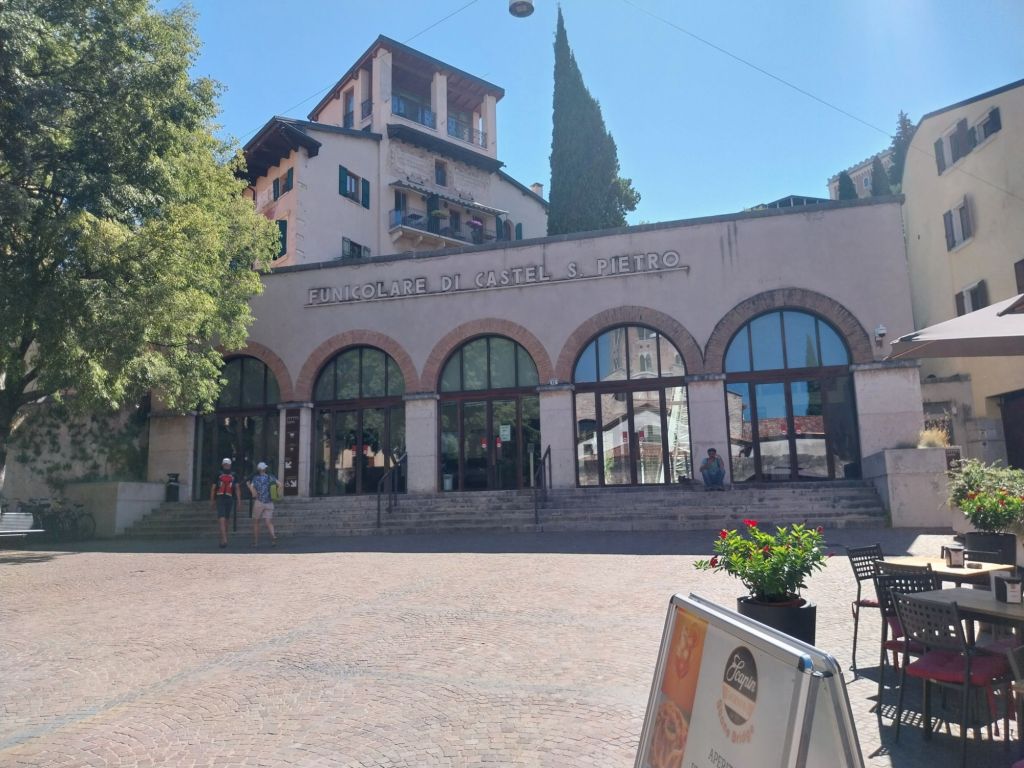
This is not the longest nor the steepest funicular I’ve used across Europe, but it is a very handy way of reaching one of the best viewpoints in Verona. The €2 ticket is a bargain, whisking visitors up the hill in just a couple of minutes. You can get a €3 round trip ticket, but most people walk back down the path, offering more views of the city. From the top, it’s quite a sight.
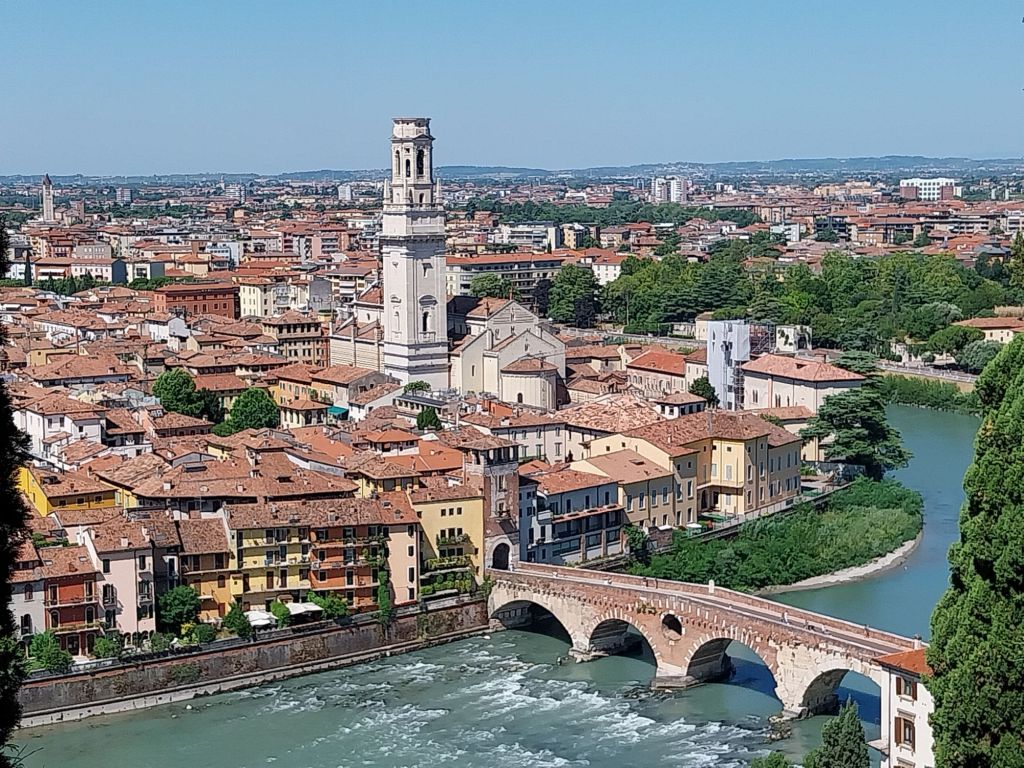
The large tower next to the bridge is that of the Duomo. It has been Verona’s main cathedral since the 12th century, but it’s a mere youngster compared to the Church of Santo Stefano. First consecrated in 421 AD, it was previously the ecclesiastical centre if the city. It’s something of a strange building with the pews below a steep set of steps leading to the alter, but the artwork inside is stunning, even if they did miss a bit at the bottom.
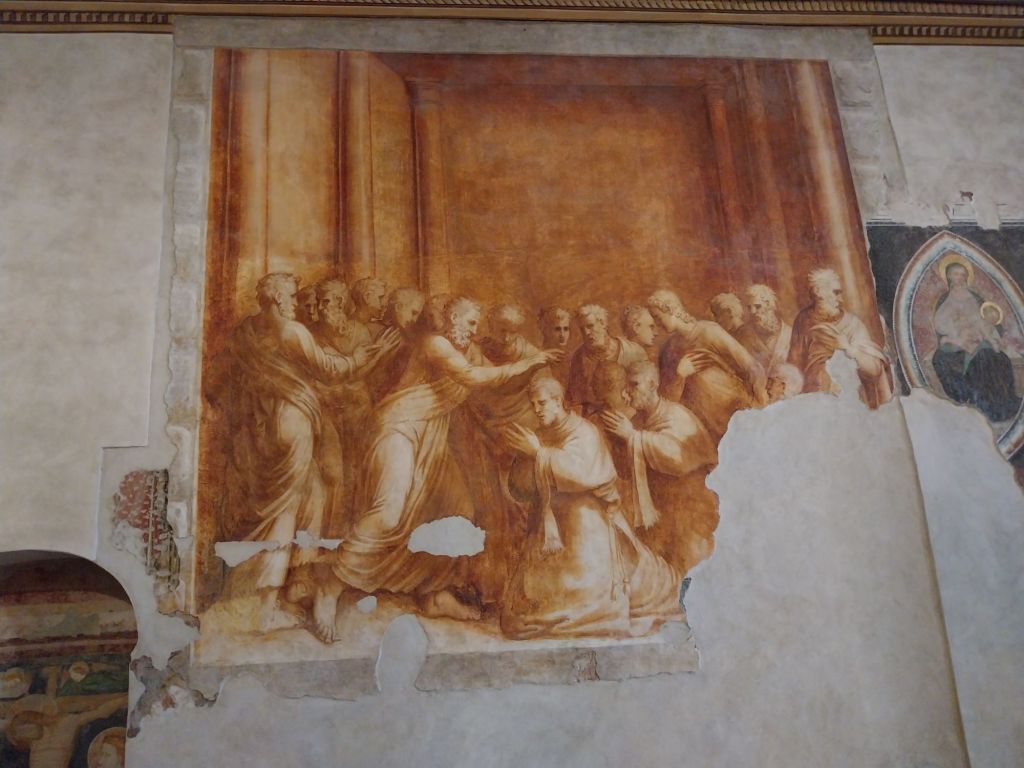
Although there are plenty of tourists here, there is still a sense of community; my visit inside the church was delayed – I had seen a number of well dressed people gathering outside, assuming a daily mass was about to start. The arrival of a hearse indicated that walking around in shorts and a sun hat probably wasn’t a respectful idea.
Prepare for the crowds
The Ponte Pietra leads back into the heart of Verona, but a better option is to wal along the northern bank of the Adige to see the Duomo and other buildings from a distance. This way, you avoid the busiest of the crowds. The river also has its charms – today groups of children are rowing dinghies in groups, shouting hellos to people on the bank. This feels like a city where locals and visitors mix more freely than in the tourist traps of Florence or Venice.
All of that said, brace yourself for the huge numbers around Piazza de Signori. There are multiple connecting squares around here, all full of the usual overpriced touristy restaurants you see everywhere else. However, it is worth stopping to see a couple of sights, and it won’t cost you a penny.
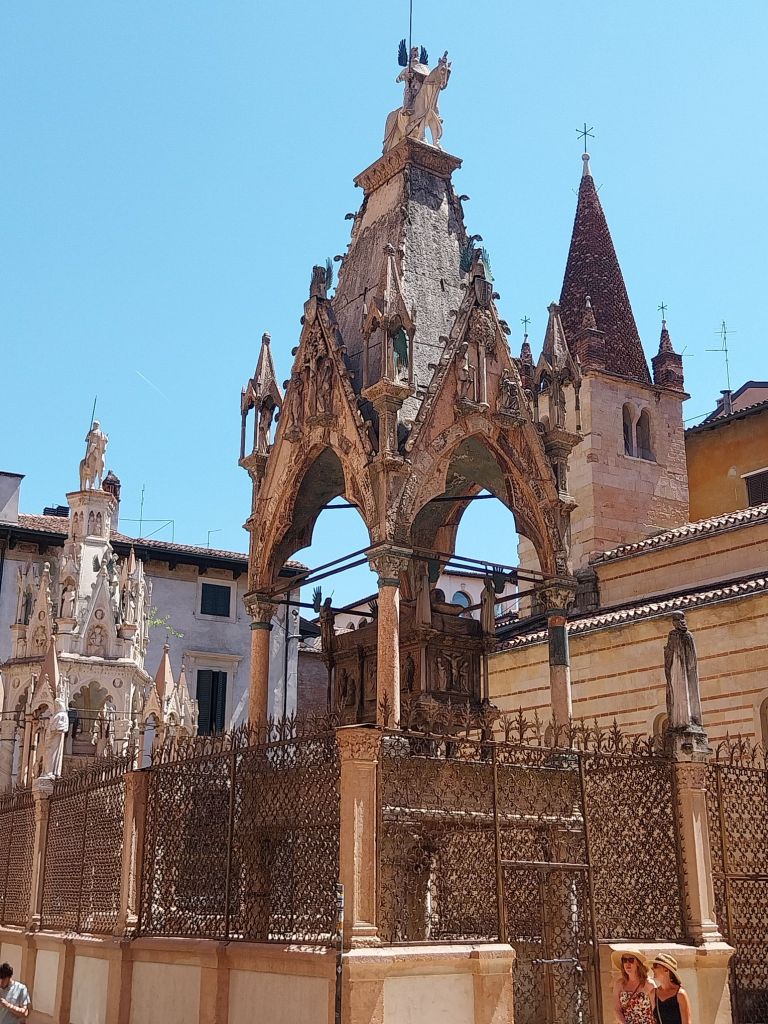
While the mafia may have dominated the south of Italy, in Verona the top family were the Scalas. They were so important that they insisted on being buried in elaborate tombs in from of the church of Santa Maria. You can pay an admission charge if you like, but the largest and most impressive funereal furniture can be seen for free from the street.
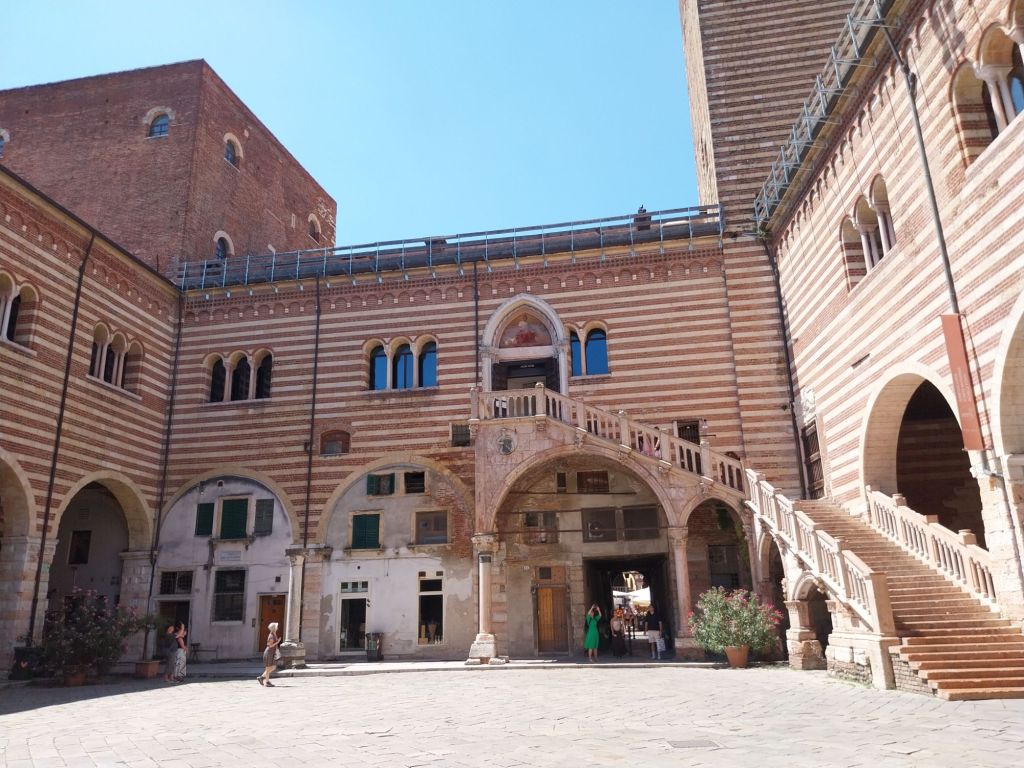
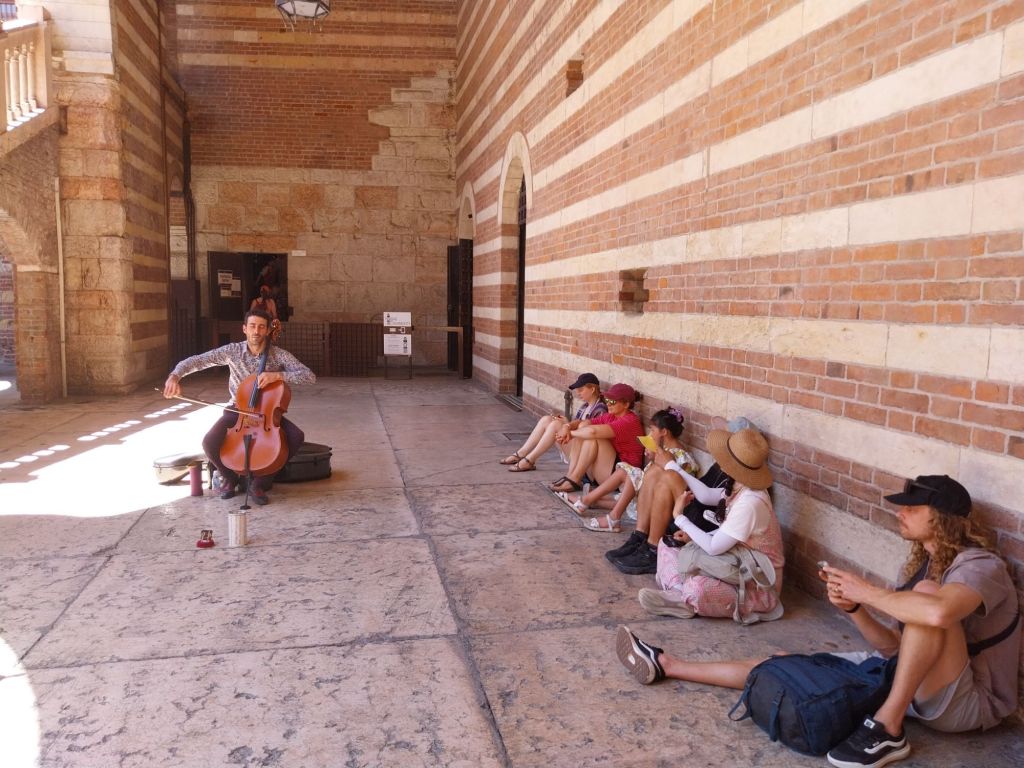
Just around the corner is the Courtyard of the Old Market, housing the Palazzo Ragione. Constructed in the 1100s, it was originally the offices of the local commune and one housed the magistrates’s court – the name translating to “Palace of Reason”. Today it houses an art gallery and the adjoining Lombardy Tower. Again, you can pay to get in, or alternatively just take in the beauty of the building below, which today has the accompaniment of a rather fine cellist, serenading the sun drenched visitors.
The nearby streets are among the more modern in Verona, with lots of big fashion and retail names along Via Giuseppe Mazzini. The marbled paving stones reflect today’s heat and although most visitors have prepared well with sun hats and sensible clothing, occasional beggars sit in the direct sunlight trying to scrape a few Euro together. Verona doesn’t have an obvious problem with homelessness or street crime, as least as far as the city centre goes. But it’s busy – and like anywhere else, it’s wise to keep valuables out of reach.
One of my rules with travel is to try and avoid the obvious overpriced paces. This evening, I make an exception. La Griglia on via Lioncino isn’t the cheapest place to eat. The initial menu prices – a fillet steak for €25 – seem reasonable enough. However, this being Italy, extras are added on without the option to say no. A bread basket acts as a cover charge, a bottle of water is offered at €4 a time. Add a beer and a side dish and there’s little change out of €50. On the other hand, the food and service are excellent, and this is the high season.
What’s more, I’m feeling a bit posh tonight, along wth a few thousand others. It’s time to head through the vomitoria.
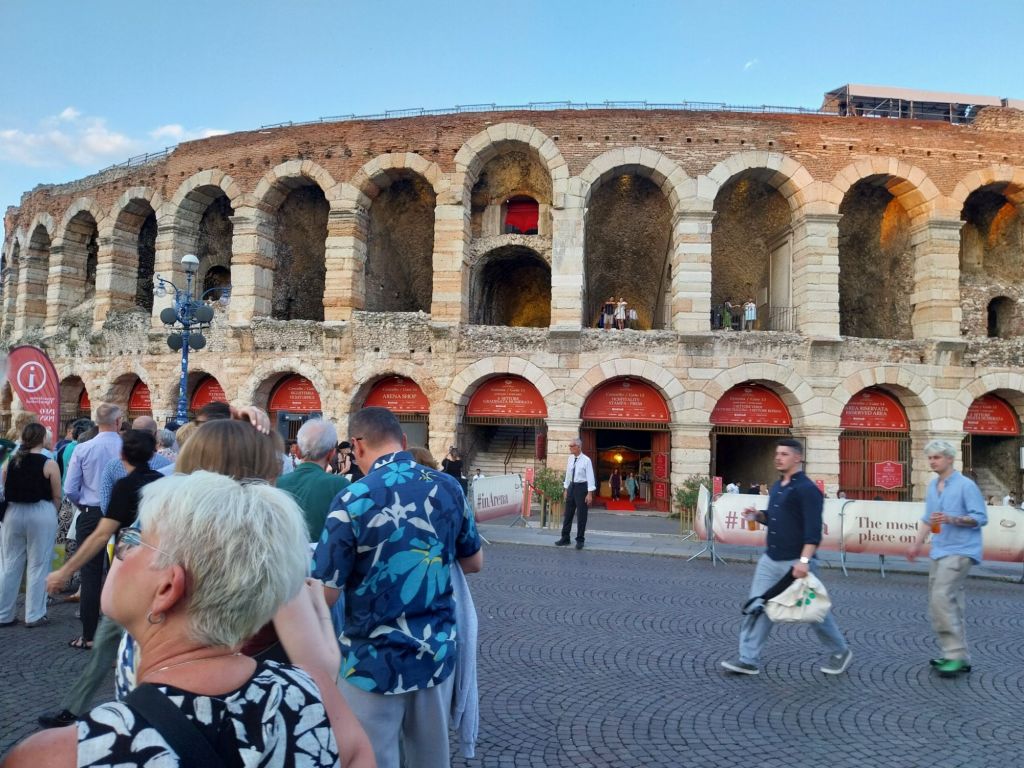
Culture under the stars
The queues to enter the Arena tonight are long. In the Piazza Bra, hawkers sell fans and – importantly – cushions. The dress code is casual, but shorts and vests are banned. Some have paid over €300 for a place in the stalls. The cheapest seats are €35, but I would argue they offer the best views. There is also a welcome light breeze with temperatures still in the high twenties.
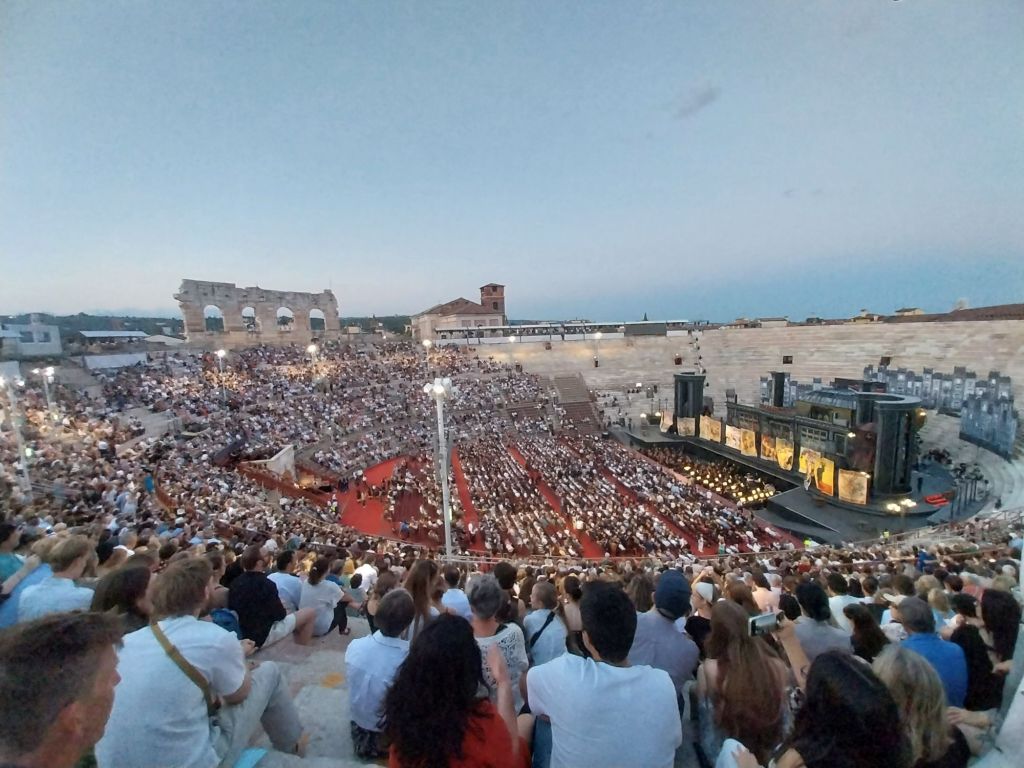
This is Verona’s Opera Festival. Over a hundred years old, there are performances throughout the summer. My seat is in the Gods; the only thing any higher is the lighting rig. And the whole thing is amazing.
Tonight’s performance is Verdi’s La Traviata. I have little previous knowledge of the production but once it starts there are a few familiar tunes. As darkness falls, the stage takes on a new identity; the lighting appears softer, the characters sharper, the singing and the orchestra louder. It may be in the open air, but those who designed the Arena did so with acoustics in mind. The performance doesn’t start until 9pm and – with two intervals – is over three hours long. That may be a bit too much for some people, but the warm temperatures and clear skies make it a night to remember.
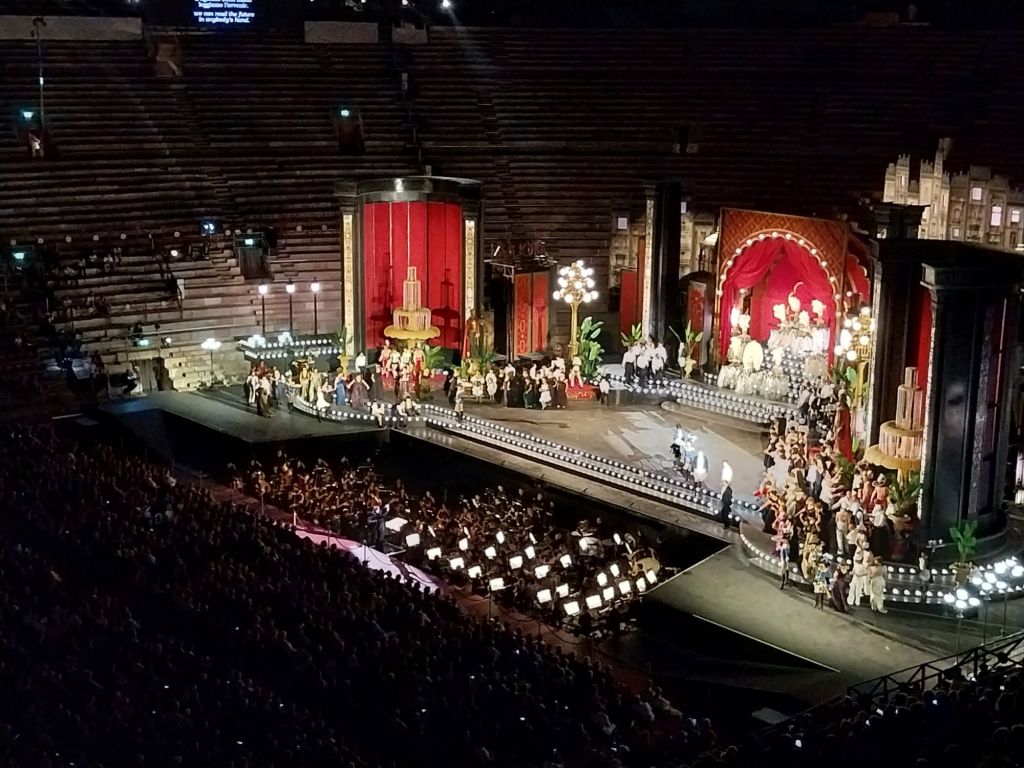
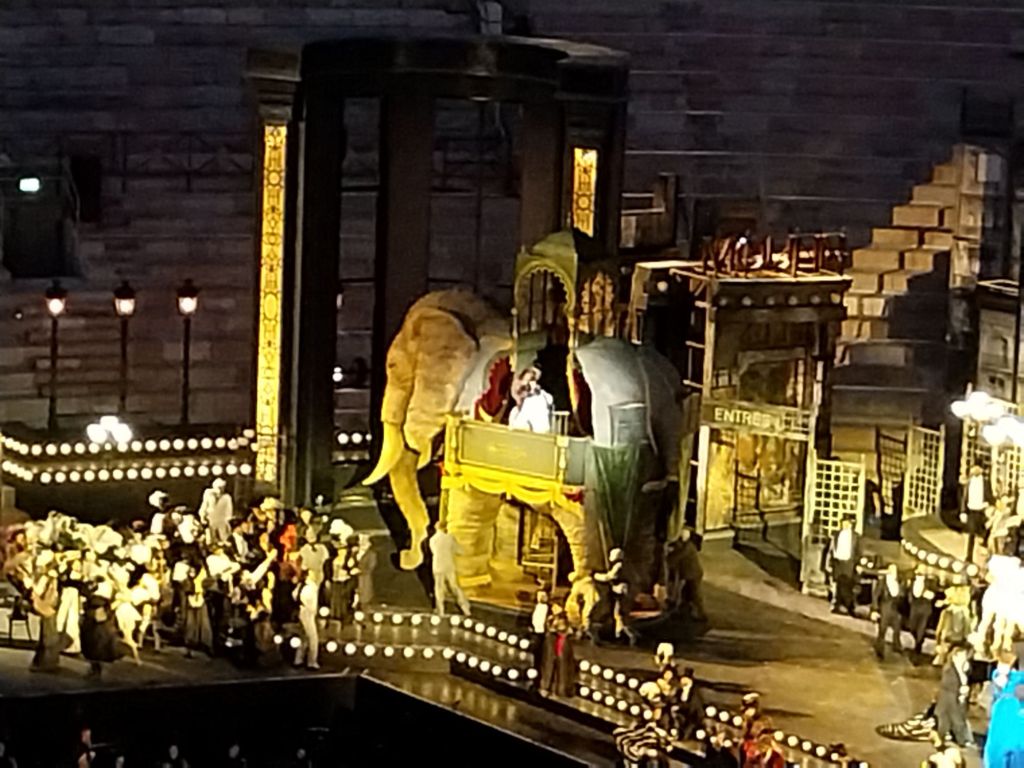
Perhaps the most spectacular thing about the Opera Festival is what you don’t see. Before the show, a steady stream of mostly young people strolled through the streets carrying instruments. Among the crowds of visitors in the restaurants will have been members of the cast – at least a hundred as far as I could see. And because this is a festival, there is more than one production; outside the Arena are some of the sets and constructions of the other shows, ready to be hauled into place.
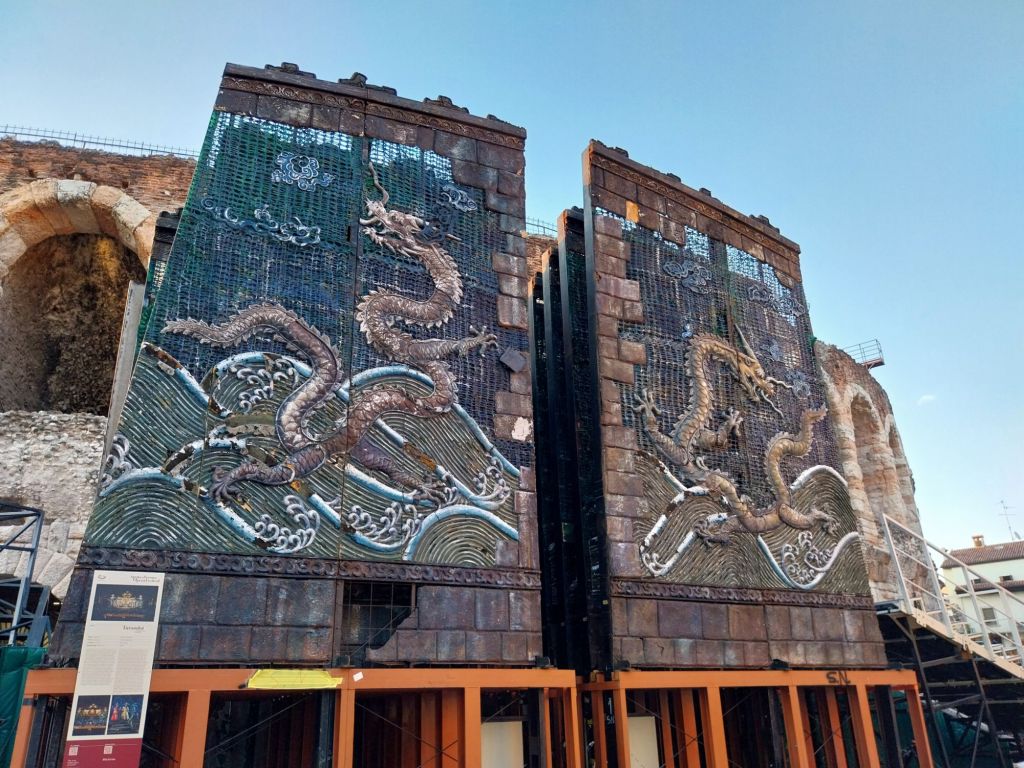
I’ve also been incredibly lucky; two nights later I’m in a bar where scores of soaking people come in when the Opera is cancelled because of a massive thunderstorm. As the performance had started, there would be no refunds.
Drink with the locals
The Arena is situated in the Piazza Bra, Verona’s city centre. Taraffic here and beyond is restricted, though that doesn’t mean you won’t risk being run over by a passing scooter or rubbish collection truck. The piazza is full of touristy restaurants, seemingly offering much the same menu.
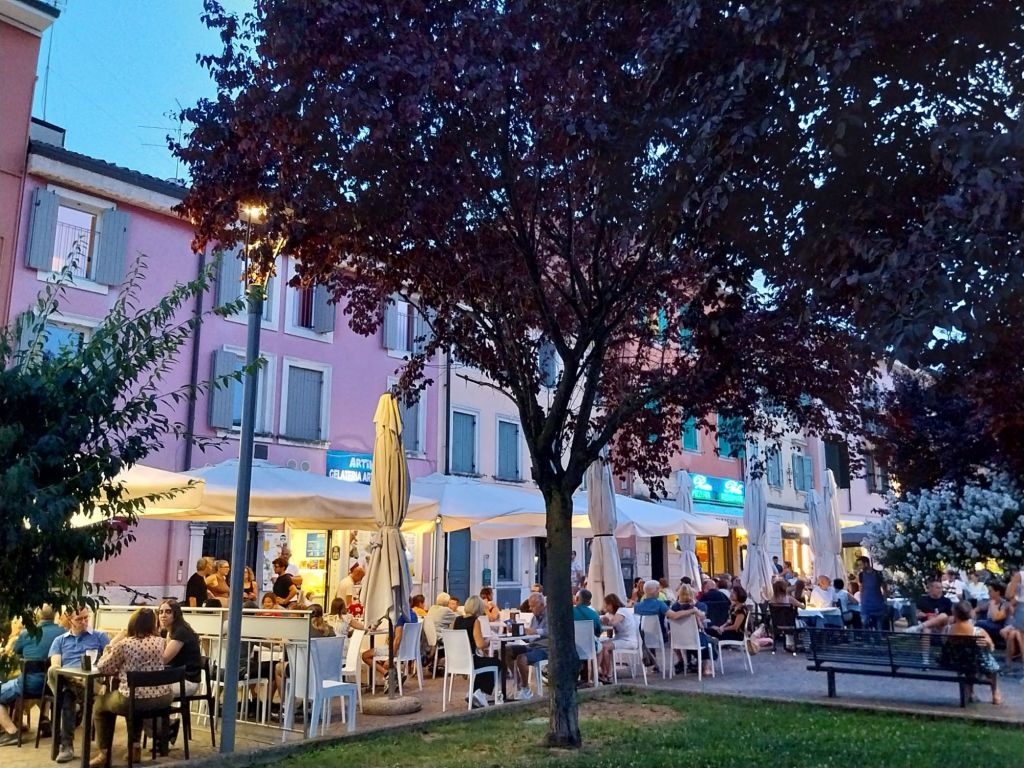
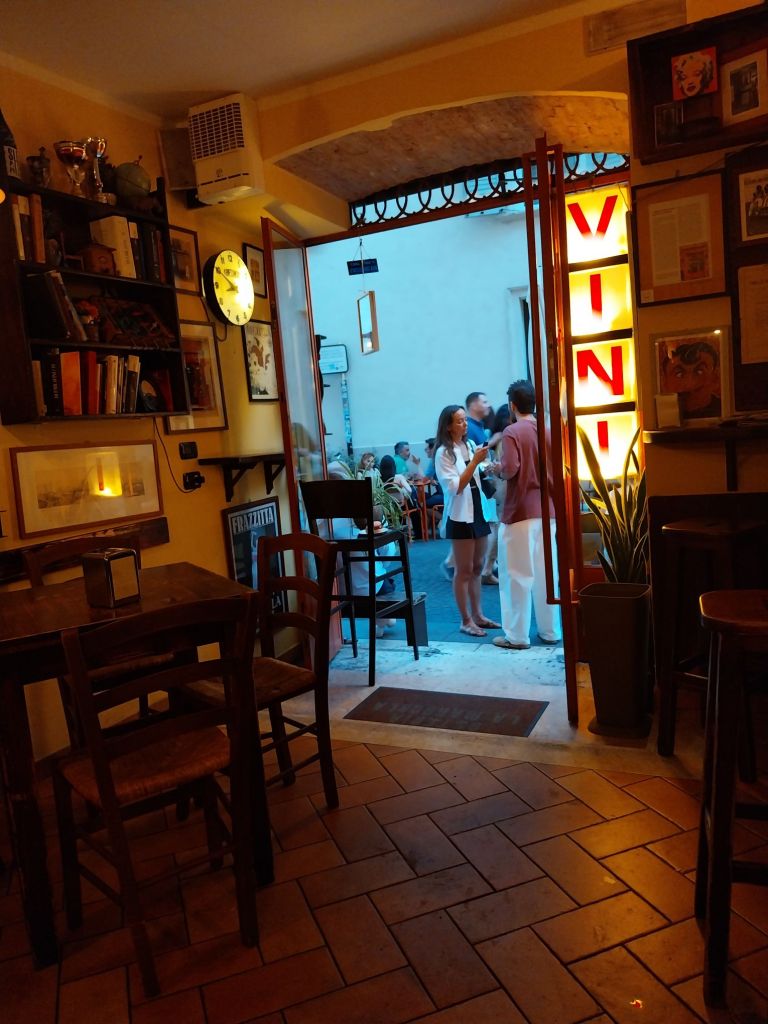
To escape the crowds, a better evening option is San Zeno, a neighbourhood west of the centre. You can get here by bus or a pleasant 20 minute walk along the banks of the Adige. On a Friday evening in summer, this is the place where locals gather on a pretty piazza overlooked by the imposing church. There are around ten bars, bistros and gelato shops, all offering refreshments at around 30% less than you’d pay near the Arena. One of the best places for people watching is Oste 33 which features friendly service and small plates and – bizarrely – Cisk lager from Malta on tap.
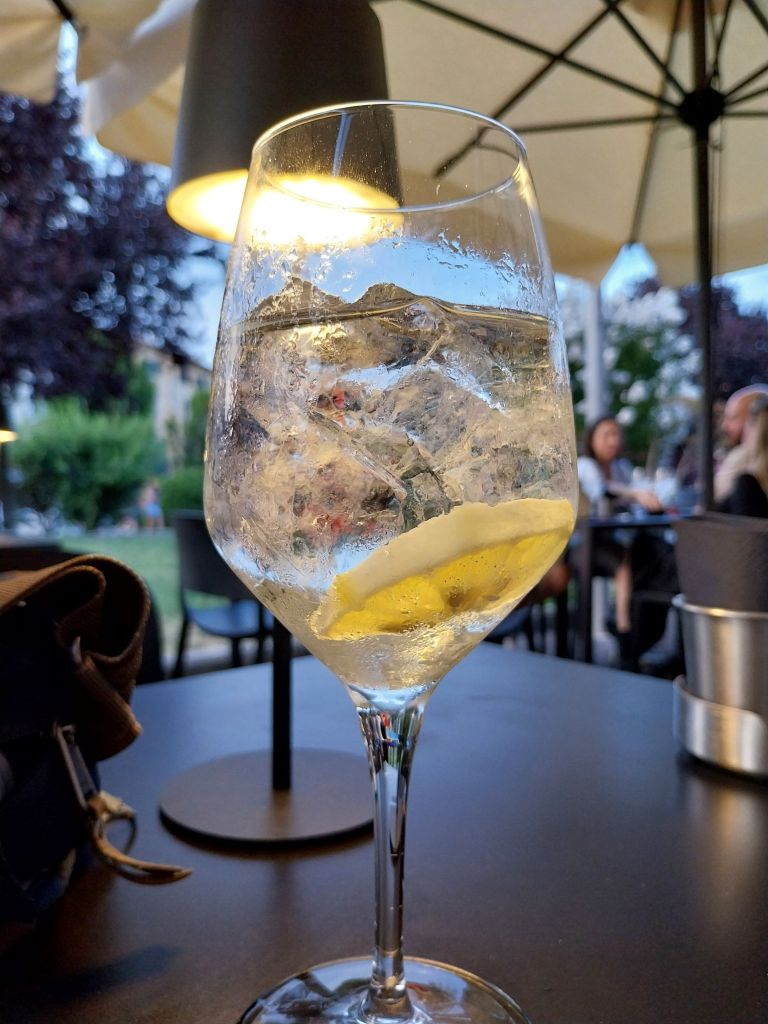
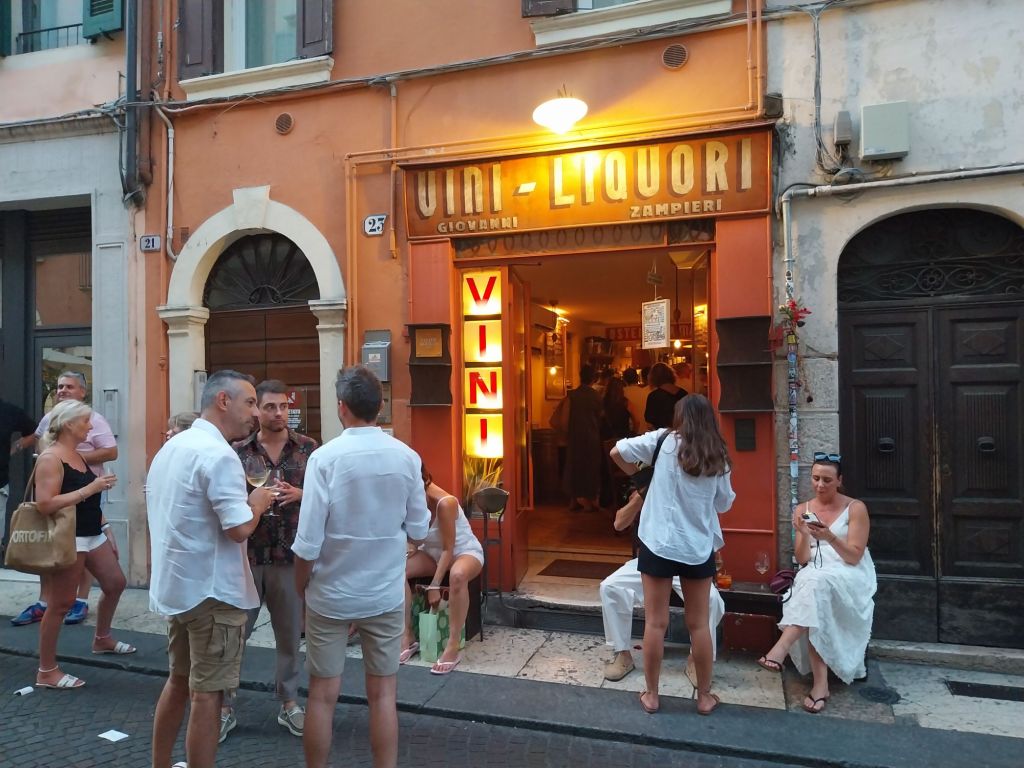
There are one or two exceptional places in the centre of Verona which are also popular with locals and visitors alike. Osteria la Mandorla has an amazing selection of local wines and the Mandorla liquor. There are also excellent small snacks giving the place a tapas feel. Like many Italian osterias it opens for lunch and evenings only, being closed in the afternoon. So be prepared to queue to bag the best seats.
Verona demands 2-3 days of attention, but it’s also a great base for exploring the wider region. From here my trip will take me to Lake Garda – but you could easily get to Venice in a couple of hours or head south to Pisa and Rome,
TravelCaster Tips
Getting here : Verona’s regional airport is served by multiple airlines right across Europe throughout the year. Travel time from the UK is around 2 hours. Skyscanner is a good website to star your planing. It’s possible to get here by train in about a day and a half from London, using Eurostar and SNCF or Trenitala services from Paris to Milan, staying overnight and moving on to Verona the next day. Check the website of each train operator or book all your tickets via Rail Europe.
Orientation : The city is around 7km east of the airport, with a travel time on a bus of just 15 minutes. You’ll arrive at the southern end of the city at Porta Nuova station. Take a connecting bus to Piazza Bra (many services pass that way) or walk for around 20 minutes, A walk south to north takes about an hour, though you’ll be stopping at sights along the way,
Public Transport : The main bus station is at Porta Nuova where services run right across Verona and into surrounding districts including Lake Garda. Download the app from bus operator ATV to plan your journey and buy tickets. A 24 hour pass costs €11, while a one way trip from the airport is €7. There are some late night buses from Piazza Bra, though many evening services wind up before 2100. If you are feeling brave, there are hire scooters from Lime (which you can unlick voa Uber) and Dott.
Food and drink : This is Italy so you will be spoiled for choice. Find a cheap pavement cafe and enjoy a gelato or a coffee for less than €5. Most restaurants in the city centre have main courses from €15 upwards, though we would recommend avoiding those directly around Piazza Bra and Piazza Signori, where prices are inflated and extras are often added on to the final bill. A spritz and a sandwich in the pleasant surroundings of San Zeno is much cheaper, coming on at around €7.
© 2026 Kevin Stanley/TravelCaster
 TravelCaster
Leave a comment