
Stockholm’s central station is a vast complex, combining international, national and suburban trains with the city’s Metro. And, if arriving here for the first time, it’s worth noting there ae many different entrances and exits. All point towards the Centralum, but each can leave you in an timely different place.
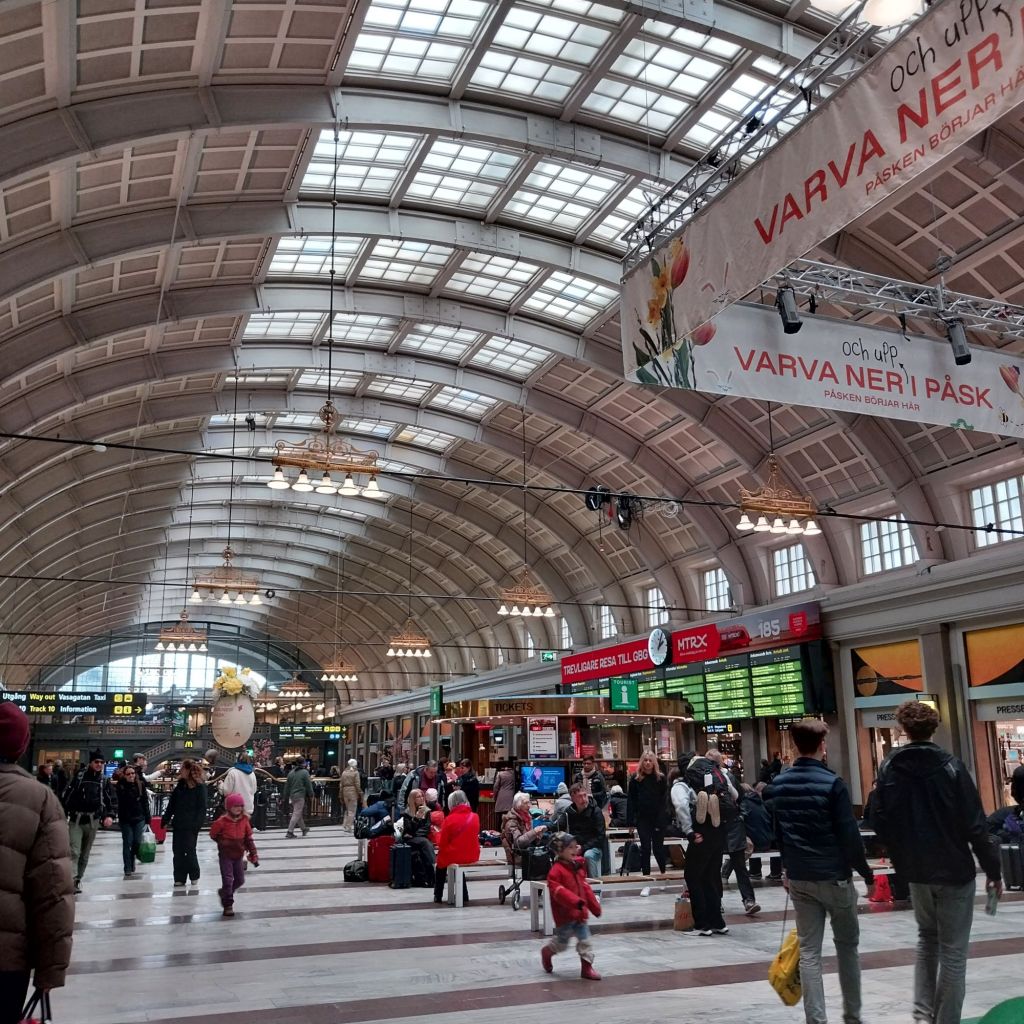
The striking main hall provides some orientation, and my first class rail pass also gives me access to the Swedish Railways lounge. Free food and soft drinks are on offer, though the staff look upon many people arriving with a sense of disdain. I’d come here yesterday to check my train to Oslo was definitely running, only to be turned away and told to go to the Tourist Infoormation counter. They had no idea, and directed me instead to the SJ staff who wander around the hall.
So after that welcome I made sure I arrived in plenty of time, two hours before departure, so I could metaphorically soil their posh surroundings with my scruffy bags.
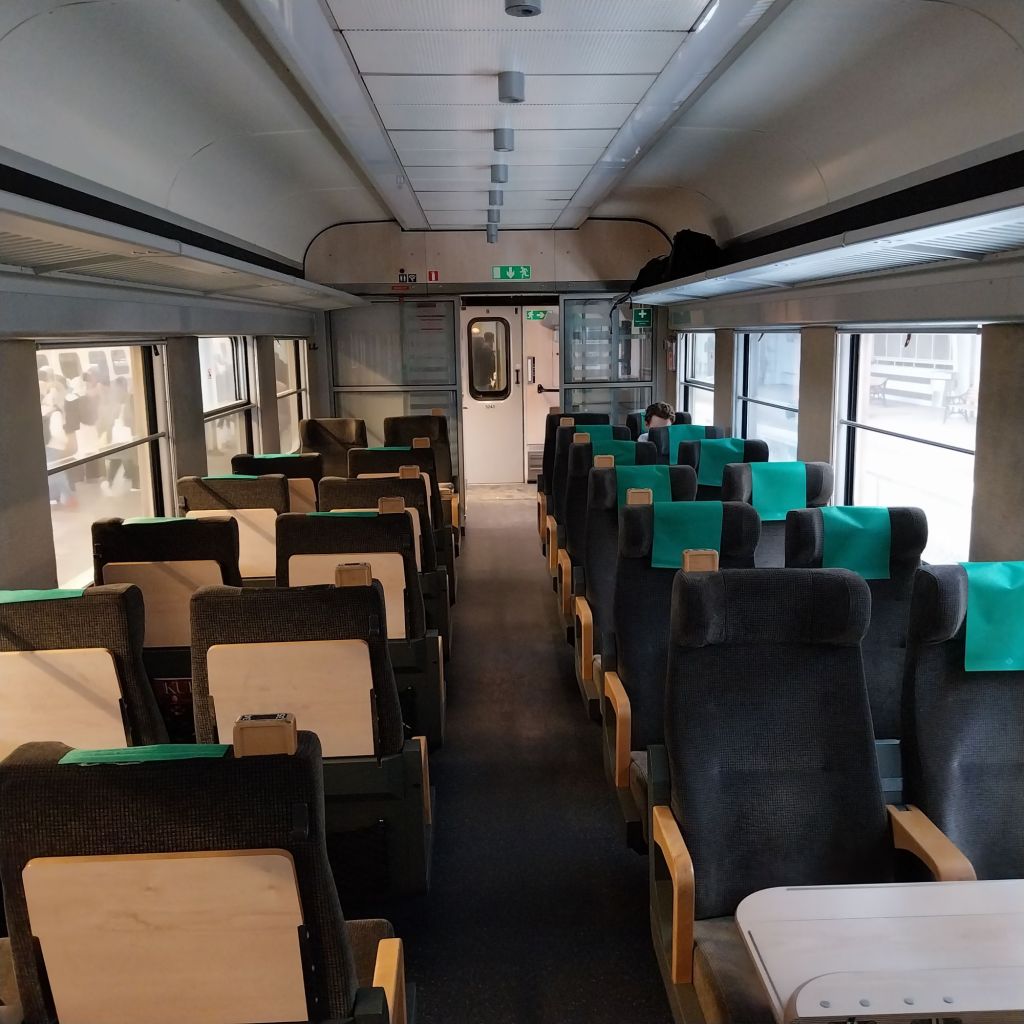
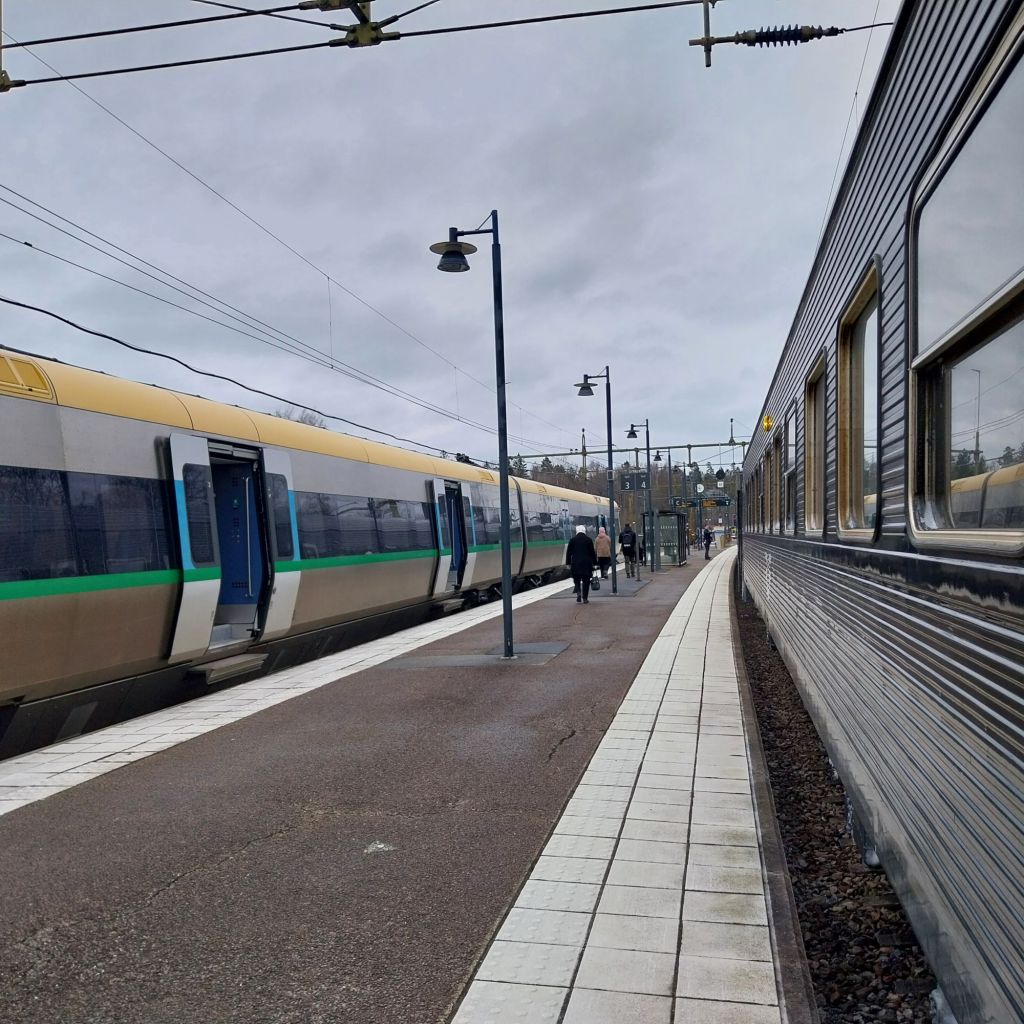
Trains run from Stockholm, Sweden to Oslo, Norway around six times each day, and I’ve opted to take an afternoon service to connect with the night train to Bergen. The Inter City trains are fast enough – running at up to 190 km per hour, though they’re a little dated. They were built in the 1980s and are still going today. However, the wide seats in First Class are comfortable with enough leg room for the tallest of people, arranged in a 2:1 formation.
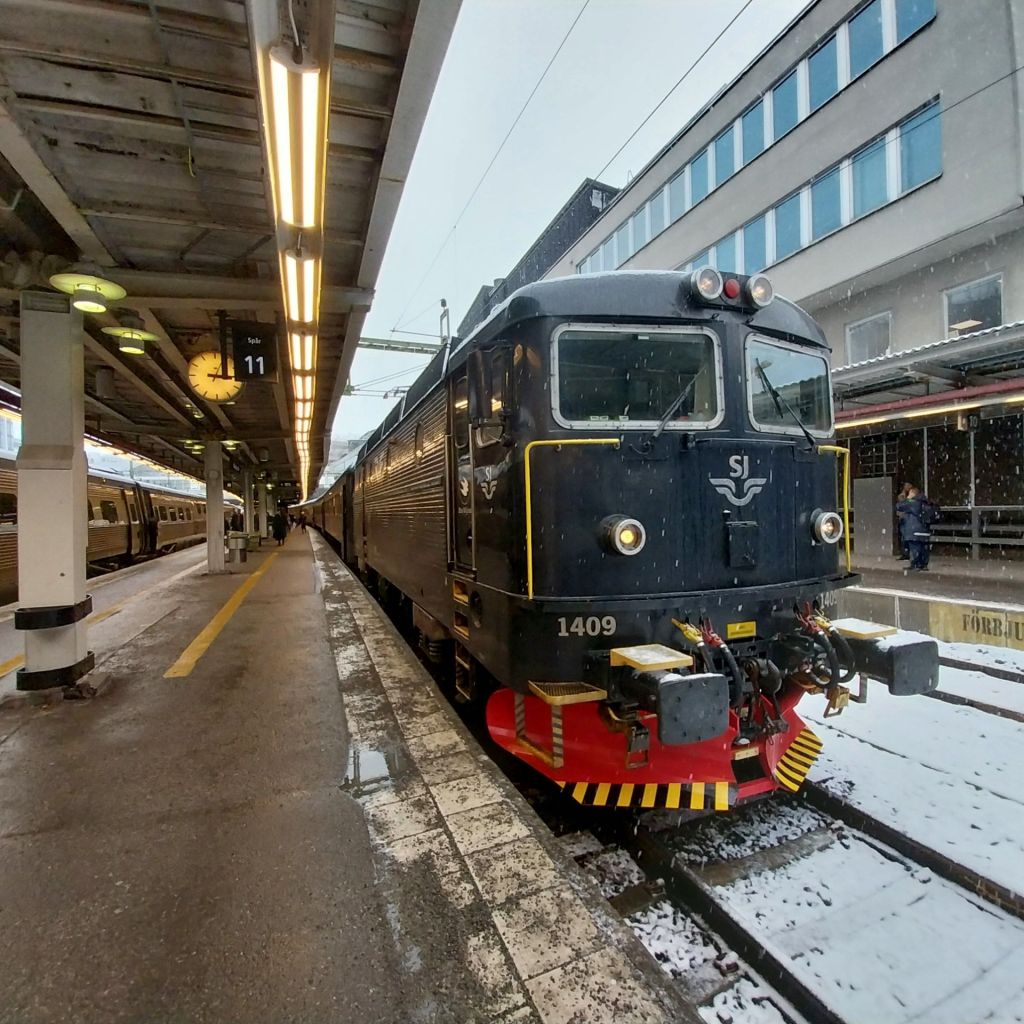
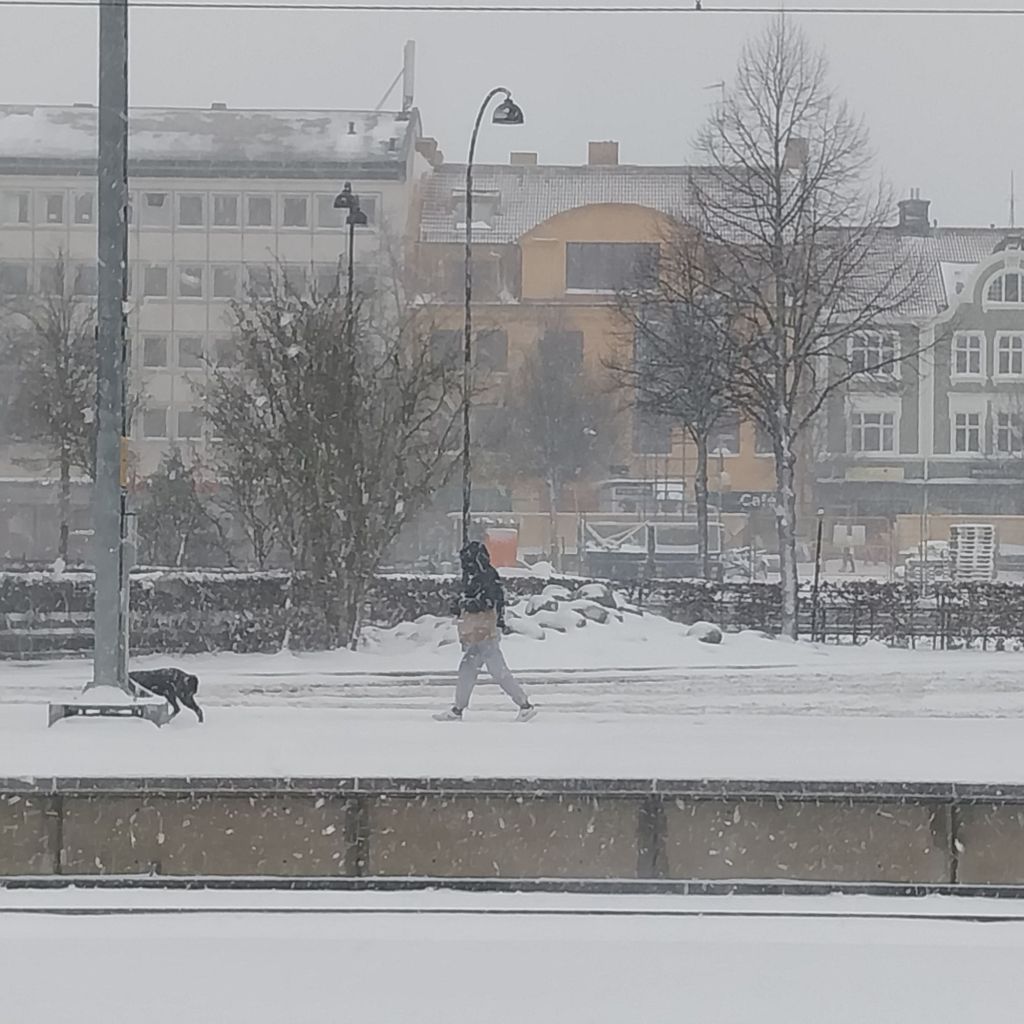
The snow on Stockholm continues as we head west across the Swedish countryside. The views aren’t the best, being a little obscured by the snow itself – but the land opens into a classic Nordic scene of pine trees and lakes. The train makes occasional stops at towns along the route, with just a handful of passengers joining or – more likely – leaving.
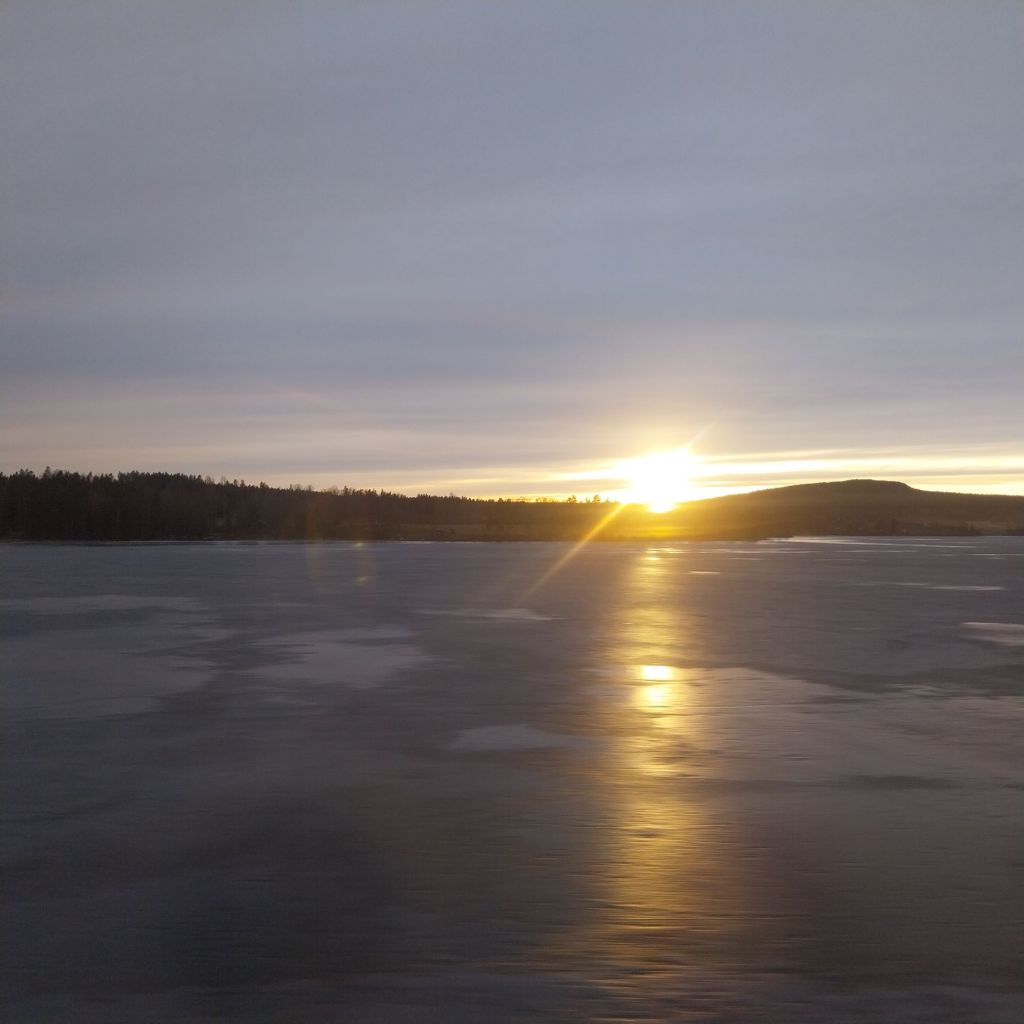
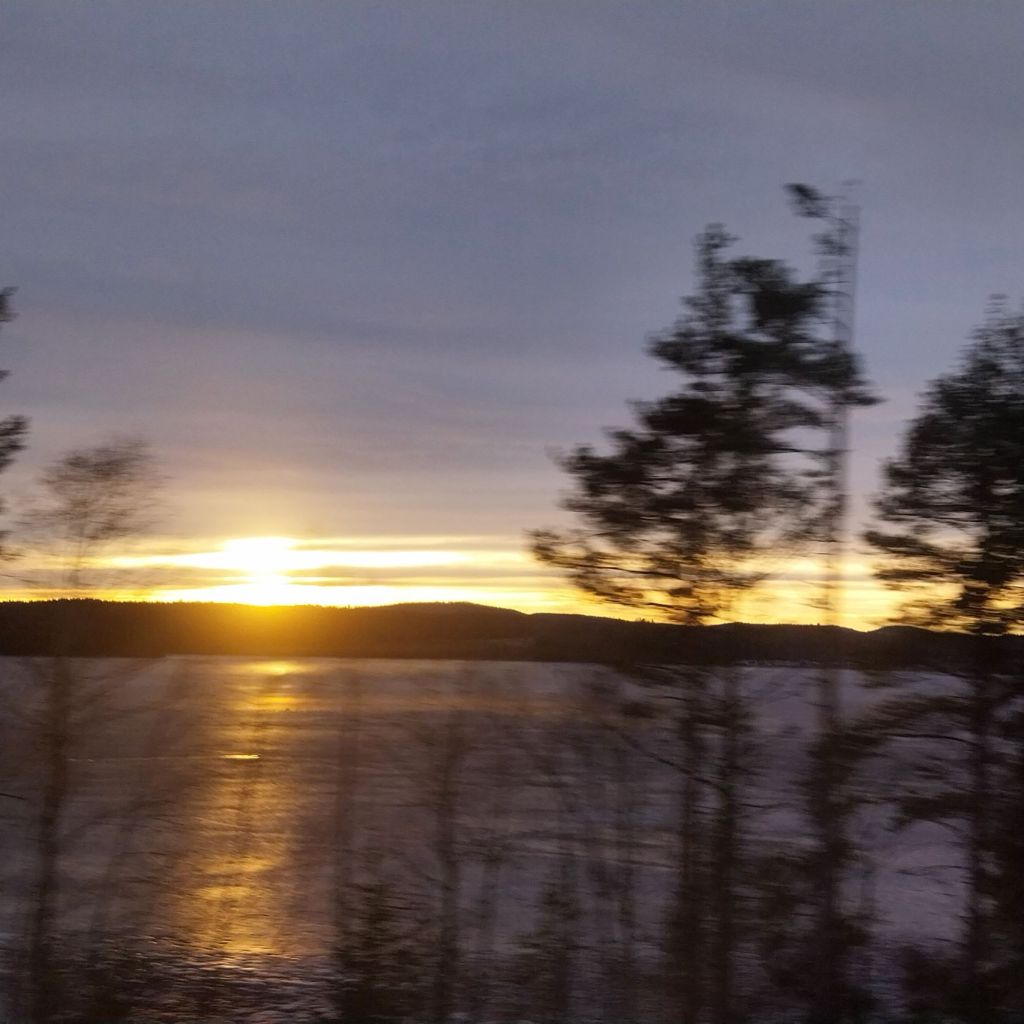
As we approach the border with Norway, the trail line hugs dozens of lakes and small fjords. The earlier grey skies have cleared, giving way to a chilly evening and a spectacular sunset.
It’s 9.30pm by the time we reach Oslo Sentral station, and as I walk towards the end of the platform something different happens. A woman from customs stops and asks what I’m doing in Norway and how long I’m staying. Having shown her my passport and rail app I’m just about to walk on when a second man from customs stops me and asks me even more questions about wher I will be staying, who I’ll be seeing and what sights I intend to visit. It’s a little unnerving – and more like the kind of interrogation you’s get at an airport. But this is an international arrival – it’s just never happened to me on a rail trip before.
And so to the night train to Bergen. This route is described as one of those most scenic in the world, but I intend to see plenty of it on the way back. Travelling overnight seems a sensible choice. My rail pass buys the ticket, but a single occupancy cabin costs around 100 Euro. But , like the ferry from Tallinn, this would combine my journey with my accommodation. Unlike the ferry, the cabin was a little more compact.
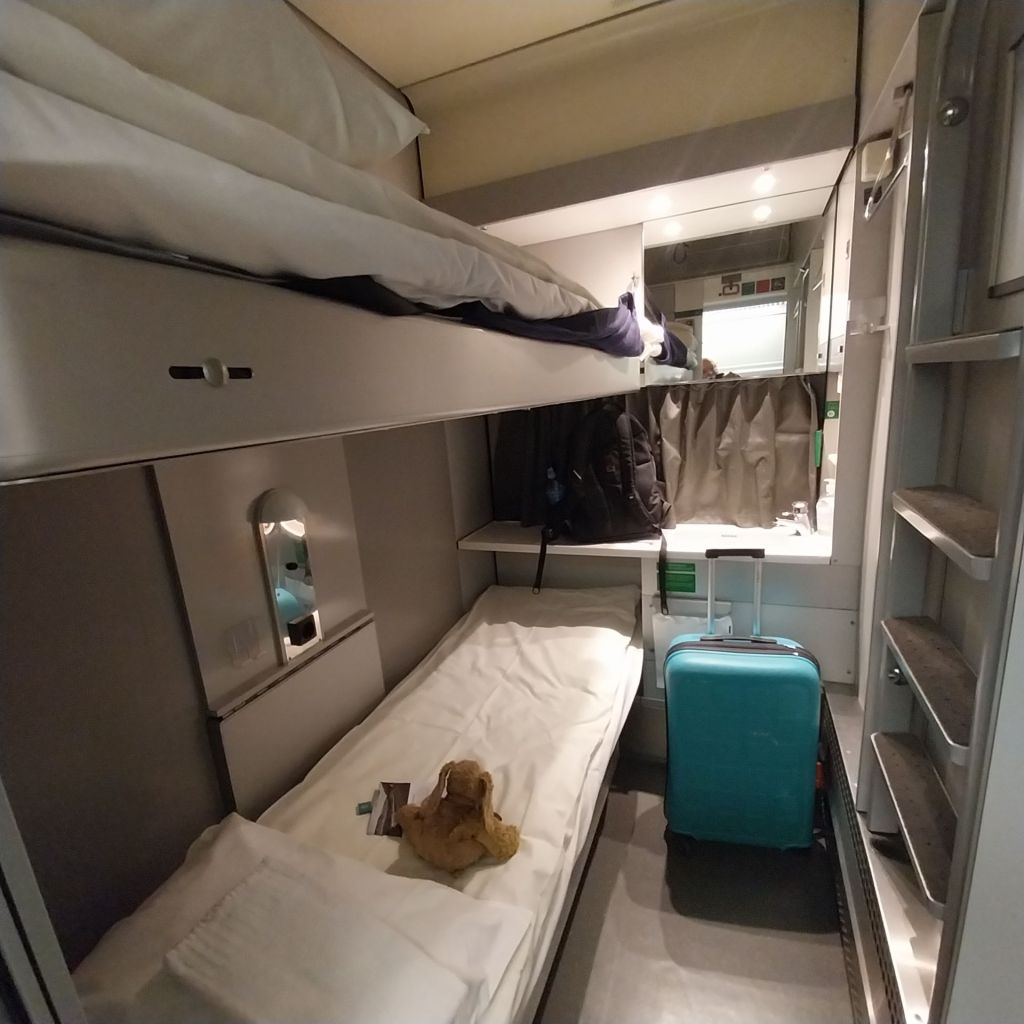
There is storage space for luggage above the door, but I can’t be bothered trying to carry it up using the ladder to the right. I suppose I could have dumped the case on the top bunk. However, it’s late and I’m tired. Ready to be lulled to sleep by the gently rocking of a moving train.
I quickly discover that this romantic image is pure fantasy. The train does, indeed, rock. Quite a bit. Being one of the most scenic lines in the world means it curves quite a bit. Then there are the remote, silent stations the service stops at every so often. A good night’s sleep is not had.
24 Hours in Bergen
I had sensibly gambled on the early arrival by contacting my hotel and asking for an early check in. This added a further 25 Euro onto the bill but it was well worth it. Bergen Station was deserted at 6.30am, apart from the passengers that had come on the night train. But it’s a compact city, and already looked promising on the 10 minute walk to the city centre.
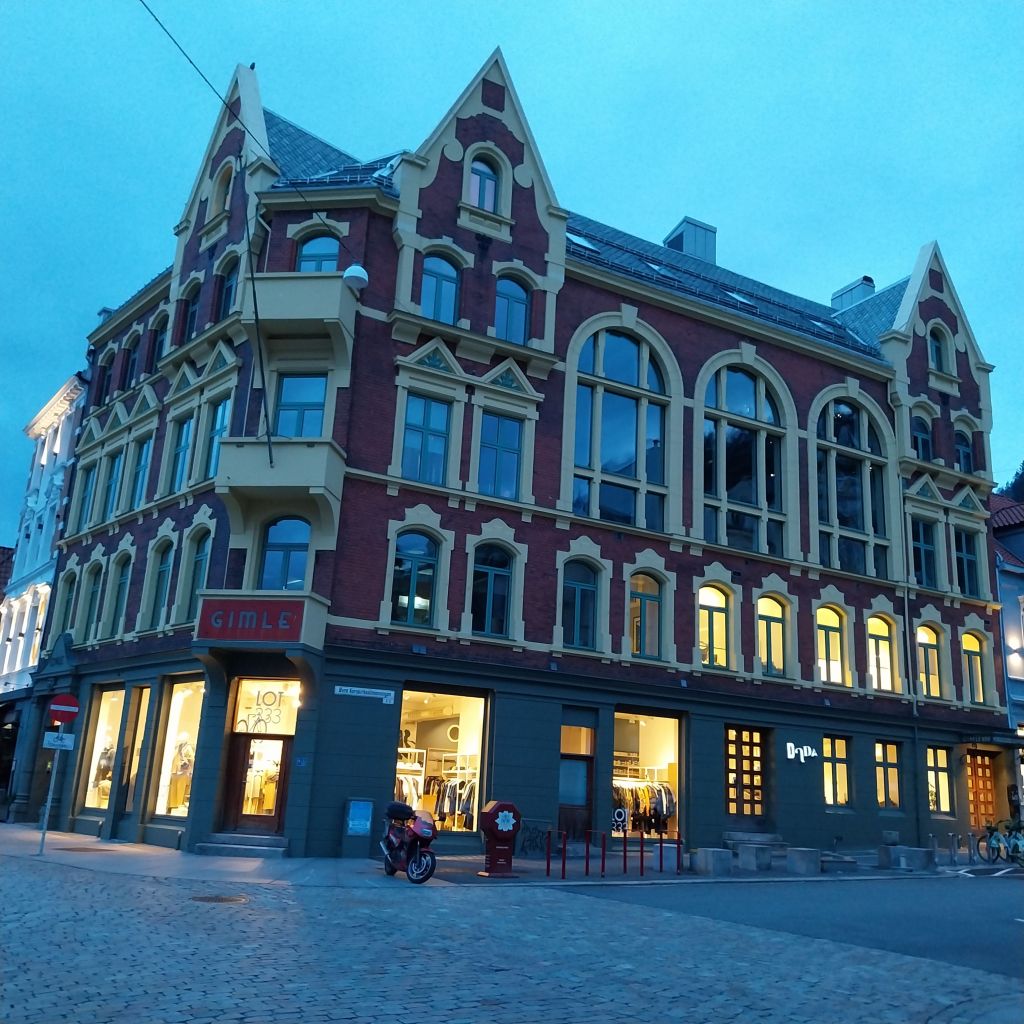
There’s initial confusion as I arrive at the optimistically named Magic Hotel. My key doesn’t open the room, and the receptionist reissues the key only for the same thing to happen again. It turns out that nobody told the electronic locks that the clocks had gone forward last weekend, and so the lock thought I was the wrong guest. It’s soon fixed, and with rain forecast later in the day, it’s time to immediately explore the city from above.
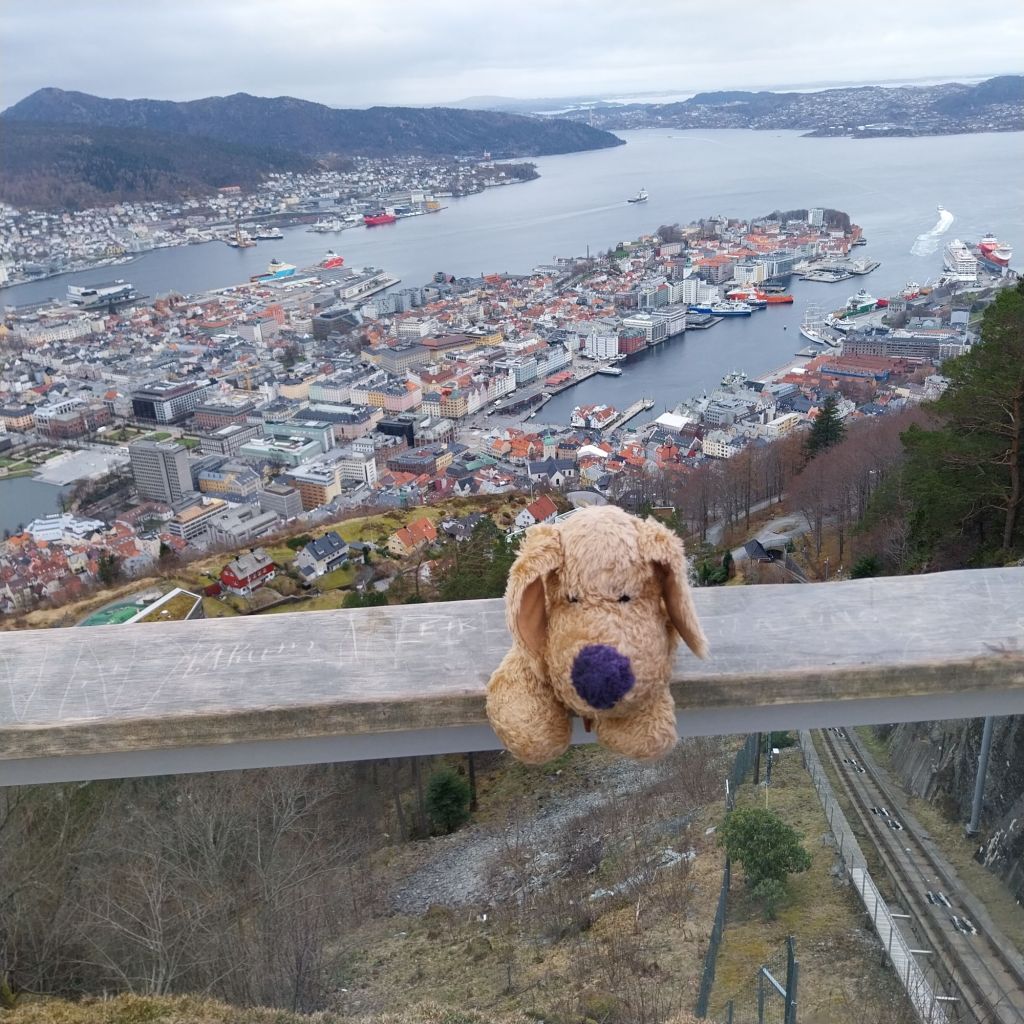
Floyen Mountain is arguably Bergen’s biggest attraction. Skiiing, hiking, climbing, hotels and restaurants are all on offer. And helpfully there’s a funicular railway to get you to the top. A round trip ticket cost around 16 Euro, though you can buy a one way journey and walk back down – or, as the early morning commuters had done, buy a multi journey pass.
It’s easy to forget when travelling that people live and work in these places, and today’s passengers include a group of children attending a school at the top of Floyen. Once we disembark, I am the only tourist and get the viewing area to myself.
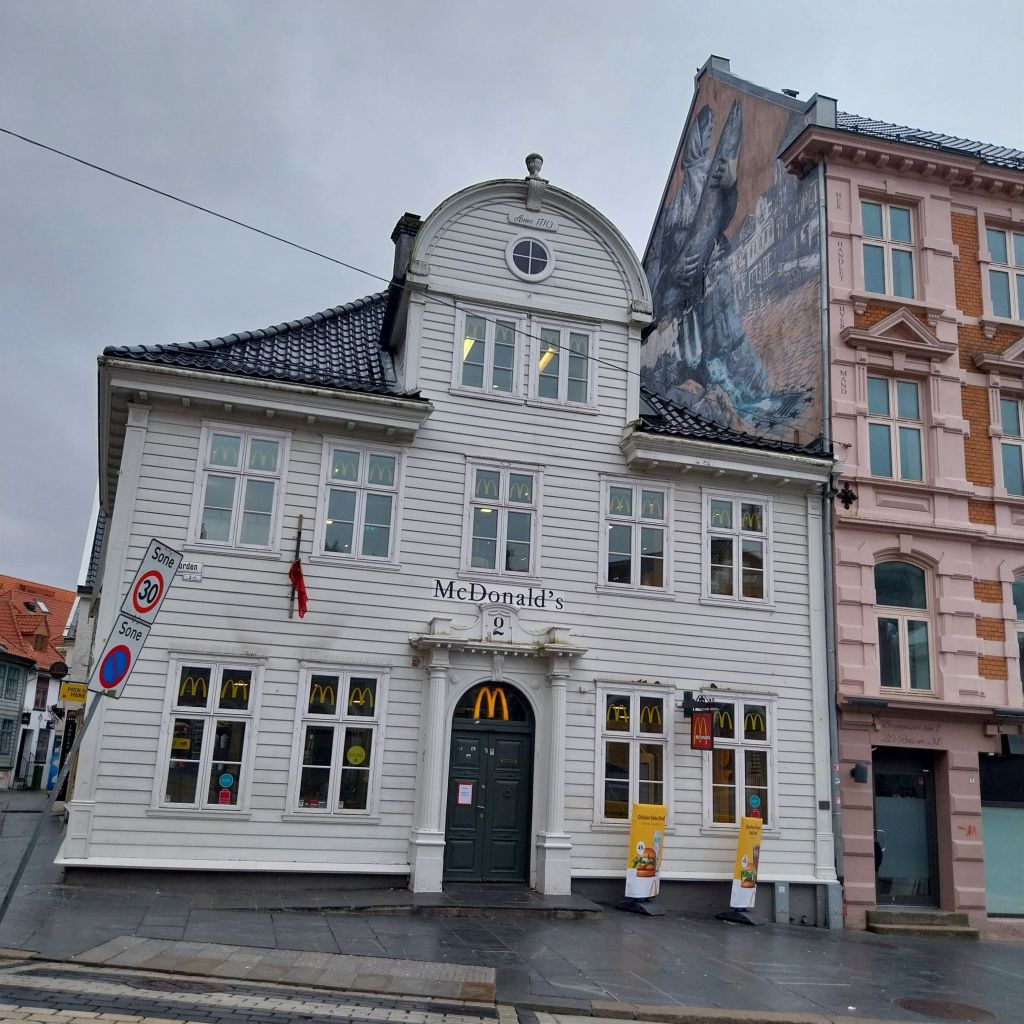
Bergen still hasn’t quite woken up as I descend back to the city. It strikes me as a very laid back place. Historic buildings are everywhere, and even the big names have to tone down their branding.
Bergen built its trade on the water, and in the harbour today are assorted merchant ships and a huge cruise liner. There’s also the stunning Statsraad Lehmkul, Norway’s oldest sailing ship. Built in 1914, it’s used today for public trips and educational purposes. A neighbouring restaurant ploughs its profits into the ship’s upkeep.
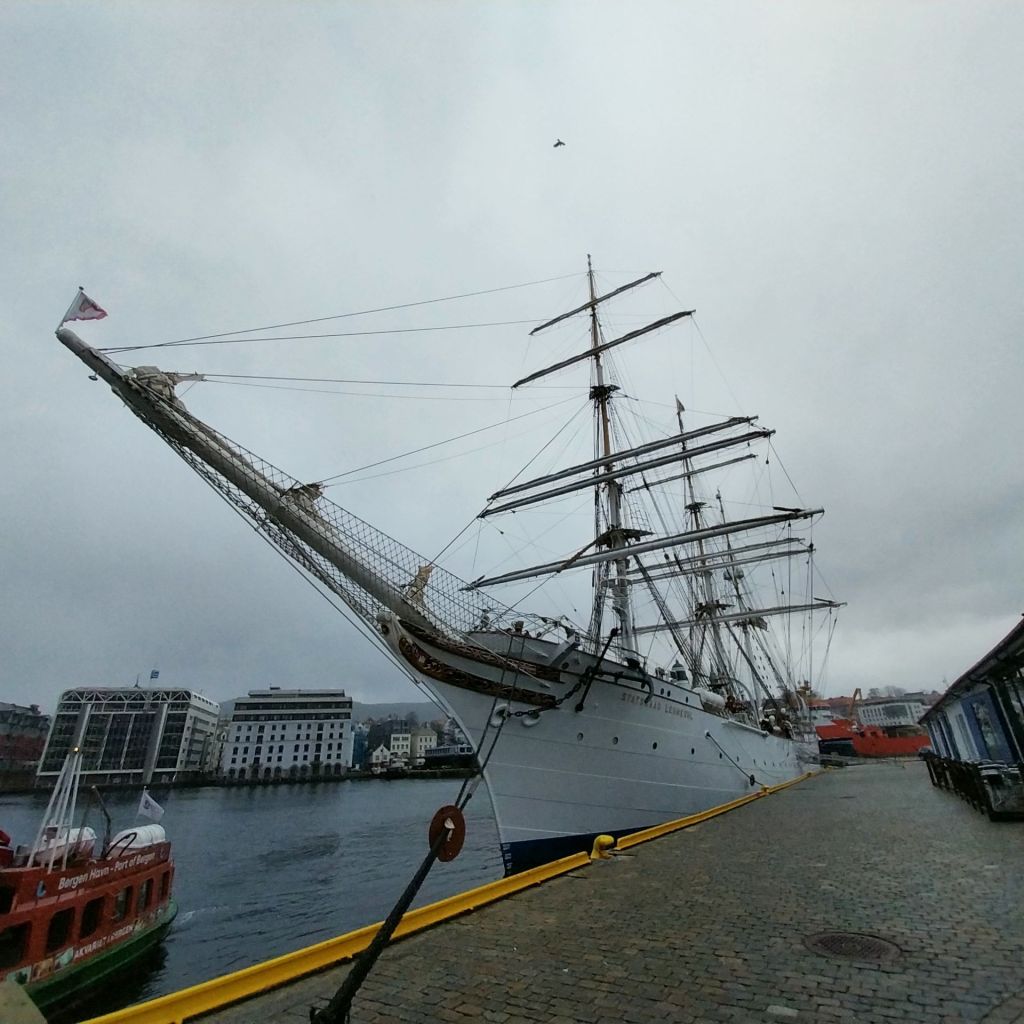
Directly next to the huge ship is one of Bergen’s smallest, yet important, vessels. The Beffen Ferry has been carrying people across the harbour since the 1880s, and is a great way to see the working port close up. A single crossing is just 2.5 Euro and takes around 10 minutes.
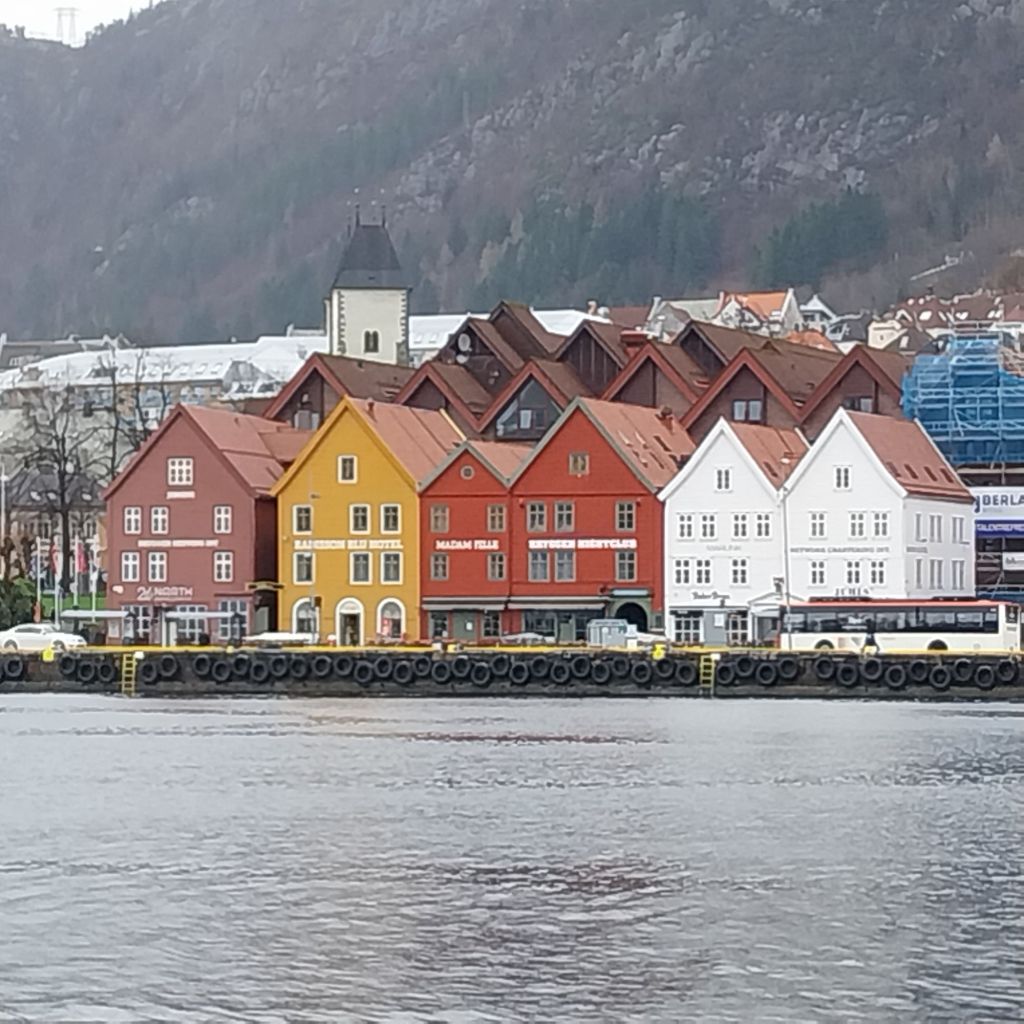
But before you make the crossing, step back and admire the historic Bryggen area. A UNESCO World Heritage site, the district was populated by German traders, the Hanseatic League, as early as 1350. Some 70 of the original buildings survive today, though over the years many other shave been reconstructed after a series of fires. It’s a pretty enough site, though today’s trade is very much centred on tourism. At the time of writing the Hanseatic Museum is closed for renovations, and is due to reopen in 2025.
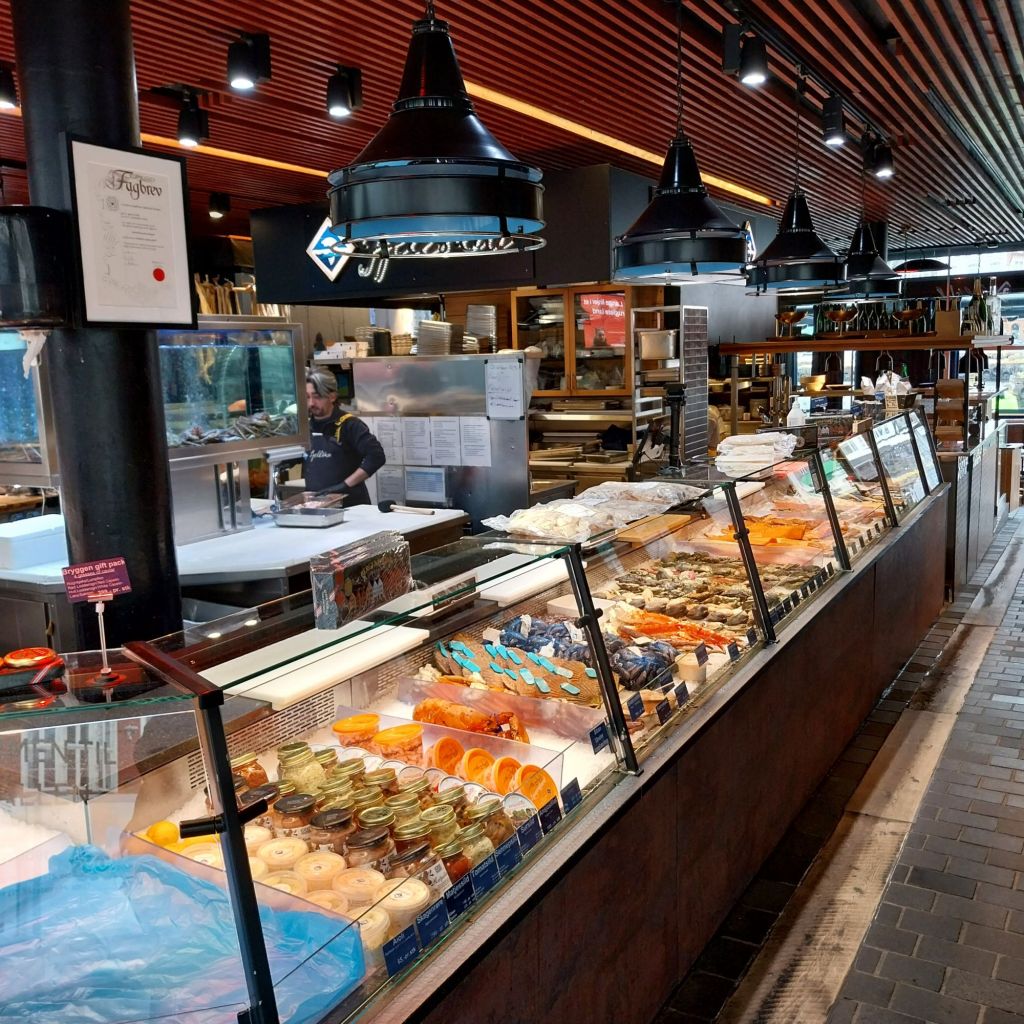
Having taken the ferry across the harbour, a short walk takes you back to the Fish Market. During the summer months all kinds of seafood – and flowers – are sold outdoors on the harbour side. But for the rest of the year you’ll have to make do with the indoor version – which seemed a little to sanitised for my liking. Public markets in other cities I’ve visited have a more raw, authentic feel to them. Perhaps it’s the Nordic way – everything must be clean, neat and organised.
Bergen’s “infamous drizzle” had returned in the early evening so it was time to take some cover. Just away from the main shopping streets, Nygardsgaten has a great selection of quirky, diverse and inclusive bars. One of the most unusual is Apollon Platebar, a drinking den that’ also a vinyl record store. There are almost as many beer taps as their are records, and the friendly staff are happy to recommend one according to your tastes.
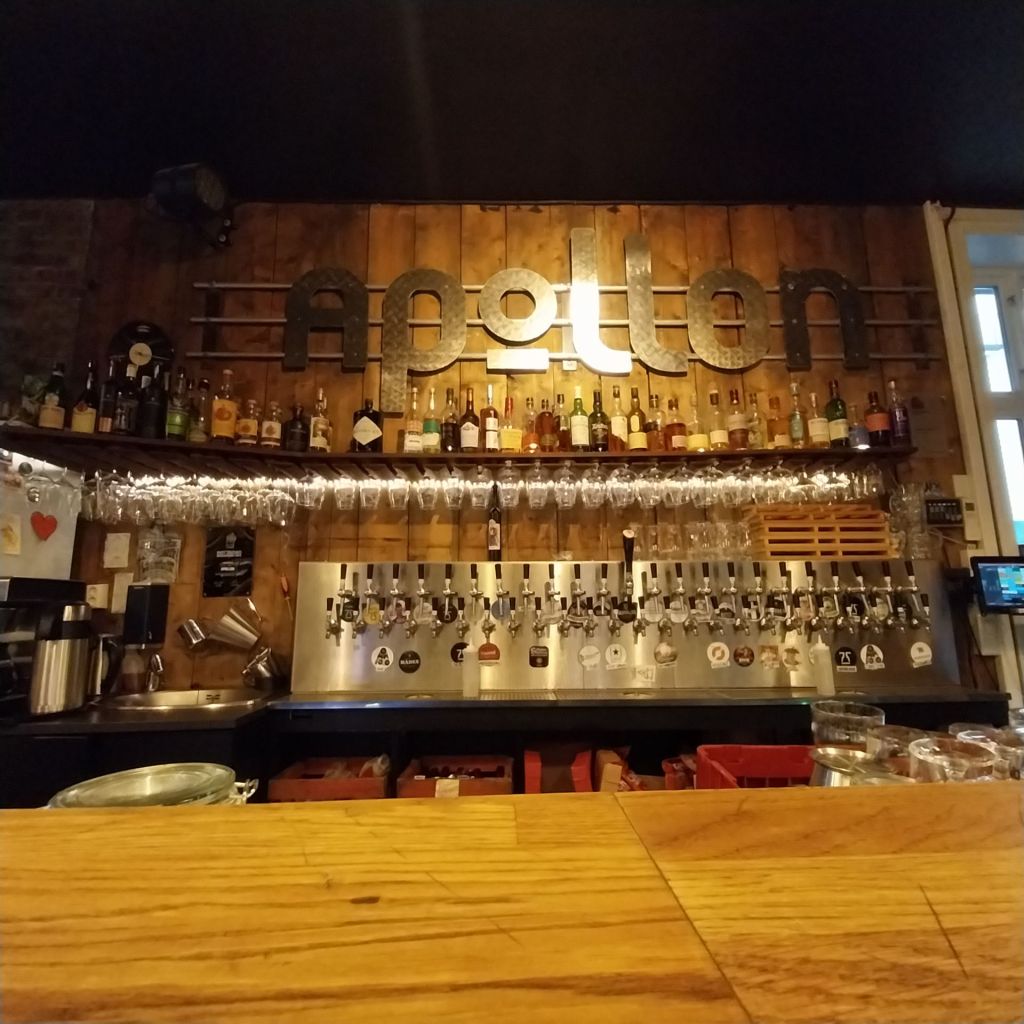
It’s fairly quiet as I arrive but soon fills up as a a local singer performs, launching her new record. I’d got a stool at the bar, and realised just what a good choice that had been – the place is packed with fans for the short acoustic gig. Apollon doesn’t have a monopoly on the theme either; as I leave I count at least three other vinyl bars. It seems hipster has become mainstream.
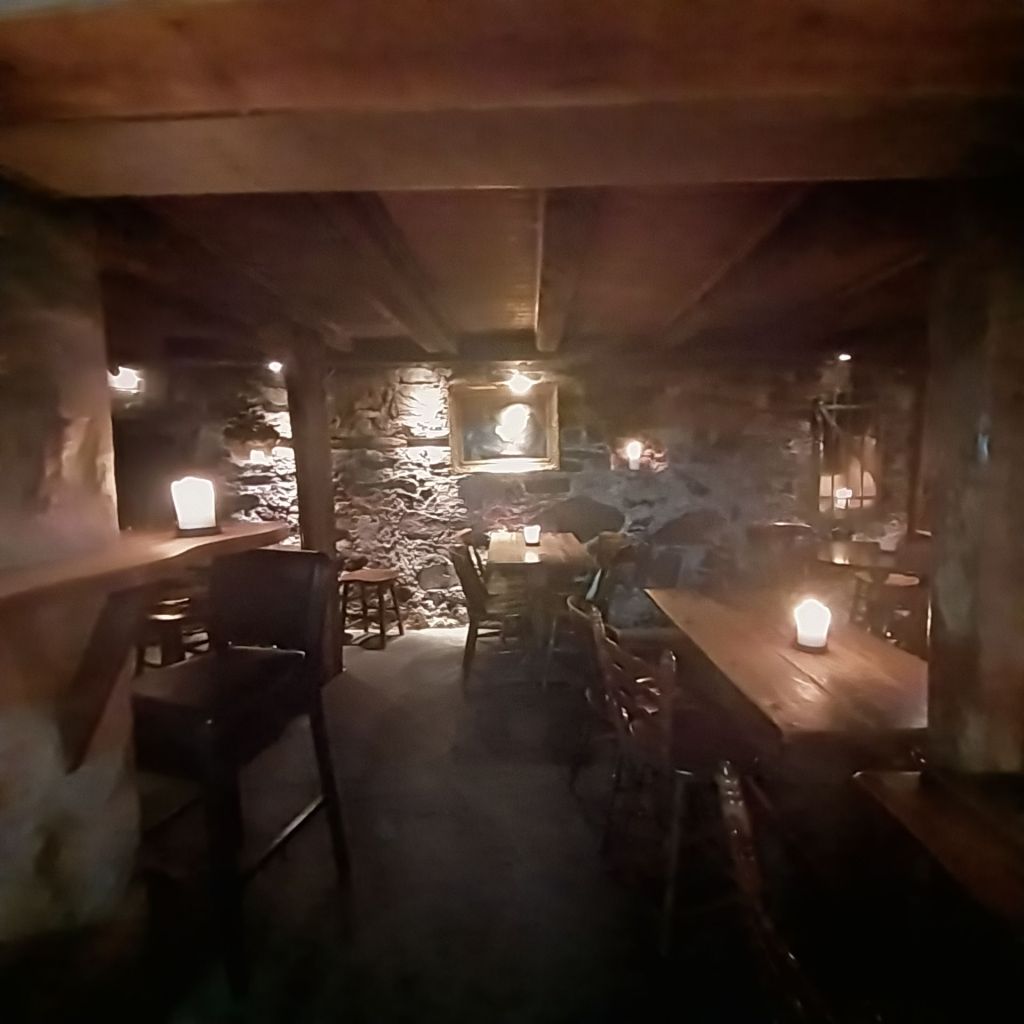
A more traditional hostelry can be found in the Old Town, a collection of narrow streets and allyways with a thousand years of history. At Dyvekes Vinkjeller, dark wooden panels and medieval caves await. The beer selection is smaller here – just two kinds of the local Hansa brew on offer, but the atmosphere is warm and inviting.
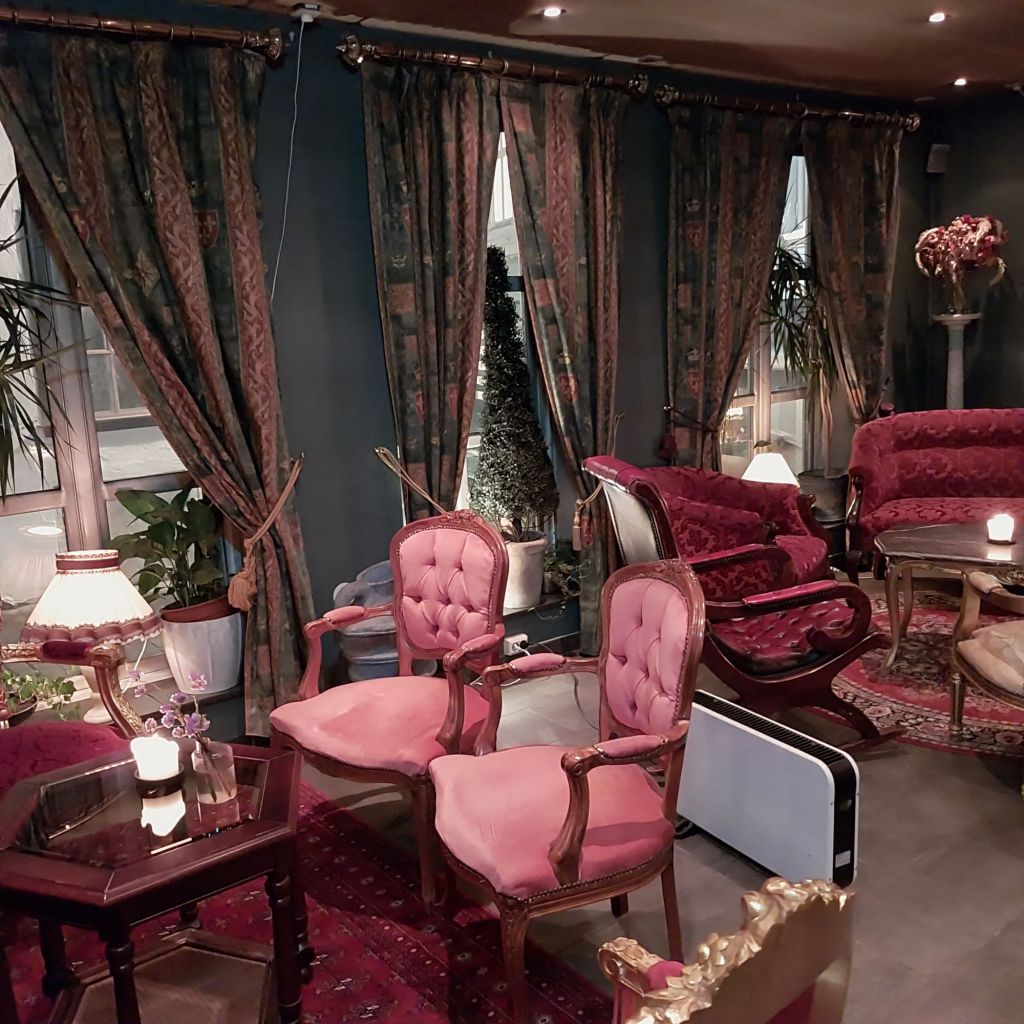
The story goes that Dyveke – the daughter of a merchant – became the mistress of Christian II of Denmark. They met in Bergen and moved to Oslo. But she died at the age of 27, reportedly by eating poisoned cherries. Dyveke’s mum, Sigbrit, then became Christian’s financial advisor. However, legend has it she was eventually burned at the stake, suspect of being a witch. It certainly gives the underground section of the bar a very different feel.
Bergen has proved to be a city that’s easy to get on with. Maritime history combined with mountains, leisure and hospitality give this place a laid back and welcoming feel, even as a chilly weather front threatens to bring heavy snow. I’ll find out just how much on the next leg of the journey to Oslo.
Getting here
By train : Slightly annoyingly, I needed to book reservations for each leg of the journey separately, firstly with SJ (Swedish Railways) for Stockholm to Oslo and then Entur (the booking portal for Norwegian state transport) for Oslo to Bergen. For the latter, reservations are compulsory.
Tip : If you’re on a tight budget, you can just book a seat for the night train, but I would strongly recommend a cabin. This is one of the most famous railway journeys in the world, so make sure you book well ahead. A single occupancy cabin came in at about 100 Euro, but think of it this way – it’s your transport and hotel rolled into one. It is technically possible to do the whole journey in a single day, but you’ll be starting very early and arriving very late.


Leave a Reply