
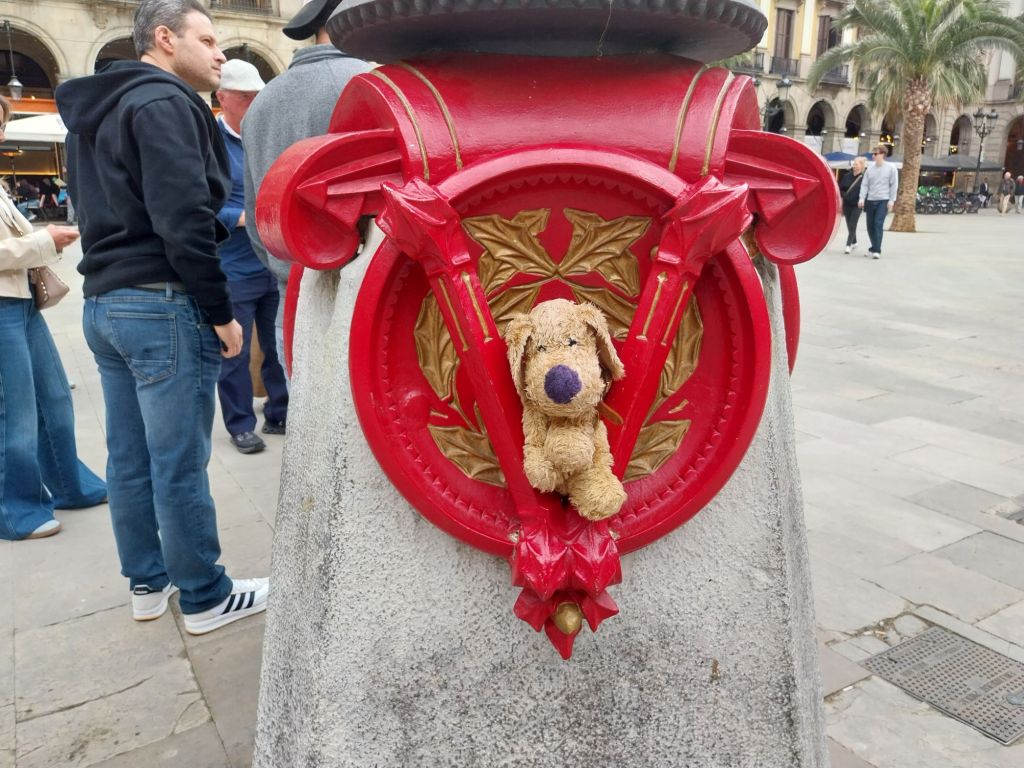
It had been almost two weeks since I set out for Bodø in Norway, and today was the final leg of the trip – some 521 kilometres from Marseille to Barcelona.
Cross-border rail services between France and Spain are frequent, but booking a ticket can sometimes prove to be a challenge if that service is operated by the Spanish Railway Renfe. There is no real logic to when reservations open; sometimes it’s three months in advance, sometimes it can be on the day. In the end I used Rail Europe, one of the better booking agencies.
Five and a half hours is a long trip, but my Forst Class pass allows me a comfort seat. With Easter approaching, the train is full, and the luggage racks even fuller. The ride through the south of France provides plenty of pretty views. Near Beziers, the track runs between the sea and the Etang de Thau, a 21 kilometre long freshwater lagoon.
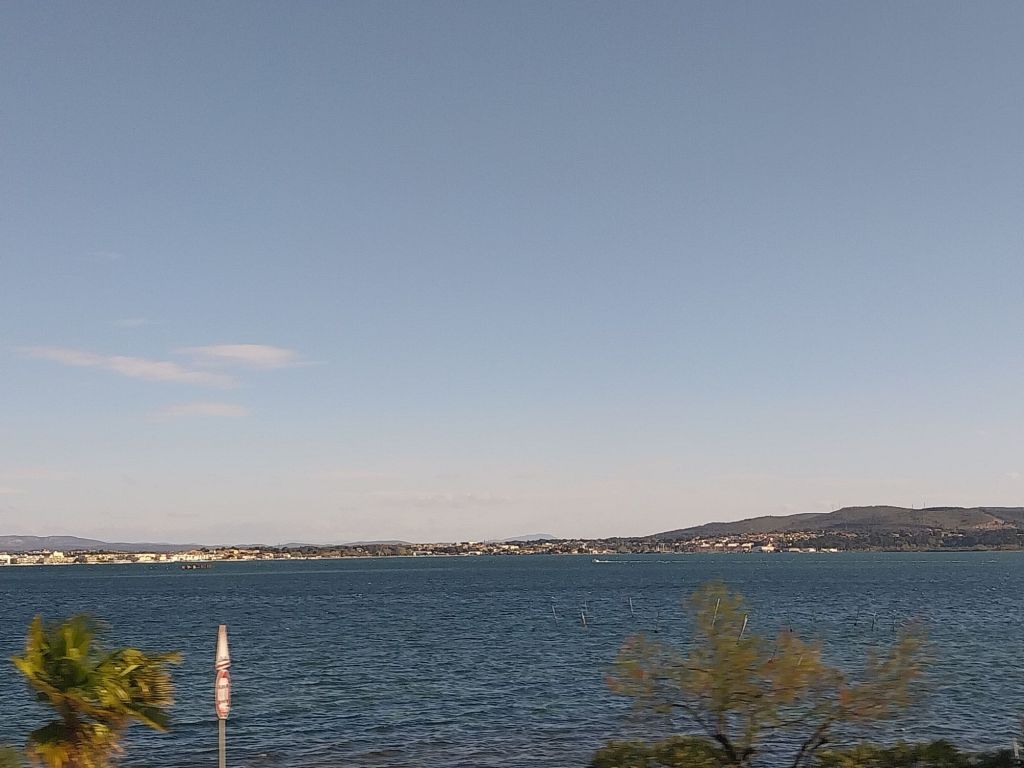
Some of the best Oysters in France are farmed here, and on the surrounding land, there are lush vineyards, small farms and rather less attractive abandoned salt works. At Perpignan, the Spanish police board the train to check all passports – even though we are travelling from one EU country to another, they want to know exactly who they’re letting in.
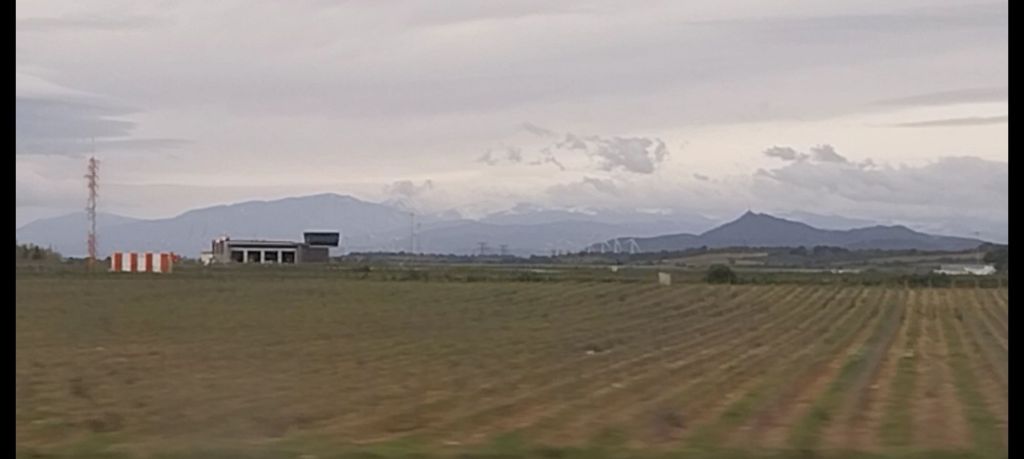
On the border and across into Spain, the line races through more greenery, punctuated by Pyrenees to the west. It’s a fantastic way to arrive in a country.
Somewhat less fantastic is the arrival at Barcelona Sants station. The train is continuing to Madrid, so there is a rush of passengers clambering to disembark. Many clog the aisles a good fifteen minutes before we get there, meaning limited time to retrieve luggage.
Barcelona Sants is a massive transport hub, and at first a bit confusing. The signs to the Metro are clear enough, but then there’s a queue of people trying to navigate the ticket machines. Thankfully it’s only a short ride to my hotel in the Raval district. It’s a good enough location, and easily walkable to the Gothic Quarter, teeming with history and art. One of the first places I pass is one of the city’s most famous residences.
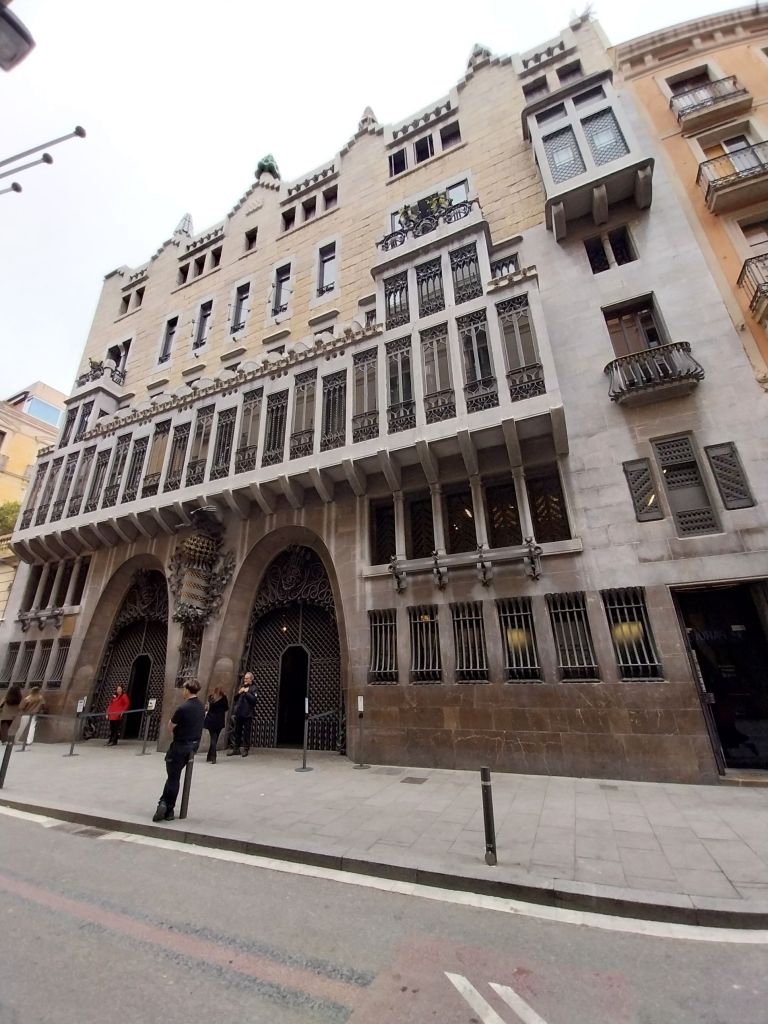
The Pala Guell was home to Eusebi Guell, a wealthy businessman who commissioned Antoni Gaudi to design it. In the end, it was the only residential building completed by the great artist. The inside is filled with lavish ornamental features, inlcuding a huge imposing staircase, and rooftop sculptures that may remind UK readers of a certain age of the tv-AM building in London.
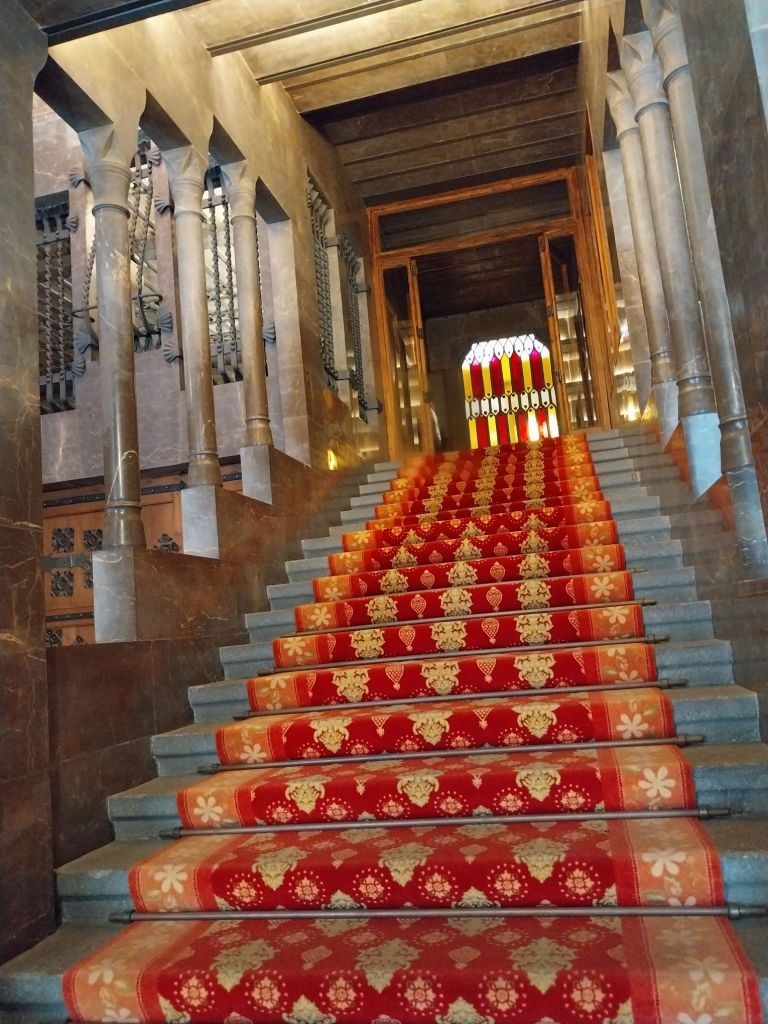
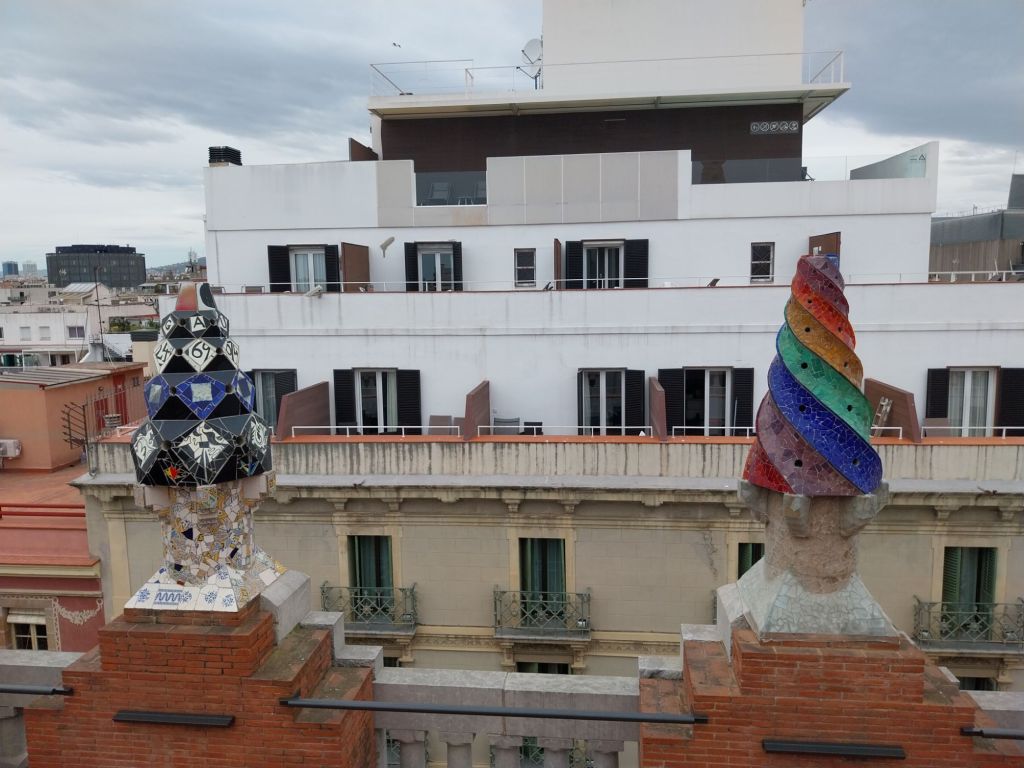
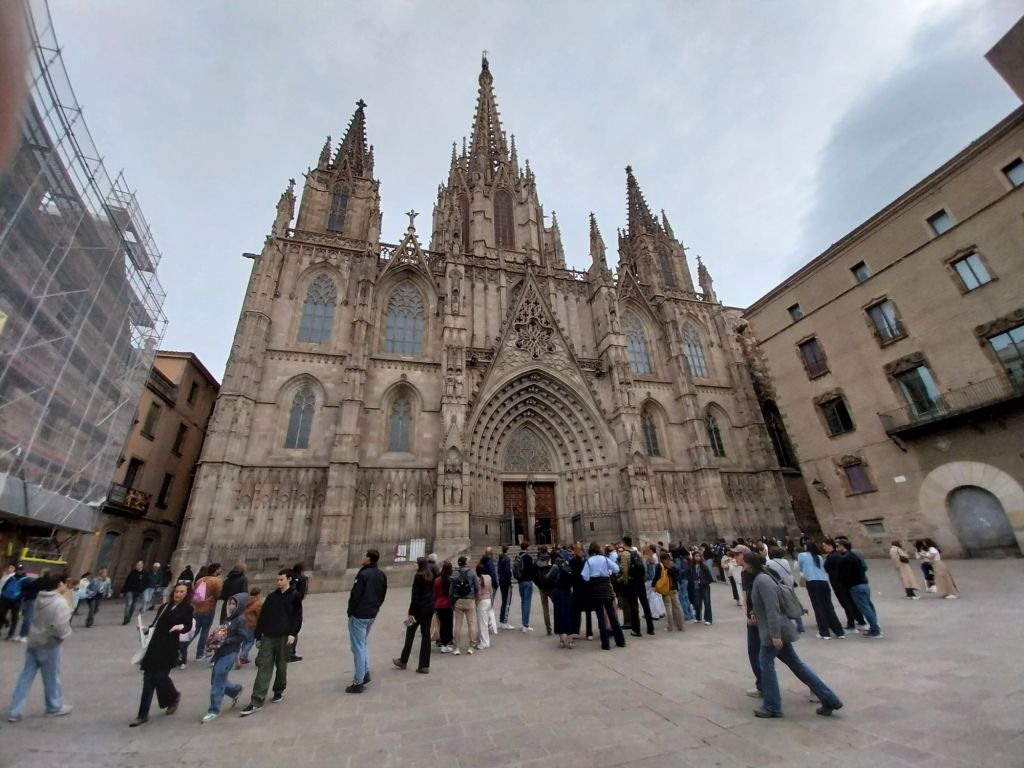
The roof gives you a good sense of geography in this huge city; form here you can see the two great seats of worship – Gaudi’s famously unfinished Sagrada Familia and Barcelona Cathedral, which took over 200 years to build.
There’s no escaping the tourists here – Barcelona is popular all year round. On the Cathedral steps, hundreds pose for selfies, while in the square below a (very good) busker plays to the crowd, while (rather strangely) clowns make balloon animals. Build it and they will come… and fleece you for a few Euro.
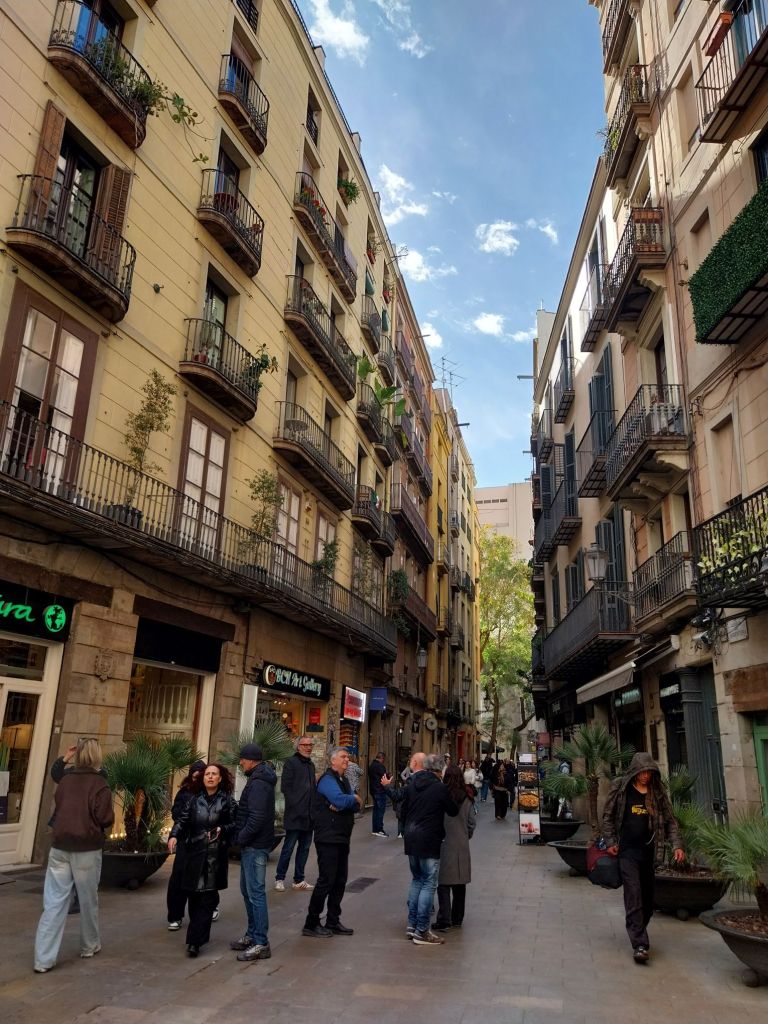
Everywhere in the Gothic Quarter makes you look up. It’s filled with light and winding narrow streets that oooze energy. And, on the whole, it feels like a safe place. Yes, there are the usual beggars on street corners and yes, you should keep your valuables safe (or preferably lock them in your hotel room). But that’s the same for any big city.
Barcelona is in the heart of the fiercely proud Catalan region. Not quite completely independent from the rest of Spain (a 2017 referendum was ruled illegal), it retains its own identity and language. Transport announcements here are often in Spanish, English and Catalan. It also has its own sense of humour, in the form of the Caganer.
For at least two centuries, the Catalans have been producing figurines of a man with his trousers down having a dump. They appear on Christmas trees, an apparent holy sign of good luck. And today, you can buy one of of your own, featuring celebrities of the day.
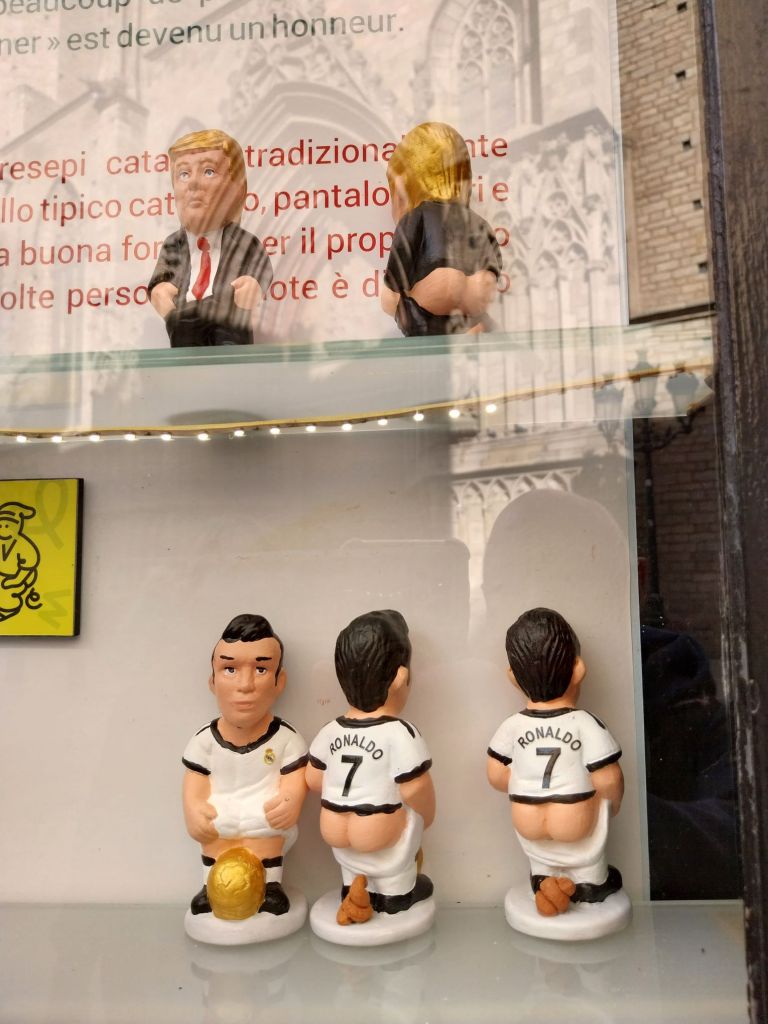
A nearby tour guide tells her visitors that the Caganer makers are waiting for a lawsuit from Donald Trump, which will probably only make them more famous.
A walk in the early evening sunshine brings me to the waterfront. Barcelona is very much a working port, and a little further north are beaches filled each year with holidaymakers. But in the city, the activity is centred around the various marinas. A small village – Bacelonetta – was created here with the redevelopment of old warehouses. Its popularity grew with the 1992 Olympic Games, and today the place is filled with boats of all sizes – and price tags.
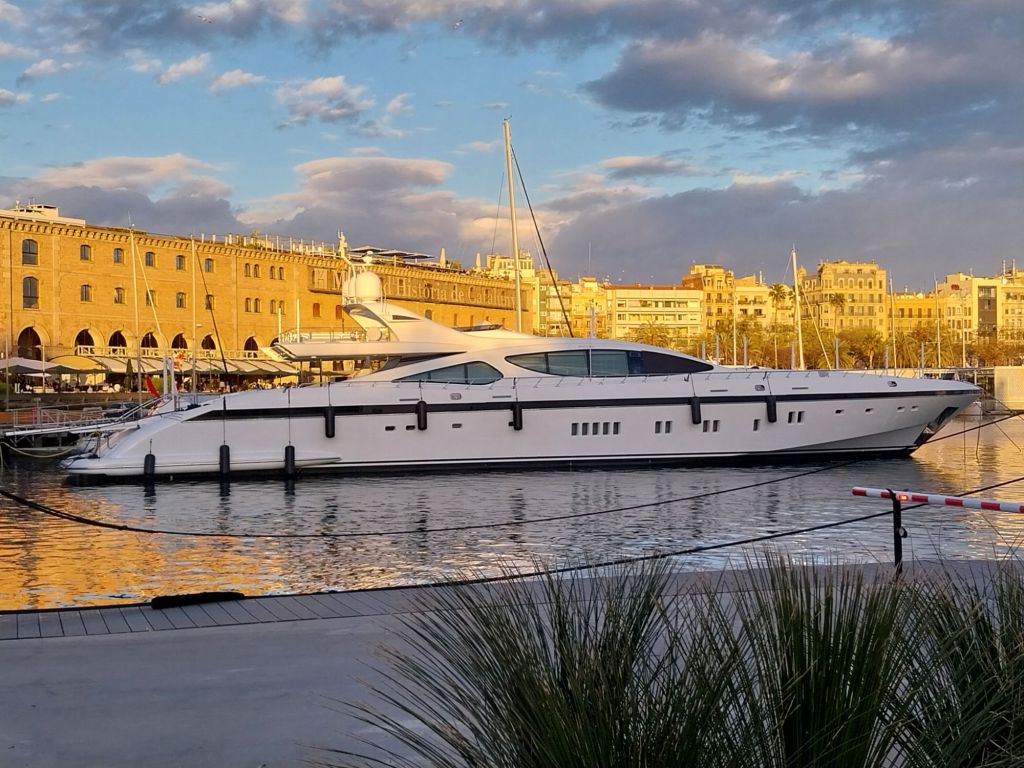
The waterfront is filled with restaurants all offering different versions of the same menu. It’s easy to lure in the tourists here. On the other hand, the Gothic Quarter is a labyrinth of contrasting bars and cafes, which all seem to have a slightly different take on tapas.
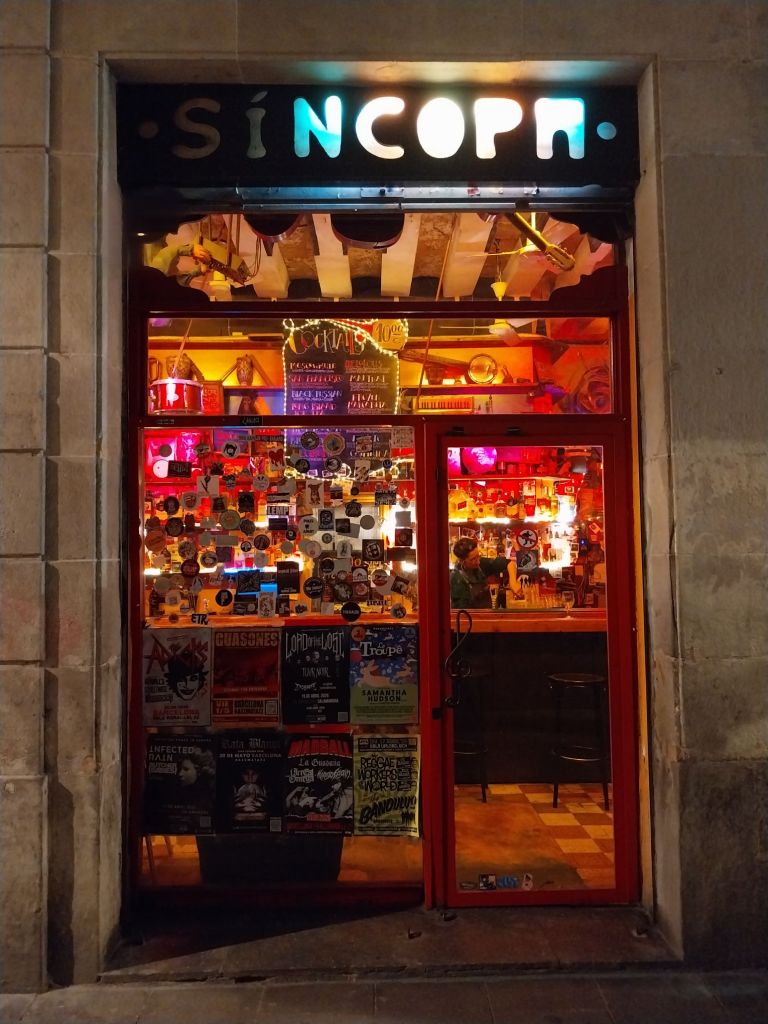
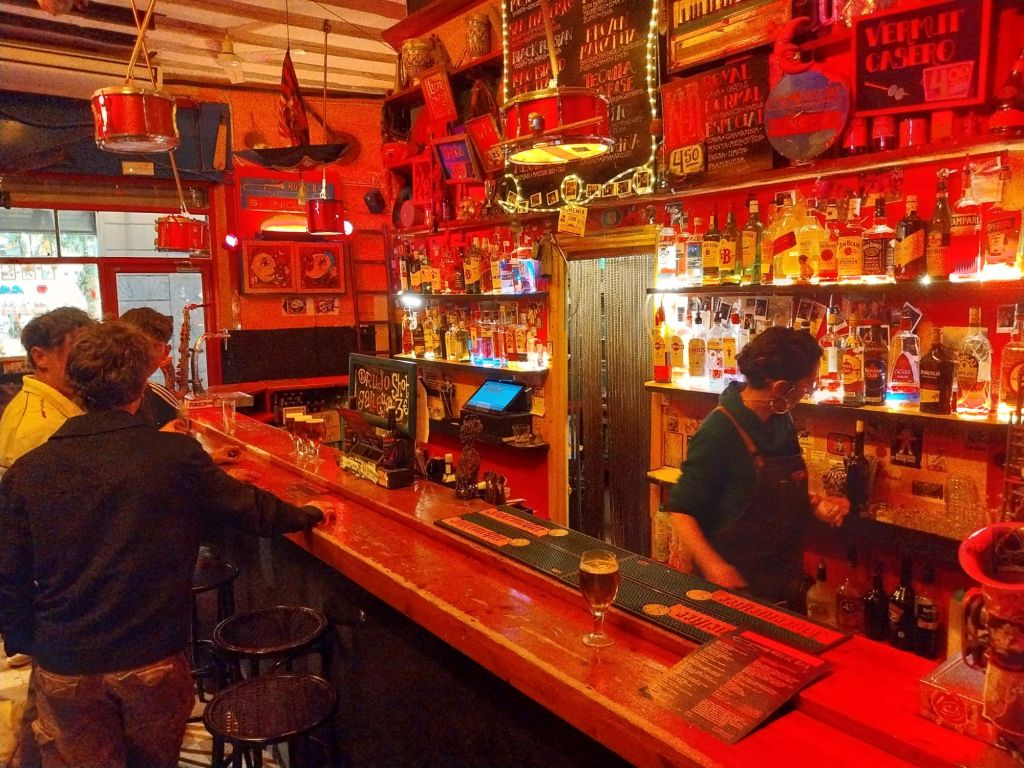
One place that’s purple with locals and visitors alike is Bar Sincopa. Punk rock is the musical theme here, so if you don’t like it noisy, don’t bother. The welcome, however, is warm – and the drinks are cheap for a major city.
My return to the “Best” Hotel Hogar is filled with some late night drama. I had already commented that my room was very warm, with air conditioning that only blew hot. The staff obliged by giving me a fan for the room, which I’d left on al evening. But the room was still stiflingly hot. After some negotiation – and it has to be said friendly service – I’m allocated a better and cooler room, though it does mean swiftly packing everything and moving it before bed.
The next morning is helpfully dry and sunny. So the perfect weather to get a great view. The Montjuïc Hill – rising to 155 metres above the sea – is a brilliantly accessible outdoor space filled with greenery, walks and impressive buildings. One way to get to the trip is by taking the cable car up to the castle.
The set up is well organised to handle thousands of visitors each day. Some cable cars have juts one or two units – here there’s a convoy of small cars that run continuously, meaning you can sometimes get one to yourself. And the views are spectacular.
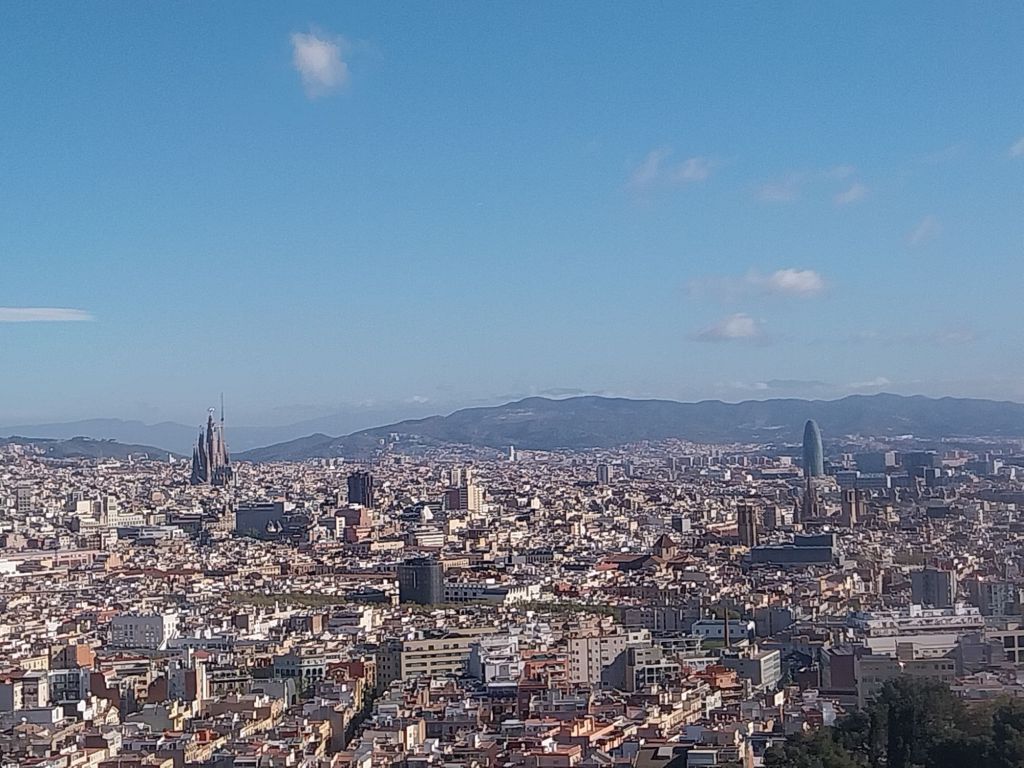
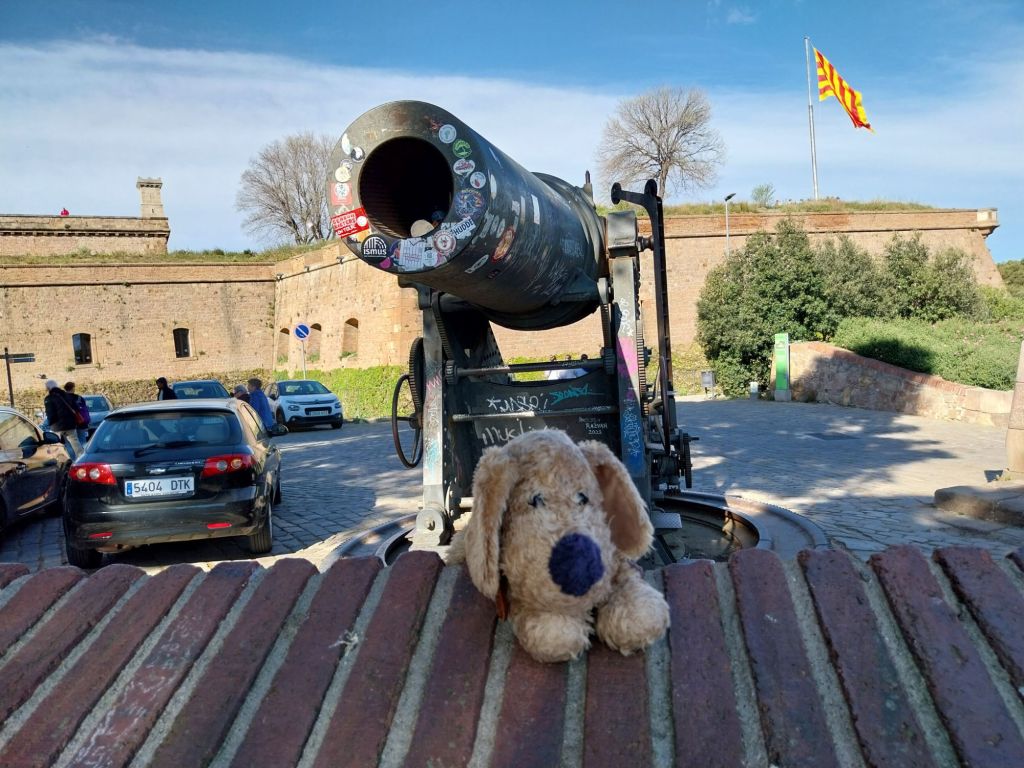
Even at 10am, the tacky tourist touts are outside Montjuic Castle, eagerly waiting to sell bottles of water or pointless souvenirs. With the Castle, Botanical Gardens and a couple of museums, you could easily spend a fortune here. There are various tourist cards which give you free entry or discounts to many attractions – but on a sunny day you can explore the outdoors for free.
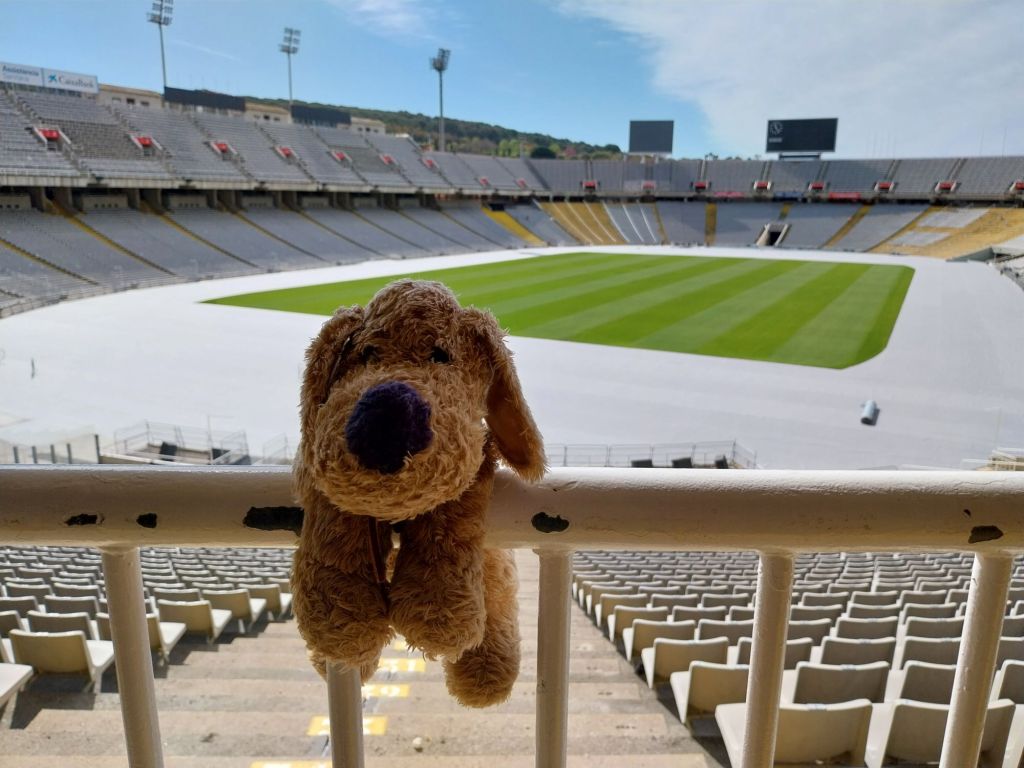
A short bus ride down the hill brings you to the Olympic Stadium. It was made famous, of course, for the Barcelona games of 1992, yet it was originally built in 1929. The city had already got ambitions to host the Olympics, but this was scuppered by the Spanish Civil War. Today it’s only usually open for big events and concerts – but thanks to a remarkable bit of luck, there appears to be an organised tour for a group of local children – so a rare chance to see inside the place for myself.
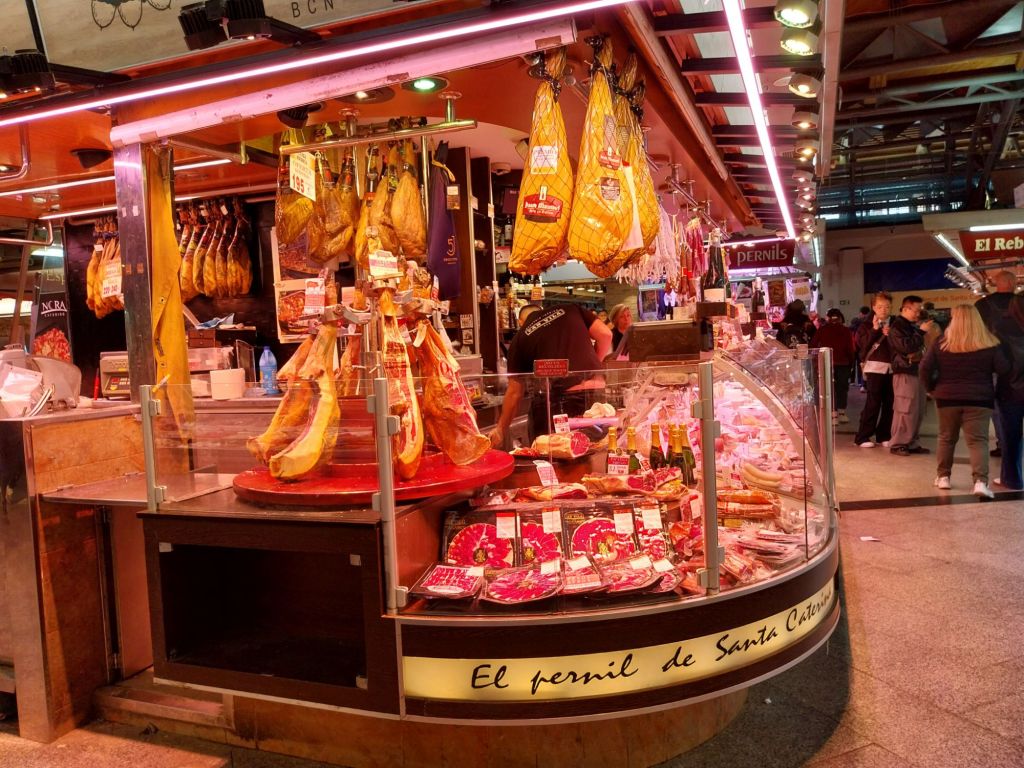
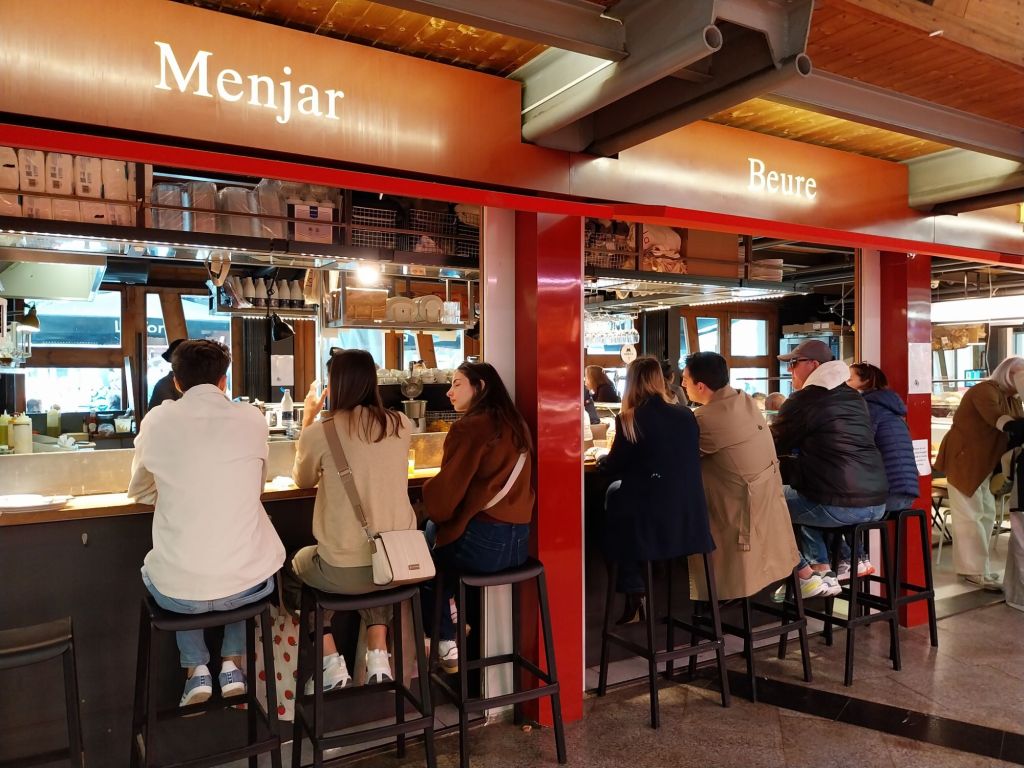
Every great European city needs a covered market, and Barcelona is no exception. The Sant Caterina market has been here since 1844, and although it’s not the largest I’ve experienced, it still sells a great mix of fresh and cooked goods – meats, cheeses, fruit and veg, cakes and spices. There are also a couple of cafes serving up tapas and main means, including La Torna – which gets incredibly busy at lunchtime, but well worth the wait.
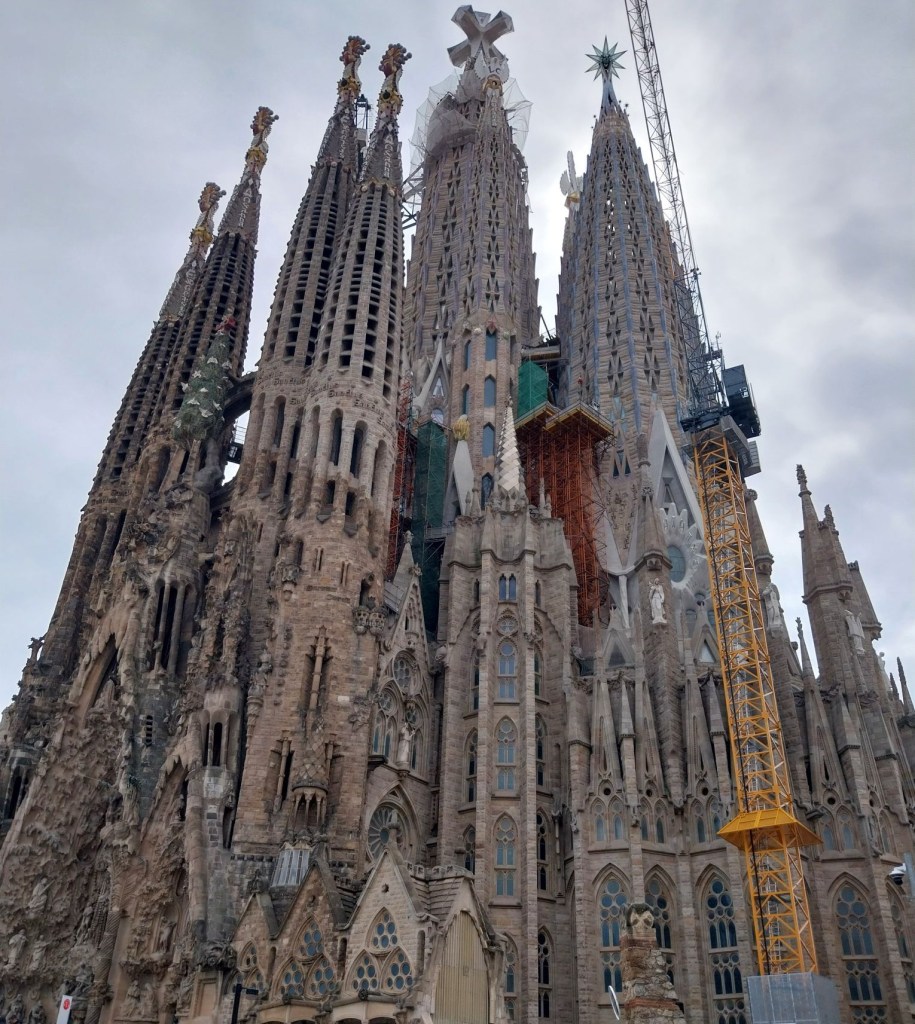
And so to the final stop – the great, still unfinished Sagrada Familia, Gaudi’s project that still continues today. And yes, it is breathtaking – even if you can’t get tickets (they’re booked weeks in advance). Yes, the building is like nothing you’ve seen before. But apart from that, everything about the location is quite predictable.
There are hawkers selling, global fast food chains, general chaos and confusion among the thousands gathered outside, a watchful eye from the local security and police. I can well understand why some cities – and their residents – are shunning “over tourism”. Even the nightly City Tax of up to €12 per night (depending on how posh your accommodation is) appears to be doing little to control the numbers.
It’s a huge contrast to the tiny airport I arrived at in Bodø two weeks ago, where the entire city’s attractions were laid out on just two streets. Of course, during the high season, thousands of people disembark from cruise ships along Norway’s coastline – but tourism there seems diffferent, modest – even with the drama of fjords and railways climbing over mountains.
This was an unusual itinerary that has thankfully been full of surprises – mostly good. The destinations covered may not be on your usual list of places to go, which is entirely the point. It also proves that you can cover Europe, North to South, in a sustainable way – and on a decent budget. Ditch the flying, take a train, and let the continent entertain you.
TravelCaster Tips
Getting here : Barcelona is located on Spain’s north eastern coast and has multiple flights to European and global destinations. Travel by train is relatively simple via Renfe, though as mentioned bookings sometimes open very close to travel. What’s more, seats can and do sell out – even on the day.
Orientation : Barcelona Sants railway station lies in the middle of this busy city, with teh airport some 13 kilometres from the centre.
Public Transport : Buses and the metro are run by TMB. The company does have an app but we found difficulties registering details online without a Spanish ID number. Tickets can be bought from all stations with a 48 hour Hola Barcelona pass costing €18.70. Remember to validate your ticket for each ride. You can also use contactless cards on buses, but not always on the Metro.
Food and drink : Barcelona offers a dizzying choice of cafes, bars and restaurants with cuisines from all over the world. Tapas is famously served almost everywhere, with a small dish typically costing €6-12, though you can also eat incredibly cheaply at many of the cafes outside the main tourist areas. Likewise, a beer can be found for as little as €2 (lots of bars run happy hour promotions) rising to €6-8 for a 0.5 litre measure in popular places.
 TravelCaster
Leave a comment