
Basel, in Switzerland, is well connected to many places, but in some cases getting out involves hopping over a border. Today’s 750 kilometre journey meant a short 30-minute journey to Mulhouse in France, before continuing to Marseille on the TGV InOui service.
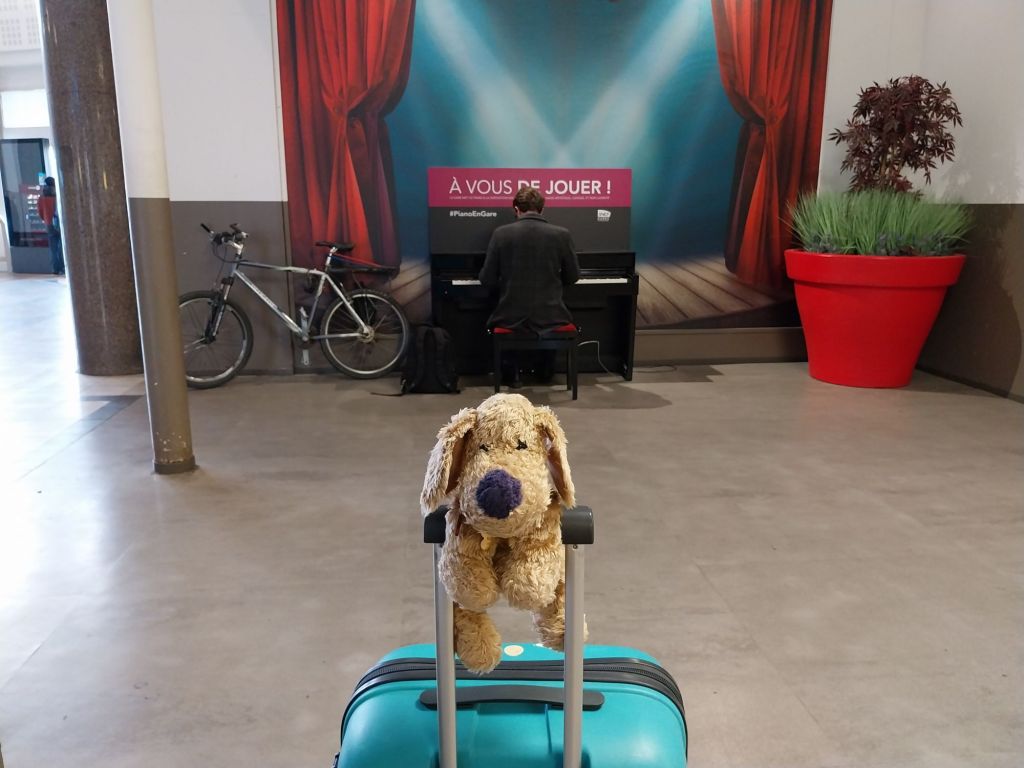
I’d managed to get an earlier train than planned which meant hanging around Mulhouse for a while. On the whole, SNCF stations are well maintained, and many provide an opportunity for free enteraintment.
I’ve used these trains a few times before and they’re a mixed bag, depending on whether you get old or new rolling stock. Today’s offering had a musty air about it – bit was nevertheless very fast – and very full. This was the start of Easter week, with plenty of people getting away for a few days.
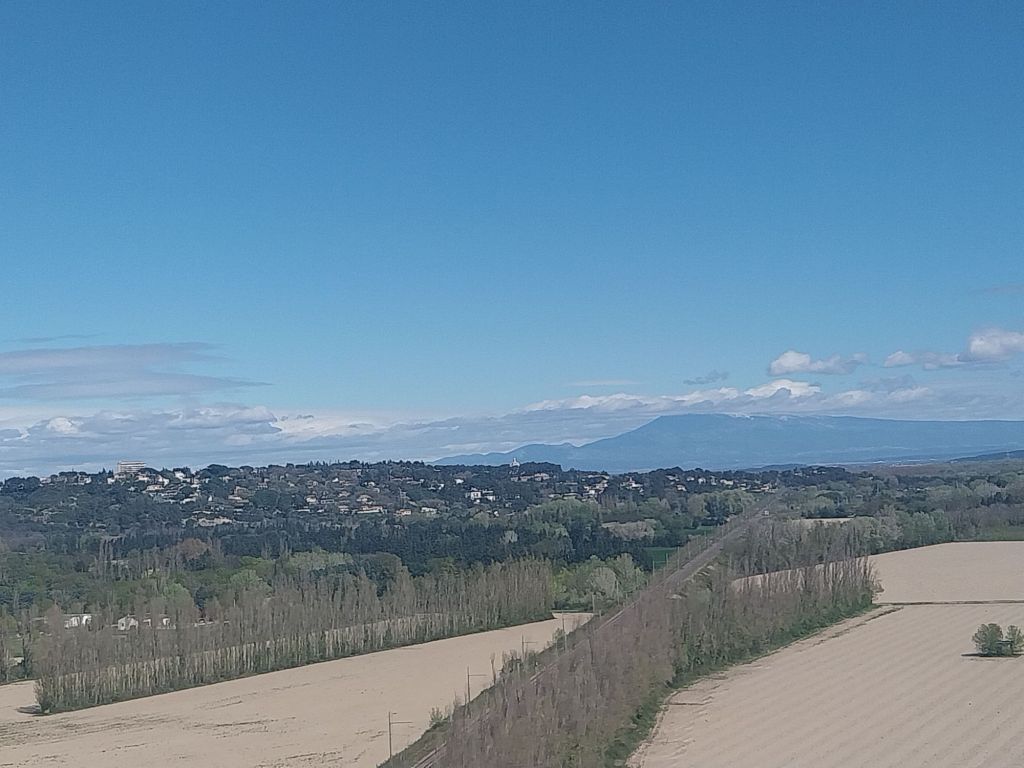
It’s a long, five hour journey, punctuated by much impatience in the dining car, where a French woman marches up to the counter, ignoring the lengthy queue stretching down the side. She is politely told to join the line, and mutters something out loud to the assembled audience. Eventually, as we head ever further south, the green and beige of Provence shows itself. A sign, I hope, that things are getting warmer.
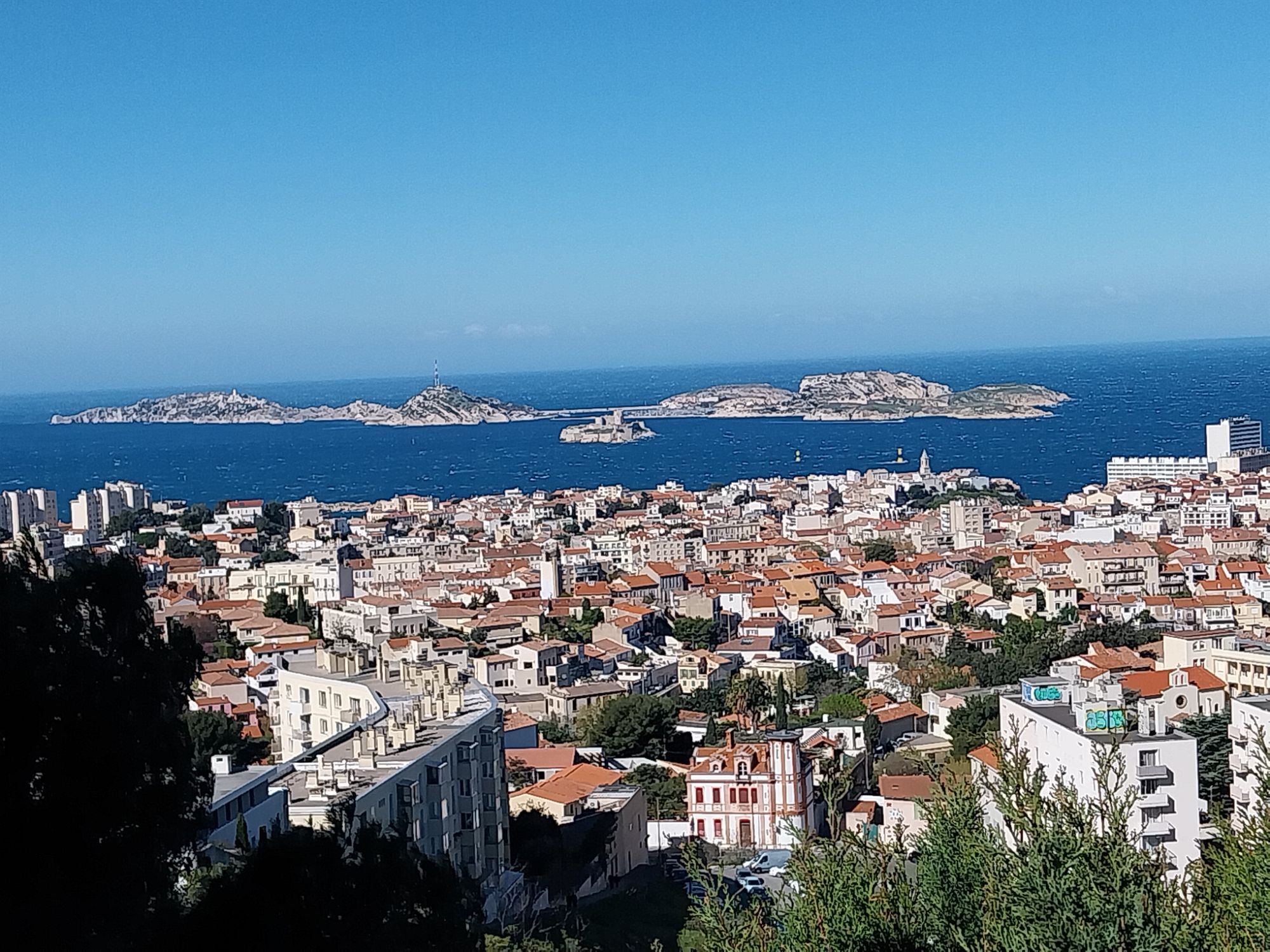
Arrival at Marseille St Charles is a joy. My big tip is to ignore the signs for the exit, and instead head onto the terraced area for some magnificent views. The entire city is laid out before you, helping to understand where everything is – and recognising that this place is built on several big hills.
There’s also an unexpected connection with the early stages of my North to South trip. An area outside St Charles station is named Narvik Square. French soldiers were along the allies who took part in the Battle of Narvik, and they are commemorated here, as well as many other French cities.
Having visited Marseille on a previous trip it was easy to navigate the Metro to the Vieux Port area where I was staying. The ResidHotel is brilliantly located just a few steps away from the waterside; the only downside being a bit of late night noise from the main road. And while the port looked pretty enough, I knew that this wasn’t the place to sample local life. A short bus ride took me to where I wanted to be.
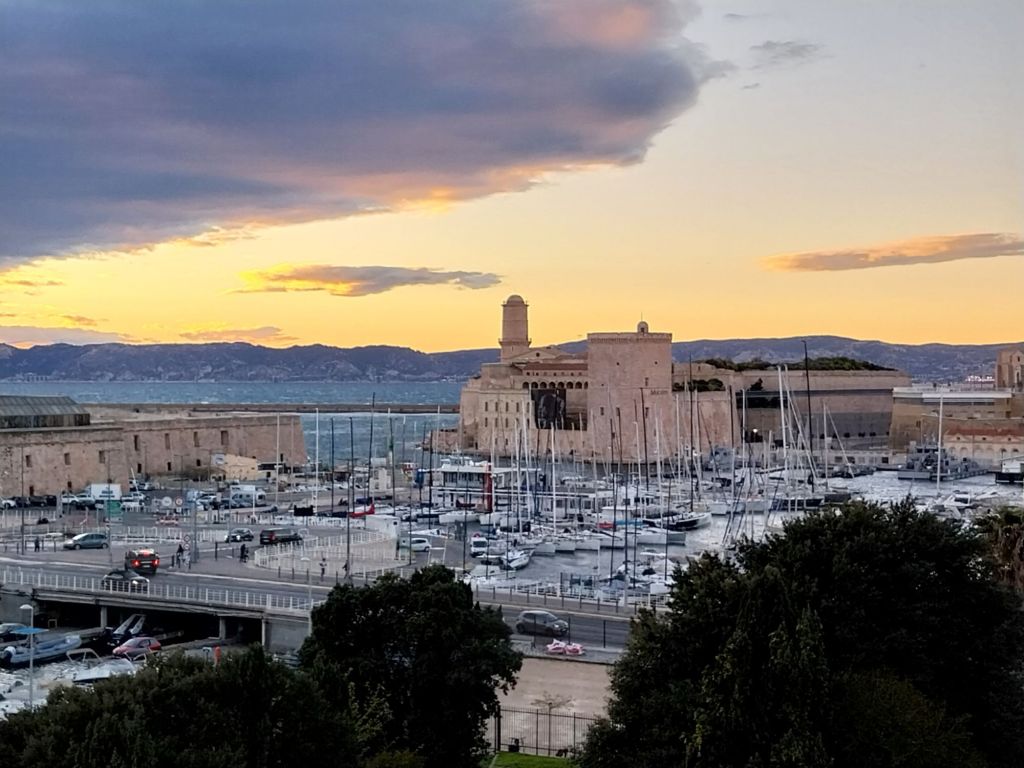
This is the view, just after sunset, in St Victor. The neighbourhood is just two blocks away from the port, but in a completely different world. Vehicles battle through the impossibly narrow streets lined with old buildings. There are local shops and many cafes here – this view taken from outside The Fat Fish, a friendly little bar with a small terrace – though you do have to be careful of the passing traffic.
On my last visit, St Victor was rammed with revellers on a Saturday night – you’d be well advised to book in advance. But Mondays are somewhat quieter, and at the eponymous Victor bar, you can get a tasty charcuterie board and a great glass of wine for €15.
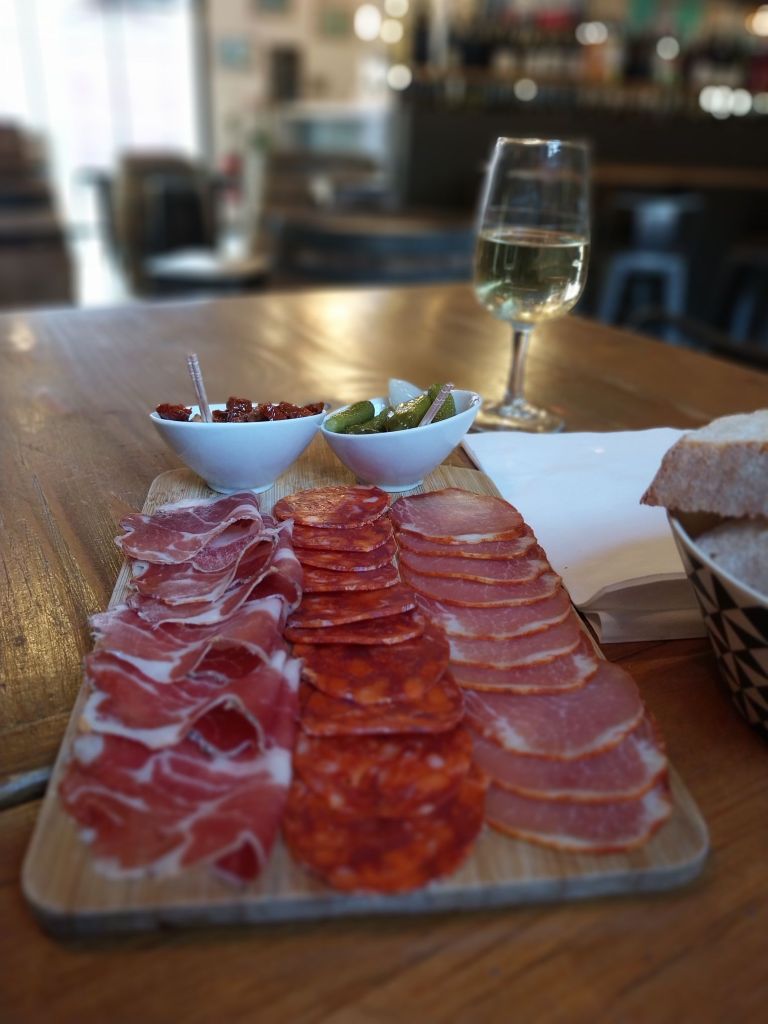
Here, I meet a British couple who have just arrived. It’s their first visit, but a friend has recommended a visit to the Calanques – a group of small island just off the coast. It’s been incredibly windy, and the following morning I am told at the Calanques kiosk on the harbour that no boats will be running today.
But these are for the tourists, and it turns out that Marseille’s transport operators, RTM, is opearating. It also turns out to be less than half the price that had been demanded by the tourist service.
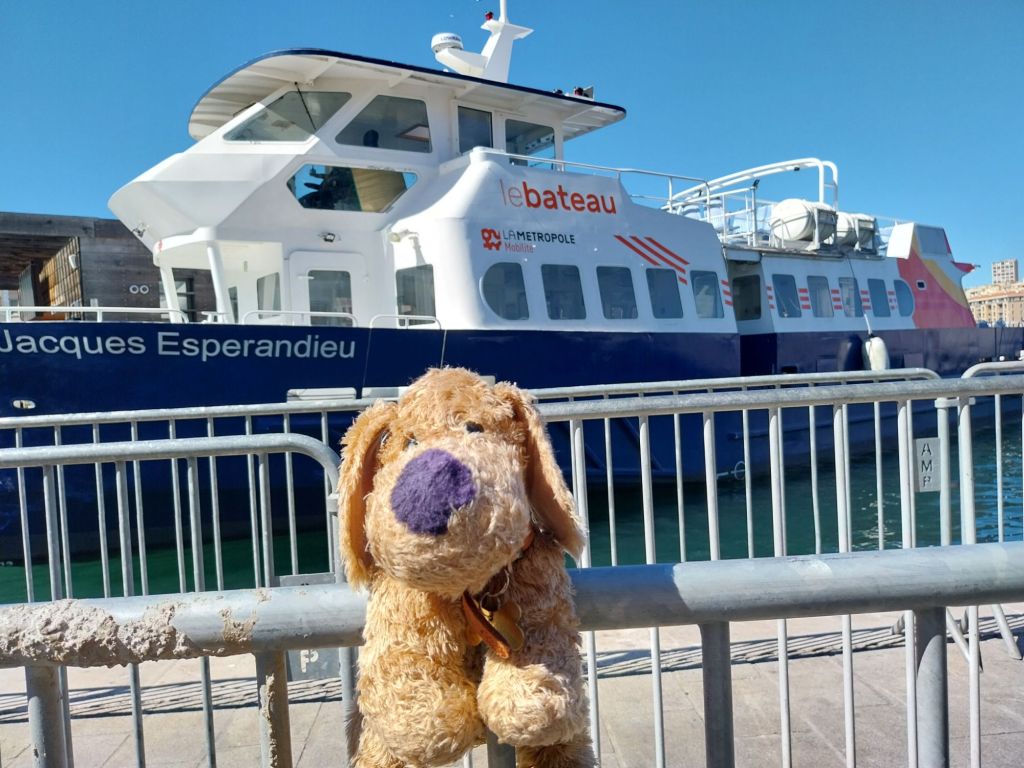
Le Bateau is a unique shuttle service for the Calanques, transporting local residents as well as tourists. Getting precise numbers is difficult, but estimates suggest there are around 200 permanent residents on Ratonneau island – with the population rising in the summer.
Although today is sunny, passengers soon get to see why the tourist boats weren’t running. A gentle swell soon turns into waves crashing across the front of the boat, with water seeping into the passenger cabin. There are a few shrieks and groans during the short 20 minute crossing, as staff urge people to remain seated; it’s not like anyone wants to stand up.
The small harbour at Frioul is delghtful, though very quiet during March. Just one of the six or so restaurants is open; the lady running it was on the very same boat as the hungry tourists. But the views are spectacular, with Marseille on one side the harbour wall and the Mediterranean on the other.
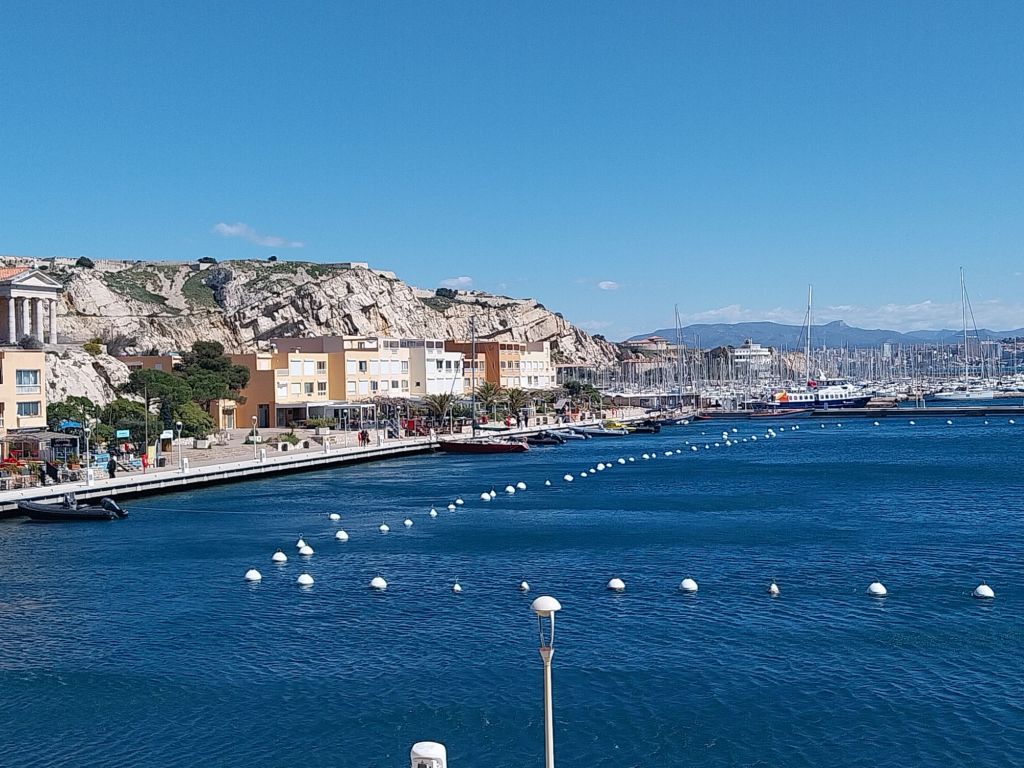
The temple on the left of the picture might well have been founded by the Greeks who first founded Marseille, but it has a more recent history. In the nineteen century the city was threatened by yellow fever from South America. A qauarantine hospital was built on Ratonneau, and the so-called “temple of heath” was added.
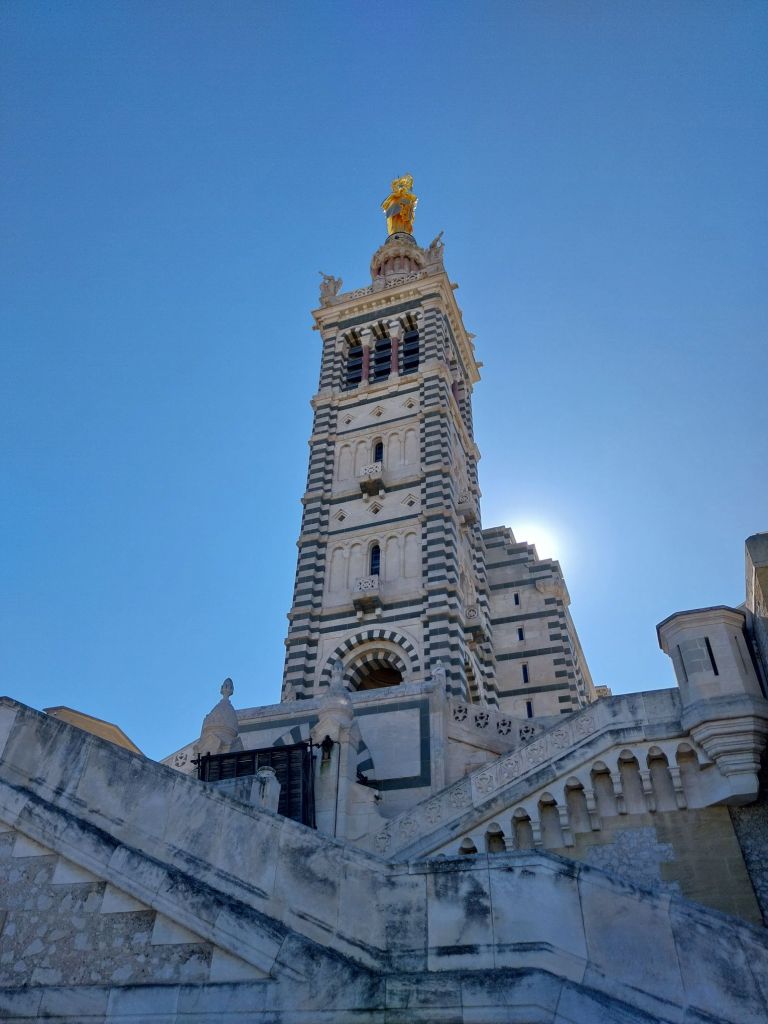
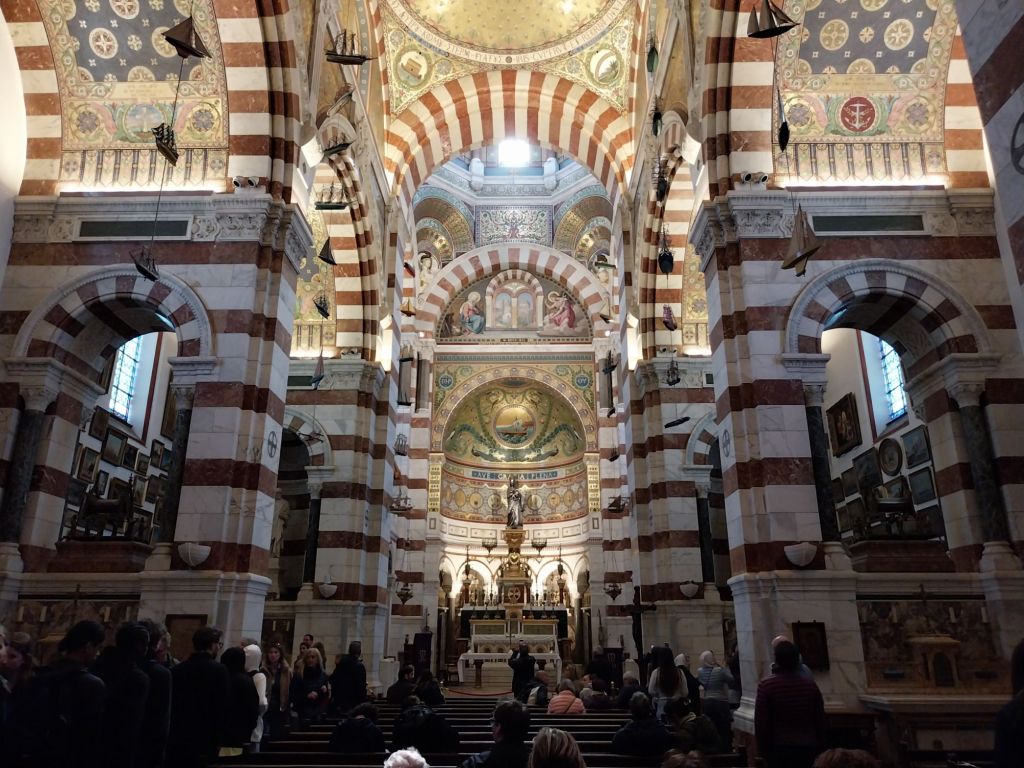
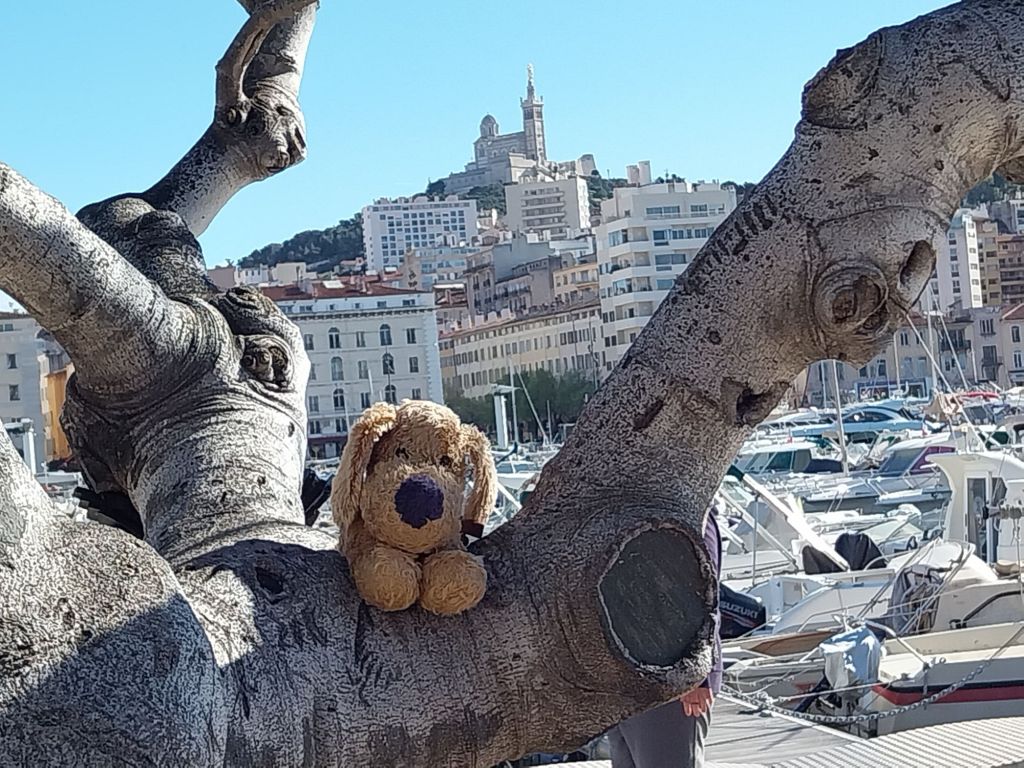
A more famous place of worhship is Notre Dem de la Garde, the hilltop Basilica that features in many pictures of Marseille. As observed during my previous visit, a tacky tourist train takes you up the hill – but for fraction of the price you can take the number 60 bus. Many have done so today, enticed by the ornate church and the stunning views back over the city.
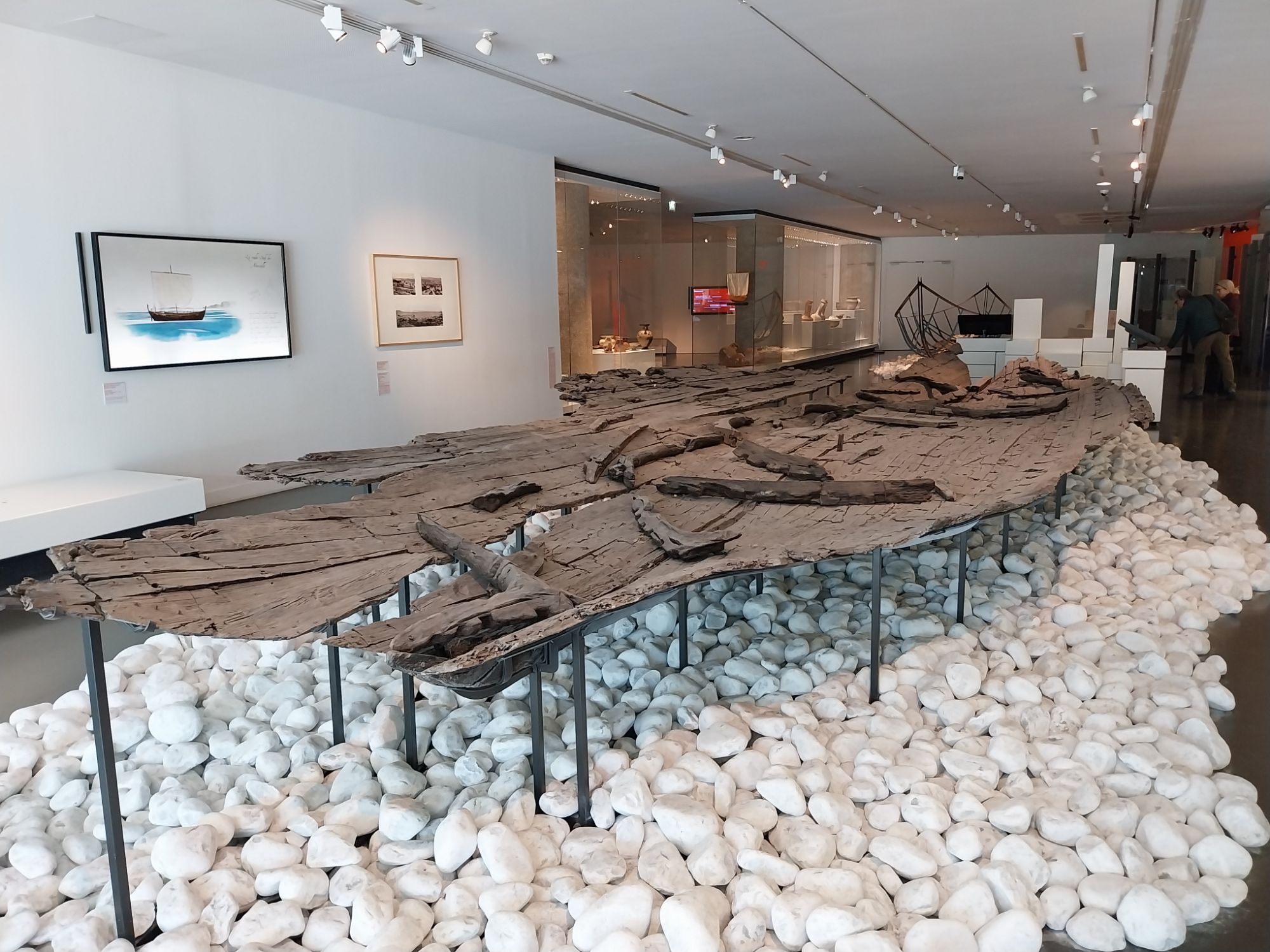
History seeps through every street and corner here. And a good place to get an understanding of this is at the Marseille History Museum. It’s free, and had a mesmirising number of Greek and Roman artefacts. It also has a collection of the oldest boats, or their remains, in France.
The “garden” of the museum is a stunning collection of Roman and Greek finds, many of which were unearthed during construction of the Bourse shopping centre, which the museum is connected to.
Marseille became a city of great wealth because of it’s strategic importance for trade. But the wealth also created a divide, and the “have nots” – who didn’t live in the posh, new parts of town – remained in the poorest and oldest districts. Le Panier is that place, and is a good way of getting away from the crowds; though in the high season the crowds come to Le Panier with exactly the same thoughts. But not today.
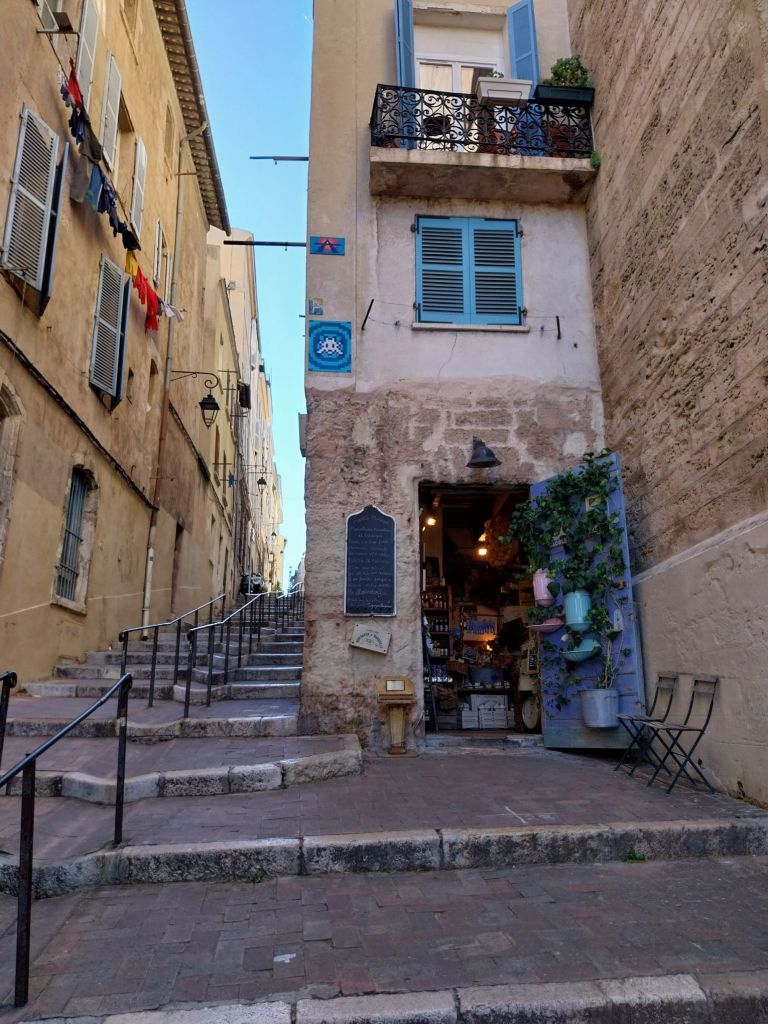
Marseille is every bit as beautiful as the pictures here suggest. It’s also considerably better value than other places in the south of France; you are not far here from Nice and Monaco. It also marks the beginning of the end of my own journey – with one more leg to go. But not before a quick final look at the Vieux Port.
TravelCaster Tips
Getting here : Marseille is 3.5 hours from Paris on the TGV InOui service, which frequent connections to other destinations such as Nice and Lyon. Details and tickets are available via the SNCF Connect website. Eurail passes are valid on all services though on the high speed connection you’ll need a compulsory reservation which costs around €12. Take a slower route and you can go for free. Flights from the UK and many Euorpean destinations serve Provence Regional Airport, which is 23km from Marseille.
Orientation : Arriving at St Charles railway station, stand on the plaza for a spectacular view and a good idea of where everything is. Marseille is a hilly city, so the best way to reach the main sights is by using a tram or a bus. If the weather is good, siply head downhill towards the water and you’ll reach the Vieux Port in about 20 minutes.
Public transport : Marseille has an excellent bus, tram, metro and ferry service. Full details are on the RTM website. A 24 hour City Pass costs €29, though this includes the entry to the main sights and a ride on the tacky tourist train. You can only buy this from tourist information points. A better option may be the 24 hour transport pass which costs just €5.90 and can be bought at any metro station. For boat trips, use Le Bateau located on the left side of the Vieux Port as you look out to sea,
Food and drink : Marseille has a great variety of options for all tastes. As well as French you’ll see a strong North African influence here. A main course can start from as little as €10, though you can expect to pay more around the main Vieux Port area. Head into the Le Panier or St Victor districts for something a little cheaper and more laid back. A local beer will cost about €4-5, though prices can be as high as €7-8 in some of the busier bars.


Leave a comment