
Narvik is Norway’s northernmost railway station, and only exists because of the country’s vast reserves of iron ore. Produced in abundance, Norway had a problem; how to export the stuff, and so the Ofotban railway was constructed.
Today, Narvik is the starting point for the touristy Arctic Train, which takes passengers around 50 kilometres just over the Swedish border. Today, I’m taking the same route but extending the journey by some 1,300 kilometres to Sweden’s capital Stockholm.
There is a daily, direct night train from Narvik leaving mid afternoon and reaching its destination by 1020 the following day. However, I’ve opted for an earlier connection – partly because I want to spend two full days in Stockholm and partly because I didn’t spot the later train. The 0925 departure from Narvik – changing in Boden – will get me there at 0620, which is an unseemly time to be thrown out of your bunk bed.
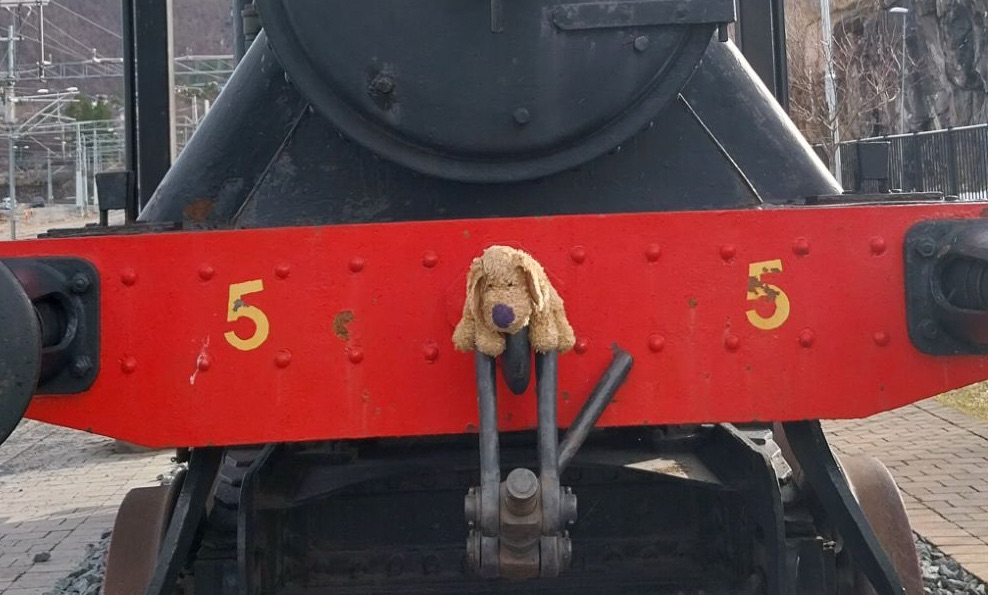
An enthusiastic party of Chinese tourists arrive at Narvik around half an hour before departure. I later get the impression they had been due to take the Arctic Train, but that’s not running today; the regular service will likely give them a similar experience for a much cheaper price. A round trip on the Arctic Train costs around €50. A similar journey using a regular SJ train is just €15. It’s a good place to start the day, with a selfie next to an old shunting locomotive.
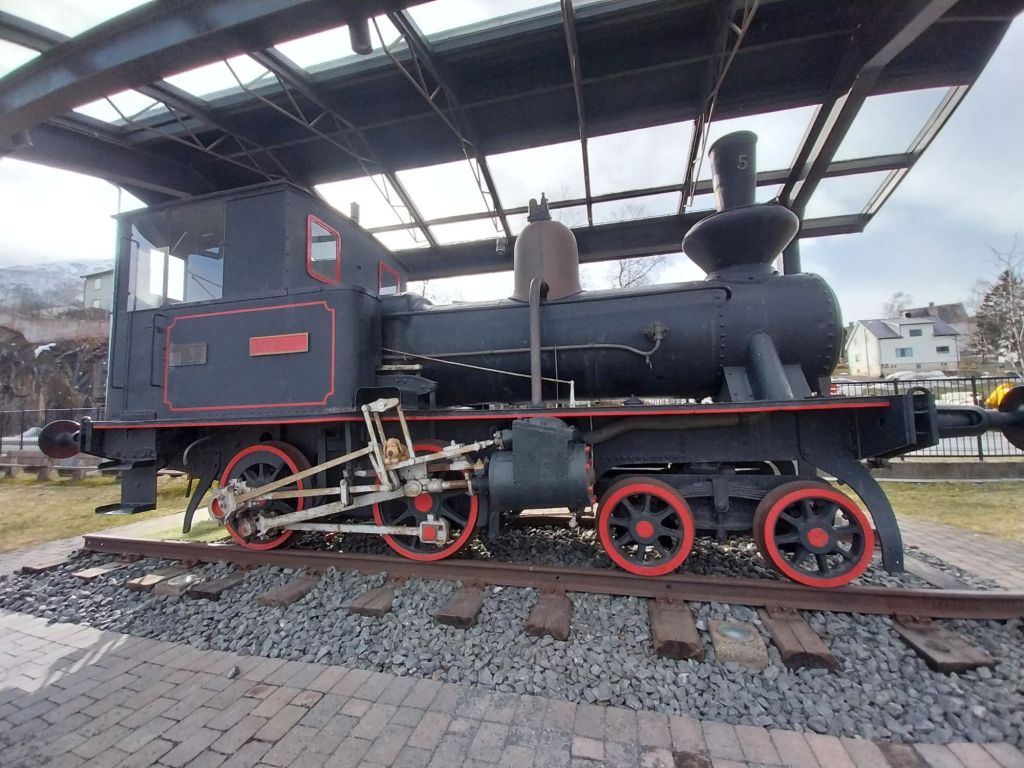
Our own train – run by Swedish Railways – doesn’t feel that much more modern. Just two coaches and a very friendly female conductor, who firstly apologises for a 20-minute delay while the driver attempts to get the thing running. But slow doesn’t matter on a day like today, and as we climb from Narvik towards the Swedish border the views just get better and better.
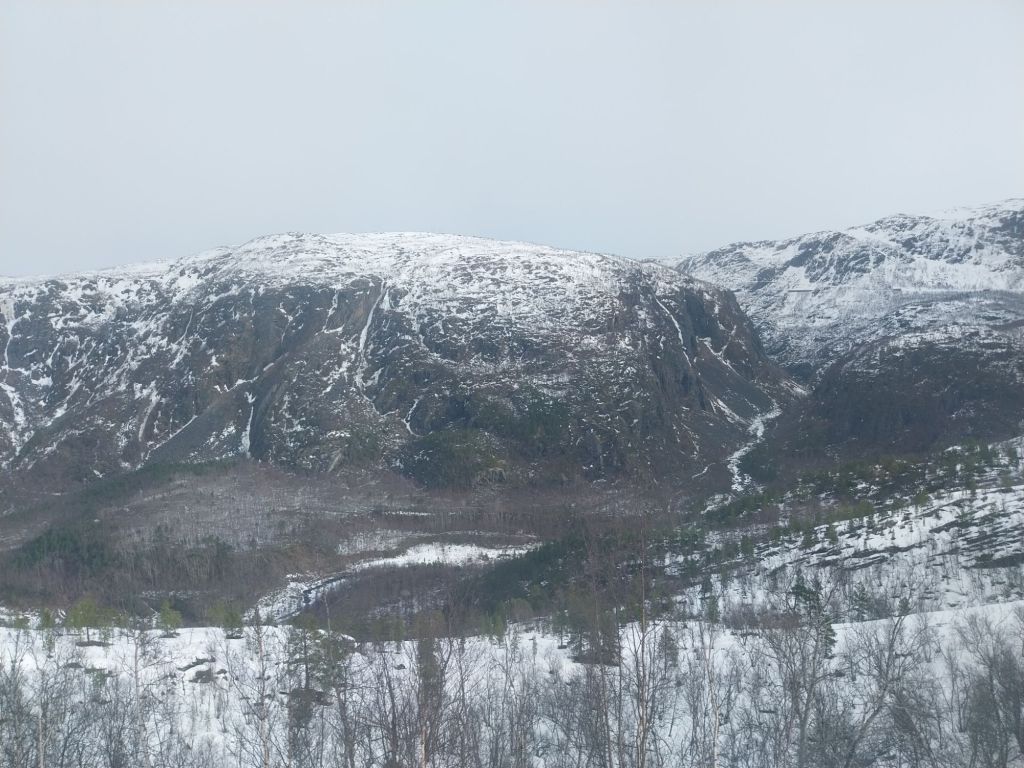
This is the Arctic landscape I’ve ben waiting for, and the weather has improved too. Once across the border, the train empties out at one of the many ski resorts around here. The route skirts along the edge of the stunngly beautiful Lake Tornestrask. It’s 70 kilometres long and one of Sweden’s largest stretches of inland water, though today much of it is frozen. At Bjorkliden a twenty minute stop; this is to wait for an oncoming train along the single-track route, and provides a helpful interval to stretch the legs and take more photos.
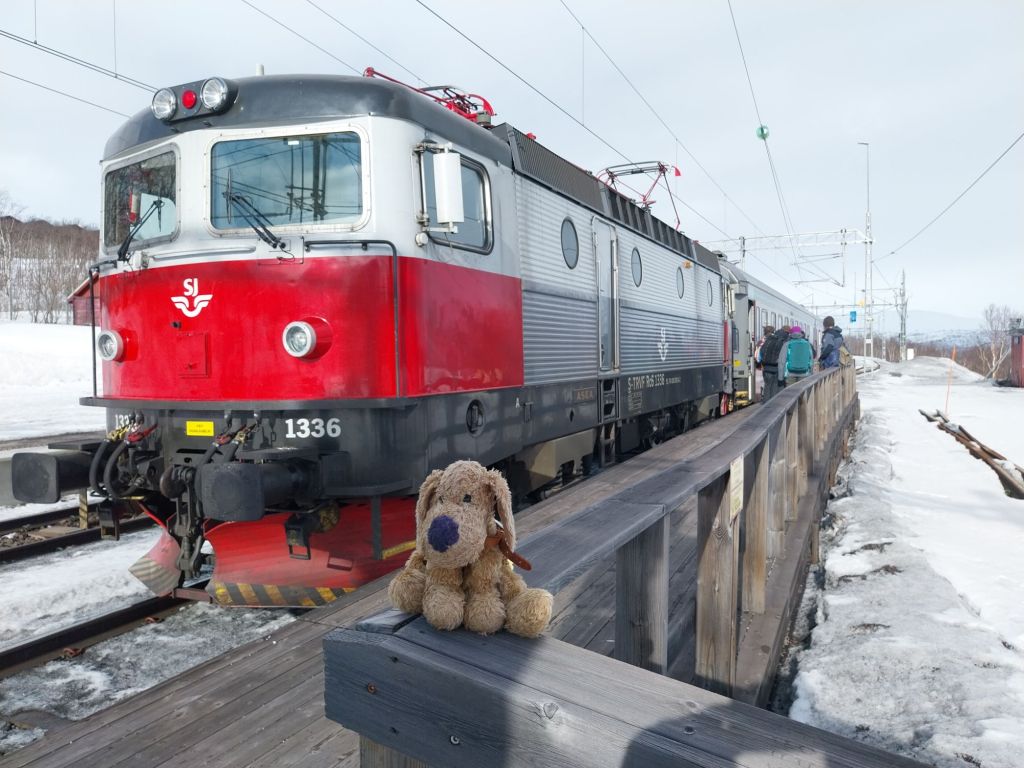
The chatty conductor apologises for the delay on the other train, which in turn delays ours. I’ve only got a 15-minute connection time in Boden, but she assures me everything will go to plan. Things don’t go to plan for passengers travelling to Kiruna, the next major stop – the conductor explains that the station’s roof has been blown off by high winds, a surprise given the way buildings are designed in this harsh Arctic landscape. It means them disembarking early for a bus connection, but also means the train bypassing Kiruna and making up some of the lost time.
For a while, the beautiful wilderness is blotted by a huge iron ore plant just south of Kiruna. From here, we can see some of the long goods trains transporting the lucrative loasds towards Narvik. It probably explains why there are just three passenger services per day along this line; any more might hold up the precious commodity.
I’m looking at the map on the approach to Boden, wondering just how tight the connection to the night train will be. But an engineering fault works in our favour; there’s been a signalling failure between Boden and Lulea, where the night train begins its journey.
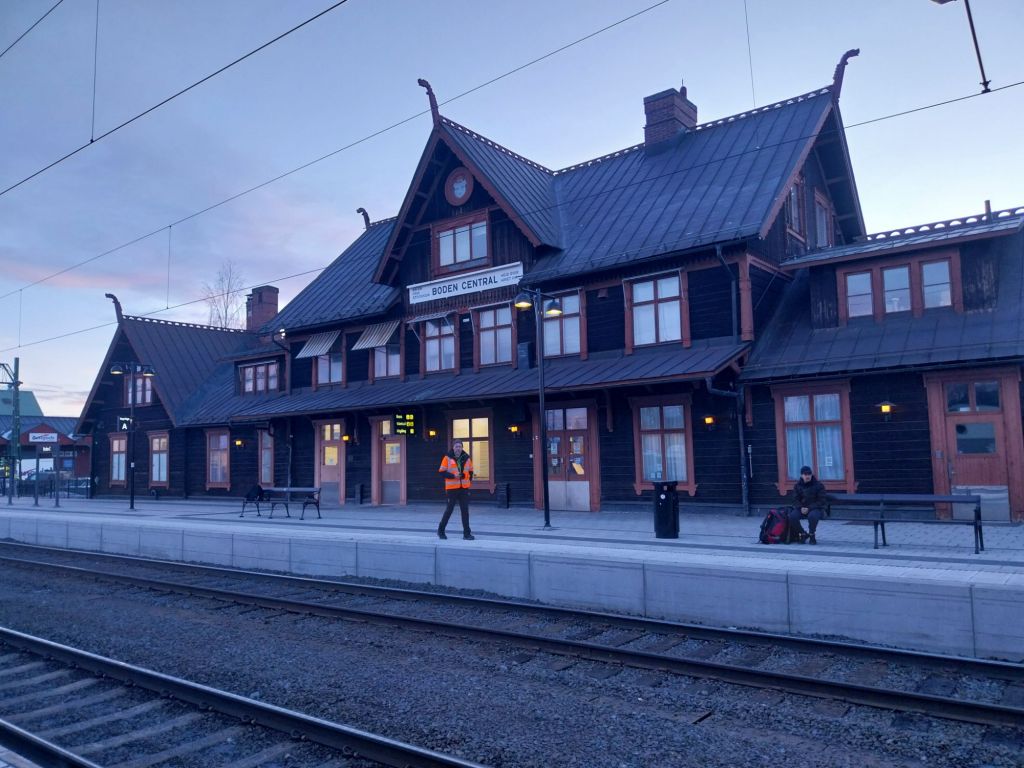
All of this creates a bottleneck at Boden, which is perfect for the 25 or so passengers who might have otherwise faced a scramble to make the connection. It also allows me to find out exactly where my sleeper compartment will be when the train eventually arrives, only around 40 minutes behind schedule.
On my booking app, the night train was described as “sold out”. Along with regular seats, this train has compartments, which give a slight air of privacy though with little chance of sleeping if you have to share. Then there are the couchettes, rooms with three bunk beds and a sink, with a shared shower at the end of the car. I’ve opted for the most luxurious – a private sleeping compartment with its own bathroom and shower. Though luxury is a relative term here, the car having a distinct air of faded glory,
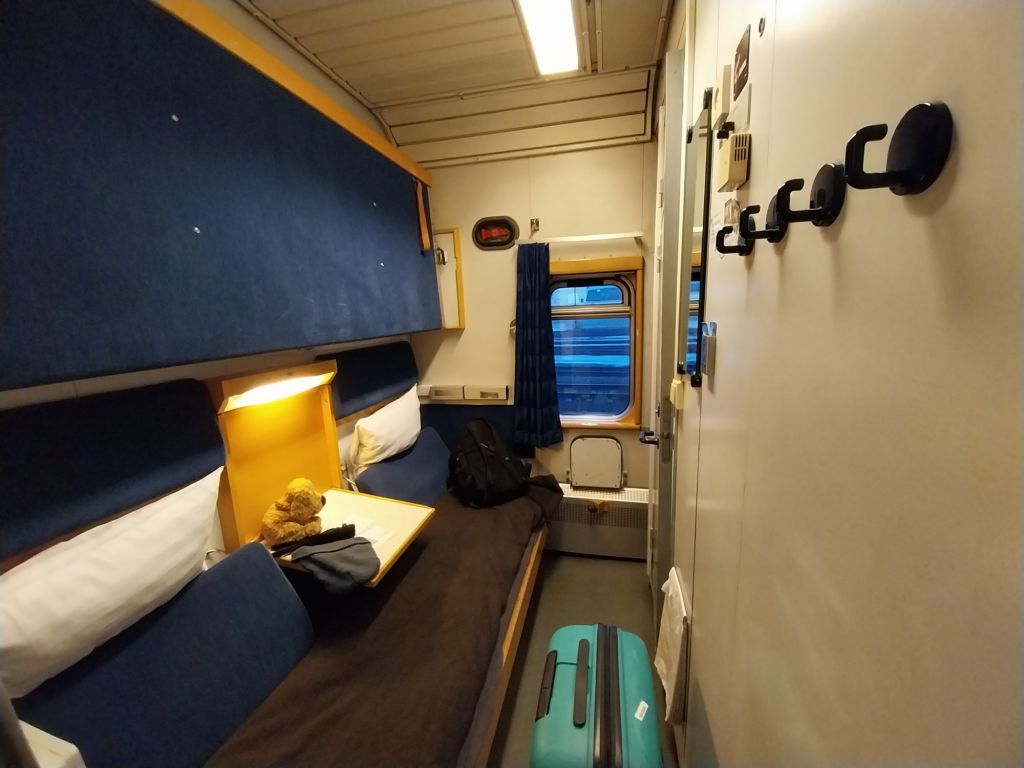
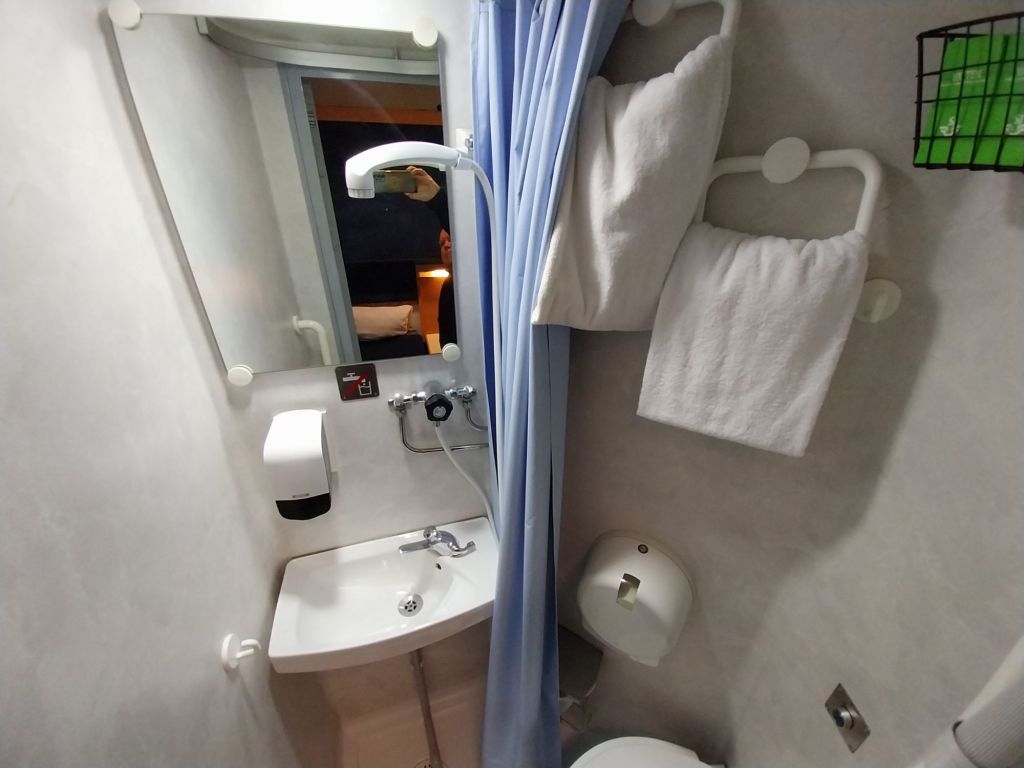
The big blue panel to the left is a bunk bed. On other sleepers I’ve used, this has always been already in position. Being folded up gives the lower bed more headroom, and the fold up table in the middle is a neat addition, given that it’s not yet 7pm. Thanks to my Eurail pass and booking three months earlier, I’ve secured the room for less than €70; a bargain that includes breakfast.
The bistro bar serves hot and cold meals, and already the benefits of being in Sweden are evident; a mian course of meatballs and a beer coming in at less than €15. Half of that is for the beer. but it’s still less than I was paying in Norway. The host tells me that breakfast is served from 5.30am – just enough to time to eat and freshen up before our scheduled arrival at 0620. Because of my First Class ticket, I’ll also have access to the SJ lounge at Stockholm – so the potential for a second free feed,
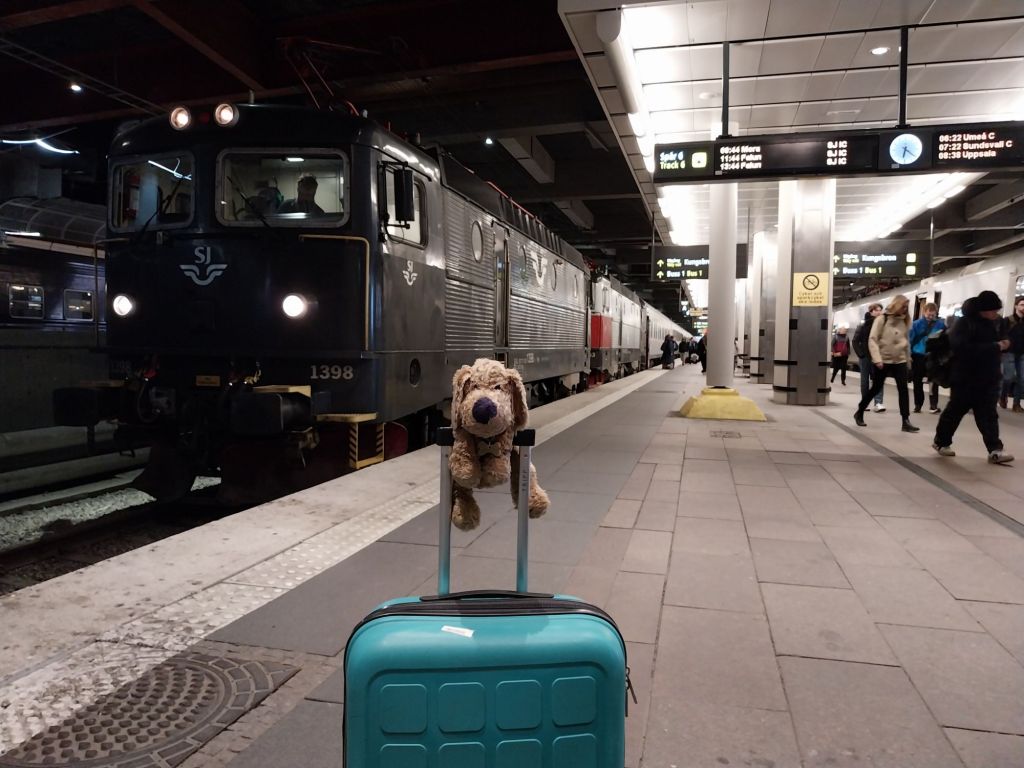
It’s an on-time arrival in Stockholm Centra, a huge terminal for trains and the Tunnelbana metro system. As expected, I get entry to the SJ lounge and enjoy some more food. It’s surprisingly busy for this time of the morning; many of the passengers looking to be business commuters.
It’s a short 15 minute walk to my accommodation, the intringuingly named Unique Hotel. Unfortunately no early check in is offered as the place is fully booked. But the casual lobby gives me enough time recharge the phone and my own batteries for the next 48 hours in the Swedish capital.
TravelCaster Tips
Getting here : Stockholm is easily accessible by train from other parts of Europe. There are night services to Copenhagen and Berlin, along with the one I took from Narvik. Booking is available via the Swedish Railways website. You can also travel here via ferry from Estonia and Finland. See our Baltics and Scandinavia blog for details.
Orientation : Stockholm’s busy central district sits immediately north of the Gamla Stan island where you’ll find the Old Town, The city centre contains hundreds of shops, bars and restaurants, plus accommodations to suit all budgets.
Public Transport : SL runs all buses, local trains, trams and even some boat services. Its website has a useful/planner function, and re recommend downloading the app for easy purchase of passes. A 24 hour ticket costs around €10
Ford and Drink : Sweden’s night trains – and may of the day trains – have a bistro bar on board selling everything from simple snacks to hot meals. A main course with a drink costs around €15.
 TravelCaster
Leave a comment