

Ask a typical UK traveller where they’d choose to go to in Europe and they’re likely to name one of the classically great locations : Paris, Venice or Barcelona. Yet in the height of the summer season such destinations can be enormously expensive. I’m fortunate enough to not have to travel on a budget, but I still like to get good value. And so my choice for this tip is Poland.
I’ve been here twice before. Easter 2024 saw the briefest of visits to Warsaw – delayed by whole day and barely spending a few hours in the capital. And September 2023 I experienced the tourist trap of Krakow and its less famous nearby cousin of Wroclaw. So it’s here that I’ve decided to begin the latest adventure – a seven day trip taking in three cities.

Before Brexit, free movement saw the UK’s regional airports become extremely well connected with Poland and these days, along with family travel, there are plenty of tourists flying into previously underrated cities. Wroclaw is one of them, and even on a sunny Saturday evening in July, there is a noticable and welcome lack of British accents here. Just two hours down the road in Krakow, the Rynek (Market Place) would likely be full of stag and hen parties ruining everyone else’s weekend. In fairness, it’s not just the Brits – Krakow is a honeypot for Europe’s party animals who enjoy cheap drink and tacky nightlife.
Wroclaw is a very different kind of evening out. Yes, there are drunks (of course) but there are also families out for some entertainment – the streets are awash with musical performers, acrobats and human statues all vying for a few Zloty (Poland still has its own currency, and isn’t part of the Euro). The are large pavement cafes and restaurants, largely selling exactly the same dishes, often with unhelpfully unappetizing pictures on the outdoor menu.
Better, in my book, to walk a block or two away from the main drag to bars like Kontenuaja which serves a huge array of craft beers with a slightly smaller but simple menu of burgersand snacks. In recent years, Polish bars have started to expand their food offerings from basic pork scratchings (often served with lard) to Italian style pastrami sandwiches – cheap to make and buy and just the right amount of carbs to line the stomach. All of which makes NewsMutt very happy.

Wroclaw boasts over a hundred bridges spanning the River Odur and the various canals that form a kind of moat around the Old Town, leading some tourist agencies to describe the city as the “Venice of Poland”. Walking along it on a humid Sunday morning doesn’t exactly exude the romance of its Italian counterpart; the waterways here are not used for everyday transport and commerce – though if you’re tempted, there are plenty of options from a sightseeing trip to a party cruise. But the Grand Canal it is not.

That said, the river has meant a number of small islands being created over the centuries, a couple housing notable churches and other historic buildings. And on the Wyspia Daliowa is a an ecclesiastical extension – in the form of the Sculpture of the Nave. Surrounded by what ecologists like to call a rewilding area (translation : we can’t be bothered to cut the grass), the public art provides the backdrop for a selfie, and is sometimes used to stage concerts and other outdoor events.

Even at less busy times, Wroclaw is an energetic city thanks to its large student population. The University here is one of Poland’s oldest, having been founded in 1702. The northern part of the Old Town is full of historical buildings with beautifully elaborate designs, and a tiny scholar who likes to make friends.


Like many Polish cities, Wroclaw has a deeply religious background. On my previous trip I managed to inadvertently attend what appeared to be a Canonisation and found a hotel named after Pope John Paul II. This being a Sunday, I certainly didn’t fancy being stuck in a service lasting up to two hours – though funding alternatives to do on the day of rest proved somewhat tricky.

I do like a Market Hall, and Wroclaw’s is one of he best surviving examples of a classic design in this part of Europe. Completed in 1908 it was largely undamaged during the Second World War, and today houses one of the biggest traditional selections of fresh produce and household goods in this part of Poland. I say traditional, because Wroclaw is also – ahem – blessed with a couple of huge modern shopping malls. Though don’t expect to buy much here on a Sunday because the Market Hall – and most stores – are closed.
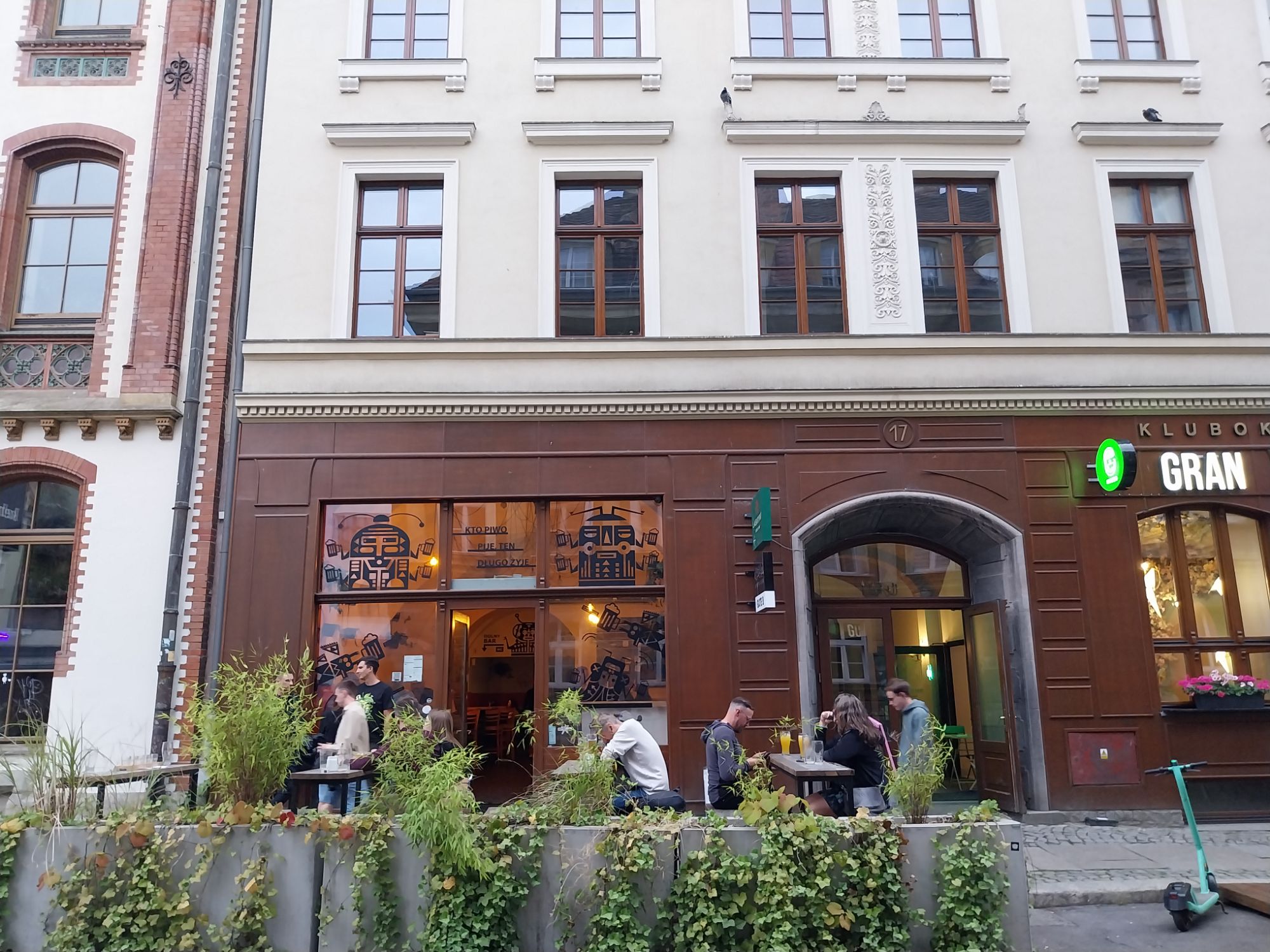
However, nobody observes religious restraints when it comes to the hospitality trade. The bars are doing a fine trade on a hot July afternoon. And in the shadow of St Elizabeth’s Church is a curiosity you won’t find officially listed in any guide. Two ancient houses linked together – affectionately called Hansel and Gretel – are home to a small souvenir shop. At least that’s what the signs say… and then you see a second sign – “Drink Bar”. It’s one of the smallest pubs in the city, but has a great beer garden that’s open late into the evening.


Wroclaw delivers almost everything that Krakow does : a compact and attractive Old Town, culture in abundance (I’ve not even mentioned the Opera House here), a sense of history – and all for about 30% less of the price you’d pay in similar sized cities. Yes, the summer is more expensive – but this is a great city to visit at almost any time of the year. After two days here, it’s time to head north.
TRAVELCASTER TIPS
Getting here : Wroclaw is served by many airlines operating from UK cities with a flight time of around 2 hours. You can also travel here by train from other European and Polish cities. Tickets can be bought at stations or via the Polish railways site PKP Intercity.
Orientation : Wroclaw Copernicus Airport is located around 10km from the city centre. The cheapest way of travel is to take the Route 106 bus from outside the main arrivals hall to the central train station. The station is about 10 minutes walk from the Old Town but is also served by an extensive tram and bus network.
Public Transport : Wroclaw’s Old Town is largely flat and walkable. However, there are plenty of buses and trams if you’re less mobile, with a 24 hour ticket costing less than €4. You can buy tickets at most bus and tram stops (and from inside the airport), but I recommend downloading the Jackdojade app to your phone which allows you to plan journeys and buy tickets in Wroclaw and many other Polish cities. Whether paper or electronic, it’s important that you validate your ticket on your first journey, as inspections are frequently carried out and you may be fined.
Food and drink : Wroclaw is cheaper than. some of its more popular counterparts but it still has a busy and sometimes pricey restaurant scene around the Old Town. That sayud, you can find smaller outlets where a good main course and a beer can cost less than €20. Heading away from the Old Town will find you much better value, with small plates costing around €5. A basic 0.5l beer comes in at about €3.50 – though if you head to the ubiquitous Pijalnia Widki I Piwa (Vodka and Beer Pump Room) bars you’ll pay about €2. These outlets also do simple and cheap snaacks to soak it up.
 TravelCaster
Leave a comment