
Distance : 383km
Travel time : 6 hours
Lucca is so well connected with railway lines, you can travel in and out one of three ways. The most popular is from Pisa, but to the west the line stretches out to the pretty coastal town of Viareggio, and to the east it follows the sceni Tuscan line to Florence, which may explain why this morning’s train is full of tourists heading for the great sights of that city.
I’ve visited Florence previously, so today it’s less about culture and more about connections. Form here I change to the high speed Freccarossia service to Venice. The advantage of a first class Eurail ticket means a seat in Business Class, which today is fairly busy. There is a bar on board, but with my ticket the bar comes to you – a simple snack and a drink (alcoholic if you wish) to welcome you aboard.
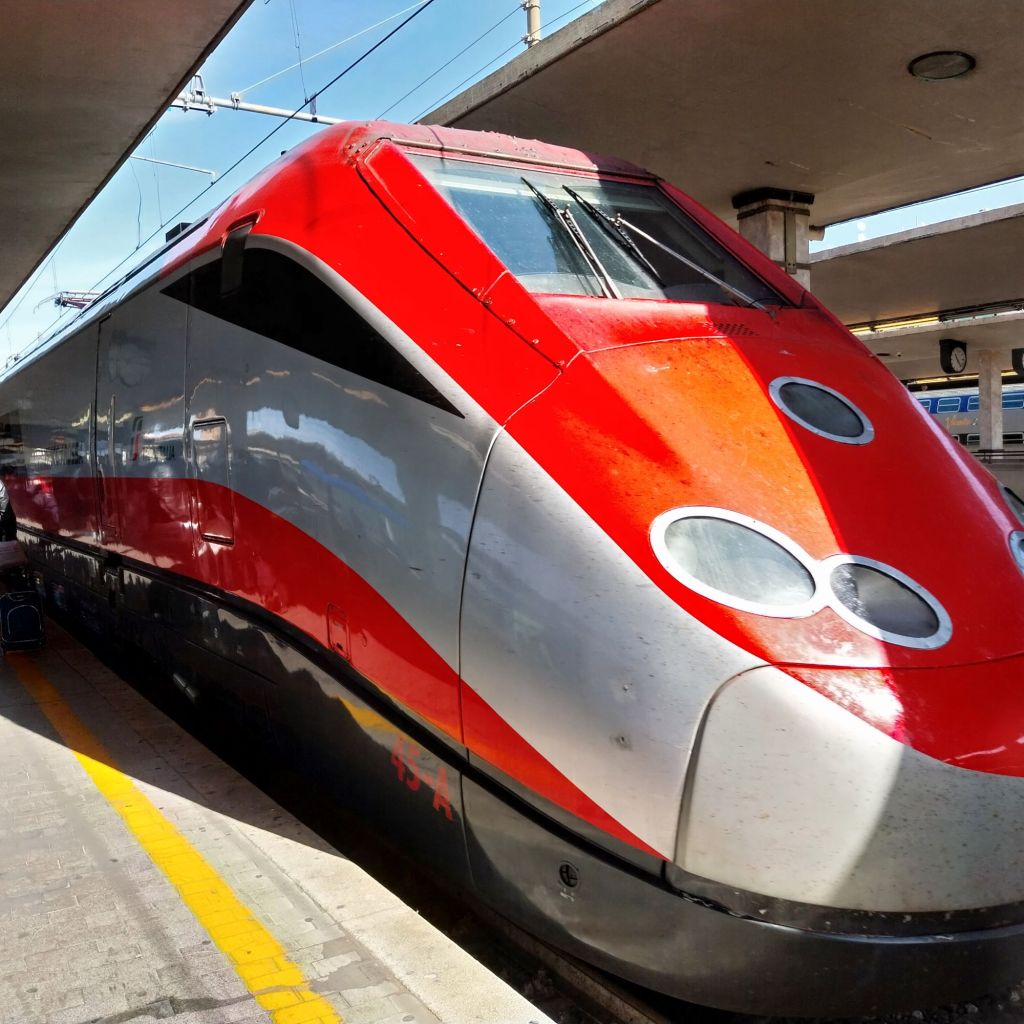
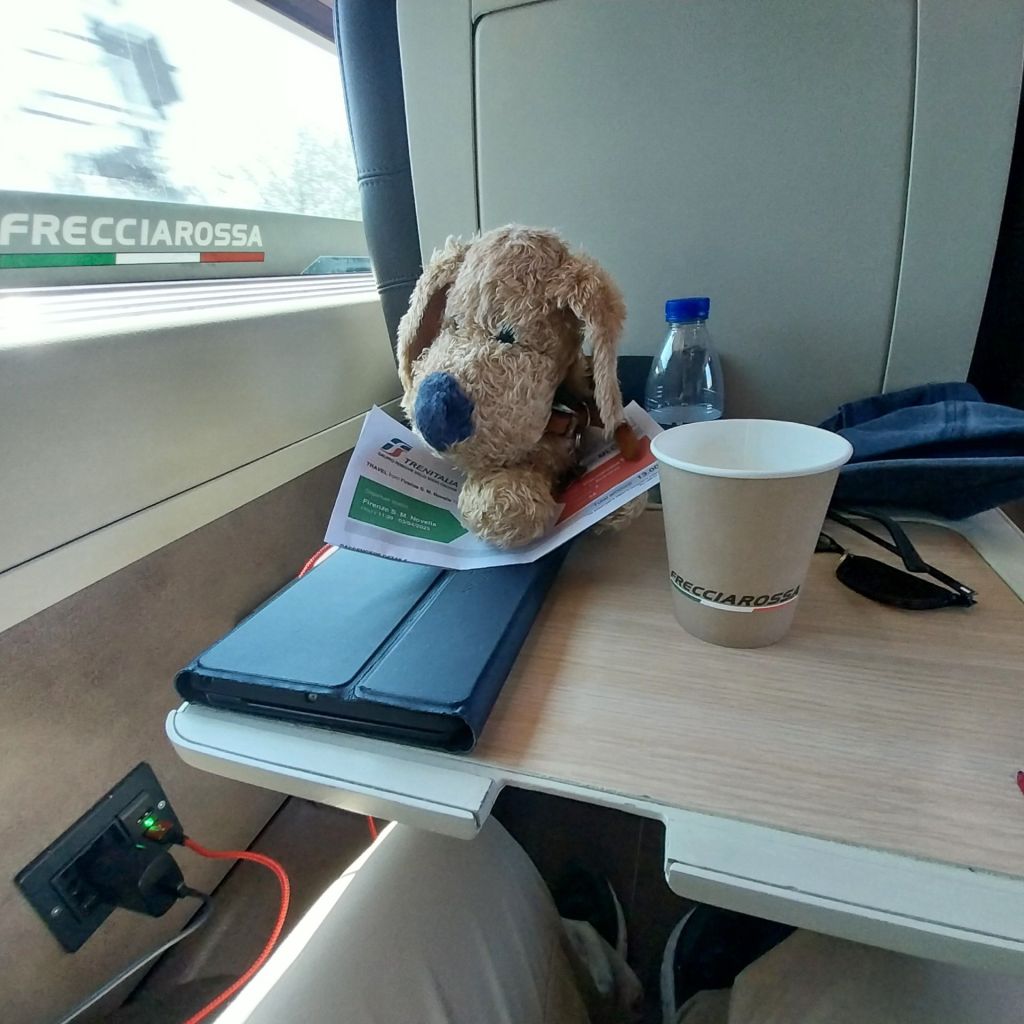
It’s a luxurious way to watch Italy go by, and the rich, lush vistas of Tuscany are replaced by open farmland in the centre of the country, before the industrial north emerges. My final connection off the day is Venice Maestre – one stop away from the historic city centre so a little too far to travel today. Instead, the modern regional train takes me onwards to one of my favourite cities.
36 hours in Treiste

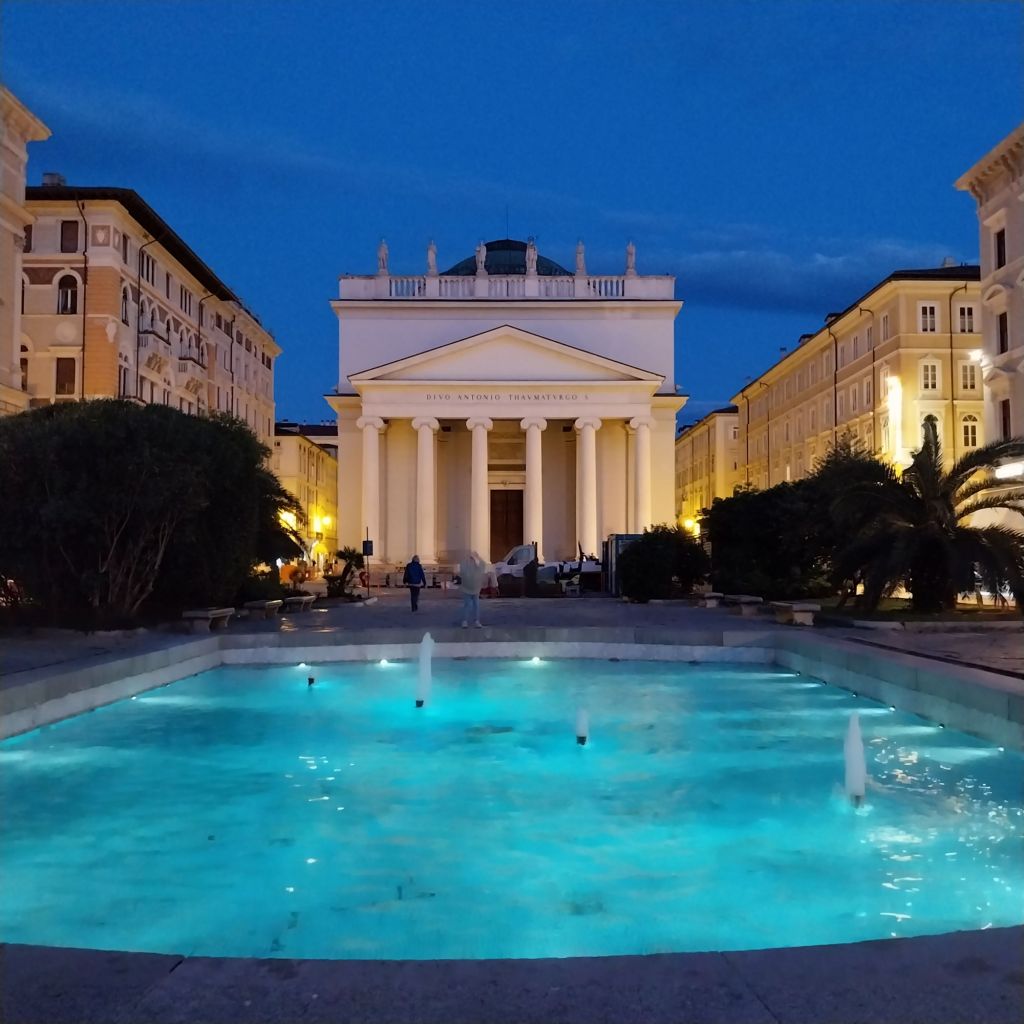
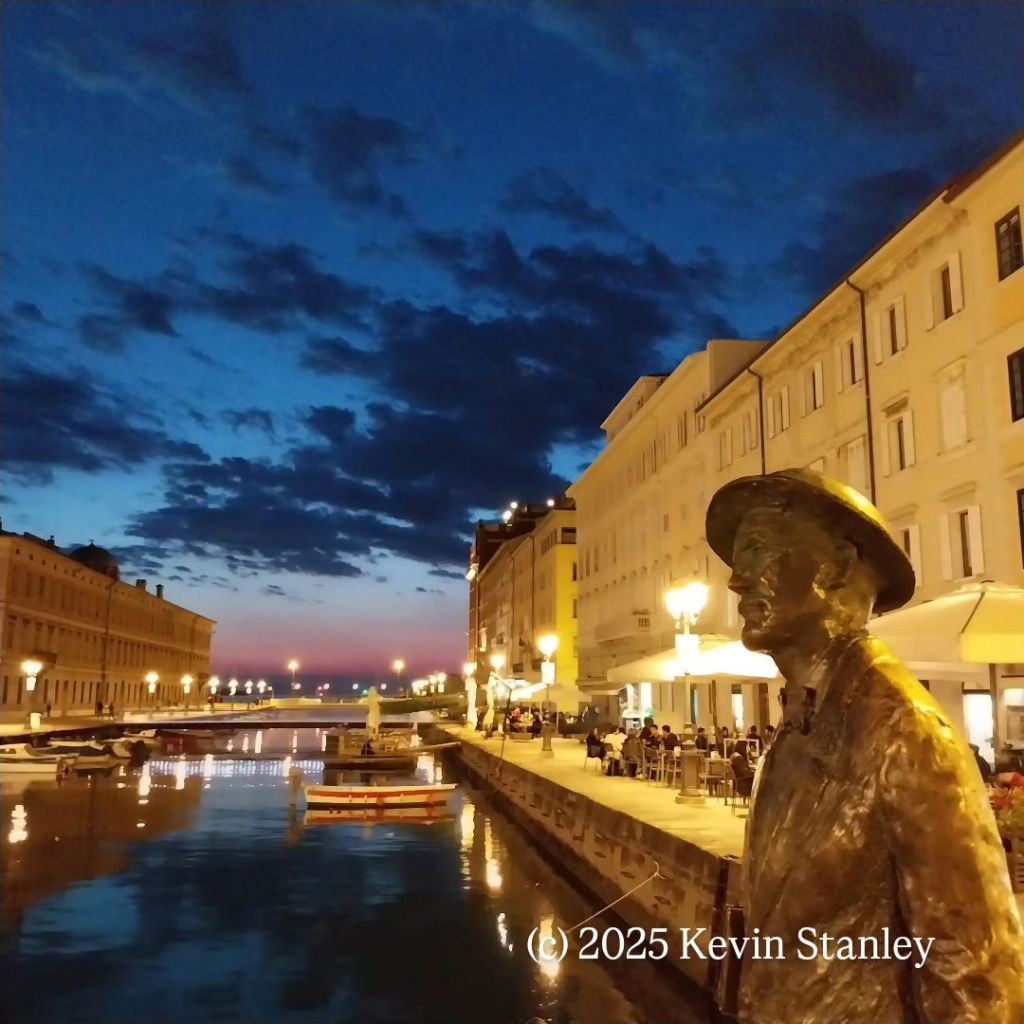
This photo was taken on my final night in Trieste, and sums up the charm of the city. I was so proud of it that I put my name on it! It is every bit as picturesque as anywhere in Tuscany, but is also a large port – a train passing ours today was transporting hundreds of cars – and it’s a strategic crossroads of both commerce and culture.
It’s not long before I experience both – and not in a good way. I always like to get a hotel close to the railway station, and the Hotel Roma seemed to fit the bill when I booked. The pictures online made the place look a little dated, and I’m used to the relative modesty of Italian hotels. The Roma takes modesty to the next level. A squishy, uncomfortable bed, a shower cubicle that was big enough for half of me, and an air conditioning unit that refused to do anything but blow hot. I’d already decided I wasn’t staying, but the booking conditions would mean paying the first night’s stay upfront. The man on reception attempted to tell me that the air conditioning in Italy “is only cold in the Summer,” which was odd, since it had worked well enough in Lucca and just about every other place I’ve stayed in.
I left them to it, and quickly booked an alternative at the nearby NH Collection, the same chain I’d used in Marseille. It was just €15 more per night than the Roma and about a thousand times more comfortable.

(That’s not my actual hotel)
Trieste was looking stunning in the evening sunshine. It was my second visit to the city, so I had a good idea of where everything way. The Via Borsa – running across from the historic Stock Exchange building – is a bustling pedestrianised area lined with bars and restaurants. I’s already set my mind on dinner at the Bar Buffet Borsa and it didn’t disappoint. Trieste is strategically placed close to the Slovenian an Austrian borders, so the food here is just as likely to be Germanic or Slavic as it is Italian. The Lublanska is a simple dish – a bit like a schnitzel – but with the flattened pork centre wrapped around ham and cheese, before the whole thing is fried in breadcrumbs. It’s filling a cheap – with a main course and a glass of wine for less than €20.

While the aperitivo is the fashionable thing to drink here, Trieste is also a great place for craft beer. Just two blocks from the Grand Canal is Hop and Rock – a basic bar with outdoor seating and loutish rock music. There are around six craft beers on tap in varying strengths plus a fridge full of cans from across Italy and beyond, It’s a pleasant place to end the evening.

I’ve turned again to my AI assistant to recommend slightly off beat things to do here. And if you’re a transport lover, the Opicina Tram is a great way to spend the a few hours, Starting from the centre of Trieste, the historic vehicle climbs high into the hills to the suburb of Opicina. It’s the only tramway in the world which becomes a funicular railway halfway up, because that’s the only way it can handle the steep inclines. The views are spectacular, with the ogle of the incline making it look as if the buildings are perched at diagnol, rather than the tram itself.

The tram runs every twenty minutes through the day with a contactless card payment system on board; a one way trip is just €1.70. Opicina is a functonal place with a few nice cafes and shops. But a road sign throws up another piece of local history.
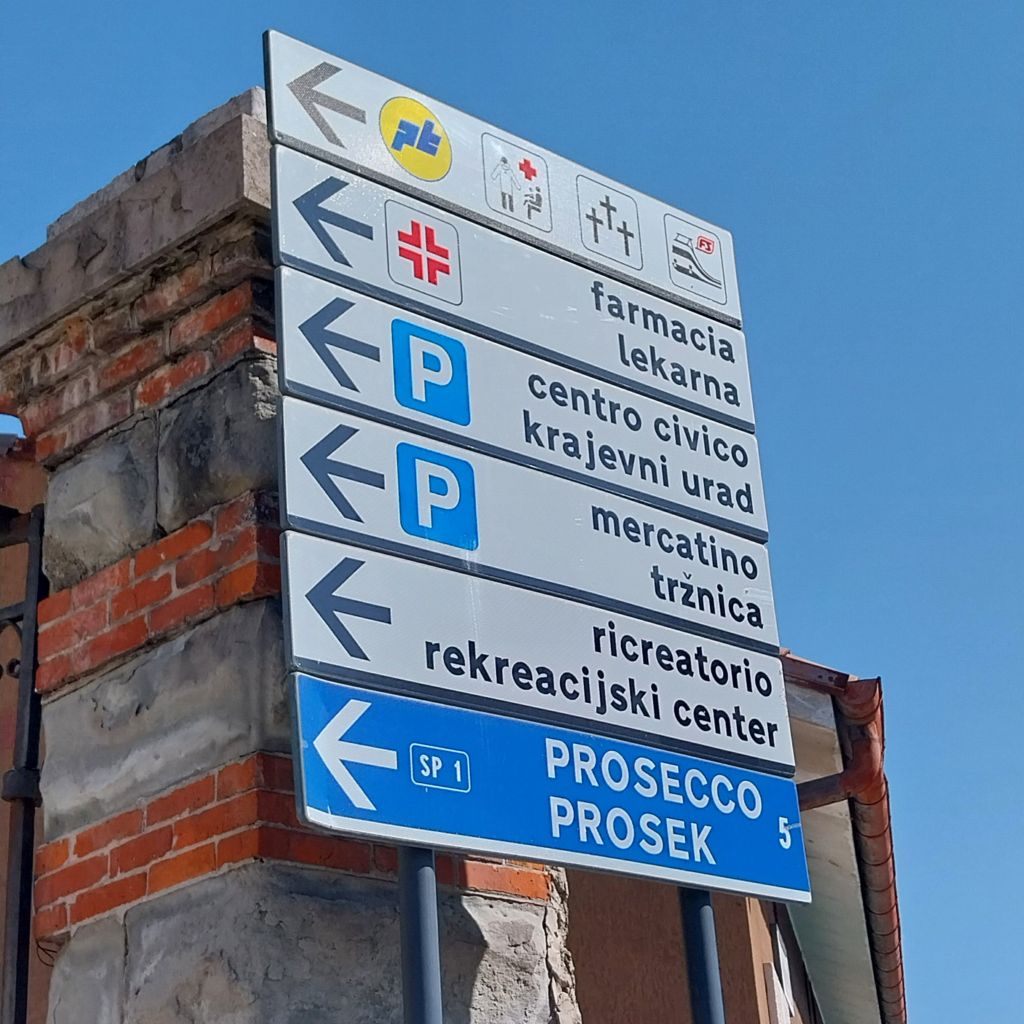
The village of Prosecco, which gave its name to the fanous sparkling wine, is just a short trip away. AI confirms there are regular buses from Treiste – though today I have my sights set on other places. But it was also interesting to see dual language signs – Opicina is a border town with Slovenia immediately to the east.
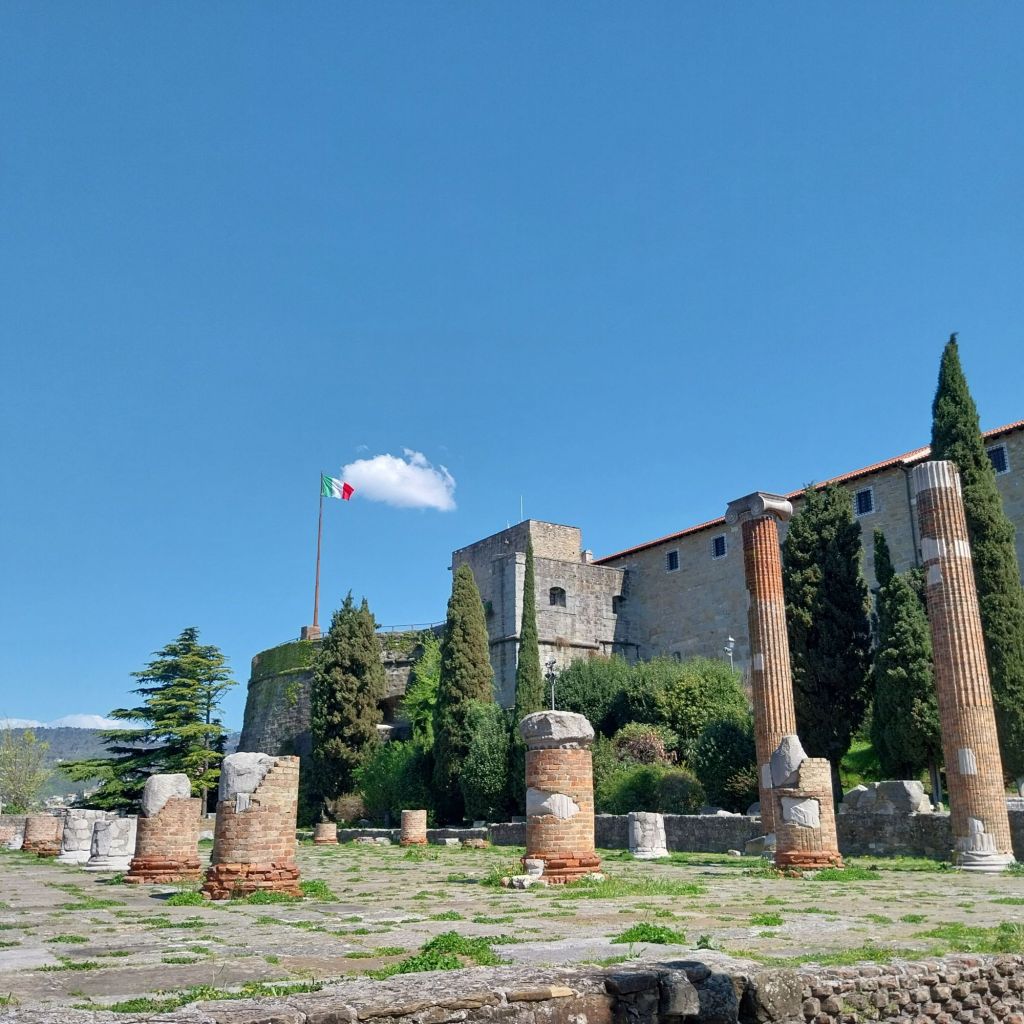
A bus takes me back down the hill, before another bus takes me up another hill to the impressive San Giusto Castle. Built by the Hapsburgs in the 15th Century, this fortified structure served as a military base and a prison. Today it houses an interesting armoury museum, which has NewsMutt instantly eager to take part.

For just €4 entry, the Castle also provides one of the best panoramic views of Treiste. There are also the remains of a Roman Forum here.
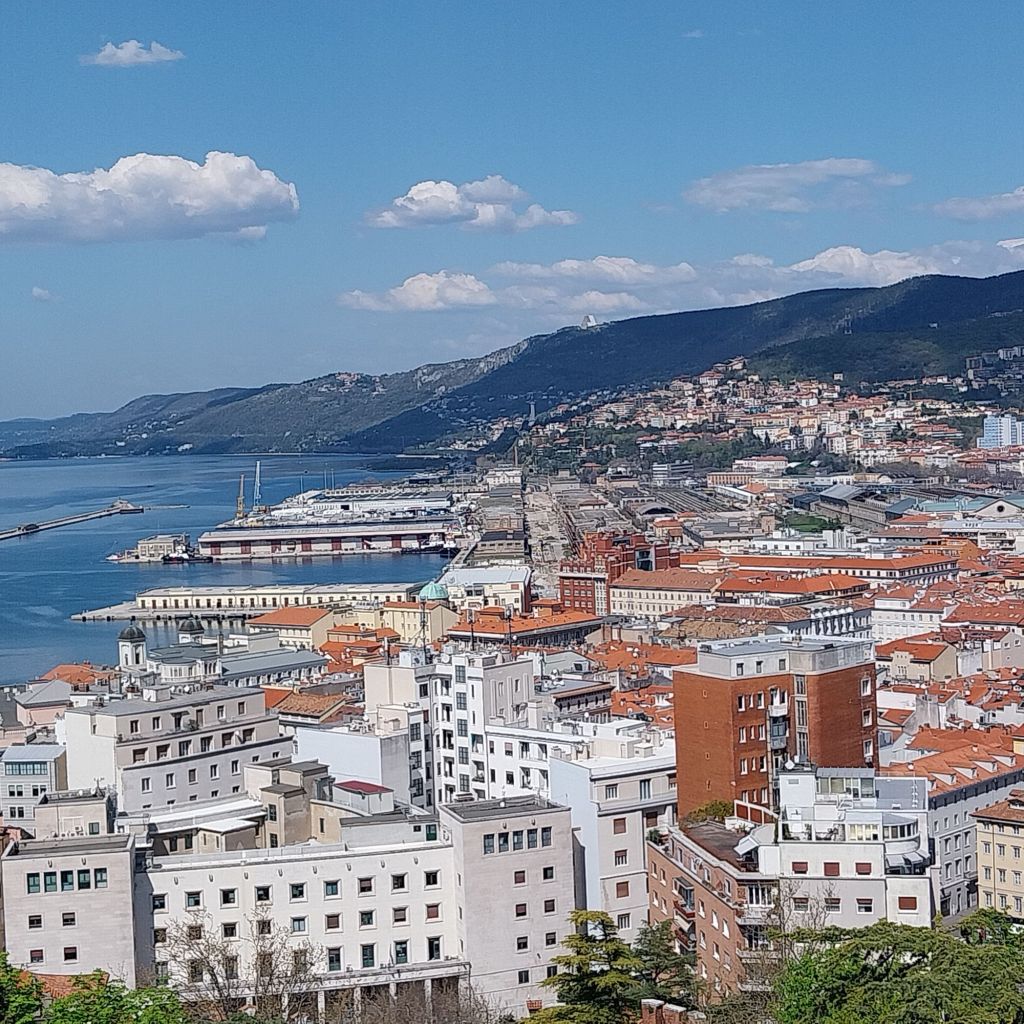
As well as its varied cuisine, Trieste has long been a place for art and artists. The Irish writer James Joyce lives here for over a decade – and his statue by the Grand Canal shows a confident man, happy to be here.
There’s nothing like a bit of bandwagoning to try and cash in on a name. Nearby is the James Joyce Bar, lit in green and decorated with wooden panels and a Guinness tap. I’ve walked past it several times and it’s always been empty.
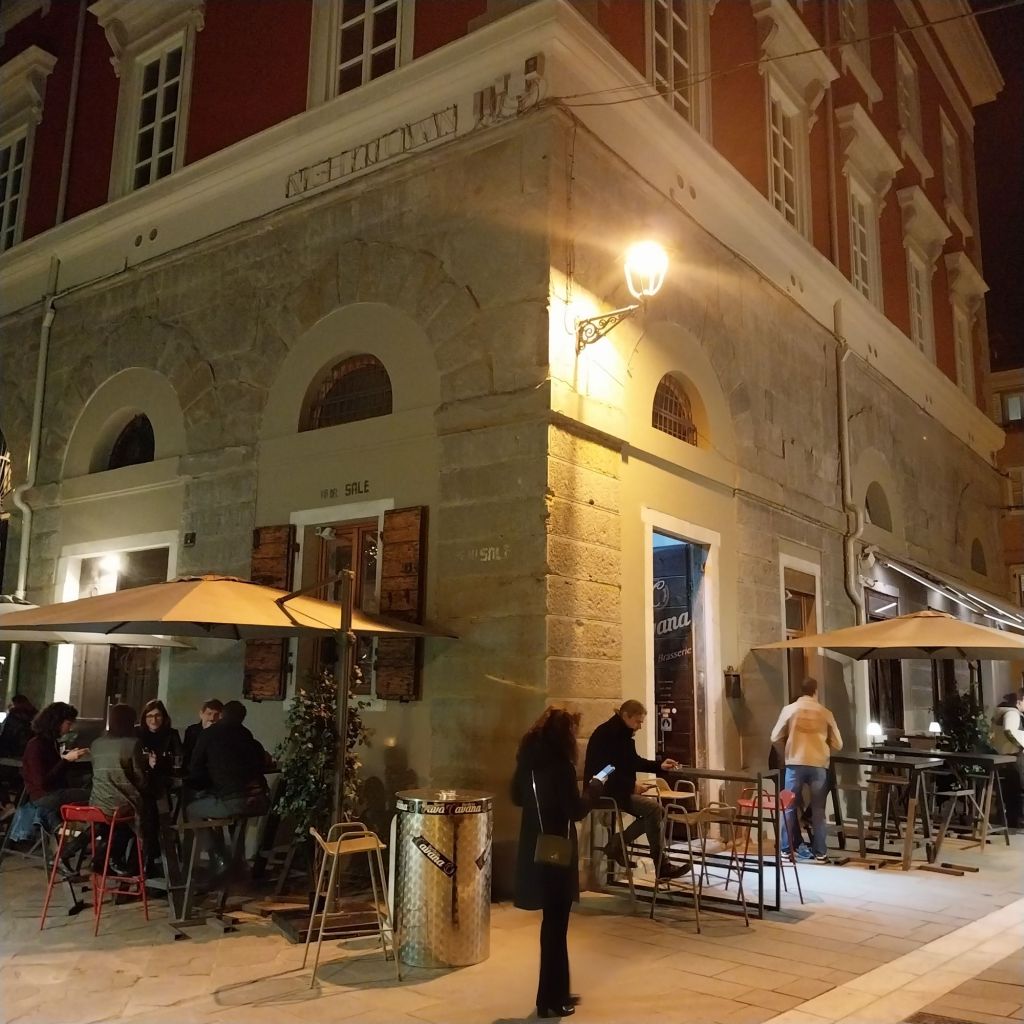
Perhaps it’s because they don’t fall for the hype here or prefer to celebrate their own local heroes, and the best of Trieste’s nightlife can be found further along from the Borsa in a collection of winding streets filled with bars and restaurant. On a Friday night you’ll find it difficult to get a seat at the Strada, where the young and beautiful locals hang out. A better ooption is a couple of blocks back towards the waterfront. I discovered Birrifico Cavana on my last visit here – it’s another craft beer place which has it’s own brewery – though it’s not easy to see which beers have actually been made here. Still, it’s a nice place to people watch.
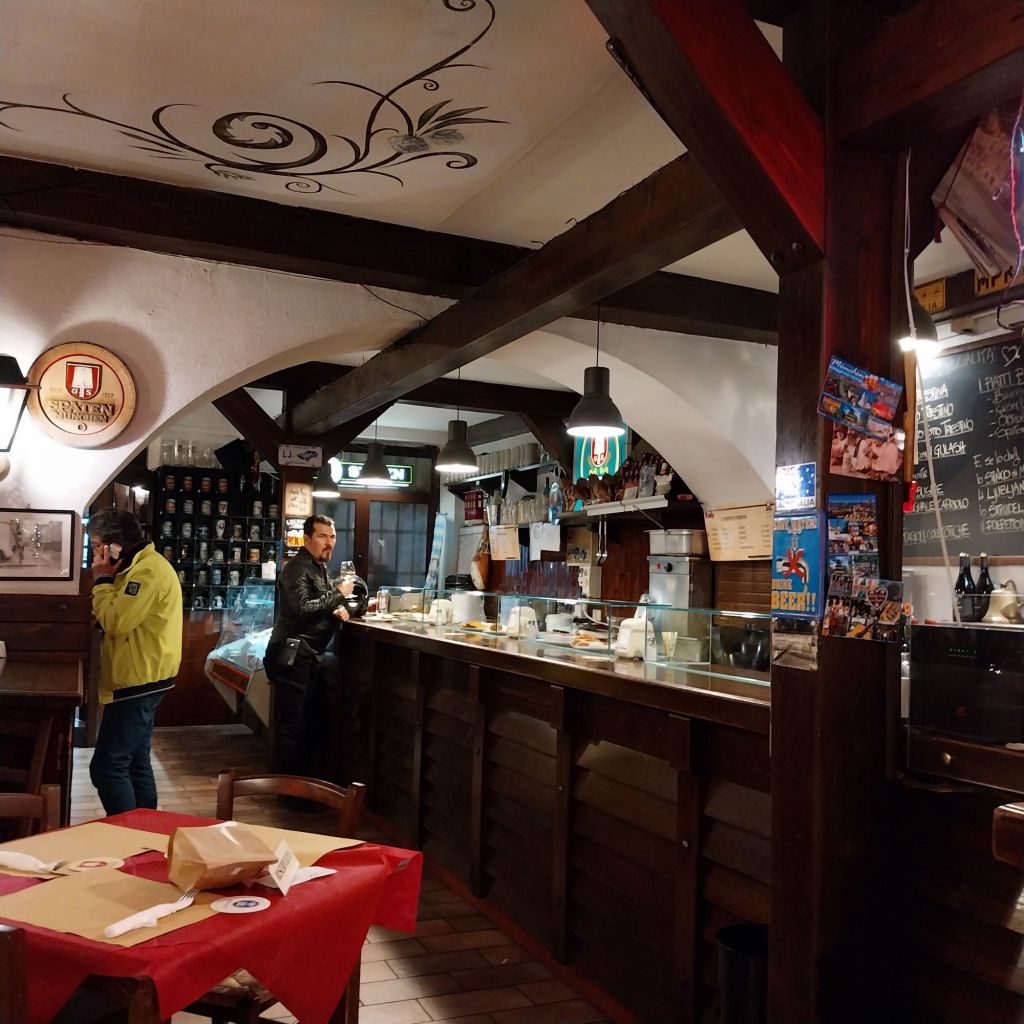
My final evening is spent close to the station area, where seemingly functional streets contain hidden gems. Rudy’s is essentially a Bavarian beer hall with an Italian twist. You can simply stand at the bar for a beer and a snack, or – as I did – enjoy some of the heartiest, meatiest dishes you’ll tase this side of Munich, An enormous pork leg is served o the bone, the meet falling off it into a delicious gravy. Again, a main course for €16 seems good value – and the large Helles beer is just €6. I won’t need to eat again for a day.
Trieste has many more sights, some of which were covered in my previous trip (linked here). With culture, food, views and a great nightlife, it’s no wonder that this is the place many Italians choose for their own holidays. It also marks the perfect starting point for the next stage of my journey.
TRAVELCASTER TIPS
Getting here : There are frequent flights from the UK to Treviso Airport – mainly aimed at those wanting to explore Venice, but there are plenty of onward rail connections to Trieste, making it possible to complete your connection in one day – the travel time is 2.5 hours, making it a leisurely way to see the local scenery. A train from Venice will take you about 90 minutes. There are many connections north via Udine into Villach and Austria, and three direct trains a day to Ljubljana. The Trenitalia website provides timetables, though for bookings we recommend the Austrian (OBB) website. While an Interrail or Eurail pass is useful for international trips, Italy’s rail fares are fixed price – meaning you’ll pay no more if you book in advance or turn up on the day. Trieste is also served by several international bus connections.
Orientation : From Trieste Centrale station, head is a diagonal towards the right, past the waiting buses and then left – taking you onto the busy main waterfront road. A five minute walk will bring you to the Grand Canal and a further five minutes takes you to the Piazza Unita d’Italia. The main bars and restaurants are basically in a four block area between the two landmarks.
Public Transport : Trieste has an extensive bus system which can take you to the main sights and beyond. The official website allows you to plan a journey though can be quite confusing. Line 6 runs between the city centre and Miramare Castle while Line 2 is a useful alternative to the Opicina Tram. You can use a contactless credit or debit card on any bus – a single journey of up to 60 minutes costs €1.50 and the technology will cap multiple journeys at the daily rate.
Food and drink : Trieste has a massive selection of plans to eat and drink, ranging from fast food stands and small coffee shops to elegant restaurants and bars. A main course at a standard eatery will cost around €15-30 – though expect to pay more for premium seafood and meat dishes. A 0.3 litre beer will be €4-5 – rarely more, unless you’re in an upmarket place or a nightclub.
 TravelCaster
Leave a comment