
It’s not difficult to get annoyed by Kelvin MacKenzie. He’s never been one to shy away from an attention grabbing headline. Although at least when he was at The Sun, most of his headlines had a shred of truth. Now, however, it seems that he’s gone into the fortune-telling business. Which is unfortunate if you happen to believe a word he says.
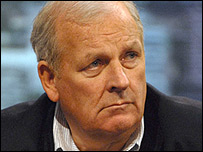
Just two days before the BBC published its latest report into Local Radio, commissioned by management and penned by consultant John Myers, Macca claimed to have inside information about its contents. And he couldn’t wait to tell you about it in his Daily Mail column.
“Now there’s a bonus for deadbeats!”
he seethed – exclusively revealing that
“any employee at one of the 40 local radio stations (which employ a total of 3,000 people) who has gone five years without promotion will receive a cheque for £4,600 — which is described as ‘disappointment’ money.“
Nice work if you can get it. In fact, I did get it, some years back. I’m not sure if it was as much as £4,600 – but I did have to work hard for it and, yes, have had no visible promotion or significant increase in my basic salary since I joined the Good Ship Auntie Beeb back in 1997. Unfortunately, Kelvin was confusing my ‘disappointment money’ with something called “growth in the job” whereby BBC employees get modest increases of 110% and 115% of their basic salary after three and five years in the job – subject to meeting a set of criteria proving that you have, in fact, made the grade. I’m sure that similar shenanigans never, ever happened at The Sun, eh Kelvin?
Now I can already hear some people seething at the idea that anybody in the BBC should be rewarded for anything at all. That aside, John Myers didn’t exactly aim his “disappointment” at the foot soldiers, rather than the generals. His detailed report into Local Radio concludes that there are too many managers for the network of 40 stations, and recommends that the BBC should consider sharing Managing Editors across more than one station. One of Myers’ key paragraphs reads :
One of the current difficulties for Managing Editors with an Assistant Editor in place is that a single station may not provide a sufficient workload. The result is that they can overly interfere with the people charged with getting on with the job…. However, some of the Managing Editors are so good and so experienced their knowledge should be passed on to a wider audience as a priority before it is lost in their impending retirement…. In effect you remove duplication, increase value and retain and share vast experience where it matters. You also save the roles of staff at the shop floor level.
The idea of a regional editor might well seem sensible to some, though unusually I’m not going to offer any comment one way or another on this. I should point out that I’m not a manager – and that this blog reflects my own opinions. But at the same time I do have to face the boss each day!
It is, nevertheless, something which is likely to be welcomed by many of the listener-led campaigns that fought against the original cuts being proposed for local radio. Although I’m guessing there’ll be as many managers arguing against sharing their roles across stations as there were presenters who were being lined up to do much the same thing.
And it’s a rarity to hire a consultant who effectively recommends axing the upper layers of an organisation. Perhaps, then, it’s no great surprise that the Controller of English Regions, David Holdsworth, gives the Myers report a somewhat lukewarm reception :
“We are grateful to John Myers for his report which will inform our thinking as we consider the BBC Trust recommendations on savings to be made in BBC Local Radio. We value his endorsement of BBC Local Radio as an excellent service, staffed by dedicated professionals, passionate about delivering much-valued output.”
IT’S ALL THE UNION’S FAULT, OF COURSE
As a post script, here’s something to make our Kelvin seethe. And yes, it’s all down to the nasty unions. According to John Myers :
…perhaps most worrying of all, I discovered management are powerless to control salary increases to any member of their NUJ staff due to national agreements, even if they believe these increases are non-deserving. No-one within a publicly funded organisation in 2012 should expect an automatic increase in salary without management approval.
This may surprise some, but I actually agree with Team Myers on this one. Of course salary increases should be subject to management approval. Which is why the National Union of Journalists is asking the BBC to reinstate the system of salary appeals, in which employees can argue the case for getting a rise, using evidence of their performance in the workplace.
The fact is, the same national agreements allow managers to take action against staff who are underperforming, right down to a little known “Issues of Capability” policy. Believe me, it takes few prisoners.
Of course, any policy can only be as effective as the managers who oversee and implement it.


 TravelCaster
Leave a reply to NewsMutt Cancel reply