
I was somewhat sad to be leaving Scandinavia. Once you get over the high prices for food and drink. Norway and Sweden are beautiful countries. Going beyond the predictable locations had opened my eyes as well as my wallet.
The next 600 kilometres involved two changes of trains; in Copenhagen and Hamburg. I knew that the first one would be straightforward enough – if I missed one connection from Lund there would be plenty of other options. The morning commuter train via Malmo was busy, and we were soon crossing the famous Oresund bridge that links Sweden and Denmark.
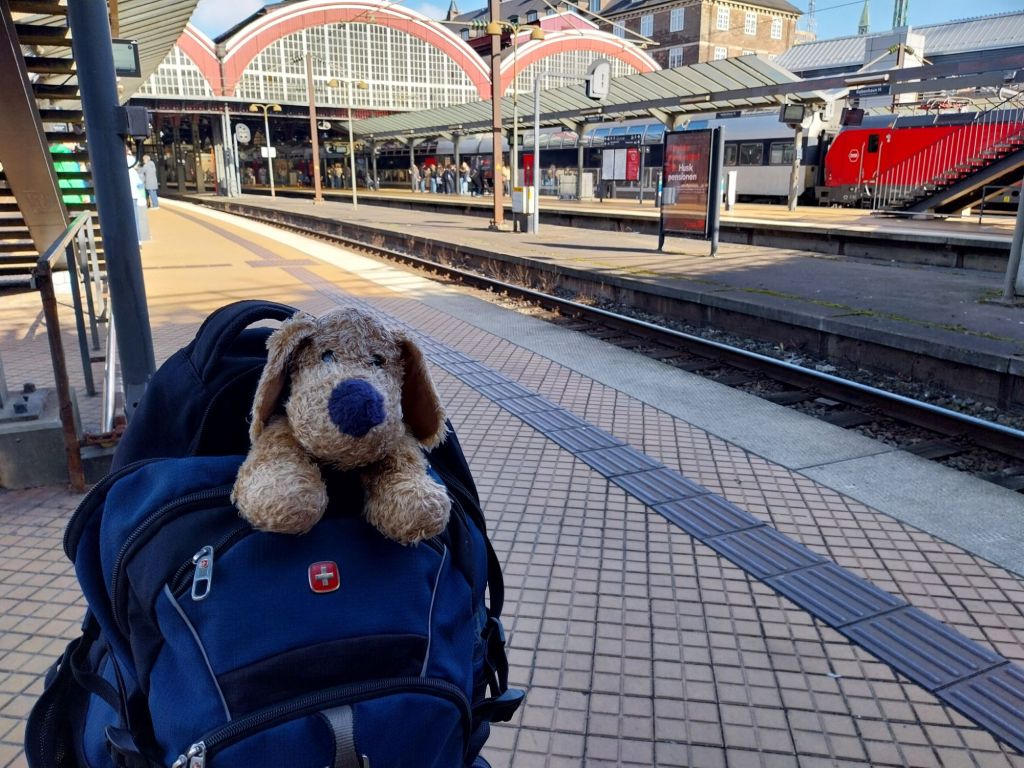
The Arctic winds of the last week had died down, with Copenhagen enjoying a sunny but cold morning. The next connection to Hamburg was a EuroCities service; this is a generic branding of cross border trains, and some are shared between different countries. Today’s trip was run by the Danish Railways DSB – and I was surprised at how modern the train was.
In my experience, EuroCities trains can be comfortable enough but run on sometime ageing rolling stock. On some, you can almost smel the tobacco stains still baked into the upholstery from the days when smoking was permitted. Today’s train, though, is shiny and new. DSB bought a fleet of Talgo electric trains in 2025, and the slick new carriages fee light and airy.
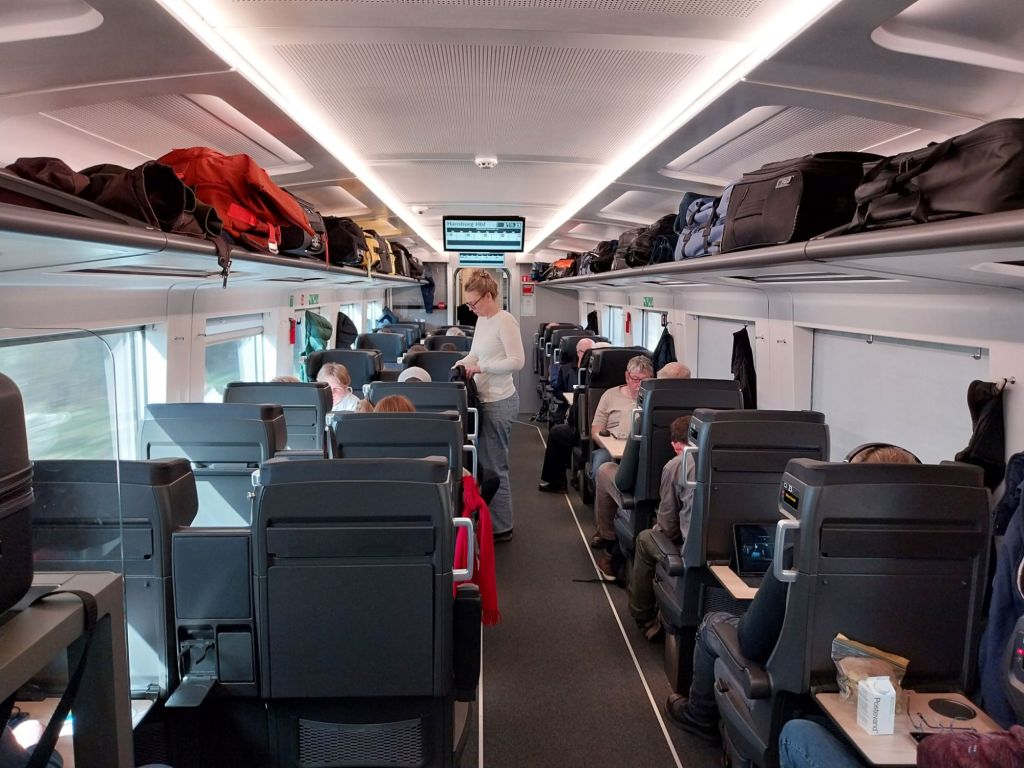
As with Swedish trains, there’s free tea and coffee in first class, and a nice touch with a basic snack served at seat shortly after boarding. There’s no dining car, but snacks and drinks can also be bought from a vending machine between first and second class. It was all going rather well.
But if anyone can mess things up, it’s Deutsche Bahn. Many would find it odd that German state railways are especially bad at timekeeping. But delays and cancellations are more common here than in many other countries. I was dismayed to see my onward connection from Hamburg to Bremen suddenly disappearing from my travel app. And then, an email from Deutsche Bahn telling me that the train I was on wouldn’t actually be going to Hamburg,
All the passenger were in the same boat – or train – as the guard made a series of garbled announcements. A German man helpfully translated for me, but after a while even he was confused, as the guard kept announcing new stations for the destination. Eventually we end up at Hamburg Altona station, rather than the main one. This means a frantic rush for the S-Bahn and missing my Bremen connection by minutes, Thankfully, there was another train the next hour, and I’m pleased to finally arrive at my destination nine hours after leaving Lund.
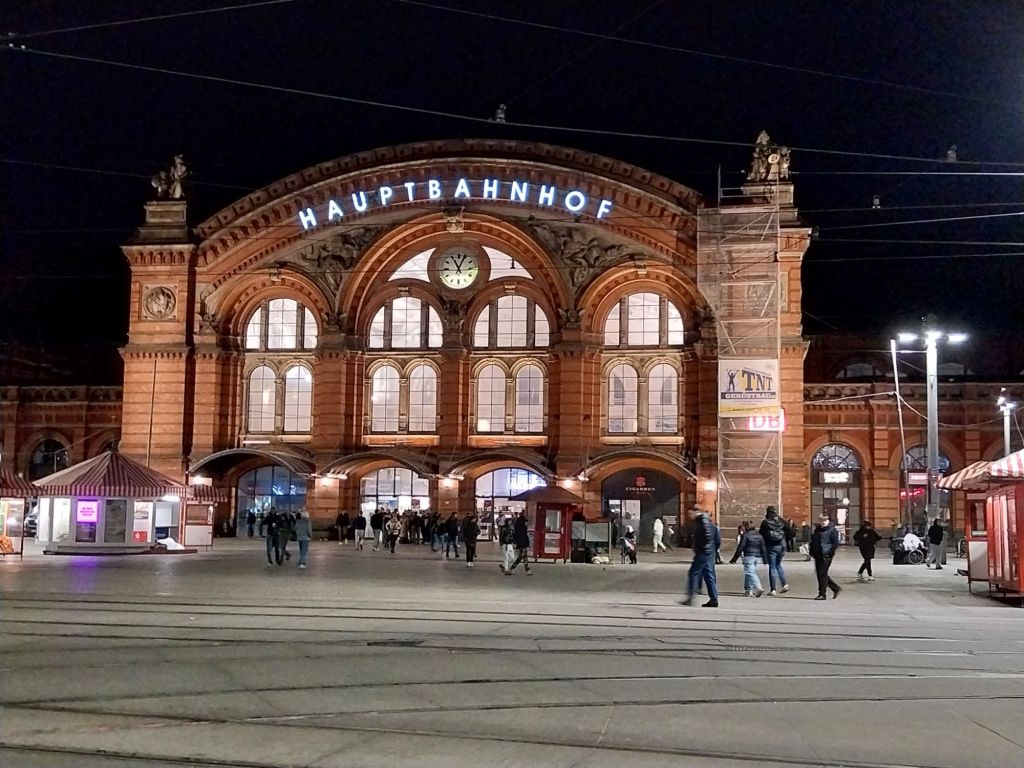
On first impressions, Bremen seems like a lot of German cities I’ve visited. The area around the station feels industrial and unwelcoming, with a flyover directly above me and concrete sprawl all around. However, unlike many German cities, Bremen did not suffer the same amount of structural damage as many did. So it’s Old Town is largely preserved – and it likes to show off. Big time.
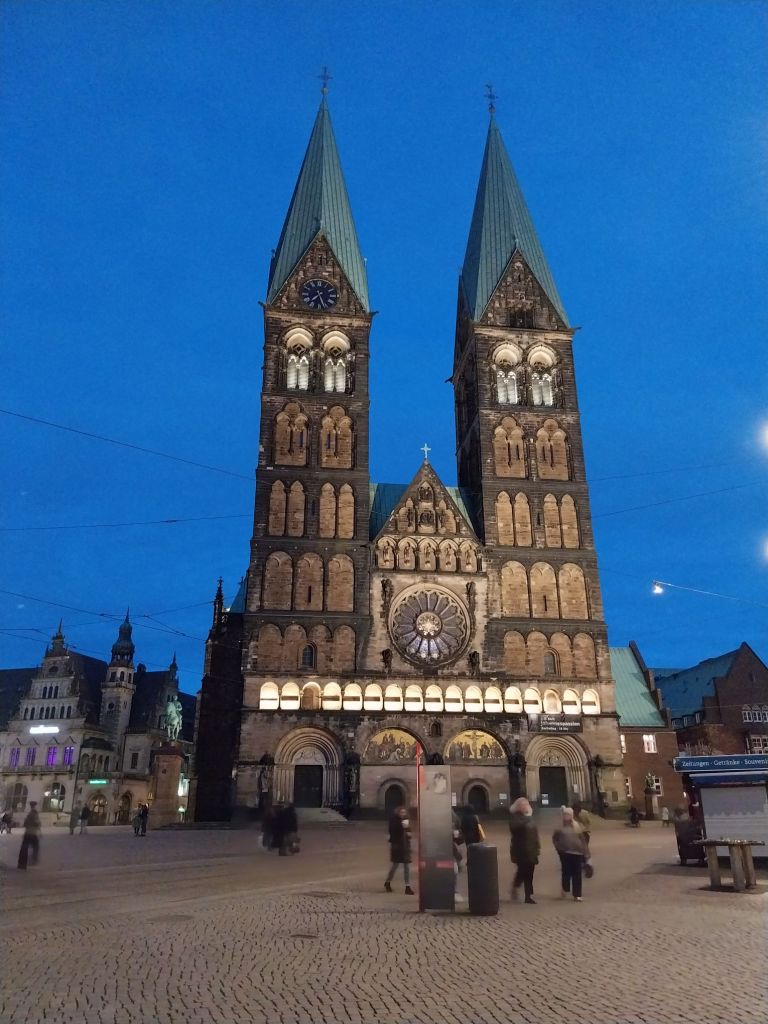
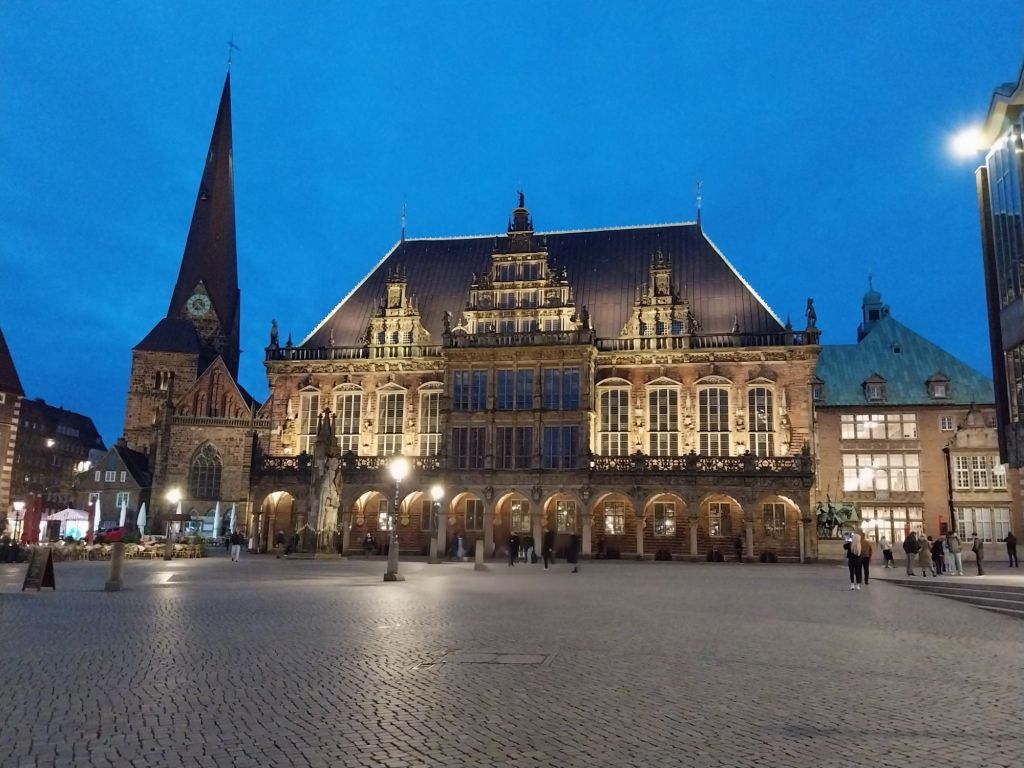
Standing outside St Peter’s cathedral, there is another building demanding to be photographed at every angle. The City Hall and other structures create an immediate impression – best seen in the evening when everything is lit up. But although this is Friday night, it seems a little quiet. So it’s time for a drink – in a pub that’s six hundred years old.
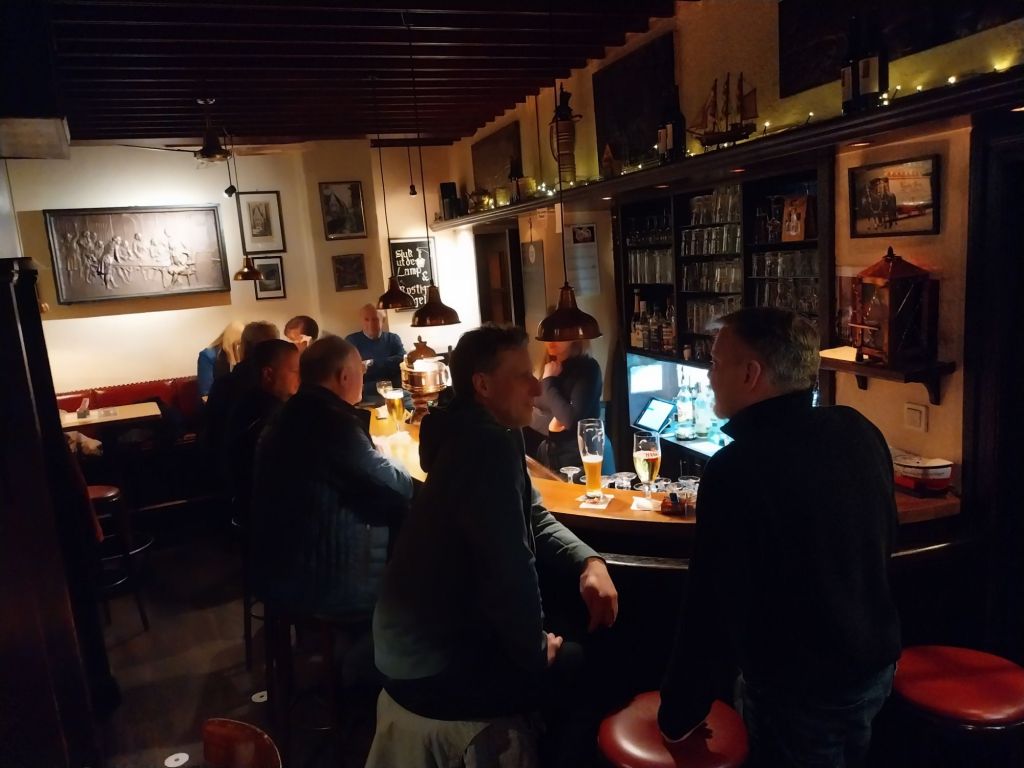
The Spitzen Gebel – named after its distinctive gabled facade – was once the premises of a company of piano movers. Such an important profession meant that its employees wern’t allowed to drink on the job. To get around it, they filled a lamp with herbal schnapps and drank from it discretely. You can still drink the “secret recipe” today – though a beer is more usual. The bar is tiny and it’s worth noting that it’s cash only. What’s more, smoking is permitted indoors – which gives the place an… authetic… feel.
Having got my bearings, I took the short 15 minute walk from my hotel to the Old Town the next morning, where a man was playing bagpipes on the bridge. Complete with kilt and sporran, I asked if he had Scottish connections. “No, I am from Hamburg, and I taught myself to play.” Fair enough. Although he was the one getting most of the attention, it was yet another of Bremen’s buildings demanding to be photographed.
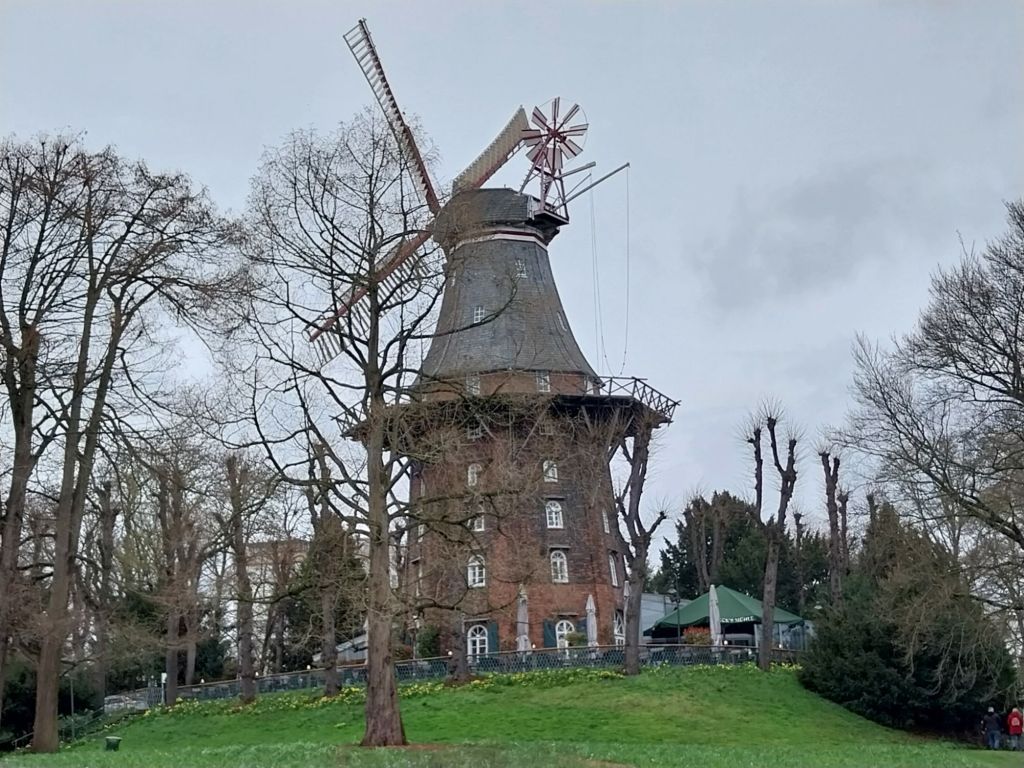
Beck’s Muhle is the only surviving windmill of around a dozen that served Bremen its flour back in the day. the current mill was built in 1830, and today houses an upmarket restaurant. Just out of shot here is an unattractive extension built to house the dining area.
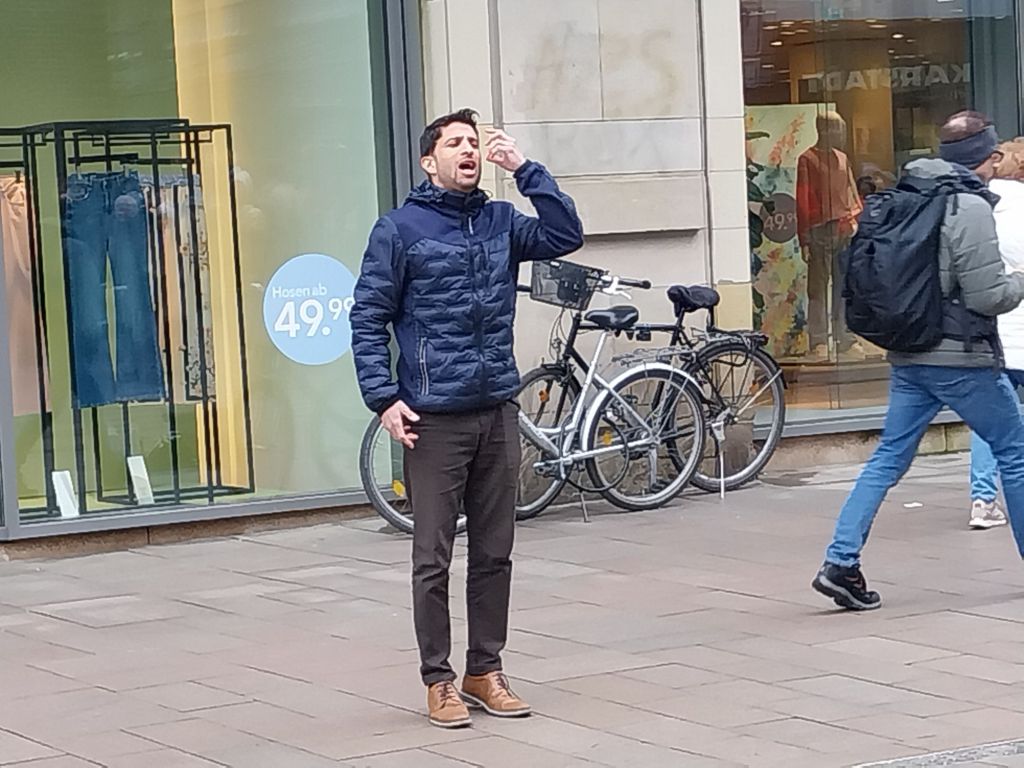
On a Saturday morning, Bremen is a cacophony of sound. In the Market Place, a protest with Palestinian flags on show. The cathedral bells are ringing out. And on one of the main shopping streets, punctuated by passing trams, are a man and a woman performing operatic classics. Here, he’s belting out Nessun Dorma. And very impressive it is too.
Sights and sounds are al around. At the Botterstrasse, over a hundred people eagerly gather at midday to witness the performance of the carillon, a series of bells suspended on on of the old buildings. At the tune plays, a board rotates depicting explorers of the world. The carillon was one of the few parts of Bremen badly damaged in the Second World War – and even the replacement bells didn’t last that long – the current set dating back to just 1991.
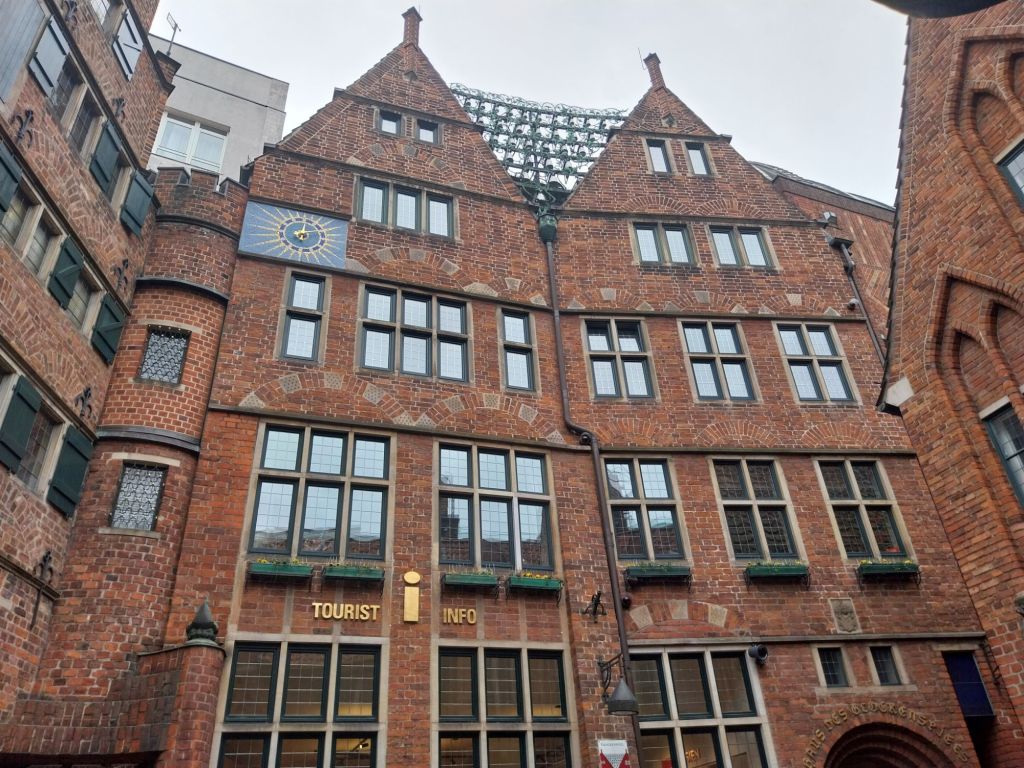
The area around the Cathedral orvids plenty of grandeur, but if you want the real history then the Schnoor district is the place to go. A set of narrow streets are knitted together with picture postcard buildings, many of them gift shops and cafes. It reminds me of the Shambles in York, or Plynouth’s Barbican, where centuries of history are now used as a way of bringing in the visitors.
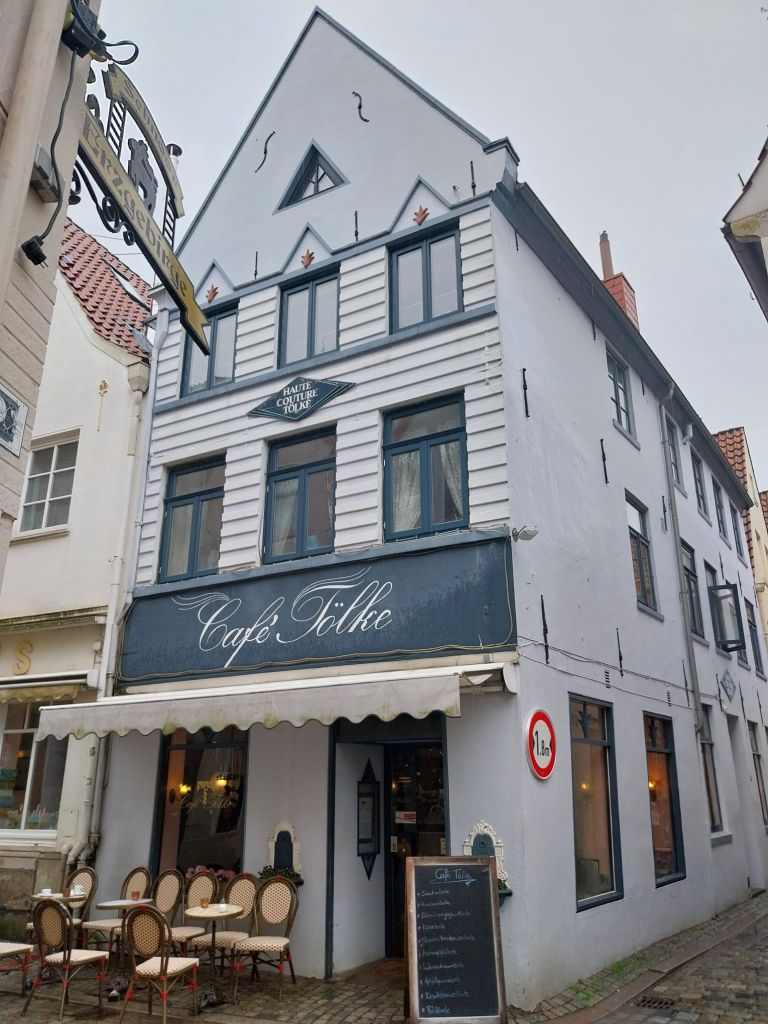
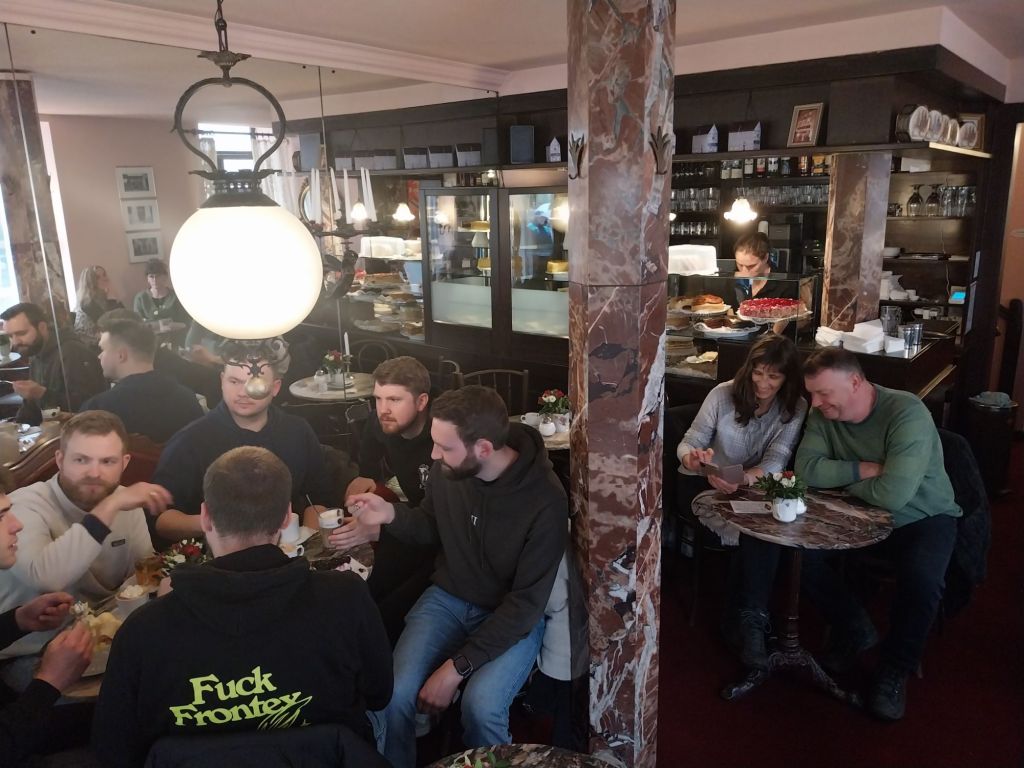
Cafe Tolke, a cosy coffee shop, is enjoying a busy day on a wet Saturday lunchtime – you wouldn’t know it by this exterior photo, as the staff politely explain that “the outside is not for the rain”. Fortunately I’ve got a seat inside, just next to a group of young men with hilariously offensive jackets.
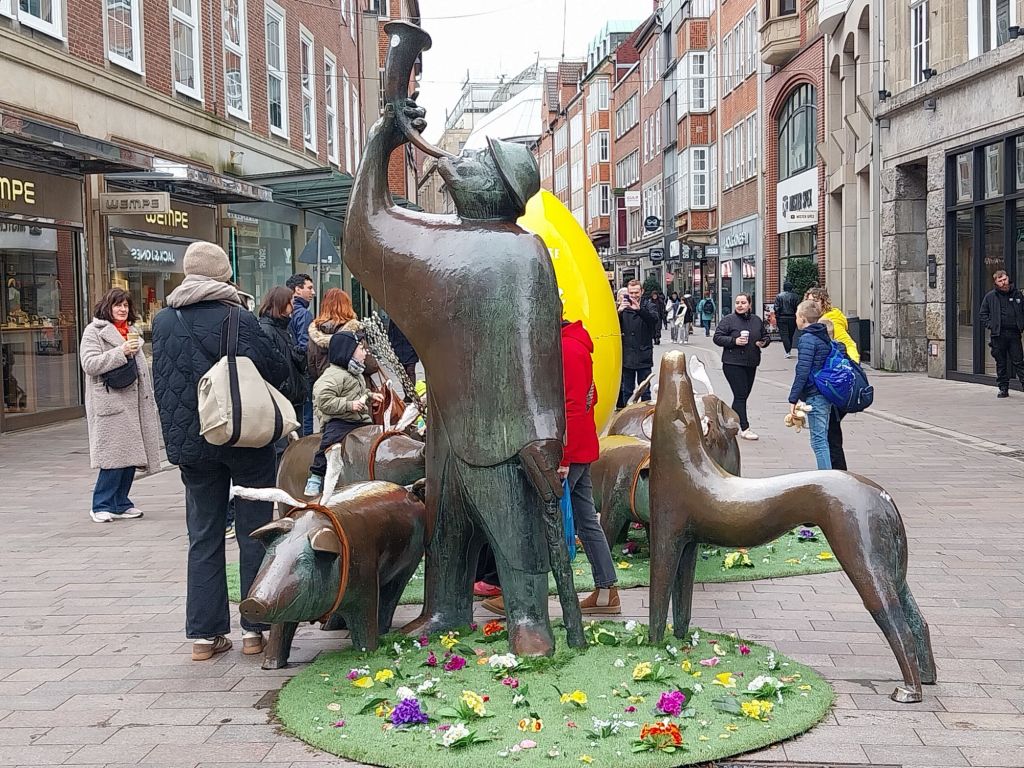
Bremen is a modern and confident city; it has Germany’s second largest seaport, and Mercedes Benz employs some 40,000 people here. It manages to combine industrial functionality with elegance, including a number of statues and sculptures across the city. The Shepherd and His Pigs today features a less than elegant protest by the animal rights group PETA – who are demonstrating against the plight of fish. In the Boettersrasse, the them is more feline.
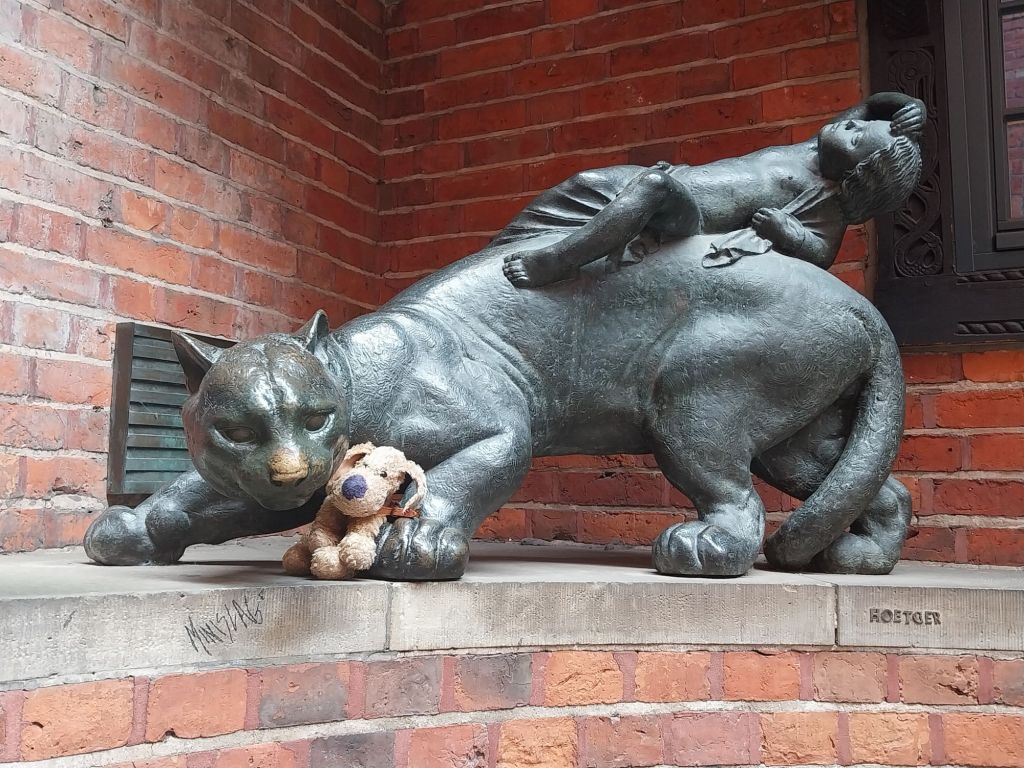
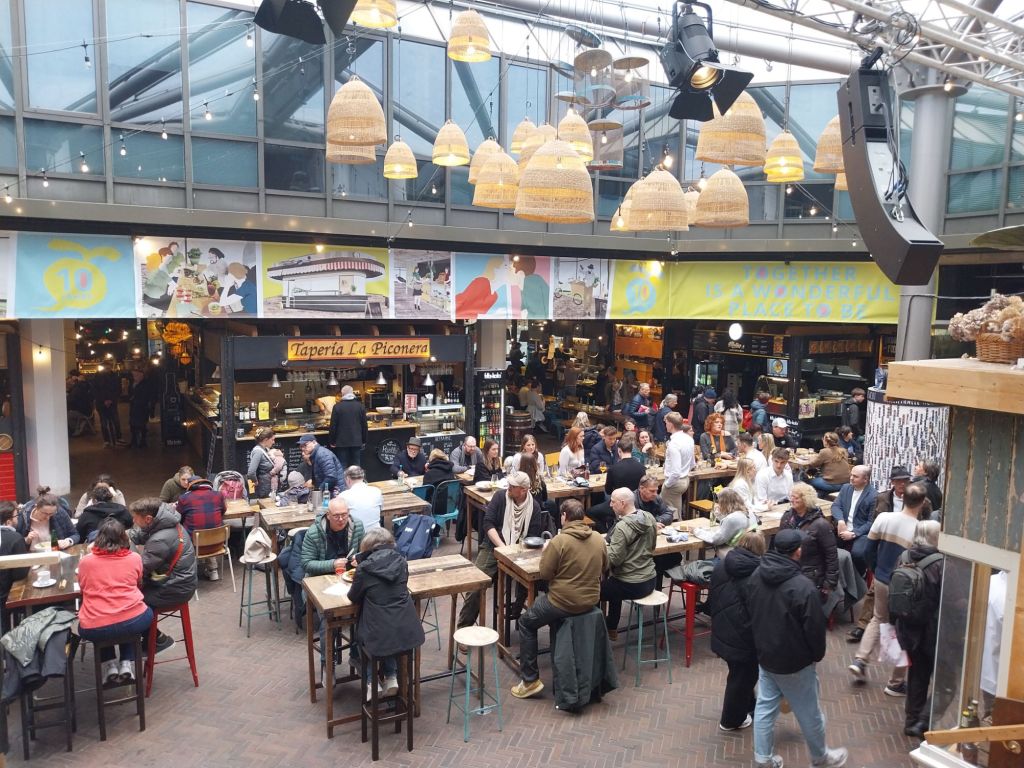
There’s also plenty if shopping on all levels, In the old Market Hall, Manufactum is a department store with a difference; the emphasis on sustainability – with prices to match. In the adjoining hall, an international food court. And back near the central station, a throwback to a name now lost in the UK.
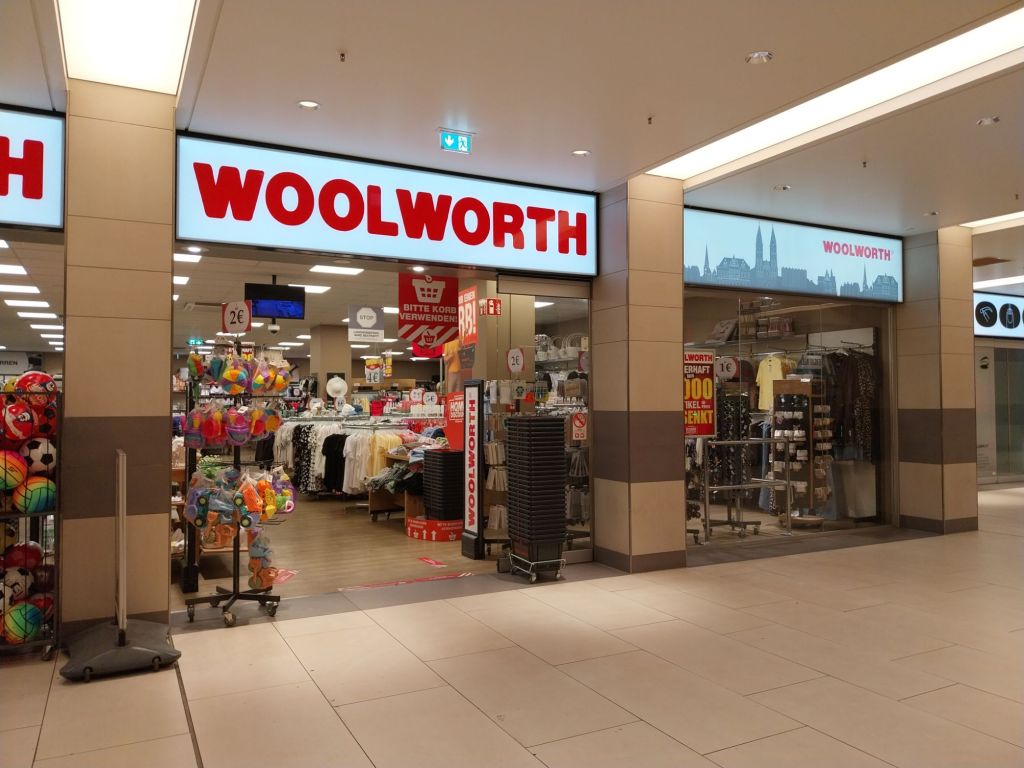
Sadly, there is no Pick n Mix…
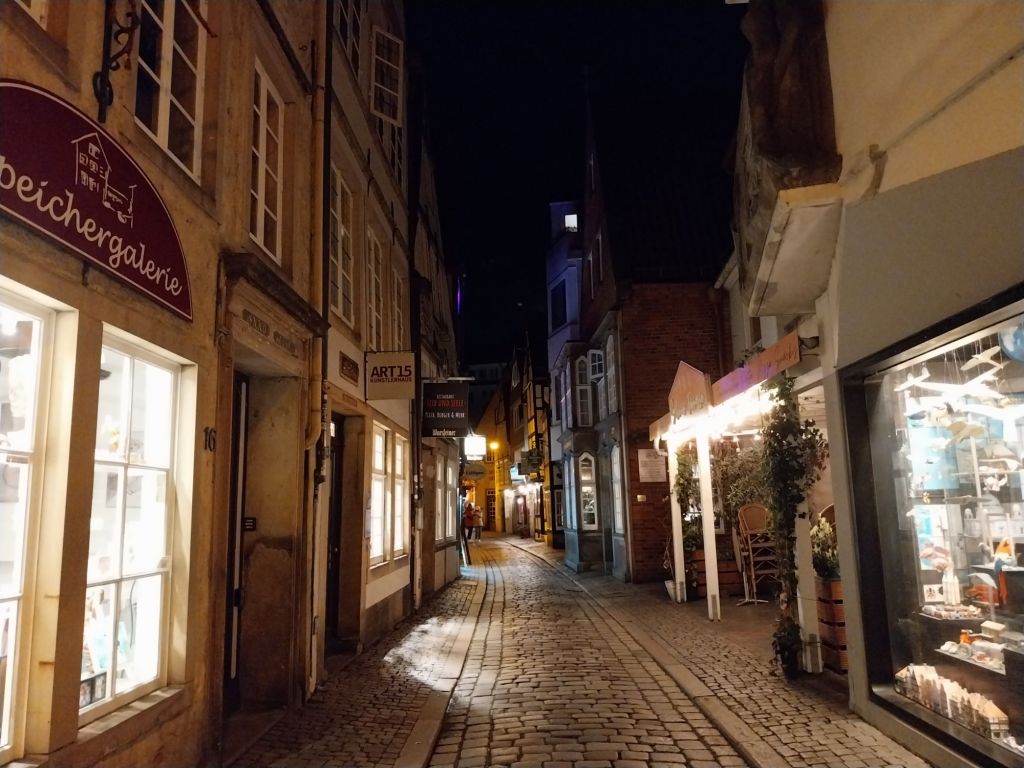
The Schnoor takes on a different feel by night, at least out of season. The small passageways that were filled with visitors at lunchtime are mainly empty. But there are a few bars and restaurants here, notably the Concordenhaus, reconstructed by a hundred volunteers in 1953. The ground floor now houses a stylish bar with some of the most friendly staff I’ve met during this trip.
The barman recommends a vollbier – whic translates to “full beer”. No sooner than he serves me than he apologises for giving me, instead, a much stronger IPA. It doesn’t matter; the price is the same and I get a free vollbier by way of an apology. This is not the usual level of service you might expect in an old town setting, and it’s rather nice.
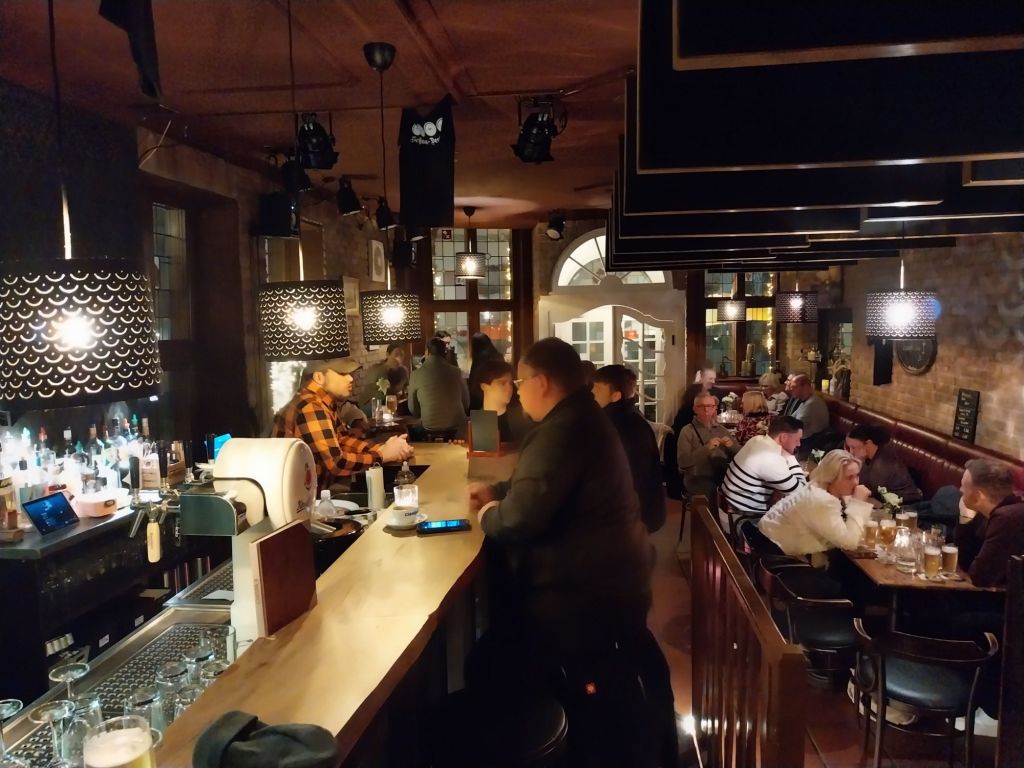
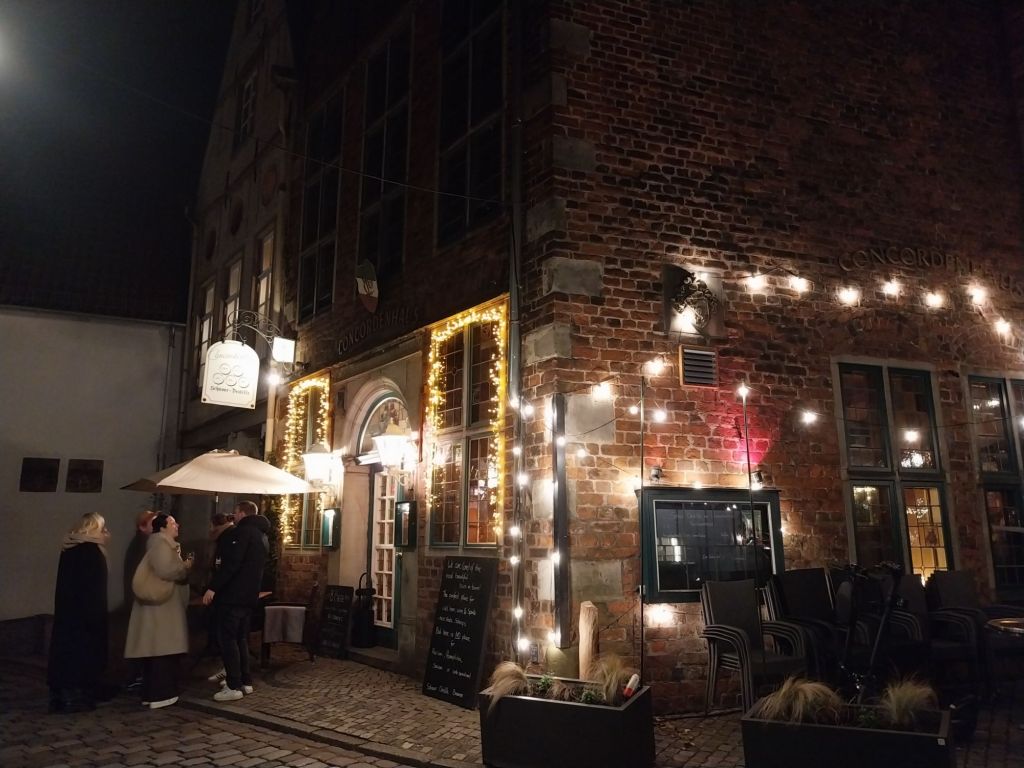
Bremen may not be on the list of must see places that many visitors choose when they come to Germany; but it should be. The city has a real charm about it, centuries of history and a great nightlife. As I walk back through the Schnoor a local guide is leading a night time walk. The place looks beautifully deserted.
TravelCaster Tips
Getting here : Bremen is situated 128 kilometres west of Hamburg and has its own international airport. Travel here by train takes around an hour from Hamburg, and Bremen is well connected to many other cities by rail. Times and prices can be found at the Deutsche Bahn website. Eurail sell a one country rail pass covering the whole of Germany; an adult ticket for five days over a month costs €211 (2026) prices. However, a global pass (covering 33 countries) may prove better value is you’re planning to hop over any borders to Austria, Switzerland, France or Belgium.
Orientation : Bremen’s old town is 1 kilometre from the main railway station and is well signposted. Accommodation can be found throughout the city, so it’s worth checking distances on a map when booking.
Public Transport : Bremen has an excellent network of buses and trams run by BASG. There is an app but we experienced difficulties in registering and selecting the right tickets. A quicker option is to by a 24 hour ticket from one of the machines on the street – costing €9.70. Tickets are valid until 3am the following morning, a useful option as the city has a good network of night buses and trams.
Food and drink : There is no shortage of restaurants ad bars across the city serving all tastes. Our recommendation is to search beyond the Old Town for the best value. A main course costs around €15 (higher in the Old Town) and a beer in the suburbs can be found for as little as €3. Expect to pay around €6.50 for a premium brew with a 0.5 litre measure.
 TravelCaster
Leave a comment