
Sunday morning in Bodo and I am among the first people on the street for the 0715 bus to Narvik. It’s 300 kilometres further North, and will mark the true starting point for the journey in the opposite direction towards Barcelona. It’s an oddity that while Bodo marks the official northernmost part of the Nordland railway, trains here are run by Swedish Railways.
There’s no rail connection to Narvik; an ambition for a true Artic Railways was never realised. But Reiss Nordland runs an efficient service from Bodo, up to three times per day. It’s comfortable enough with a seat at the front.
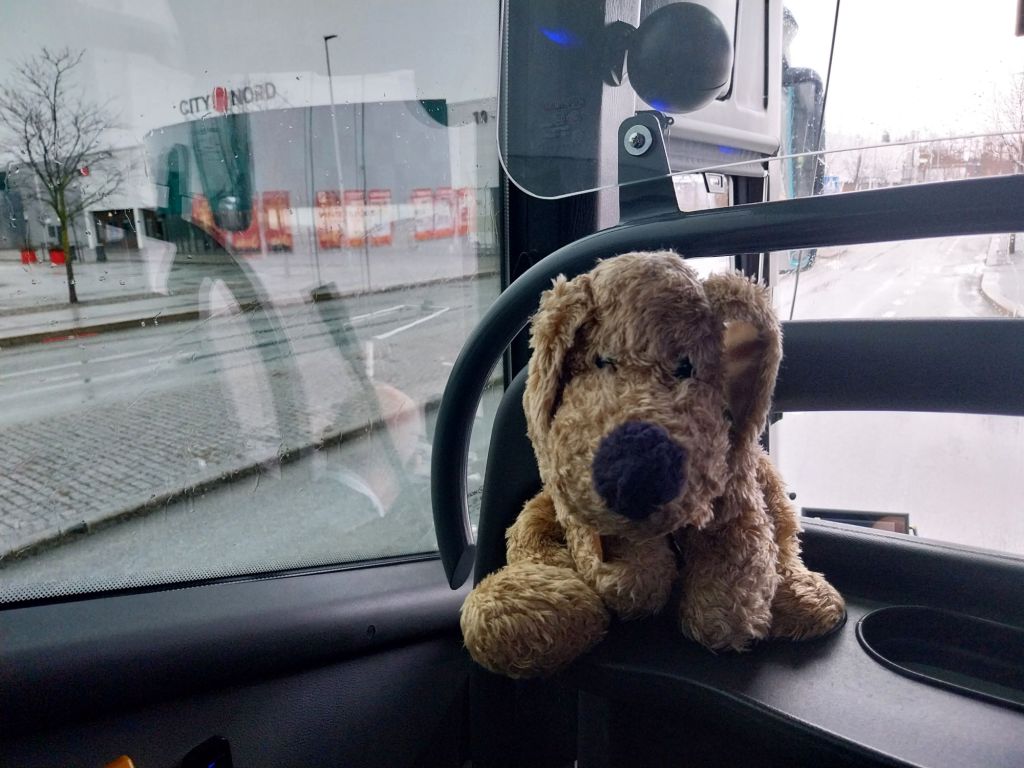
The outskirts of Bodo are filled with the usual array of light industries, retail parks and lifeless roads. But soon the landscape slowly unfolds with snow covered countryside before our first stop at Fauske.
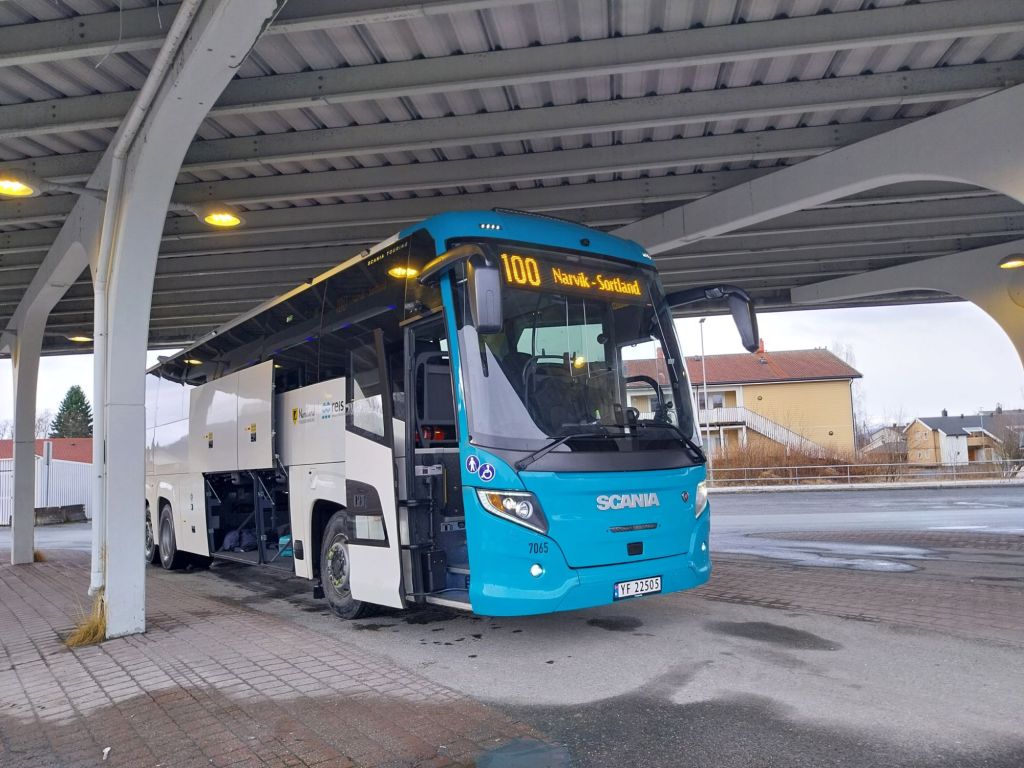
The driver is a friendly chap who helpfully provides commentary on the views along the way. This isn’t a regular thing, but with just for passengers on board he takes pity on me, enthusiastically telling me that there would sometimes be up to 30 people connecting at Fauske from the night train from Trondheim.
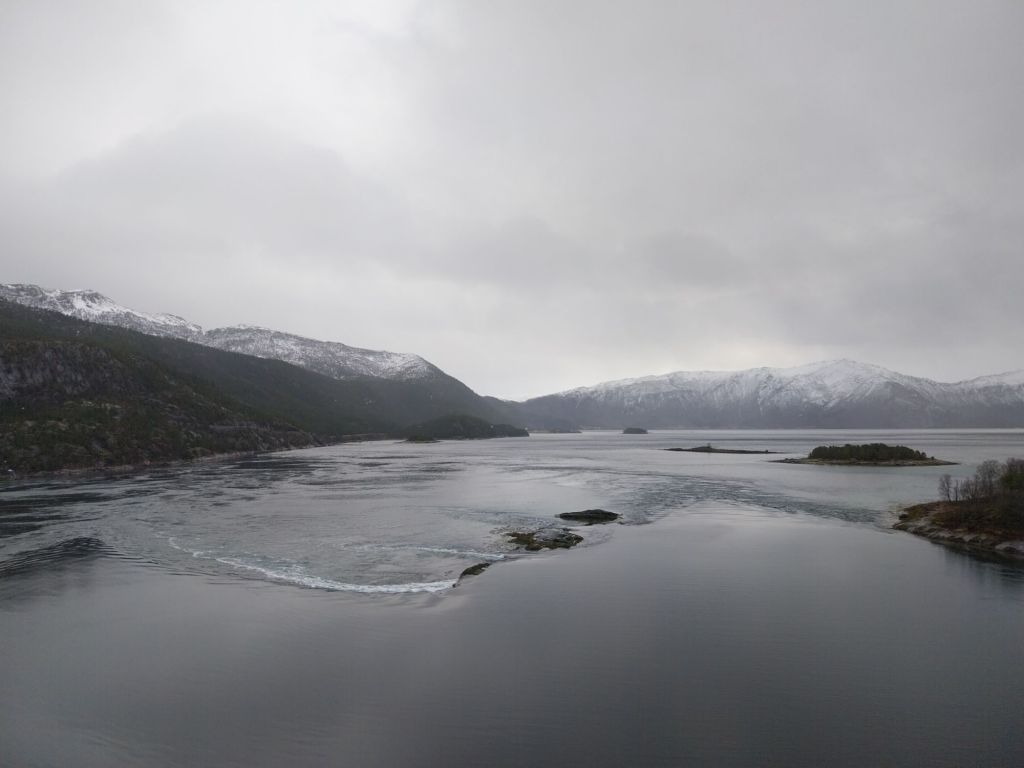
As we press further North, the stunning fjords open out on all sides of the road, which winds around the shorelines before occasionally disappearing into a tunnel. The weather has improved considerably today, but the driver tells me that it’s often snowbound, thick with ice or congested with hundreds of trucks who use the one and only main road in the region – thhe E8. It really does feel like the edge of the world as we dig deeper into the Arctic Circle.
And so to Narvik – very much a working, industrial town, split in two by a railway (more of that later). While the bus drops off – as you’d imagine – at the bus station, it also continues through the town centre – my map showing a stop fairly close to my accommodation.
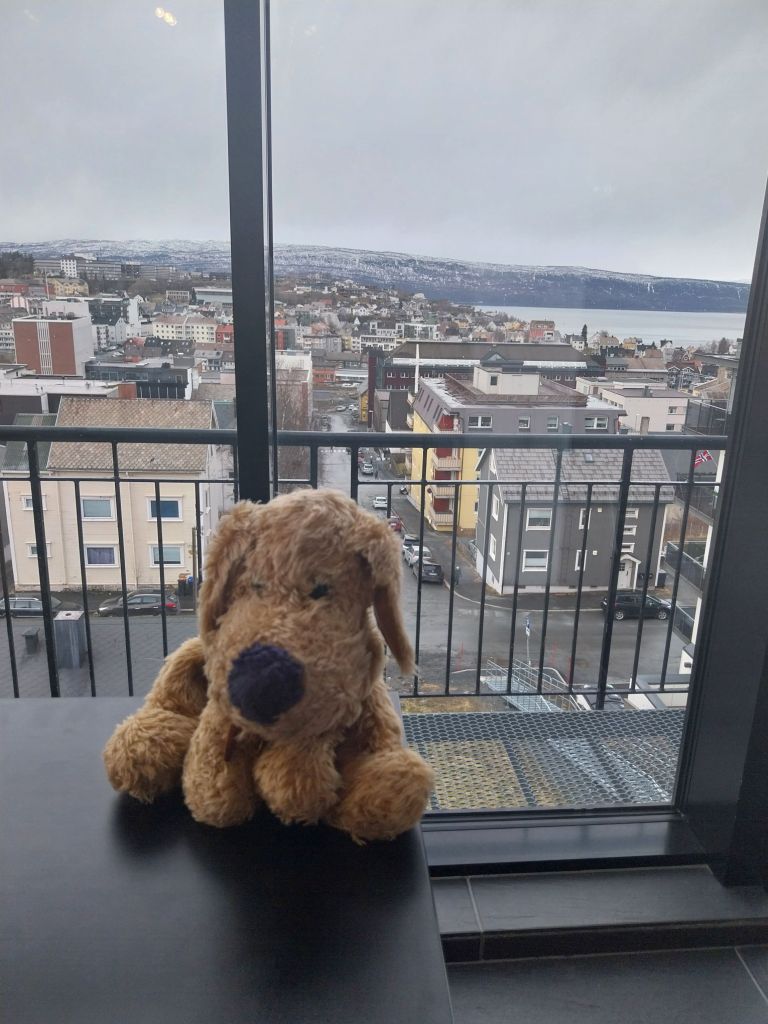
The Bredablikk Guesthouse might well be close to the main town centre, but it’s up a steep hill and then a long metal staircase (a faster way than walking around the road but a challenge with a heavy suitcase). However, the climb is worth it for the views from the modern and welcoming lounge.
While it doesn’t connect to the South, Narvik is very much the centre of the hugely important piece of railway infrastructure. In the 19th century, Norway faced a major challenge of how to transport its vast reserves of Iron Ore. The Ofoten Railway was the answer. It’s just 42km long, but importantly it connects to the Swedish rail network at the border.
The Rallaron – the men who built the railways – at celebrated in Narvik with a pub named after them. But behind every great man is a great woman, and just near Narvik Station is a statue depicting a local legend.
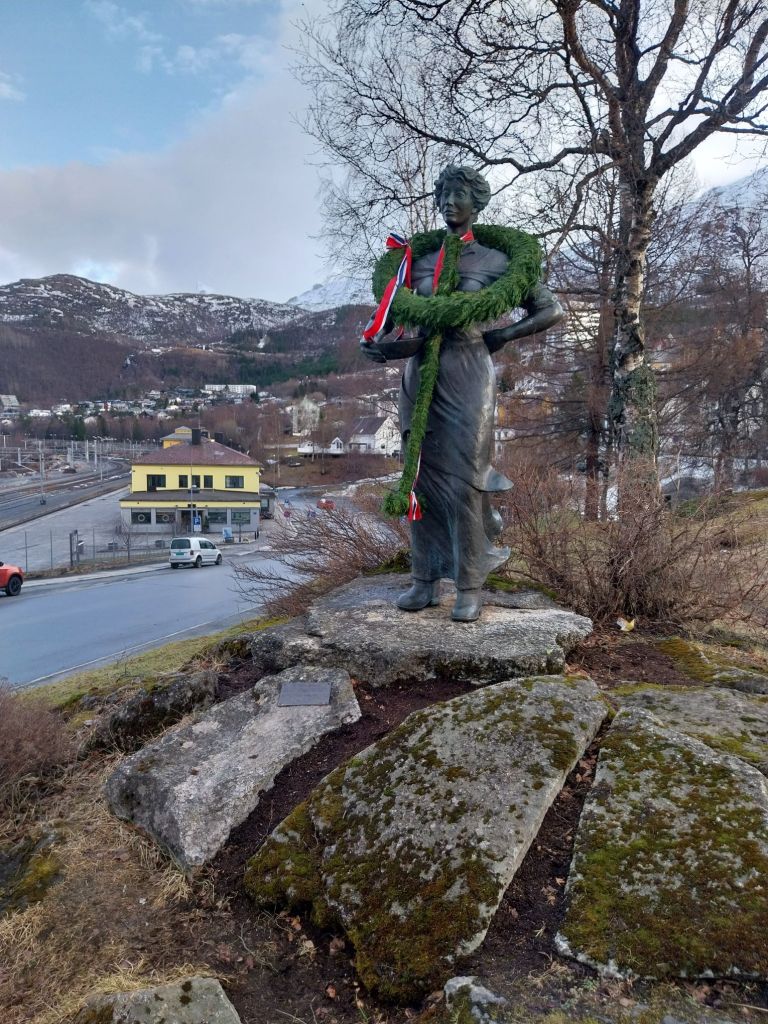
Svarta Bjorn – also known as Anna Rebecka Hofstad – was a cook who fed the railwaymen. Her story is part true and part legend – the nickname (the Black Bear) was said to have been given to her by a Sami man who observed her black hair and strength. She apparently died following a fight with another cook, though it’s also believed she has TB at the time.
The railway splits Narvik in two – and while its importance can’t be understated, it does create a divide between the fairly uninspiring high street (a concrete shopping centre, souvenir shops and more “classic” post war architecture) and the rather more pleasant waterfront.
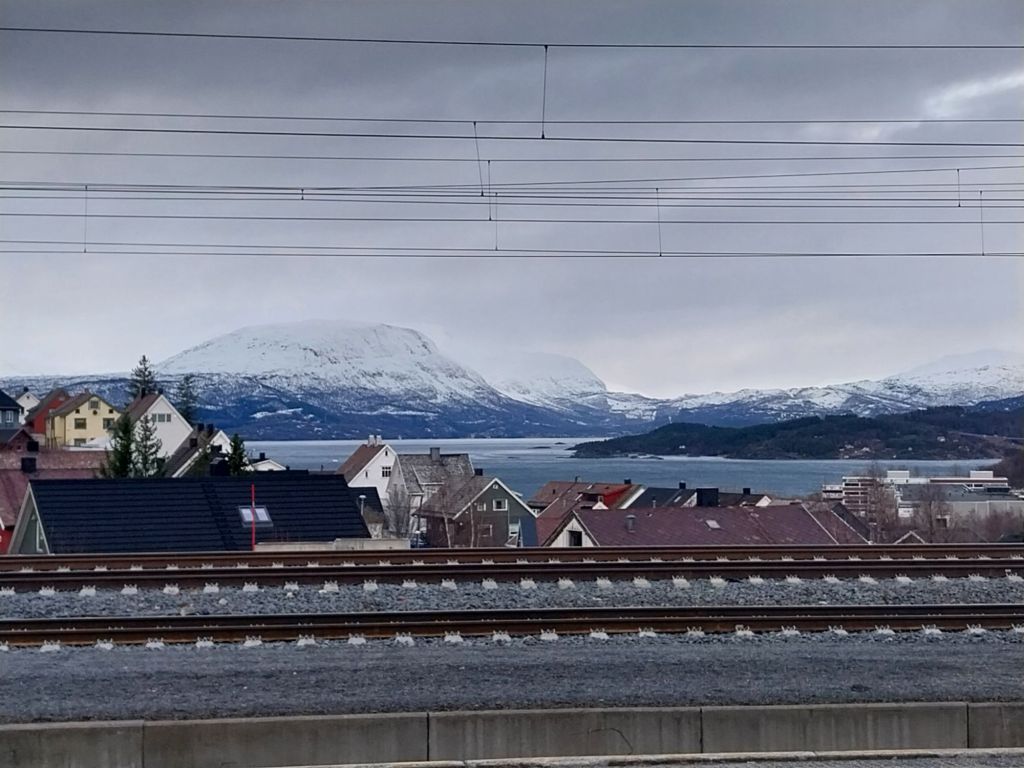
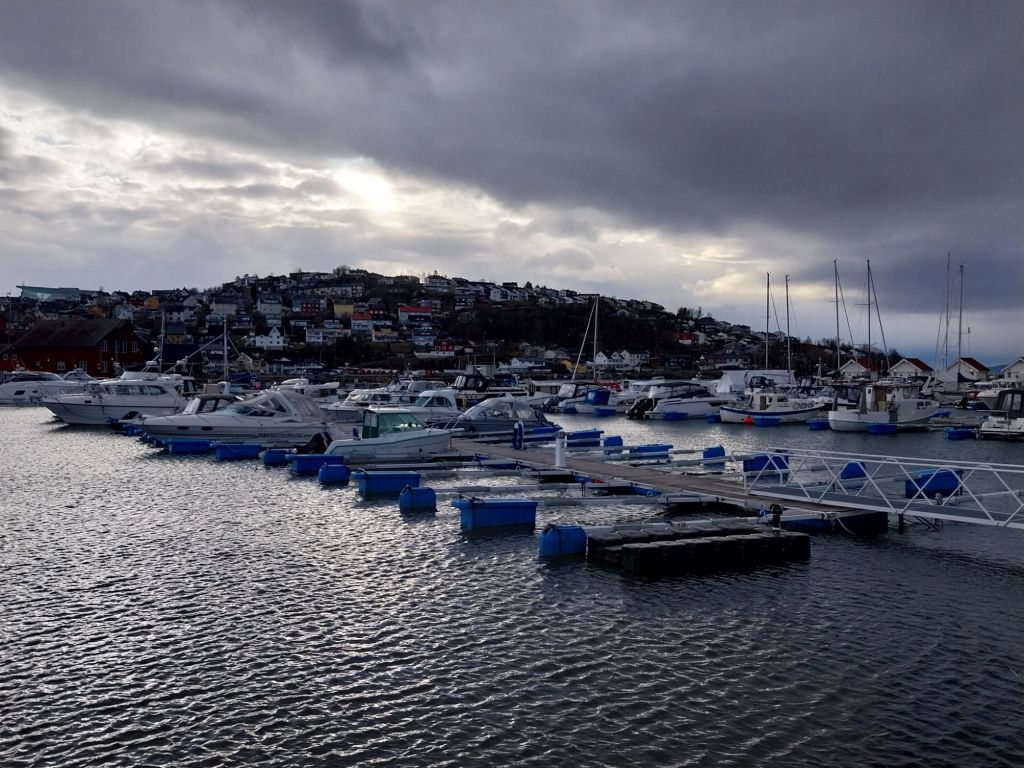
Just around the headland is the town’s busy industrial port, but the marina provides a peaceful diversion from the town centre. Interestingly there are no bars or restaurants which you might normally expect on a waterfront here. There is, however, a large residential area – filed with picture perfect wooden houses and affluent looking finishes.
Narvik is unique in that it is the only Arctic port that remains ice free all year round thanks toi the Gulf Stream. It may account for today’s realatively warm temperature of 6 Celsius – not bad for March. The warm waters were also crucial for the sea transportation of iron ore before the railway was part of the infrastructure. And the iron was a valuable asset during the Second World War, sparking the two month Battle of Narvik, one of Norway’s most important moments in history.
The town’s man cultural centre – housing the library and musem – is one of Narvik’s more inventive buildings. You can climb the steps on the outside to get a rooftop view of the industrial port, with the fjord and mountains providing a spectacular backdrop.
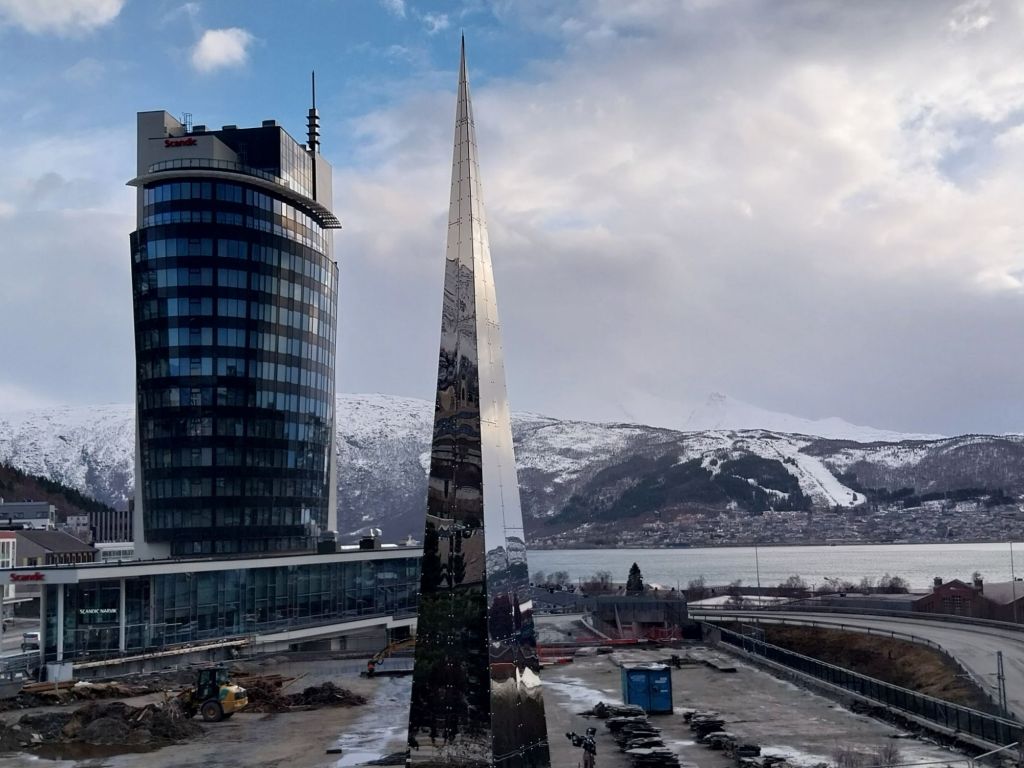
The glass building to the left is the Scandic Hotel, while the metal shard is a monument to the Second World War. All of which will make for a stylish central square – which at the time of writing (March 2026) is under construction.
Like Bodo, this is a place to base yourself for other activities. Narvik has its own ski resort, tours from here take visitors to other parts of the region, and it’s a great place to witness the Aurora Borealis – the Northern Lights – though this weekend’s cloud cover has put the brakes on that one. You can also take the Arctic Train into Sweden – though my advice is to avoid the touristy €50 day trip on the dedicated service and take a local train itself – for a far cheaper €15 round trip.
Narvik by night has a low key feel to it at this time of the year, especially on a Sunday. The Narvikguten Pub has a friendly and local crowd,/ some of whom appear to have spent the whole day drinking. The efficient landlady feeds a couple of them strong coffee; being drunk in public is technically an offence here.
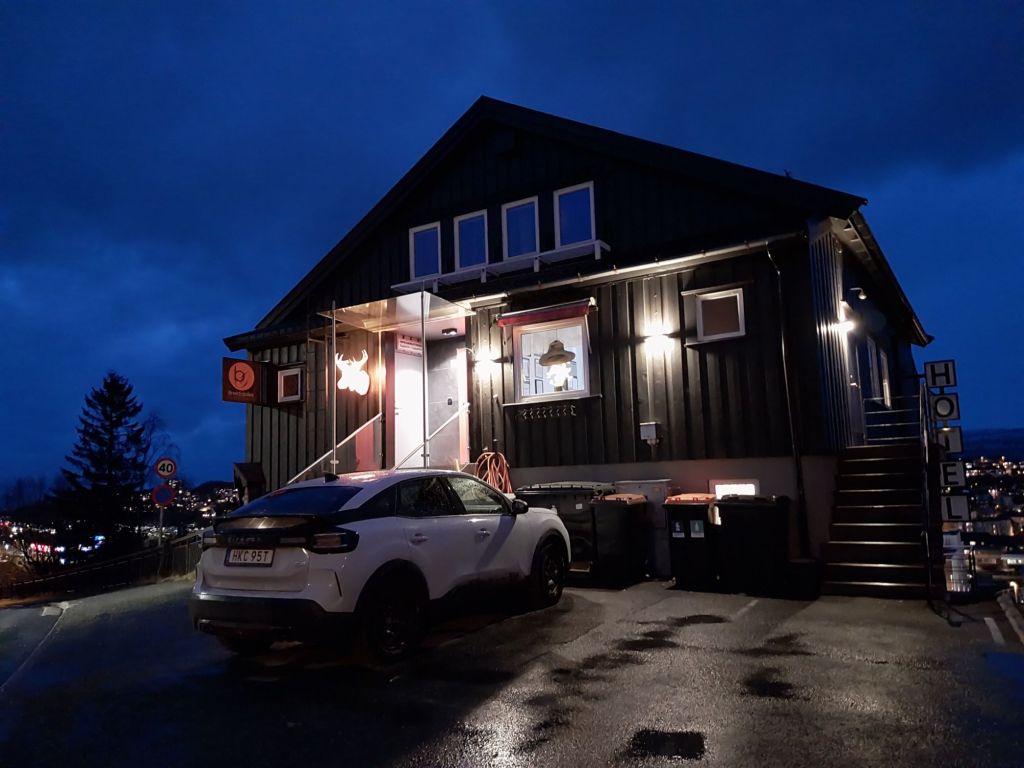
After such an early start it’s nice to be back at the guest house knowing I don’t have to get up quite so early in the morning. Monday marks the end of the travelling North – and from here on in it’s pretty much due South to Spain.
TravelCaster Tips
Getting here : Narvik lies some 300km North of Bodo. Reiss Nordland operates up to three services per day, each taking around six and a half hours, including a link via ferry. A one way ticket costs around €40. An alternative is to take a coastal ferry, though this comes at a much higher cost. You can also approach by train from Sweden (there is a daily night train from Stockholm) – booking via the Swedish Railways website.
Orientation : Narvik’s bus terminal is awkwardly situated on the other side of the railway to the east of the main town centre. For most accommodations, stay on the bus and ask for the Radhuset (Town Hall) stop. Some apartments and guest houses are up very steep streets, so a taxi from the bus station may be necessary.
Public transport : Most of central Narvikis walkable. There are a handful of local bus services and others going further afield. Dwnload the Reiss app or use the Entur website to plan your journey.
Food and drink : Like everywhere in Norway, a night out is likely to be expensive. Expect to pay around €30 for a main course, even in a smaller budget restaurant. Cheaper takeaways can be found and the unbquitous McDonalds and Burger King have branches in Narvik. A standard 0.5l beer will cost around €10, or more for an import.
 TravelCaster
Leave a comment