
In recent years a lot of my traveling has been around Europe. Some routes were more ambitious than others. The Baltics and Scandinavia trip was especially memorable because of the variety between Eastern and Western Europe. So, having traversed the continent sideways, I’ve decided this time to do it lengthways – a North to South journey covering almost 6,000 kilometres in two weeks, from Norway to Spain.
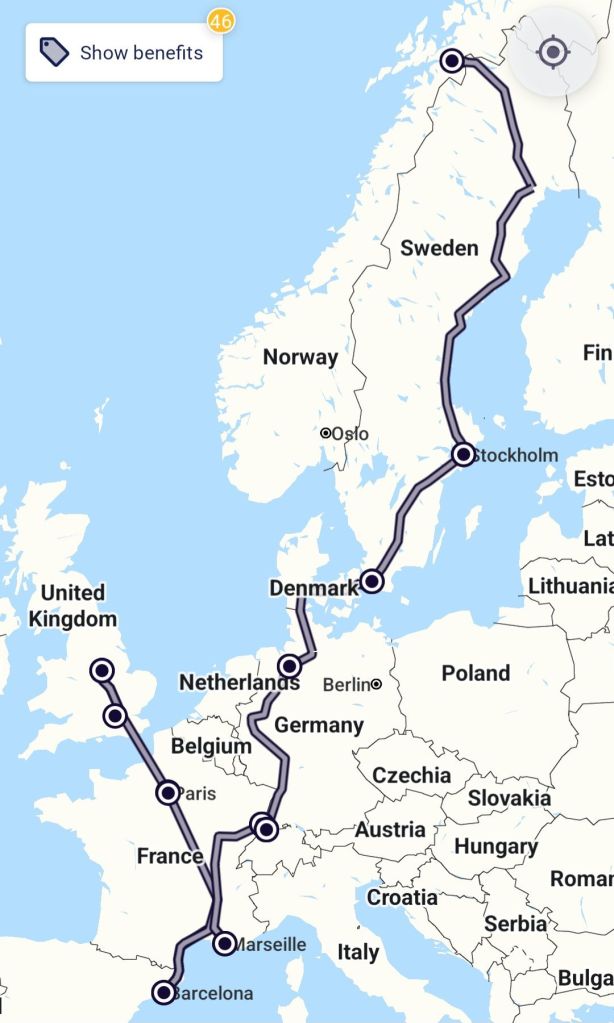
I had considered doing a huge, narrow horsehoe from home to Norway before heading South, but time and logistics didn’t permit such an ambition; it would have taken three or four days to get to northern Norway from the UK by train, and ferries no longer run from England to the famous ports of Bergen and Oslo.
So the starting point of Bodo requires a flight, or two to be precise, from London. But I wasn’t going to stop that preventing me from taking a train ride first.
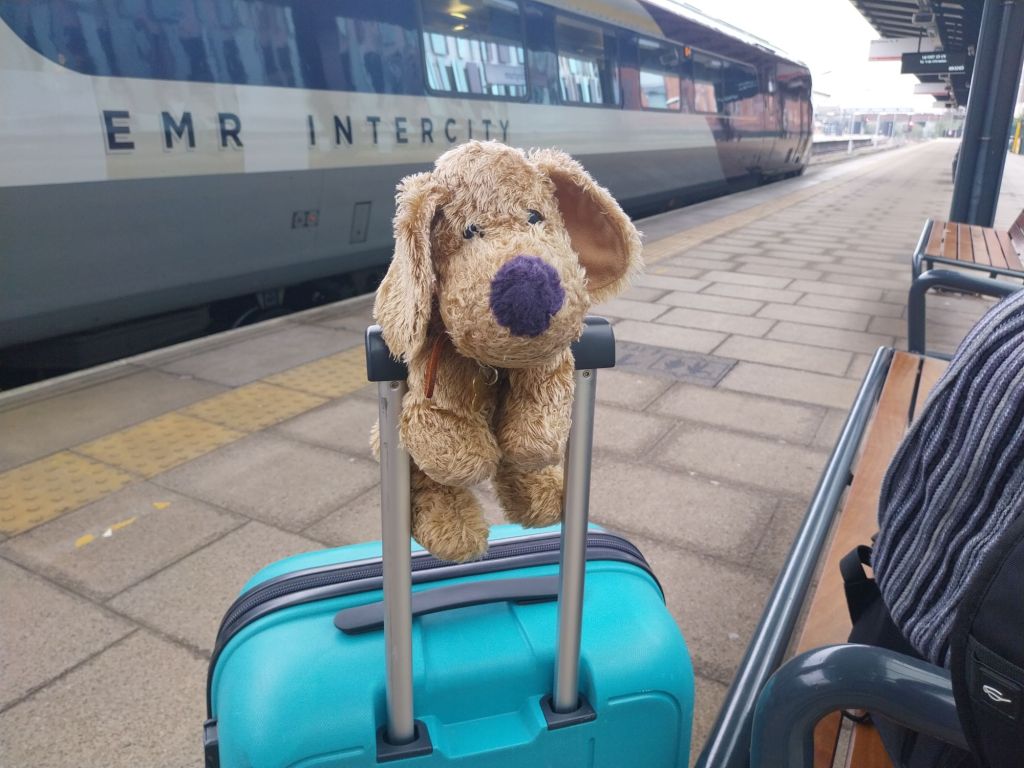
Because with a Eurail (Interrail) pass, you are permitted to take one outward and one inward journey from and to your country of residence. And here’s the thing – it doesnt matter if you’re flying out and in – free rail travel is included, using one of the travel days on your pass.
For this trip I opted for a 10 day pass which can be used at any time within two months, a generous amount of travel time that in theory would allow you many days of rest between locations. Mine was to be slightly more compact.
Getting to Heathrow Airport from central London used to be a real chore. Depending on where you arrived in the capital, you would either have to use the pricey Heathrow Express (£26 one way) – and even then you’d have to get to Paddington station – or the cheaper but sow Piccadilly Line on the Underground – taking around an hour from Kings Cross. Neither is valid with the Eurail pass.
But since 2022, the Elizabeth Line has provided a useful alternative. Costing the same as a single Undergound ticket (£5.90) but – importantly – free with a Eurail pass, it takes passengers from Farringdon near Kings Cross to the airport in around 30 minutes. It’s sufficiently busy on a Friday morning to prove how popular it’s become in a relatively short space of time.
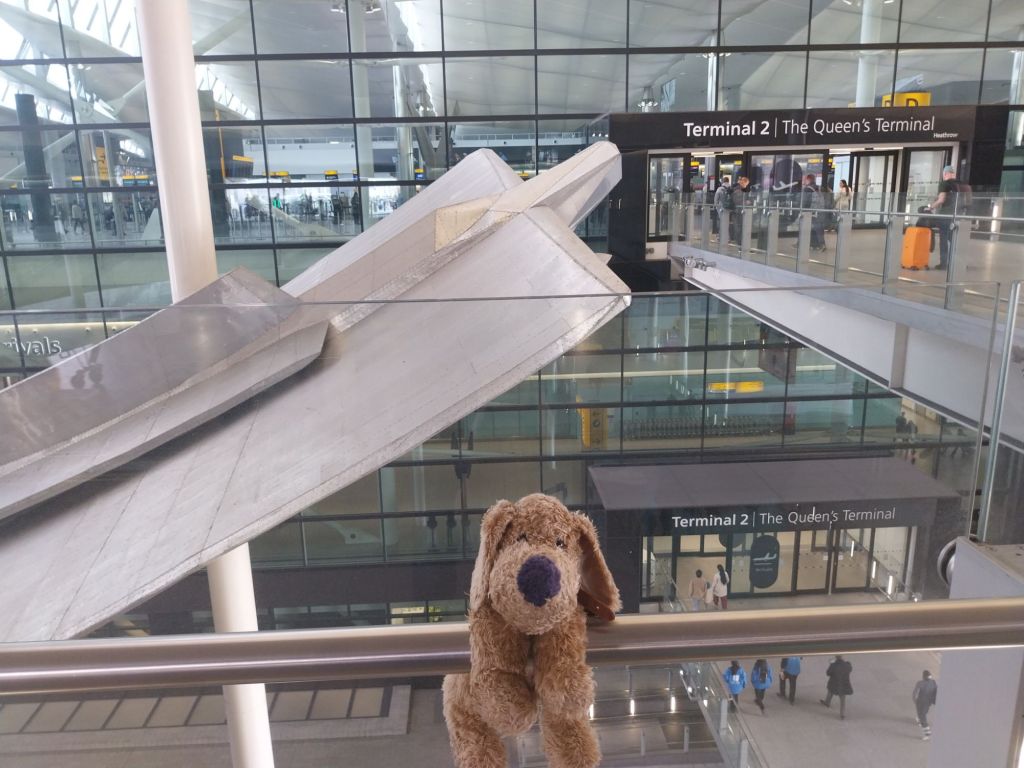
And so to Heathrow Terminal 2 – another royal connection, renamed the Queen’s Terminal after a refit in 2014. It’s by no means rage worst airport in the world, and security here is fast and efficient. So much so that I arrive airside nearly two and a half hours before my flight to Oslo.
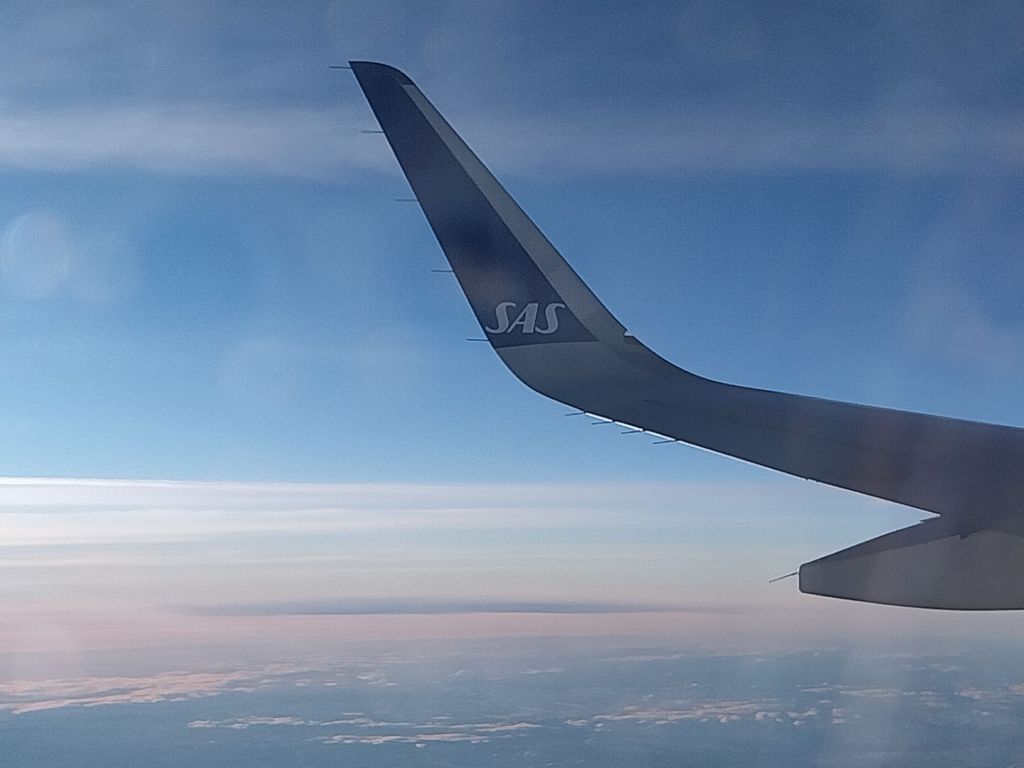
The flight itself is pleasant enough, taking less than two hours. Somewhere over the Norwegian coastline, vast landscapes of forests and frozen lakes emerge, the captain helpfully flying low enough for us to see the view. There’s little cloud around today, and the late afternoon flight gives us a beautiful sunset across the Nordic landscape. It’s much more breathtaking than this photo suggests, blurred by the reflection on a worn window.
Oslo’s Gardemoen Airport look compact enough as we land, but it belies its size. I’m transferring to an internal flight, so it seems reasonable that the process should be quick enough. It’s around 15 minutes from the aircraft to the customs hall – but then the actual transferring bit takes far longer than I’d expected.
First, a lengthy walk through corridors overlooking the main departures terminal. And then – annoyingly – a security check that appears to be woefully short staffed for the number of people going through it. Even more annoyingly is the ban on anyone bringing a bottle of water through; something I’d already paid a premium price for back at Heathrow. It all seems so unnecessary. And it’s a good job I built in a two hour connecting time for the onward flight.
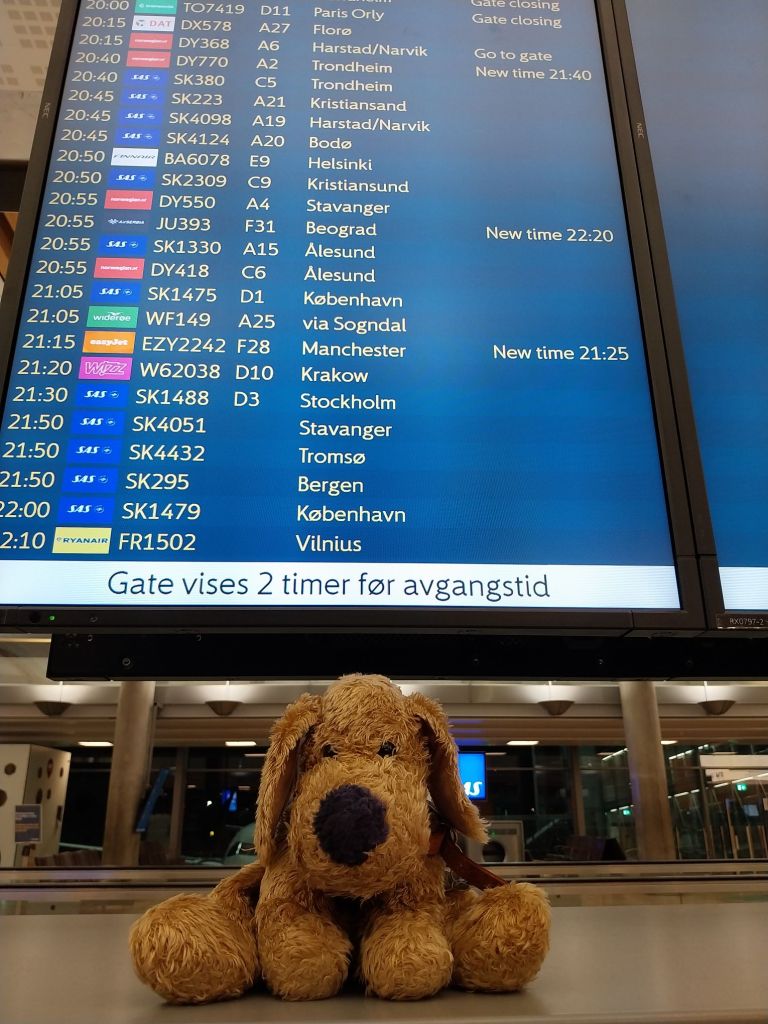
It’s one of the many reasons why I’ll take a train over a flight given the choice. Airports are usually too distant from the city they serve to allow any form of escape during a connection. You’re therefore stuck in a terminal with nowhere to o except the overpriced food outlets.
Though in Norway, it’s sometimes hard to tell the difference between overpriced and regular prices. A cold slice of pizza and a Coke comes to over €15. I price things in Euro for the convenience of readers – but Norway has its own currency – the/Krone. This is different from the Swedish Krone and the Danish Krone, and each has its own exchange rate. The best way to deal with this is just forget about the expense – anywhere in Scandinavia isn’t cheap.
 TravelCaster
Leave a comment