

One of the joys of using a rail pass is the ability to stick a pin in a map and choose a fairly random destination. I knew little about Dinant in Belgium, other than it looked very picturesque.
From Metz, my route involved going briefly back into Luxembourg which wasn’t an entirely pleasant experience. I was travelling during the morning rush hour and with part of the journey covered by a rail replacement bus. The local TER service from Metz was jammed full with standing room only. A number of passengers unhelpfully also had fold up electric scooters. Almost all were heading to Luxembourg City.
The second part of the journey was far more relaxed. There were just a couple of other people in the first class Belgian train that was headed for Brussels. The landscape changed as we slowed down through the Ardennes along the River Meuse. A brief change at Libramont took me onto the local service towards Namur. This was very much a slow and relaxed way of travel – no rush, pretty sounding station names like Beatrix and Carlsbourg, and plenty of increasingly improving views.
This being the Low Countries, there are no significant mountains – but the train climbed above the valley as we rounded a bend on the river and arrived at Dinant. My hotel – playfully called Le Marveilleuse – was up a short but very steep hill from the station, housed in the former Bethlehem Convent. Approaching it, I didn’t quite know if I was in an episode of The Traitors or Scooby Doo.
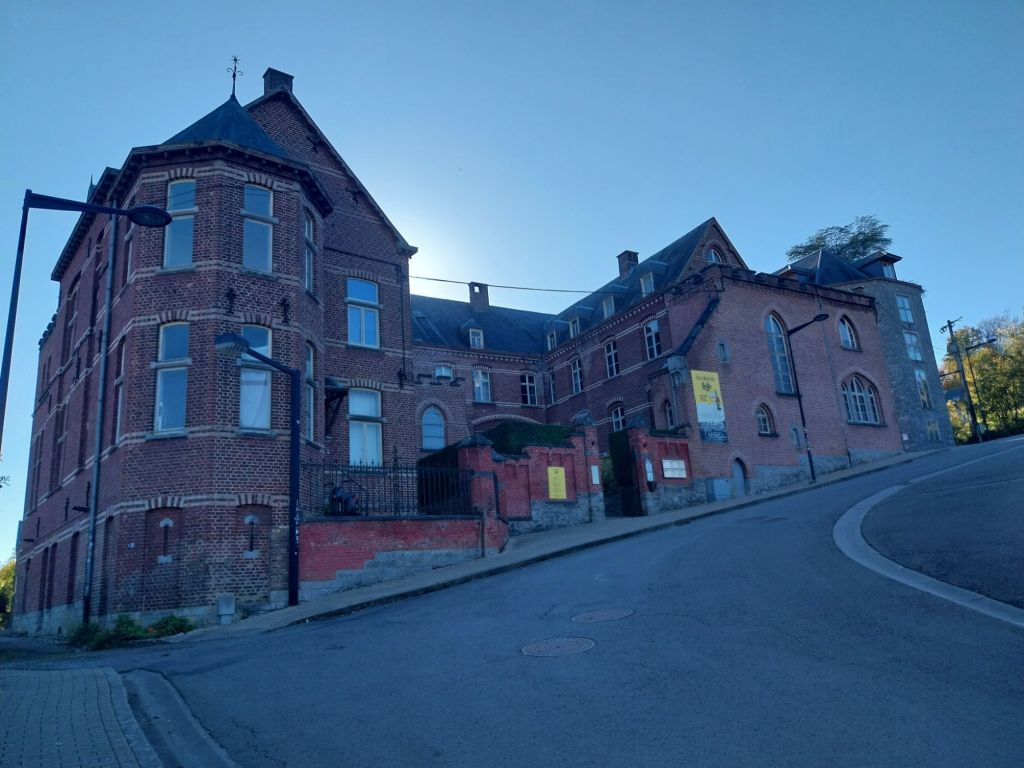
The building was home to a commune of Carmelite nuns until the 1990s, and teh chain that now owns it has transformed the building into a luxury retreat. While some locations are know for their spa days, swimming pools and saunas, this is famous for one thing. Beer.

The Maison Leffe has seen the former chapel converted into an interactive museum, celebrating Dinant’s most famous export. Leffe beer was originally brewed in the Abbey of the same name, which is on the other side of the river. It’s a self guided tour, mostly told through films that are activated by a QR code on your ticket (the code knows which language you speak too).
And as with all great pilgrimages, visitors are rewarded for their worship – with a Leffe of you choice in the bar and a branded beer glass, which looks more like a chalice. It’s not a bad deal for €15, though I have to say that the young man on bar duty didn’t exactly seem enthusiastic about his work. But someon ewas was very happy, enjoying what it’s probably Blgium’s best beer garden.

Guests staying at Le Marveilleuse also get a free drink token. The rooms are accessed through oak panelled corridors with views of the chapel, and while they have genuine creaky floorboards, the furnishings are somewhat better than those the nuns likely had.
From the hotel’s garden, spectacular views of the valley unfold, presenting Dinant at its prettiest. And at ground level it’s not too shabby either. The huge structure of the Church of Notre Dam rises above the other buildings, almost reaching for the rock above, which houses the historic Citadel.
As I approach it I can see a number of brave souls climbing the steps up the steep rock. There is a cable car – but it was suddenly closed in October 2025 because of safety fears.

Dinant by day, even in the low season, is a busy place. There are riverfront cafes and restaurants, though the scenic view is spoiled by the main road that runs between the buildings and the outdoor terraces. This is very much a tourist town, and a favourite with bikers who no doubt enjoy the challenge of the twisting roads around either side of the ravine. All of which makes it a bit noisy.
But if you’re not into heavy machinery, you can significantly improve your sax life here. No, that’s not a spelling mistake, because Dinant was the birthplace of Adoulf Sax, who patented the Saxophone in 1846. Though he very nearly didn’t – having variously falling from a great height, swallowing a pin and almost being suffocated by furniture varnish. He was not a lucky child. Today in Dinant, his legacy is celebrated – and how! You can barely turn a corner or walk over a bridge without being reminded of his great invention.
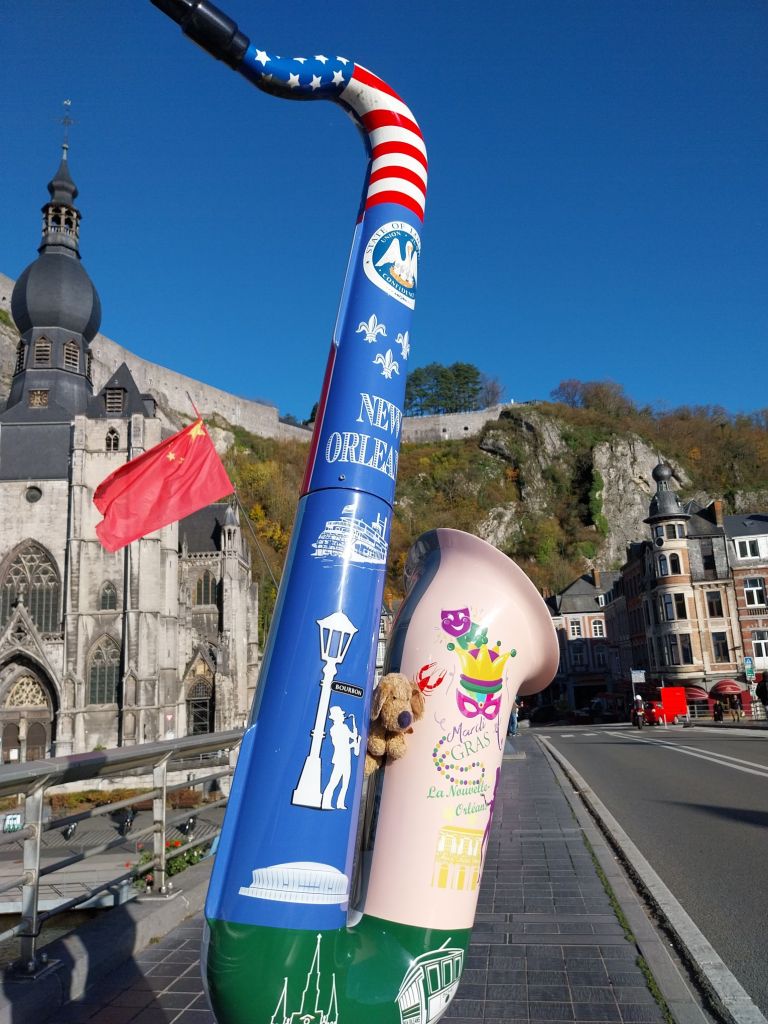
The saxophone and beer aren’t Dinant’s only claims to fame. While you can have a Croque Monsierr almost anywhere around here, the Coque Dinant is a very different kind of delicacy – a hard, sweet biscuit made with honey. Sadly the bakeries in Wallonia close early so I missed the treat – but you can read all about them here. Remember, the Coque Dinant is designed to be sucked, not bitten. Which is probably the most unlikely advice you’ll see on any travel blog.
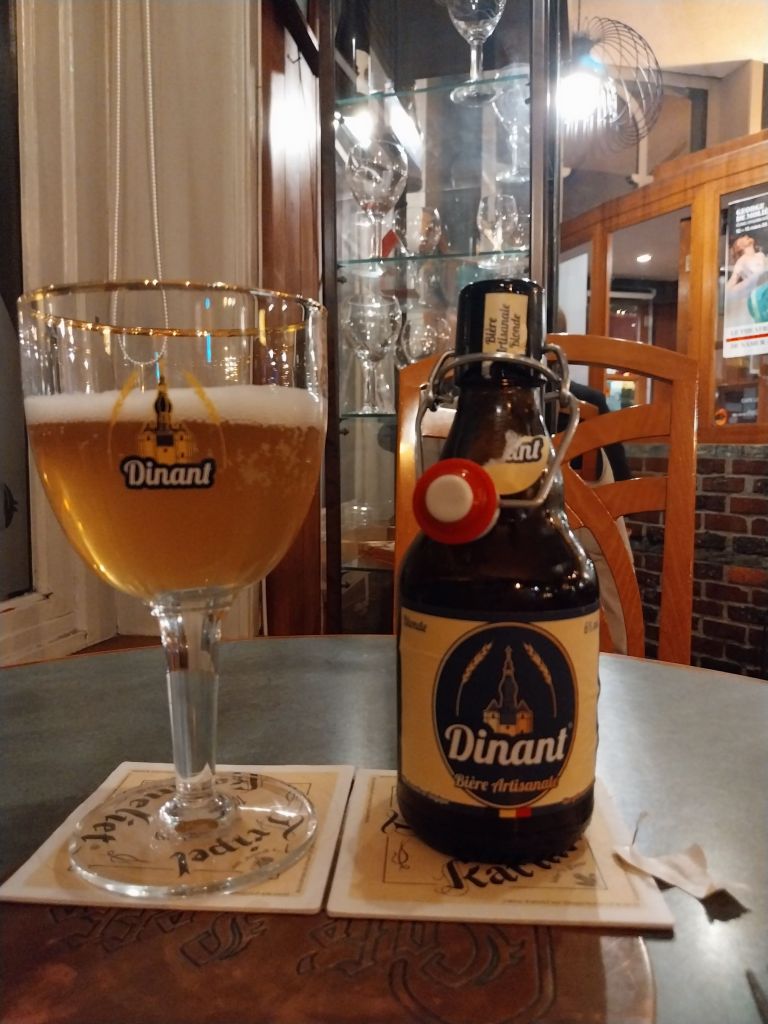
Out of season, Dinant by night has somewhat limited choices. There is a a casino – owned by the Hotel Marveilleuse. But otherwise just a smal handful of bars and restaurants are open at this time of the year. It’s easy to imagine how different it would be in the summe, with hoards lining the riverfront and taking a trip on the boats – currently parked up for the winter. I settle for another beer – this time at the touristy themed Cafe Leffe. Well, when in Dinant… (drink the opposition’s beer)
TravelCaster Tips
Getting here : Dinant is situated 90km south of Brussels and just 20km from the border with France. Belgian Trains run services every hour through the Meuse valley.
Orientation : From Dinant station, turn immediately right and then left at the traffic roundabout, taking you over the bridge into the main town. Just about all the main services are on this side and everywhere is walkable. The Hotel Marveilleuse (including the Maison Leffe museum) is a 15 minute walk up the steep hill on the same side as the station.
Public Transport : There are a number of local bus services running to Namur and smaller village along the valley, though these can be infrequent. The train is probably best for most visitors.
Food and Drink : Typically French and Belgian cuisine can be found in the many bars and restaurants along the river and Rue De Sax immediately behind it. Expect to pay tourist prices, with a main course between €20 and €30 and a standard beer at about €6. There are cheaper options with takeaways along the riverfront wher you can get Belgian fries for around €4.
 TravelCaster
Leave a comment