
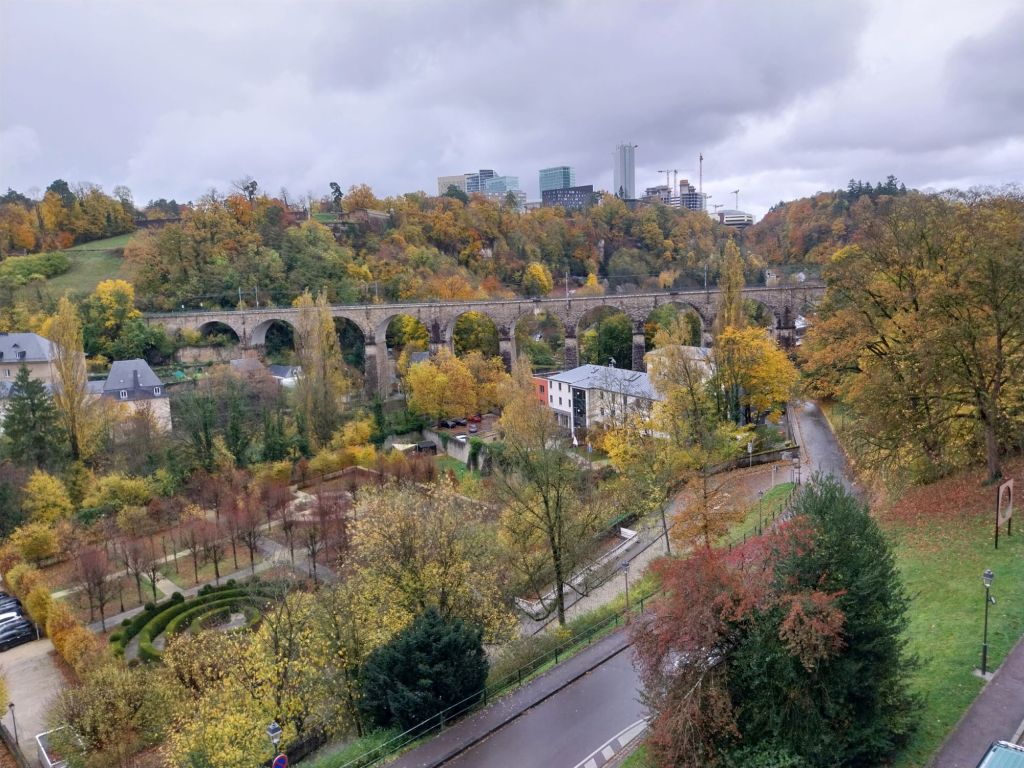
When choosing a location for a journey, I’ll often look for a place I’ve not been before. It’s amazing just how many locations are relatively close by, yet almost always overlooked.
Luxembourg was one of those places. It always seemed like a small place – it covers just over 2,500 square kilometres and has a population of 660,000, making it Europe’s seventh smallest country. But that’s still a lot of ground to cover and I didn’t have much time.

The route from Mechelen involves a change at Brussels Nord, a quieter alternative than the main Brussels Zuid/Midi, making it a relatively easy task of finding the right train. This is a Belgian SNCB service with just one (or half a) first class compartment, on the upper deck of a double decker car.
The industrial north of Belgium gives way to a lusher, greener south. Beyond Namur, we enter the border with the Ardennes in France, with large fields intertwining with the River Meuse. I’ll be returning to this area later in the trip.
On paper, you can only buy a rail ticket as far as Arlon, the final station on the Belgian side of the border. No rail planner will sell you a through ticket, which can look confusing at first. But that’s because all public transport within Luxembourg is free of charge. Along with some of the lowest tax rates in Europe, it’s one of many reasons why so many ex pats come to live here; around half of Luxembourg’s residents are foreign citizens.

Arrival at the main railway station in Luxembourg City is a slightly confusing affair at first. I’m not sure what I’d expected but it seems a lot busier than in should be for a Sunday afternoon. Then again, this is a captital city. The area around the Gare is also somewhat grubbier than I’d imagined. For whatever reason, I’d envisaged a plush, clean, elegant and rich environment dripping with money. The reality is a bit different.
The Ibis Styles hotel is my home for the night, and again, it ll appears to be a bit basic. Although that is the Ibis brand – budget accommodation – which in Luxembourg means over €120 for the night).
With just an afternoon and an evening to explore, I decide to head to the Bock, the rock on which the original city of Luxembourg was built. En route, the topography becomes quickly apparent. The city centre is essentially built on the top of a hill, with the Rivers Alzette and Petruse forming deep valleys surrounded by steep ravines. The Bock Casemates are tunnels and defences carves into the soft sandstone. Over the centuries they’ve provided important defends for the city; today, they offer stunning views over the ravines.
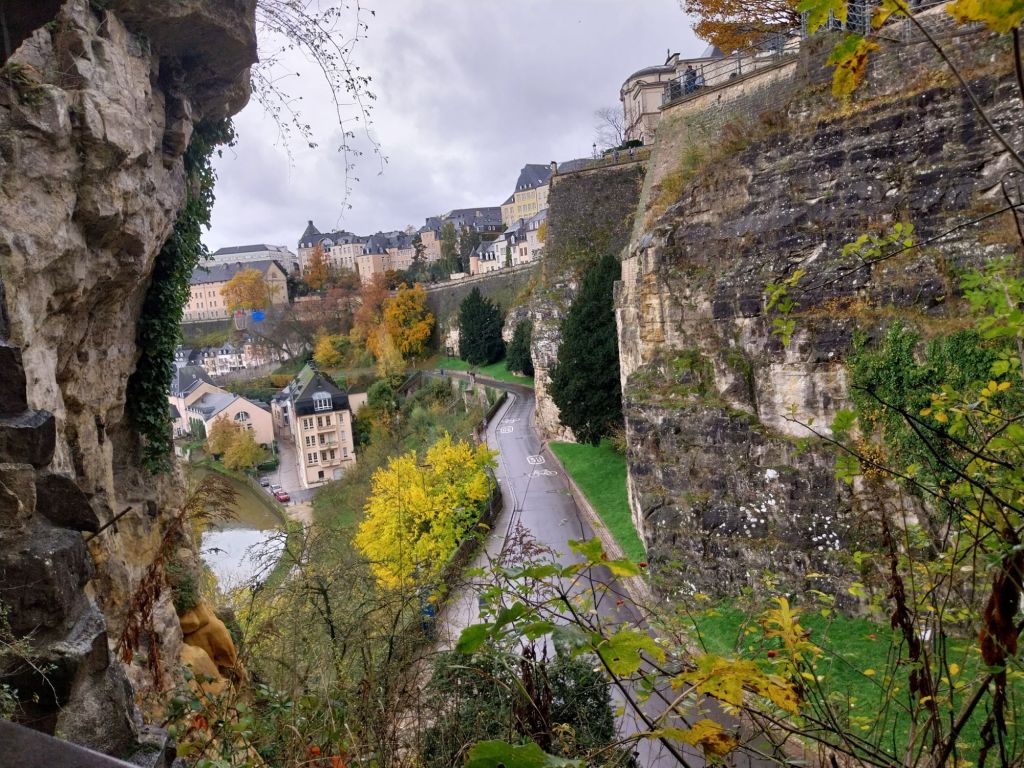
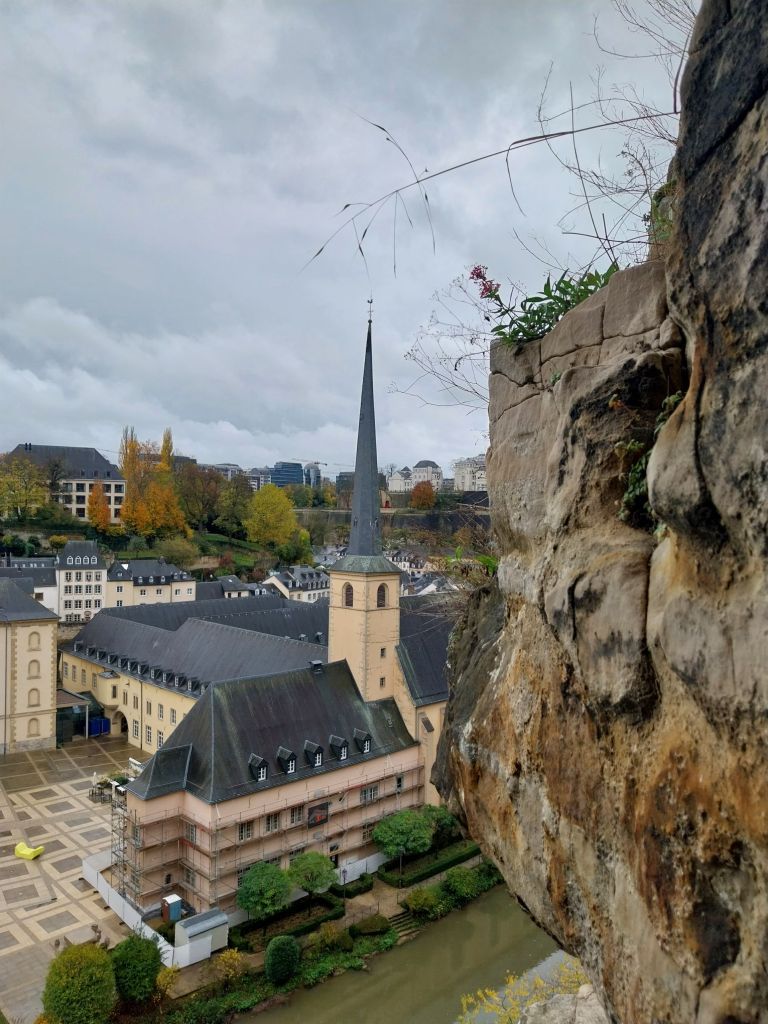
The views are spectacular, though this afternoon they’ve been severely dampened by heavy rain. This is a place for sensible footwear and stamina, with steep steps guiding visitors through the network of tunnels.
The rain continues and I’m getting increasingly frustrated by a large group of Spanish tourists. At the bus stop they take up the entire shelter, oblivious to the fact that others are getting soaked. It’s time to take cover – at Luxembourg’s only microbrewery.

The Big Beer Company (which doesn’t sound like a microbrewery at all) is located at Rives de Clausen, a complex of former industrial buildings now housing bars and restaurants. This one is very much in the style of a German Beer Hall, with schnitzel, sausages and sourkraut on the menu.
Although it’s part of Luxembourg City, the neighbourhood of Clausen seems a world away from the busy Haute Ville. Glass tower blocks and expensive hotels are replaced here with small houses, and plenty of room to take a stroll along the banks of the Alzette.

It’s always a good tip to treat a city as a series of small villages; pick one and explore it. I found Clausen almost by accident, and it turned out to be a really pleasant experience.
Back in the City Centre, the wai had started once again, making William II Square seem a little foreboding in the evening gloom.
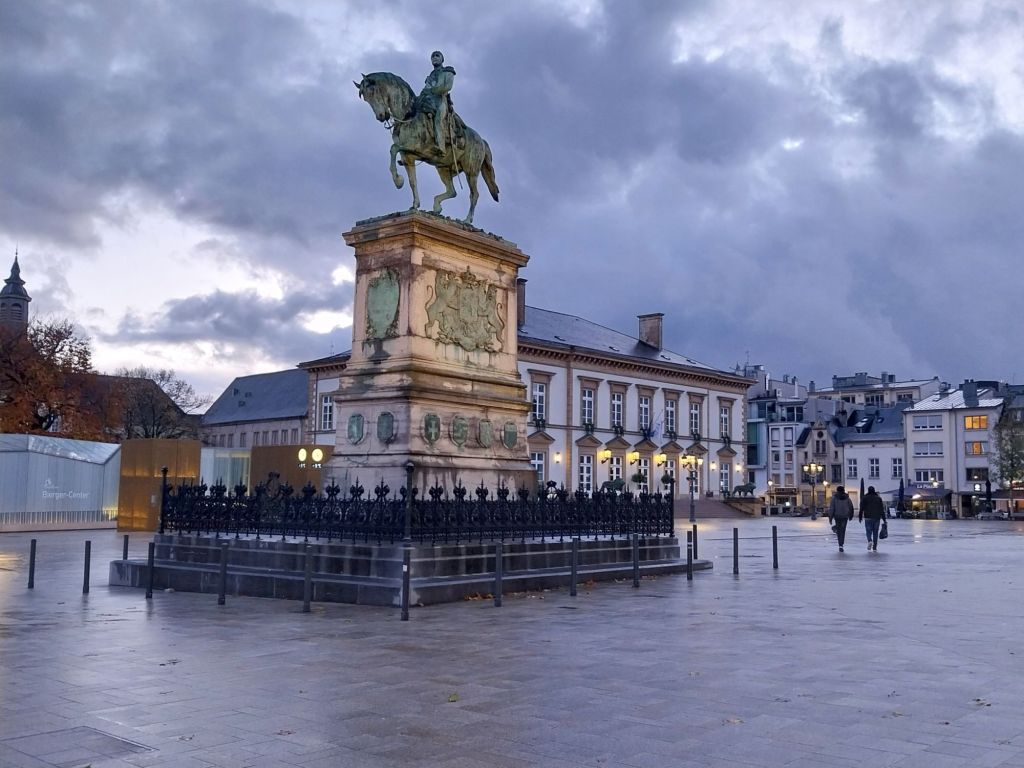
William (the bloke on the horse) was King of the Netherlands and also became King of Luxembourg by default. Before his death, he granted Luxembourg its first political constitution – the country later getting its independence in 1867.
It’s still pouring with rain, making options for evening exploring somewhat limited. And this is where the free public transport comes into its own. I was able to take a number 23 from near my hotel back down towards Clausen, but stopping off first in the attractive area of Grund,

Like Clausen, Grund has the feel of a village. The deep ravine separates it from the main city above. Here you’ll find half a dozen cosy bars and restaurants around the River Alzette. The most popular is Scotts Pub, which resembles the perfect English country pub. Hearty food is served – though it’s a little pricey, as is the house beer at €7.
At this point I realise that Ive allots come full circle – having gone back into the city centre I’m now just a short walk from Clausen. If the Big Beer Company is the symbol of corporate Luxembourg, then The Pyg is the heart of its community. Well, the ex pat community at least.
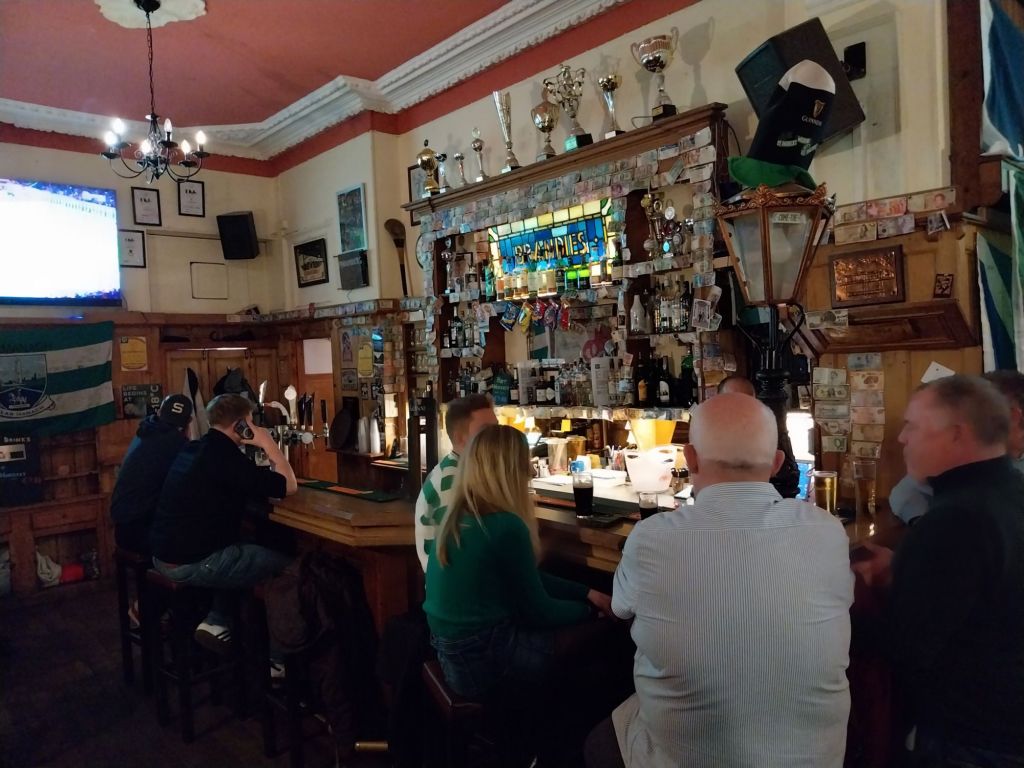
This is an Irish pub. But not the plastic kind you find in just about every town around the world. Not only does the TV show Irish sport, it’s a genuine feed with Irish commercials. The bar serves a perfect (though expensive, €8) Guinness and Tayo crisps. The bar tender is actually fron Ireland. You don’t see that in many places.

The compact nature of Luxembourg City makes it easy to explore in a day or two. A longer visit would be recommended to get into the rest of the country. For me, the journey continues south into France.
TravelCaster Tips
Getting here : Luxembourg City airport is served by flights from many countries, but you can also easily travel here by train. The high speed TGV InOui service takes just over two hours – if you’re using a rail pass you’ll need to book a mandatory reservation for €12. For a slower but more picturesque experience, travel from Brussels in three and a half hours.
Orientation : Arriving at Luxembourg City station, the Haute Ville (Old Town) is a ten minute ride by tram or bus. Tram number 1 leaves from outside the station – alight at the Hamilus stop and walk 5 minutes to the centre of the city.
Public Transport : is entirely free throughout Luxembourg. There is a very good network within Luxembourg City, with buses running late at night, even on a Sunday.
Food and Drink : French is the main language of Luxembourg, and that’s where you’ll find the emphasis on the cuisine here, though there are German and Belgian influences too. In the heart of the city you can expect a main course to start at €20 (or a lot more at high end places), though there are cheaper options with takeaways and bakeries. A standard 50cl beer will cost around €7, as will a good craft beer.
 TravelCaster
Leave a comment