
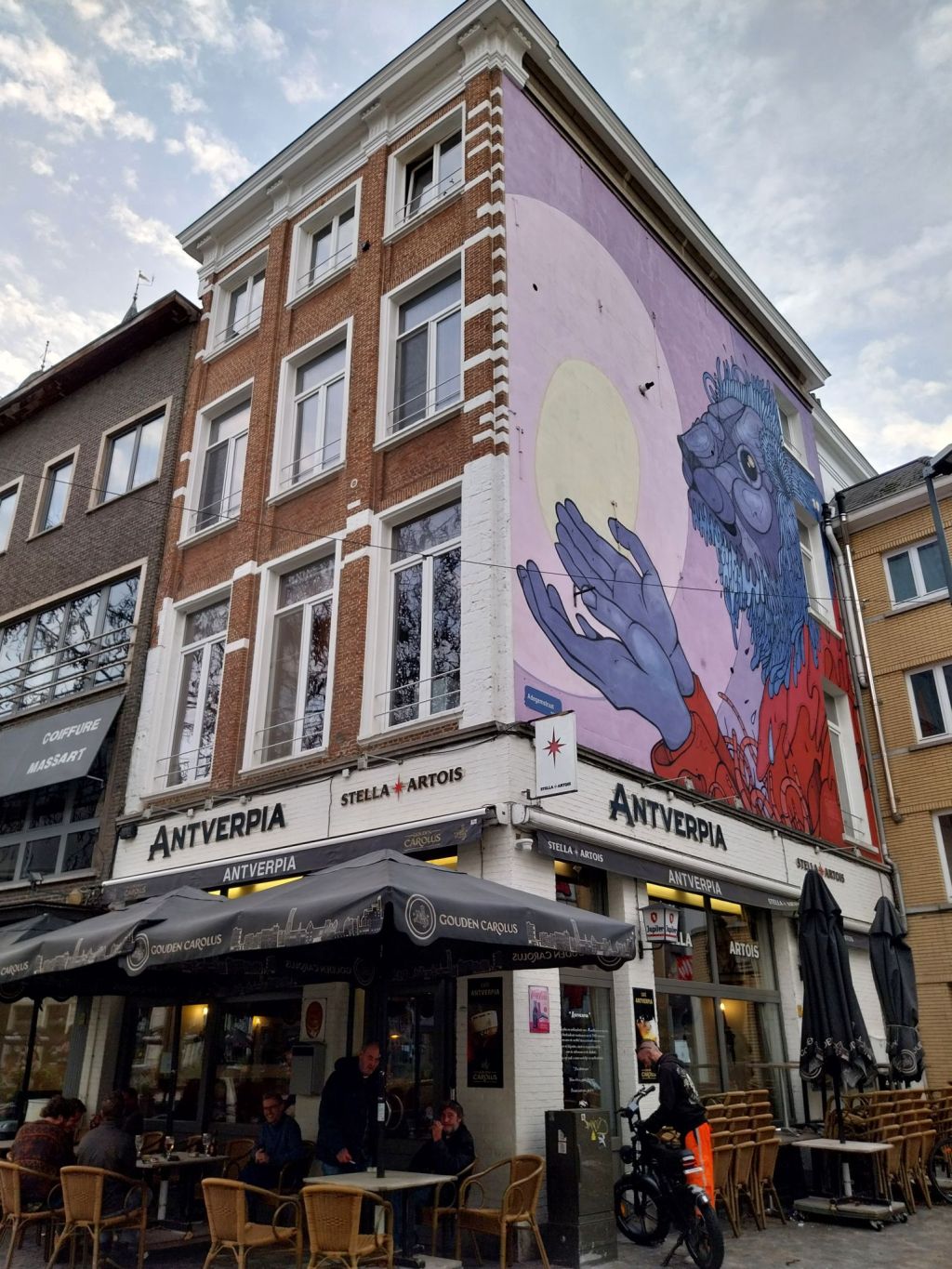
Discovering three cities in a single day isn’t usually achievable, but in designing this trip I’ve opted for destinations that aren’t too far apart. So, after the briefest of looks around Utrecht and Gouda, it’s s lunchtime departure for the two and a half hour journey to Mechelen in Belgium. It’s just half an hour to Rotterdam, where I connect with the onward train.
Like the Netherlands, Belgium’s transport system is vast and largely efficient. First class accommodation on SNCBs services isn’t quite as plush as some other counties, and there’s no on board Wi-Fi. And for the route between Rotterdam and Mechelen, there’s not much to look at – the scenery is semi industrial, with much o the railway hugging motorways, filled with Friday afternoon traffic.
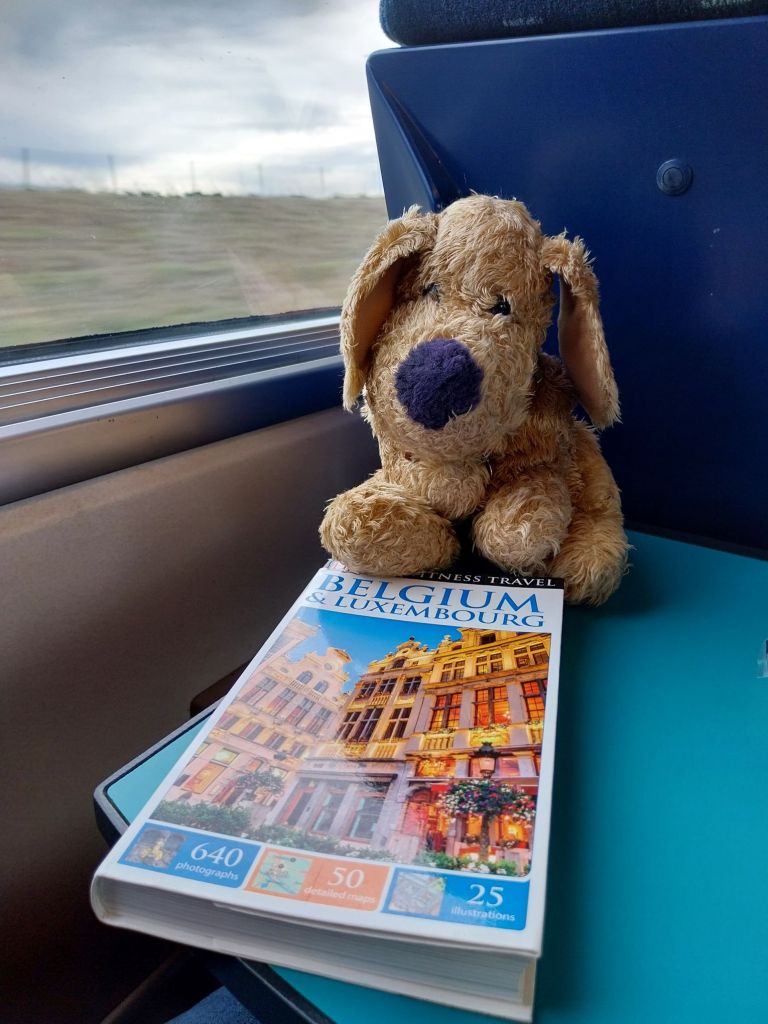
It’s easy to miss it on a map, but Mechelen is a large town between Brussels and Antwerp with a population of around 85,000 people. I’d deliberately chosen it because it’s not that well known.
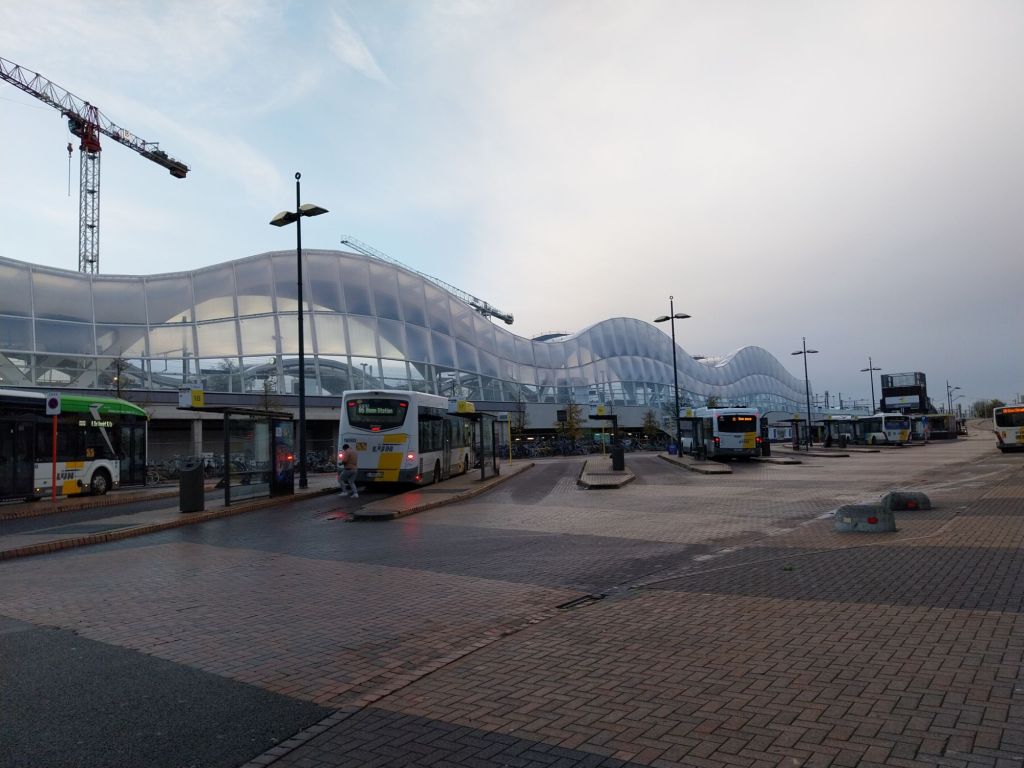
Descending form the modern glass and concrete elevated railway platforms, my first impression is of a fairly non descript market town. The streets were clean, the buildings well kept. It didn’t appear there was much life here. But first impressions don’t give a full flavour of the place.
It’s a dull Friday afternoon when I check into the NH Collection hotel. I’ve grown to like this chain in recent years, there’s something a bit faded glory about this one. The room is comfortable enough but the lift and corridors have seen better days.
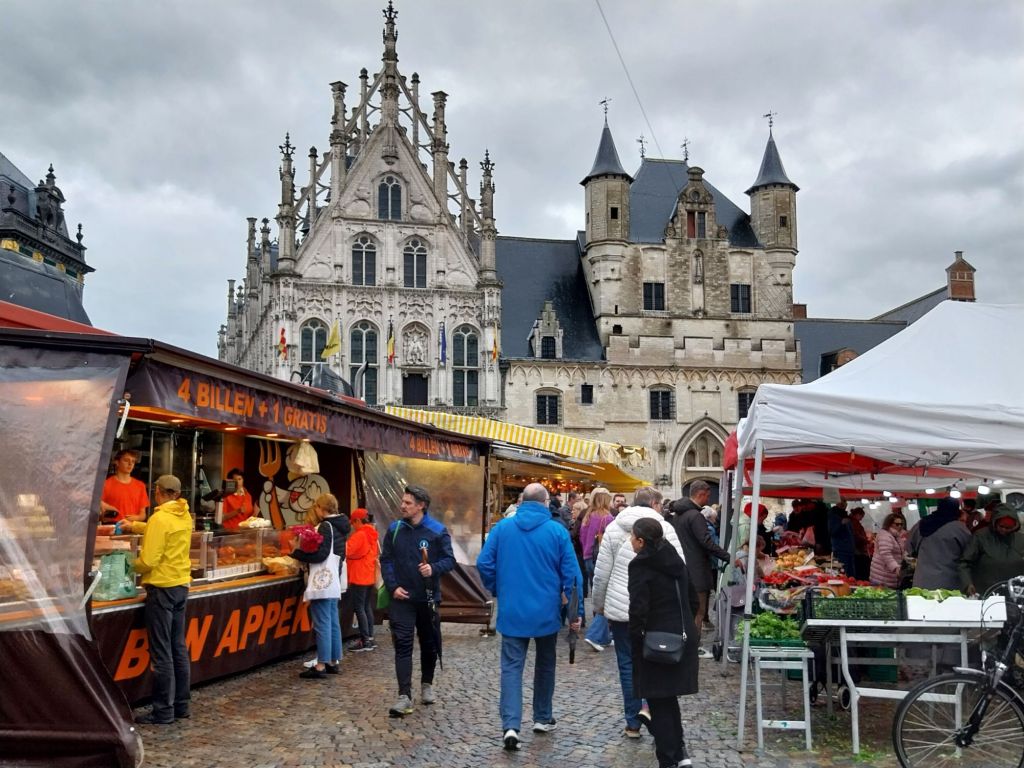
Running around the town, the River Dyble forms a natural boundary to the oldest part of Mechelen. And as soon as you cross the bridge from the Kornmarkt you see the history. Tarmac is replaced by cobblestones, and within a few moments is the centre of any proud Belgian town – the Grote Markt and its accompanying town hall.
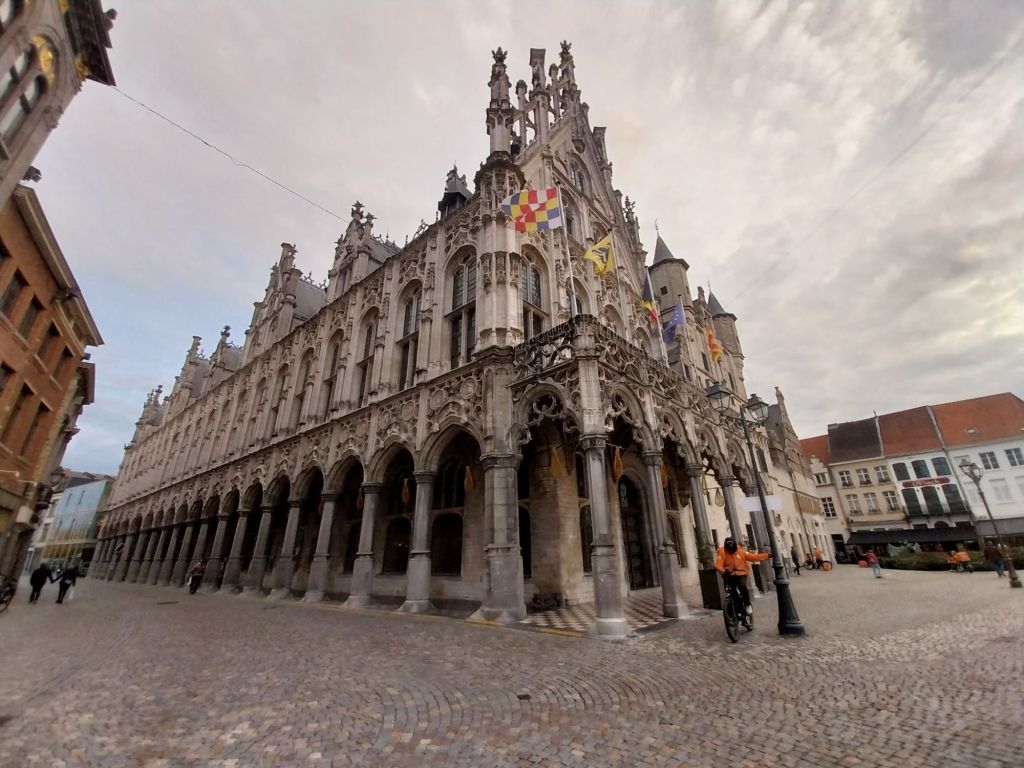
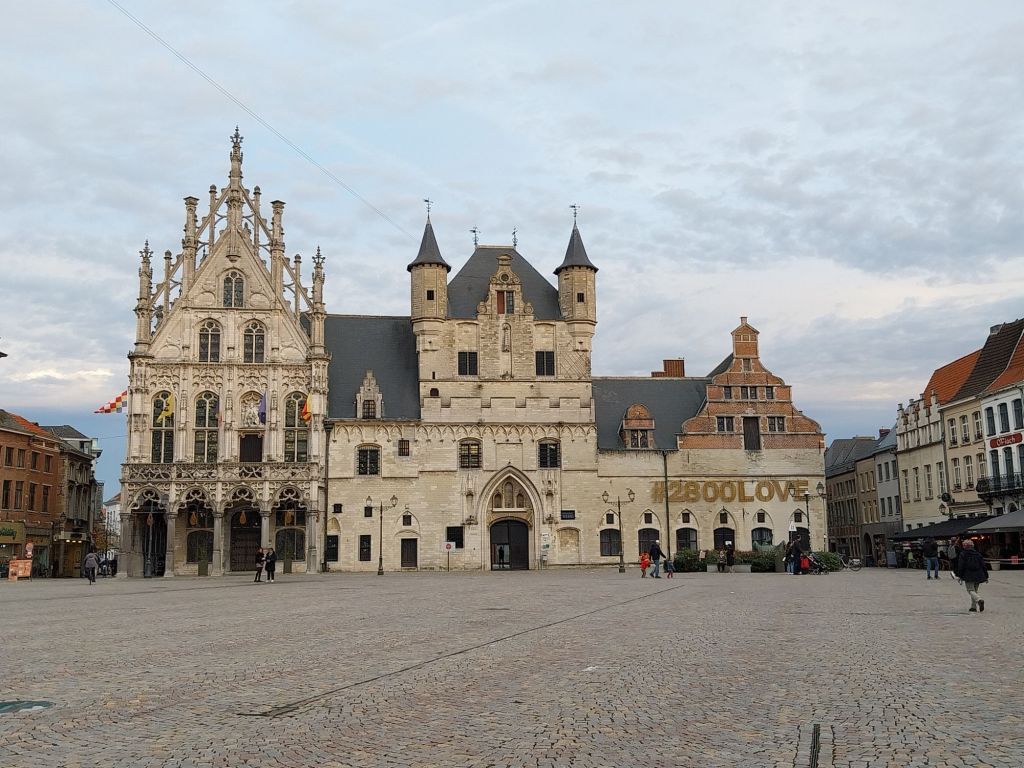
It may not be quite as impressive as the one I saw in Antwerp, but it certainly stands out. The vast open market square is used for all kinds of events – not least a large market on Saturdays. In traditional continental style, the square is surrounded by bars and bistros. On a chilly Friday evening at the end of October, they’re not doing much business – but it’s easy to imagine how this place would look and feel in the middle of summer.
There are plenty of choices for food and drink – and you can combine this with history by the banks of the river.
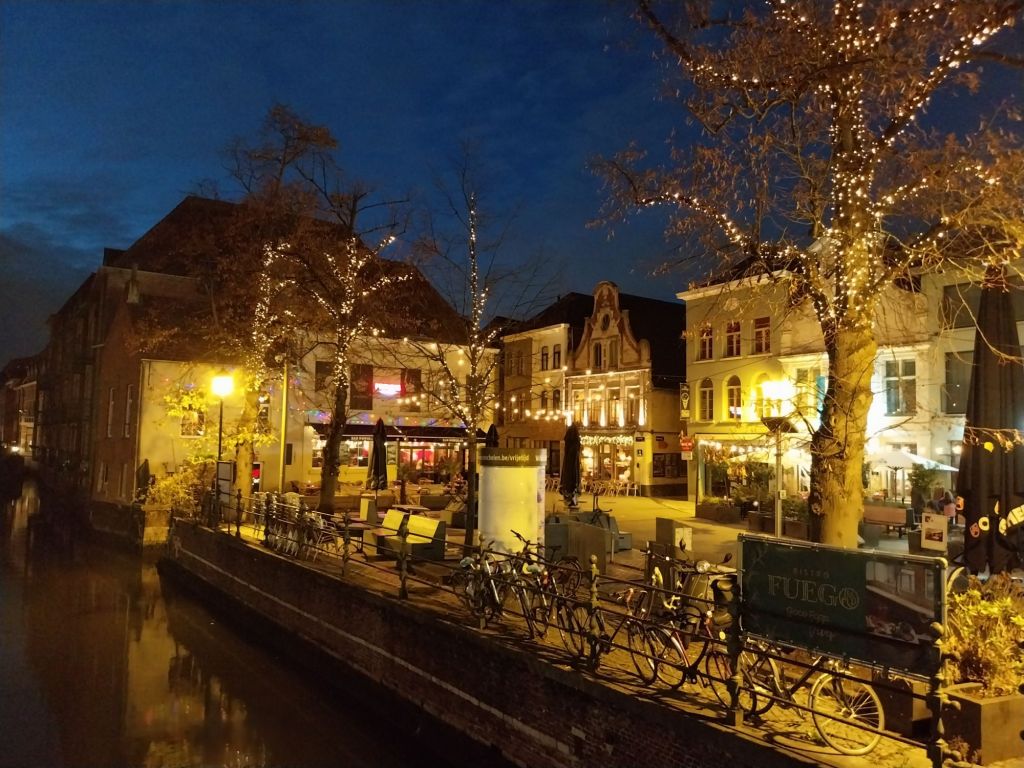
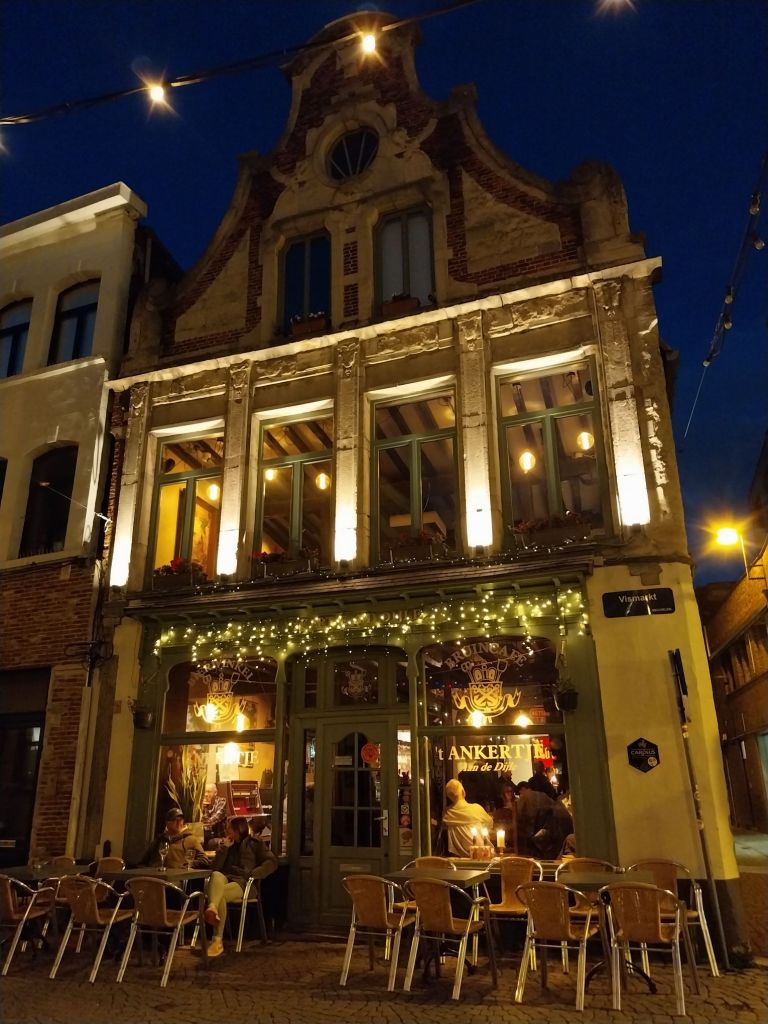
The Vismarkt (Fish Market) was relocated here centuries ago, after locals complained about the smell from its original location. It probably also made sense to have it by the river so that stocks could be imported and exported. Today, the area is a cosy and vibrant location filled with restruants and bars.
As with France, al fresco drinking is a big thing here, though perhaps less so in the colder months. Thankfully, places like The Tanker also have plenty of warm, cosy indoor seating, along with a vast selection of beers.
“When you say small,” asks the waitress, “Do you mean you want 25 centilitres?” Being British, of course I want the larger of the small measures. The local beer – a Carolus Classic – has a strong and malty flavour. Only after I start drinking do I realise its strength of 8.5%. Perhaps I should have opted for the 15cl measure instead. But at less than €4 it’s pretty good value.
Having explored the history of the Vismarkt, it seems only right to drink like a fish too. And the perfect place to do it is at the Golden Fish.
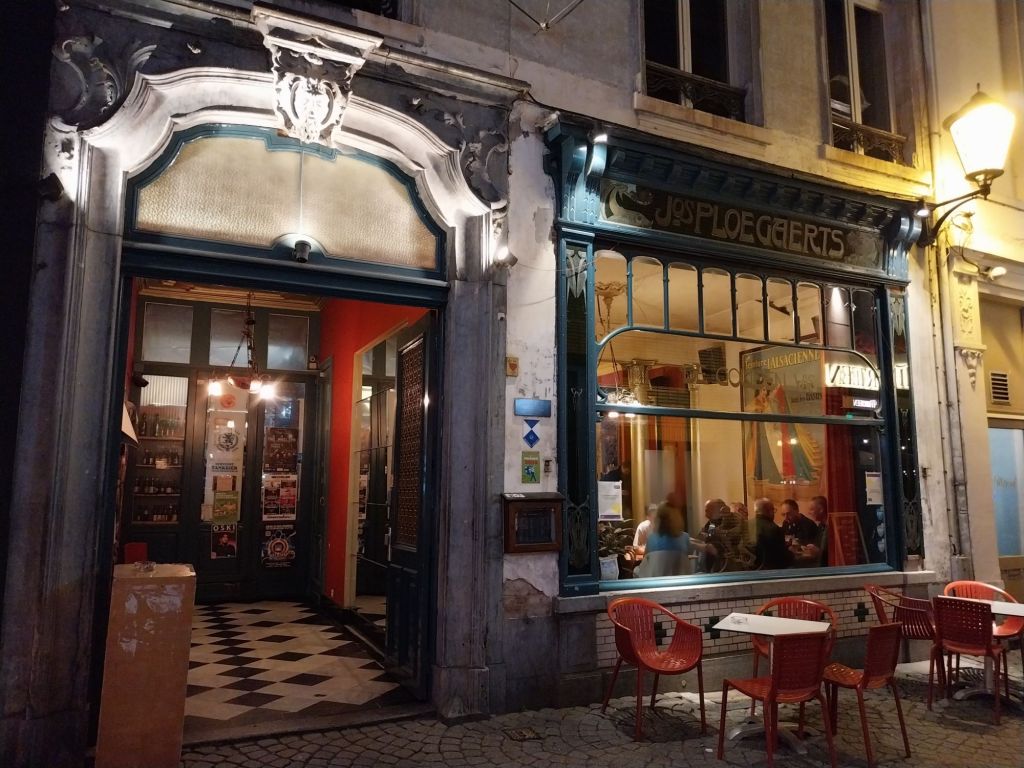
This beautiful 19th Century building has become one of Mechelen’s main watering holes. It was rescued in the 1980s by an interior architect, who restored many of the original features inlcuding elegant pillars and wall decorations.
By day it’s a pleasant cafe bar, and by night it attracts a vibrant crowd of all ages. I squeeze into a small space at the bar, which is already getting busy at 9pm. It’s Halloween – which isn’t celebrated quite as much as All Souls Day on 1st November. But for many it means no work tomorrow as it’s a public holiday, so the drinks flow in abundance.
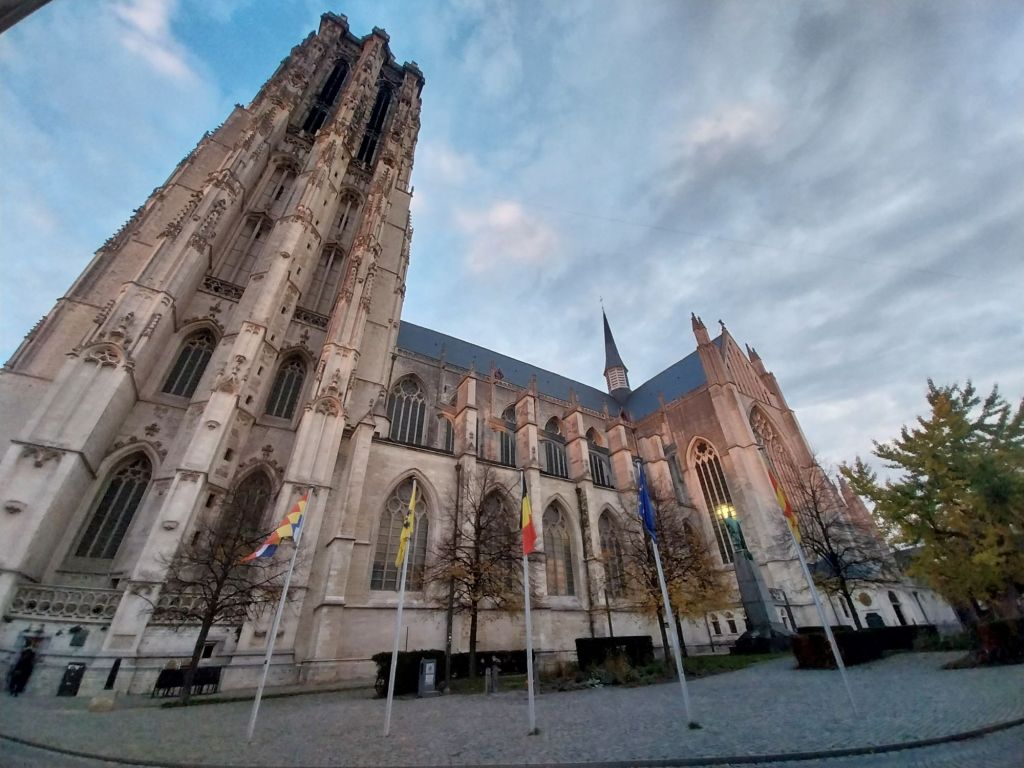
Saturday morning starts with a visit to church. St Rumbolds Cathedral is a magnificent structure, towering over the rest of the town centre. Inside, a special service is taking place for All Souls Day. Delivered in Flemish-Dutch (though the Belgians have their own dialect), I hardly understand a word – but the singing from the choir is beautiful.
It’s a wet day but that doesn’t deter the traders at Mechelen’s market. Fresh produce, cooked food and flowers are the order of the day, all under the watchful eye of the Town Hall.
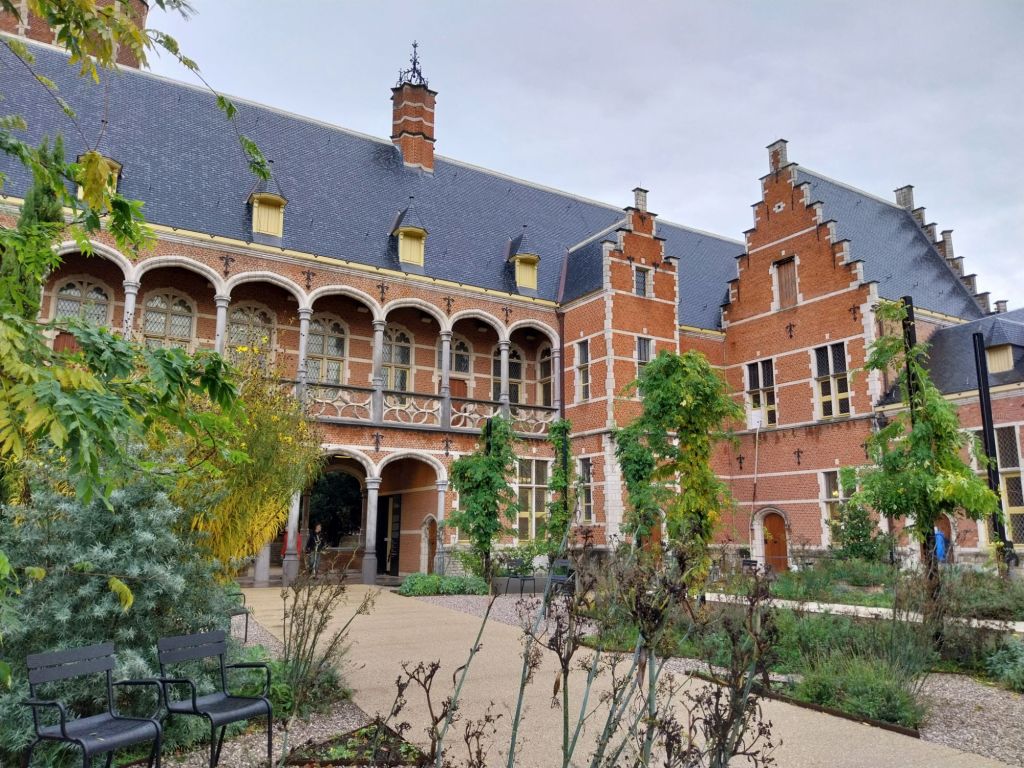
The fifteenth century brought the Renaissance period to Europe. This part of Belgium was under the rule of the Austo-Hungarian empire, and Queen Margaret became rather fond of Mechelen, as did her nephew, Hironymus Van Busleyden, who built a palace here.
Today it’s the town’s main museum, which explores the elegance of the period. You can also walk around the gardens for free. I can also recommend the adjacent coffe shop, which has a fine selection of cakes.
Not that this is all about food, you understand. But lunchtime is beckoning, and the Vleeshalle is a great place to do it. This was Mechelen’s original meat market, designed at the height of the European industrial revolution.
Not unike the Golden Fish, the building was saved from destruction by two enthusiastic local designers, who transformed it into a space for independent food businesses.
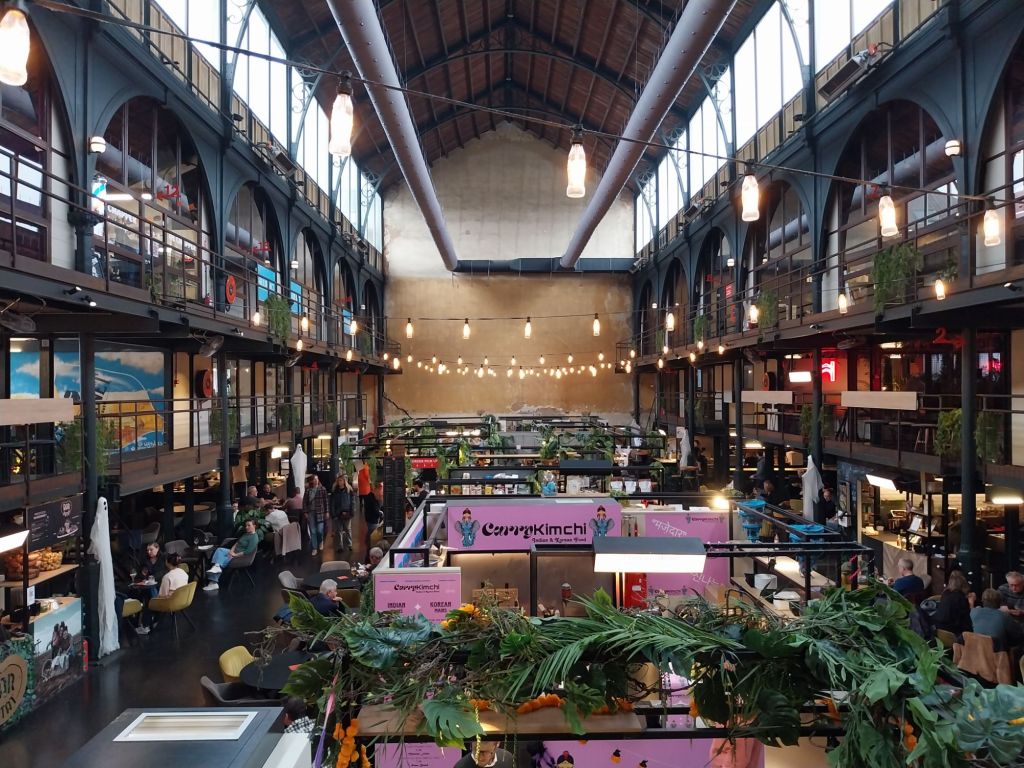
It’s an impressive sight. Climb up the three floors and order your food via a QR code – and watch it being cooked below. This isn’t the cheapest culinary experience you’ll have here, but it is probably the most memorable.
In this part of Europe, they’re big on churches. There appears to be one on every second street, and the religious motifs aren’t restricted to official places of worship. On a street near the Vleeshalle was this building, with a strangely random deity on the wall.
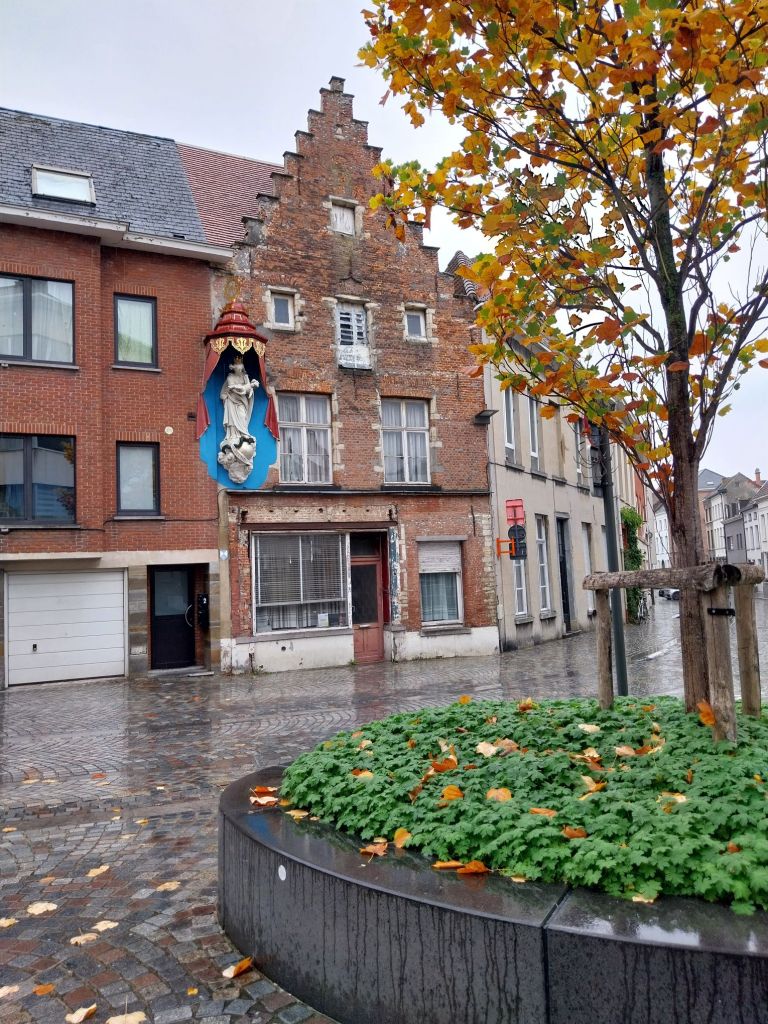
The decorative gabled roof clearly marked something of significance, yet there was no indication anywhere of what this was. Nothing was marked on Google Maps, and I could find no other clues online.
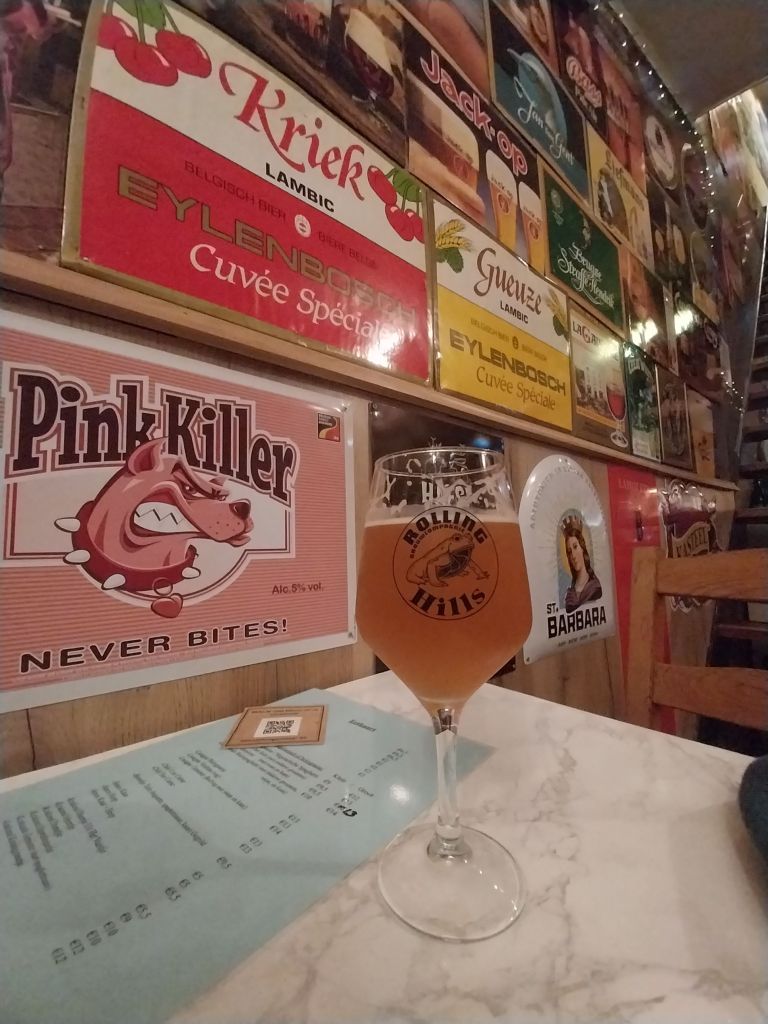
My second and final evening in Mechelen takes me to a tiny bit brilliant craft beer pub. Den Stillen Genienter – translated as The Quiet Enjoyer is an unassuming venue on the Kornmarkt. Set back from the main street, this little bar has one of the largest selections of beer you’re ever likely to see. The decor is rough and ready, with all of the attention and love given to serving great drinks. Beware, though – they only accept cash.
TravelCaster Tips
Getting here : Mechelen sits about halfway between Brussels and Antwerp. From the UK you can travel to Brussels via Eurostar, and make the frequent onward connection to Mechelen.
Orientation : From Mechelen station, cross the main plaza and head across the main double road and keep walking – this will take you to the main Bruul shopping street and the Grote Markt. Everywhere in the old town is walkable, though there are local bus services too.
Food and drink : Mechelen has a wide range of restaurants and cafes to satisfy every taste. A main course will cost between €15 and €30 depending on the type of cuisine you want. A small Belgian craft beer (25cl) should be under €4 – a basic pilsner will be less.
 TravelCaster
Leave a comment