
Wednesday is bin day in the Polish city of Lodz. I know this because I am woken at 5am by a noisy dumpster being wheeled down the alley outside the Stare Kino hotel. But breakfast is tasty enough and today’s travel time to Warsaw is just 90 minutes. Lodz Fabryczna station is eerily quiet during the morning rush hour – it’s a huge interchange, but eeverybody seems to go about their business in total silence.

First class had been an option today, though PKP Intercity’s modern rolling stock means more room in second class, and a ticket for just €8. Beyond the industrial centre of Lodz, Poland’s rural landscape opens up. The views are filled with farms, large and small. Figures from 2024 suggest some 22 million out of the country’s 37 million residents live in towns with fewer than 100,000 people – many with far less.
And so to Warsaw, which I’d only visited for less than 24 hours on my previous trip. I’m determined to see more, and the first view comes from the 27th floor of the towering Novotel near the central station. A helpful early check in gives me time to freshen up, taking in the site of Poland’s national football stadium about a mile away. As ever, someone else got in the way of the shot.

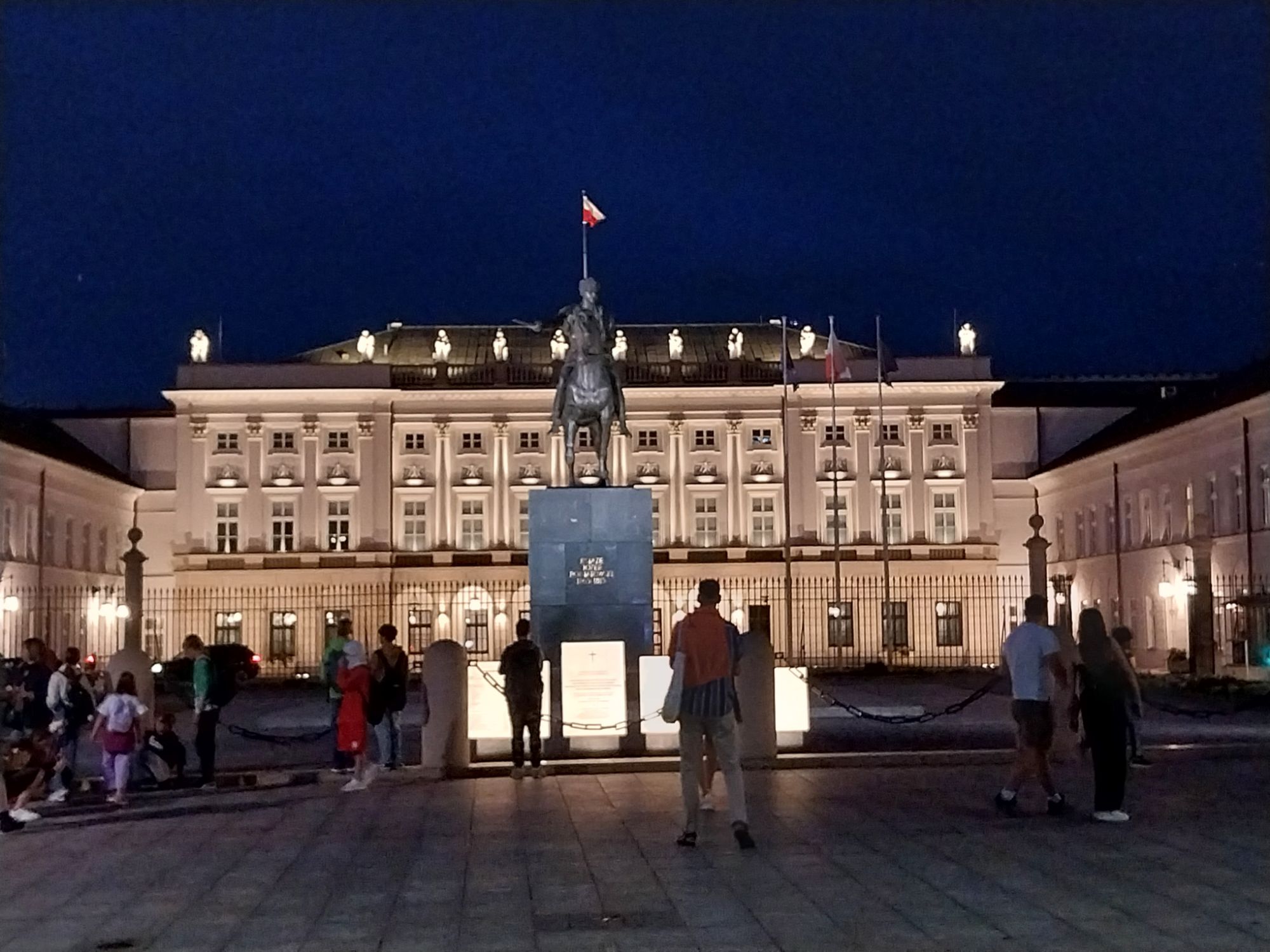
The long road to Warsaw’s old town is known as the Royal Route and can be taken on foot. The number 128 bus provides a quicker ride allowing you to take in the grand sights of Nowi Swiat – New World Street – that stretches from the city centre to the Royal Palace. Here are elegant, classical buildings, the Carmelite Church – one of only two in Warsaw that survived the Second World War – and the University. They’re grand enough by day, but take on a special appearance at night.

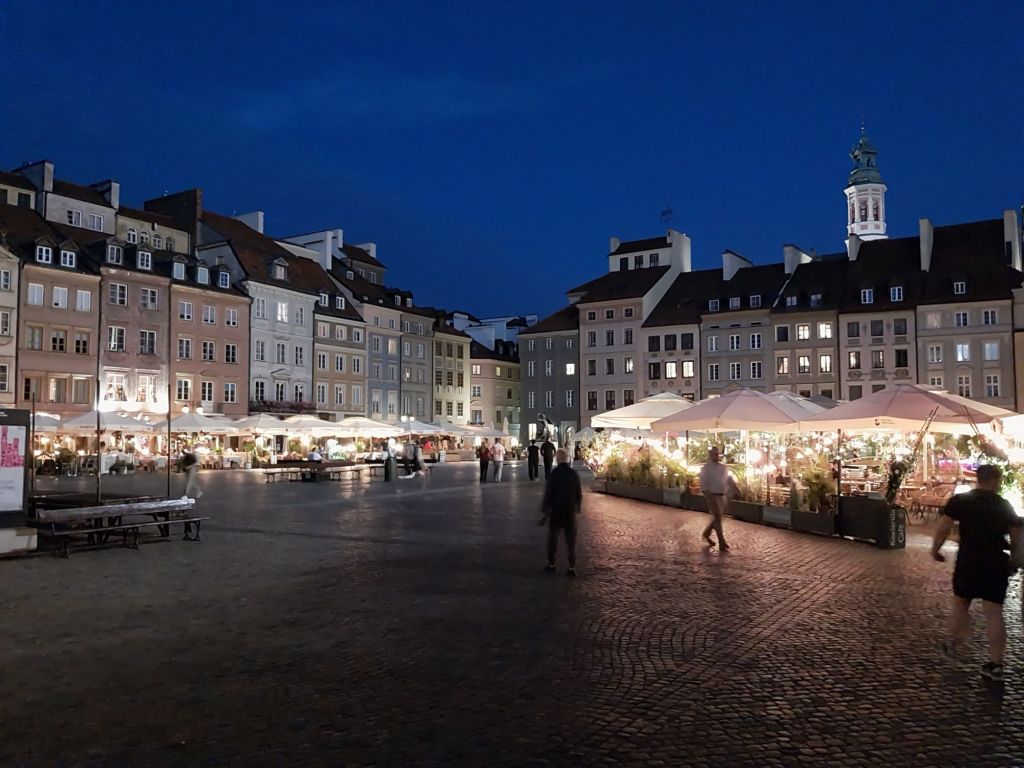
On a Summer’s afternoon there are long queues to get into the Palace, but to my mind the Old Town is just something you have to tick off as a visitor. The Market Place – the Rynek – is much smaller than the one in Wroclaw, filled with tacky identikit restaurants that spoil an otherwise nice view of the historic buildings and the mermaid fountain.
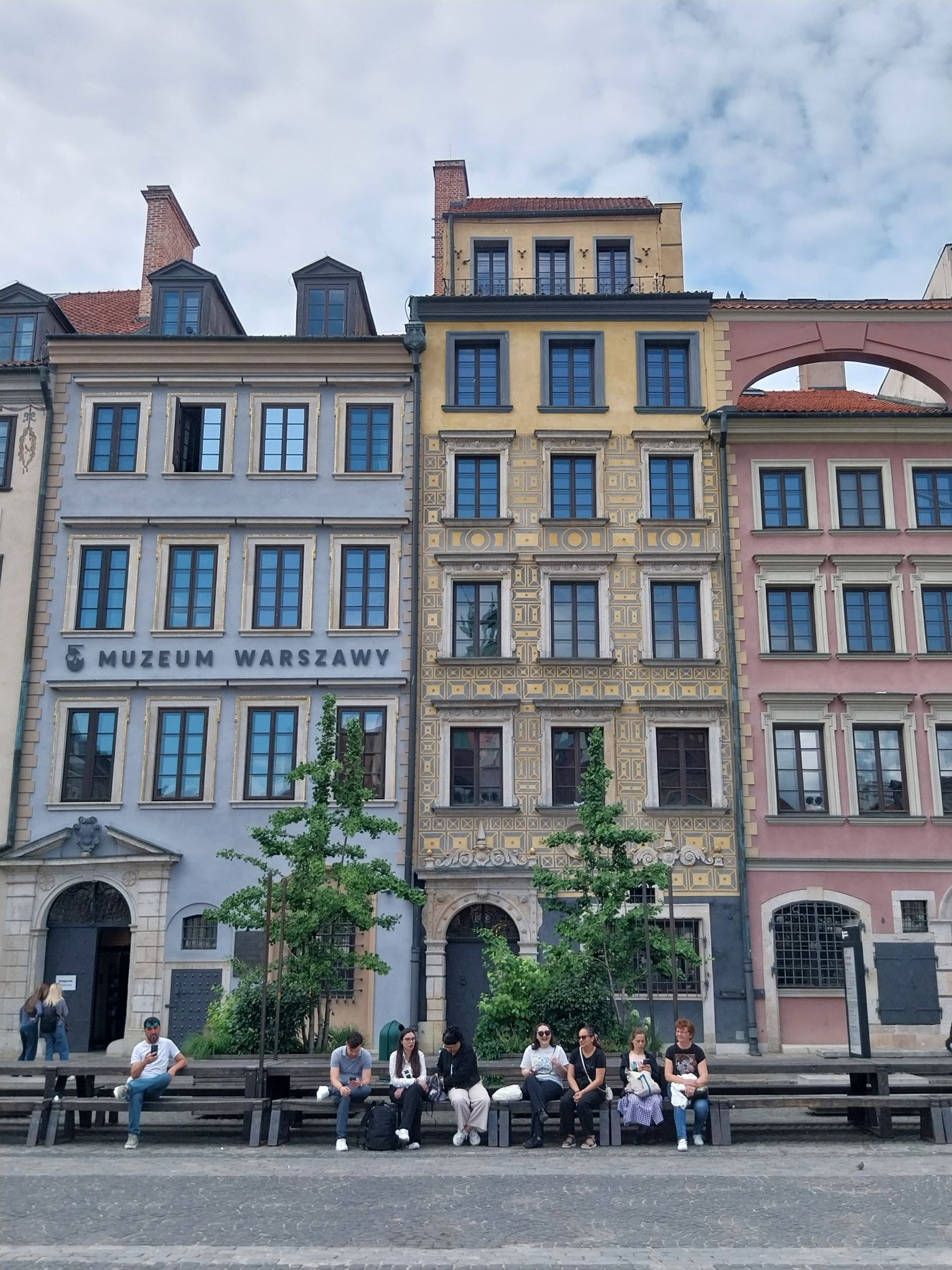

I say the buildings are “historic” with a caveat; Warsaw is known for what’s called Europe’s newest “old town”, because nearly all of the buildings were destroyed in the Second World War. While most of the eateries around the Rynek are overpriced and overrated, just a few steps along a side street brings you to an authentic taste of Poland.

There’s no doubt that the Murzeynek is there for the tourists, but it doesn’t feel like that inside. There’s traditional chicken soup, a classic schnitzel and the pierogi – a potato dumpling filled with meat, cheese, cabbage or fish. In the the heart of the Old Town it’s one of the cheapest places to get a filling main course at around €15 or less.
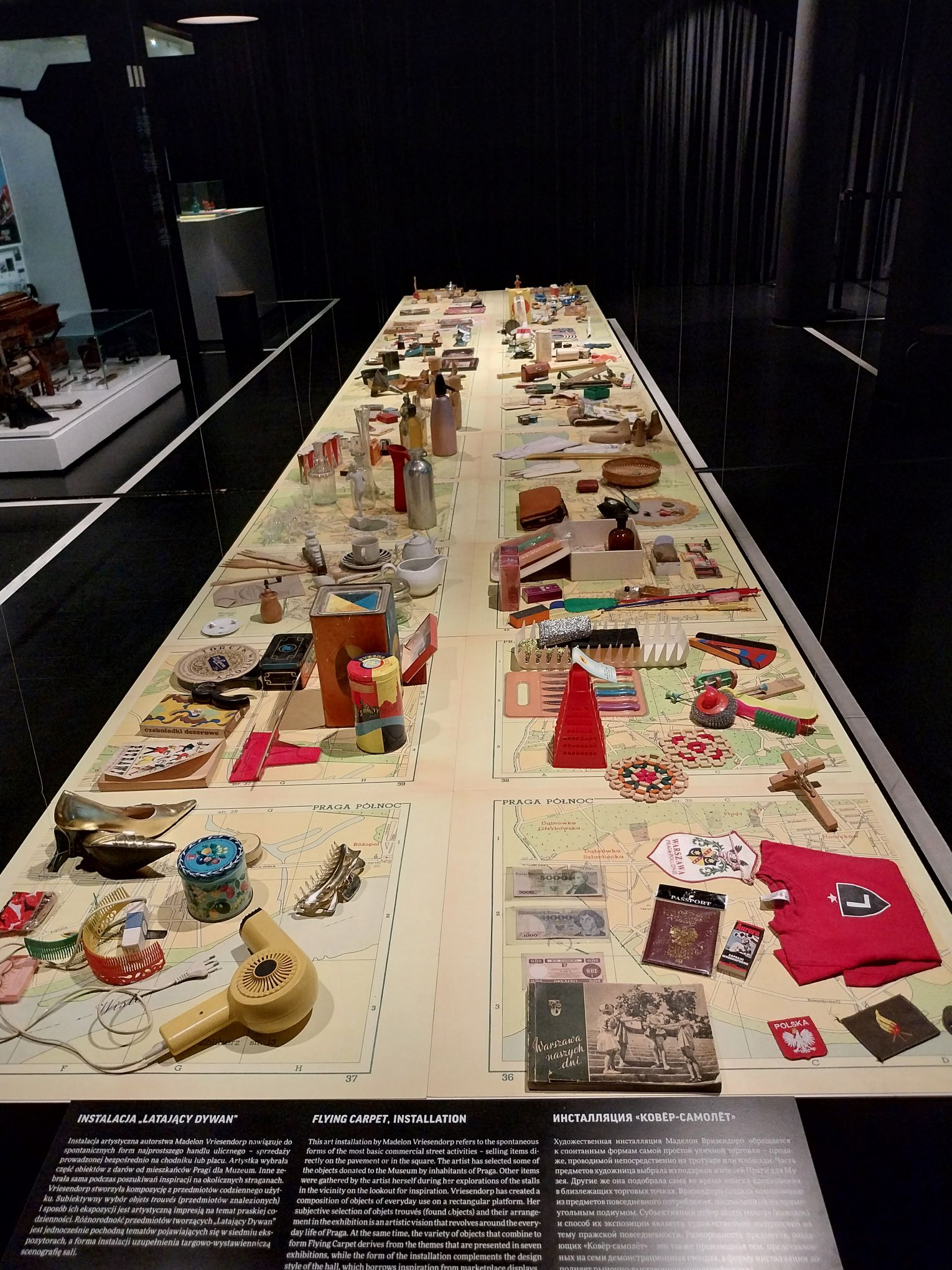
There is more to Warsaw than its Old Town, of course – and one of the easiest places to experience something a little less touristy is to take a tram three stops to the Praga district. Nothing to do with the Czech Republic, the name praga is derived from a Polish word for “burning” – because trees along the banks of the Vistula river were burned and cleared to make way for this settlement. The quirky Praga Museum shows a fascinating history of the district through paintings and photos. It’s a brilliant insight into communist life too, showing the everyday activities that happened against the backdrop of oppression.
Praga can very much be described as down to earth. Just a few steps away from the museum is the “Farmer’s Market” – though these days it’s a somewhat downtrodden trading area for clothes and homewares. However, it’s a symbol of tradition continuing in the face of progress. Just down the road is a huge glass shopping mall. The market defies all of this, with a largely older clientele browsing the stalls for a bargain.


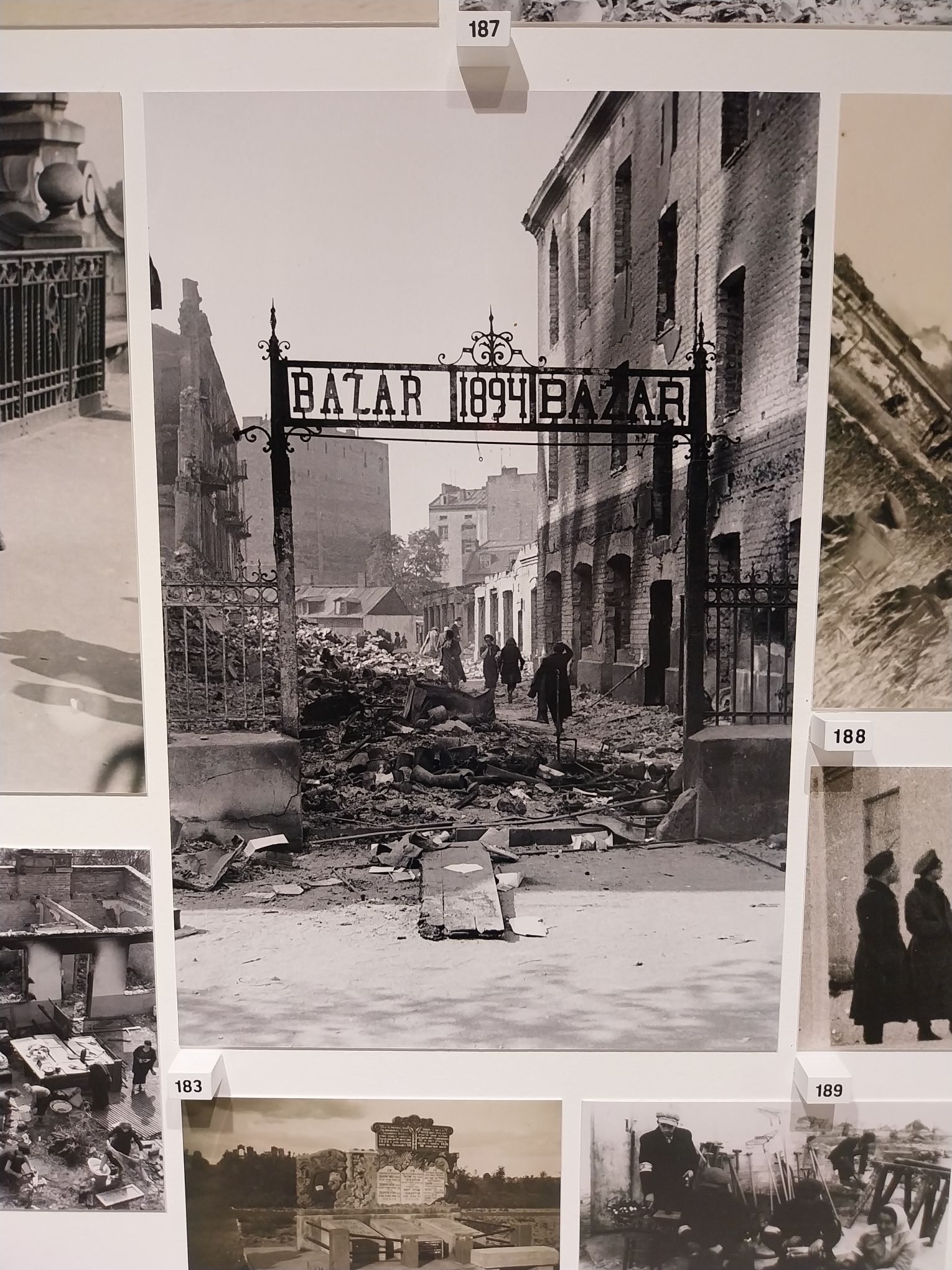
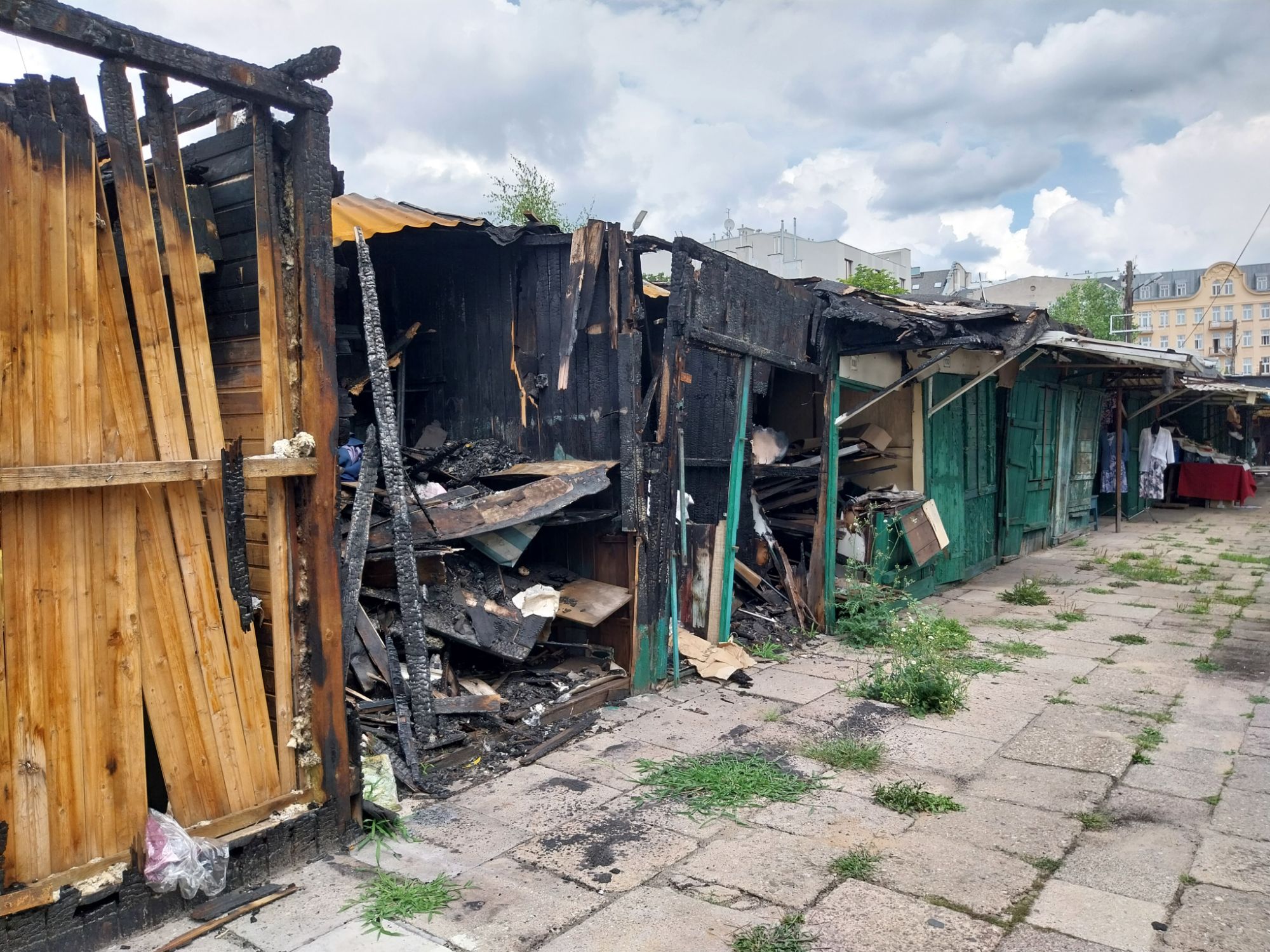
It’s also moving to see just how this place has survived. In the museum was a poignant picture of destruction during the Second World War – contrasted here with a picture from today, showing the charred remains of a fire at the market in March 2025.
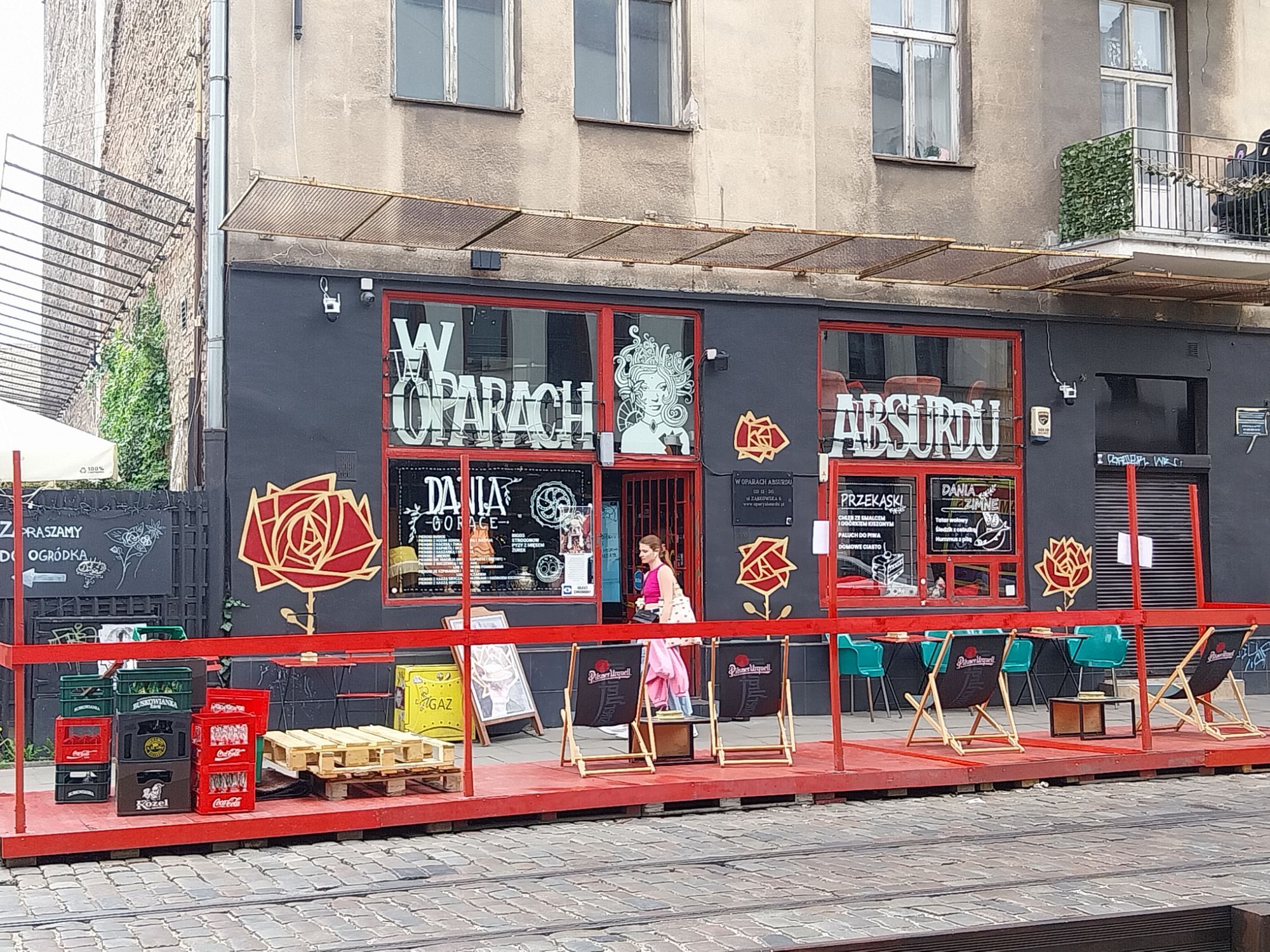
Praga is also a good alternative to experience Warsaw’s nightlife. Just a few steps from the Zabkowska tram stop is U Opera Absurdu, a neat little bar with a bohemian feel to it. On a midweek evening it’s fairly quiet but at the weekends you can find live music and DJ sets. (It looks better than in this photo)
No amount of colour can take away what happened during Warsaw’s darkest days. The 1944 uprising saw a huge attempt by the Polish resistance to take back the city from the Nazis. The operation lasted 63 days but ended in defeat and, ultimately, the devastation of the city. Today, the events are marked by a stunning memorial in Krasiński Square – though it wasn’t built until 1989 because the previous Communist regime saw it as a threat to its authority.

As you’d expect from a capital city, Warsaw is vast and noisy. In planning a visit, it’s easier to treat it as a series of small towns and work out which you want to see. And among the overwhelming scale of its large buildings and wide roads are patches of green and calm. One of the best places to experience this is Lasienki Park just to the south of the main centre. Dating back to 1674, the park once housed the Royal baths, which were subsequently transformed to the Palace on the Isle – a residence surrounded by water.

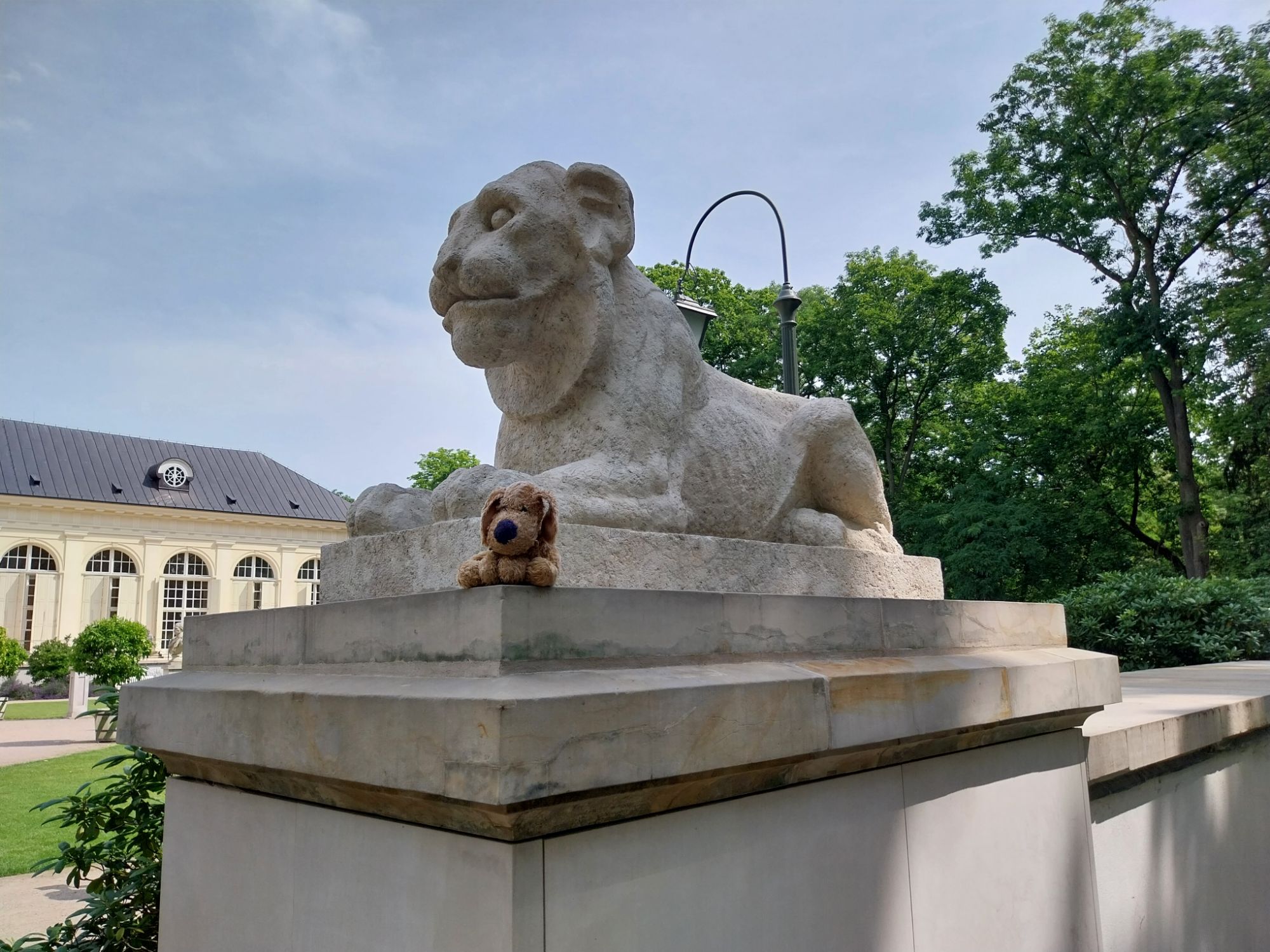
This is selfie central – people lining up to take the perfect picture – though the palace isn’t the only place to do this; the park features an orangery, a classic water tower and a huge monument to the composer Chopin who was born in Warsaw.

With palaces and culture in abundance across Warsaw, it was only a matter of time before someone decided to combine the two. And in the 1950’s, the Communists created the centrepiece of peacocking in the form of the Palace of Culture and Science. Blink and you’ll miss it. or maybe not.

At 237 metres high, this is Poland’s tallest building. There are 44 floors, though visitors are only allowed up to the 30th flood, a mere 114 metres above ground level. It is less windy than my last visit, which was at the end of March, but hugely more busy. Even though I’d purchased a ticket in advance (less than €6) there was await of 20 minutes to get into the self service lift. On a different day I might have given up. But you can’t argue with the views here.

Warsaw – and Poland as a whole – has been a fascinating place to visit. You can cram a lot into just one week and you’ll get a lot for your money. Travel is easy, the majority of people you’ll meet speak English and there’s something new to see around every corner. And on this trip I have just scratched the surface : there are mountains, lakes, national parks and the Baltic coastline to explore. I think I’ll be back.
TravelCaster Tips
Getting here : Warsaw is served by two airports. Chopin International has an array of cheap public transport options to take you into the city centre – though it’s worth noting that even some of the main hotels can be a 15-20 minute walk from the main railways station.
Orientation : With the main railway station in front of you, you’ll see the Palace of Culture and Science on your right. The Old Town is north east and can be reached by a 25-30 minute walk or via bus or Metro. The vibrant Praga district is across the Vistula River to the East, while Lazienski park is a 15 minute bus ride south.
Public Transport : Warsaw has an extensive network of buses, trams and a metro which can seem pretty overwhelming at first. This helpful guide will get your started. Tickets can be bought at any bus, tram or metro stop and can be used for short journeys or up to seven days at a time. A 24 ticket costs about €3.50. As with other Polish transport systems, you must ensure that your ticket is validated on your first trip.
Food and Drink : As you would expect from a capital city, every culinary choice is available here, but you’ll be charged depending on the location. In the Old Town expect to pay up to €25 or more for a main course and around €4-5 for a beer. Away from the tourist hotspots you’ll find everything from cafes to street food, meaning youj can fill up for less than €10. A 0.3 litre beer can cost as little as €2.
A word on safety : Warsaw is on the whole a safe place. But do beware of pickpockets and beggars in and around the main railway station and also on the Royal Route. Pavement cafes can be a lucrative place for petty thieves so ensure you keep your belongings close to hand.
 TravelCaster
Leave a comment