
Distance : 94 km
Travel time : 3 hours
For visitors from the IUK, Ljubljana is potentially one of Europe’s most underrated destinations. And yet it’s extremely accessible, not least ifyou’re travelling by train. There are multiple connections from neighbouring Croatia (Zagreb), Austria (via Salzburg and Villach) and from my current destination of Trieste in Italy.
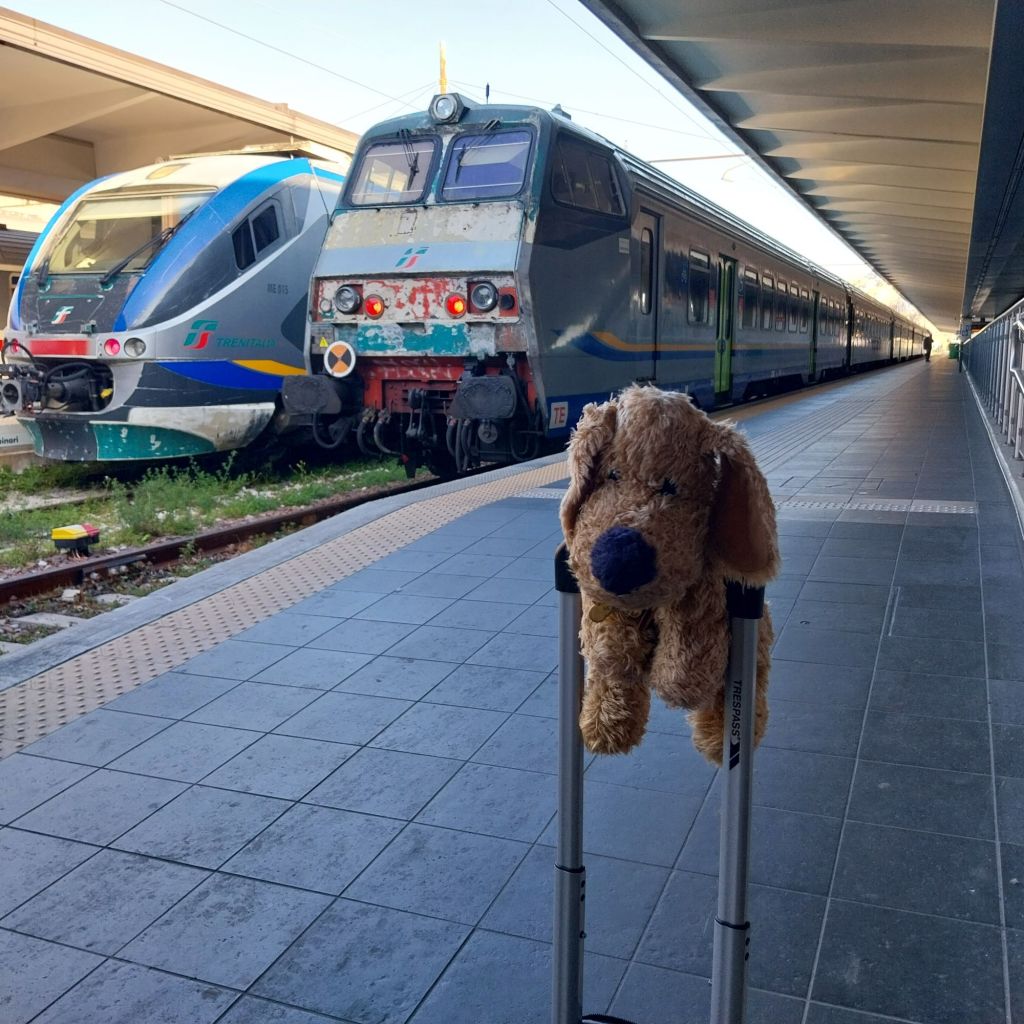
One of the best things about the two daily regional departures is that no reservations of required, or indeed possible, which is unusual for a cross border service. The only small inconvenience is that today’s 0903 requires a change of train at Villa Opicina – on what is actually a through service.
The journey time to Ljubljana is just under three hours. The trains run relatively slowly, despite electrification, but that gives you time to admire the stunning scenery – first, climbing high in a horsehoe shape around the Gulf of Trieste, before crossing into leafy Slovenia with its attractive vast area of farmland framed by mountains that get ever closer as you approach the capital city.

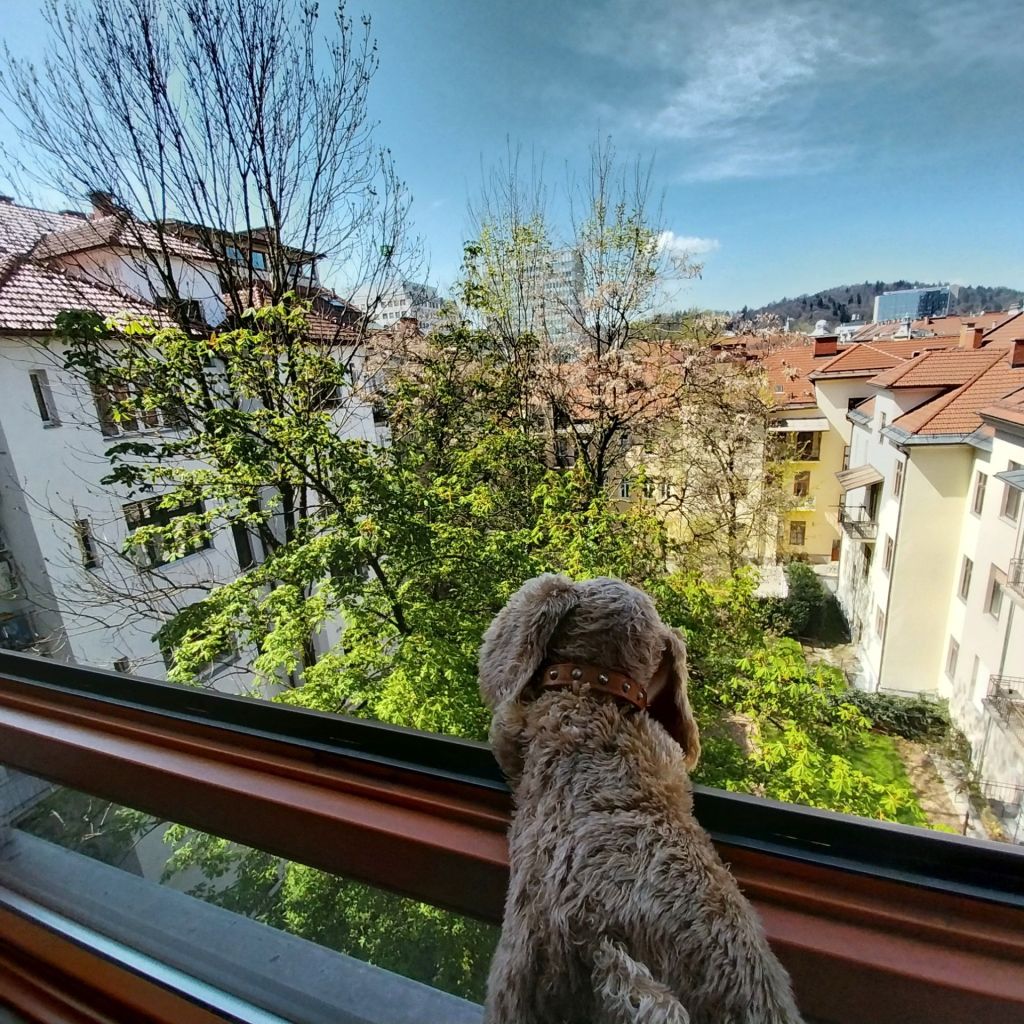
My previous arrival here had been in the evening, in the pouring rain – so it’s great to see Ljubljana bathed in warm Spring sunshine. There are multiple accommodation options here, and the City Hotel is a convenient distance between the railway station and the Old Town – about ten minutes either way to walk. Depending on the room, the views aren’t bad either
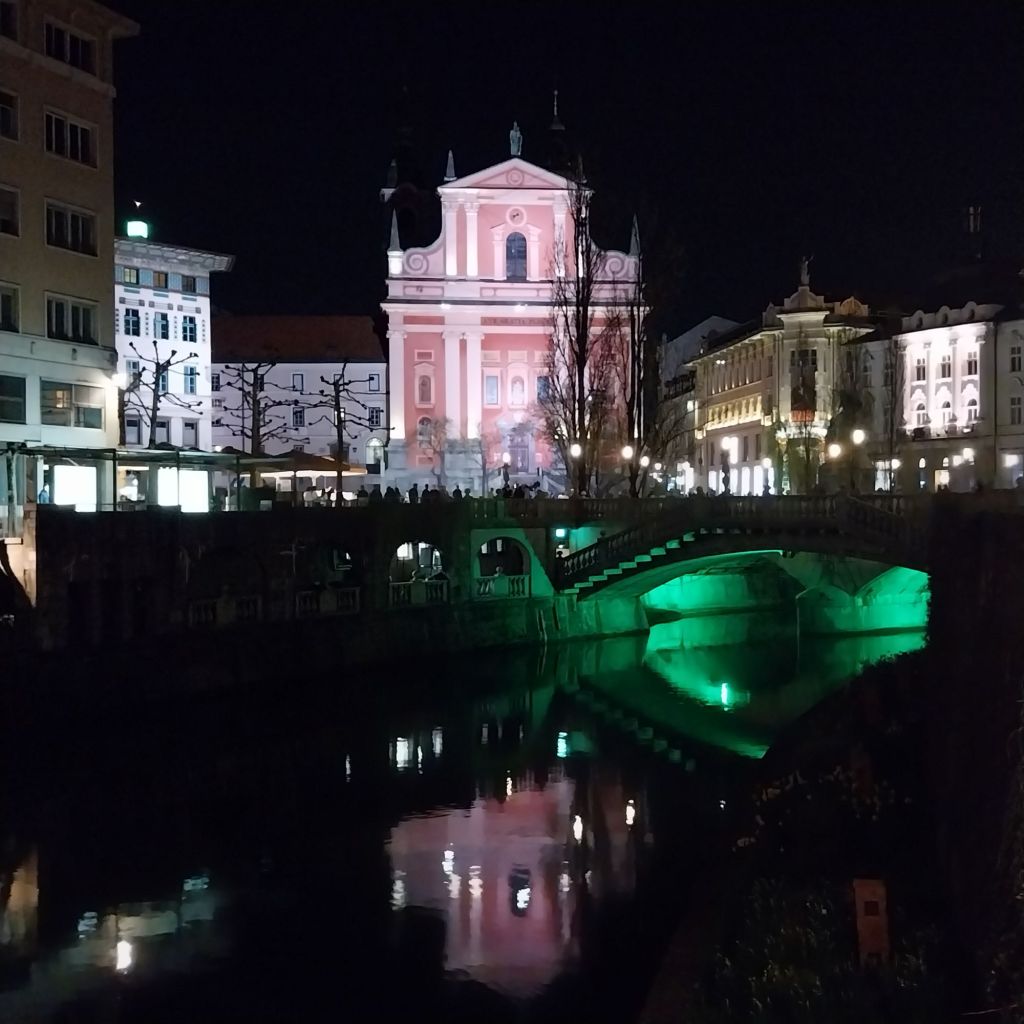
There are many sights to see right across Ljubljana but most of the popular places are in the Old Town, stretching either side of the Ljubljanitska River. The best way to get your bearings is to head for the distinctive Triple Bridge by the Franciscan Church. It aids navigation and helps you to make the choice of the type of activity you’re interested in. And at night it makes a great photo.
Generally speaking – though not exclusively so – turning left at the bridge takes you to a series of market stalls and cafes, flanked by a long covered embankment along Anamic-Lunder street. Its name commemorates two Slovenian boys who died here during German violence in 1908, and today is flanked with market stalls selling souvenirs and flowers. At the end is the main Market Place, where a huge fruit and veg market happens mots weekdays. It starts at 7am so you’ll need to get up in the morning to enjoy it at its best.

To the right of the Triple Brdge is where cafe culture turns into bar culture. A huge line of restaurants compete for trade. There are al kinds of styles on offer here, but one of my favourites is Ala Prsuterja which celebrates the famous meat – not just from Italy, but also Spain, Croatia and of course Slovenia. It’s a great laid back place that also has an enormous selection of Slovenian wines.
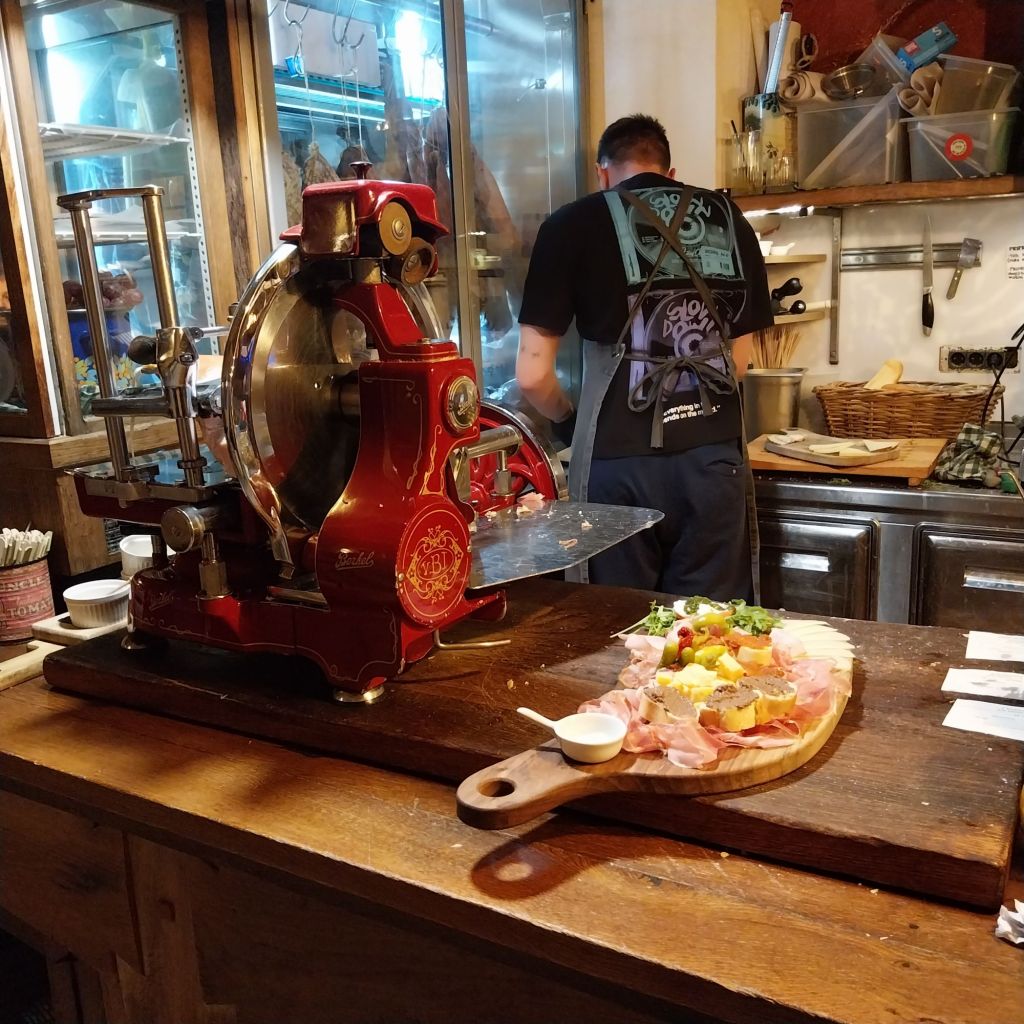
And here’s the thing – this is not about quaffing but sipping. The standard measure of wine by the glass here is 0.1 litre. The idea is to sample several different flavours rather than acting as if you’re on a hen party.
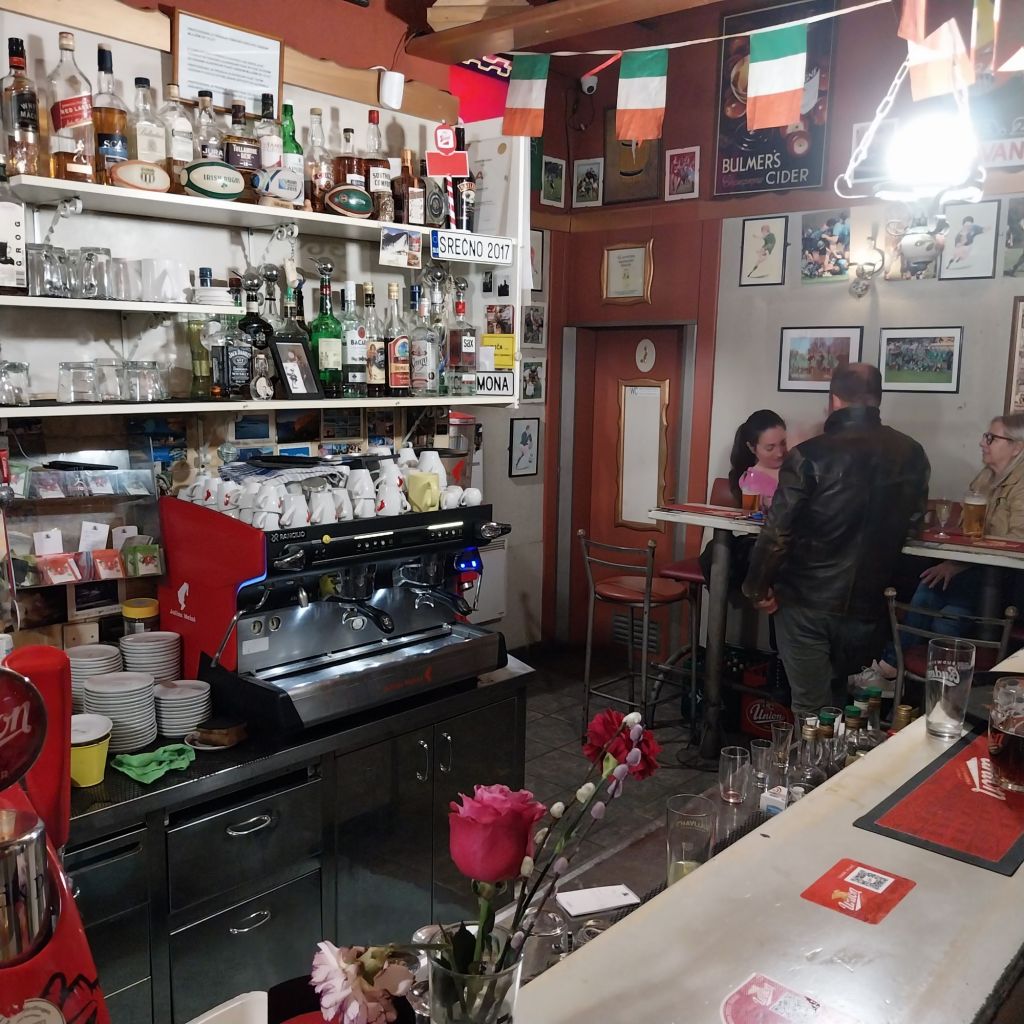
That’s not to say that you can’t have fun. There are plenty of bars open late into the night offering a party atmosphere. A more basic one being the Levstik Pub on Levstikov Street. It’s so basic it doesn’t have a website – just a reputation for really cheap drinks done well. Saturday night sees a curious mix of locals playing darts and young couples who’ve lot their way to somewhere classier. At €2.80 for a large beer, it really doesn’t matter.
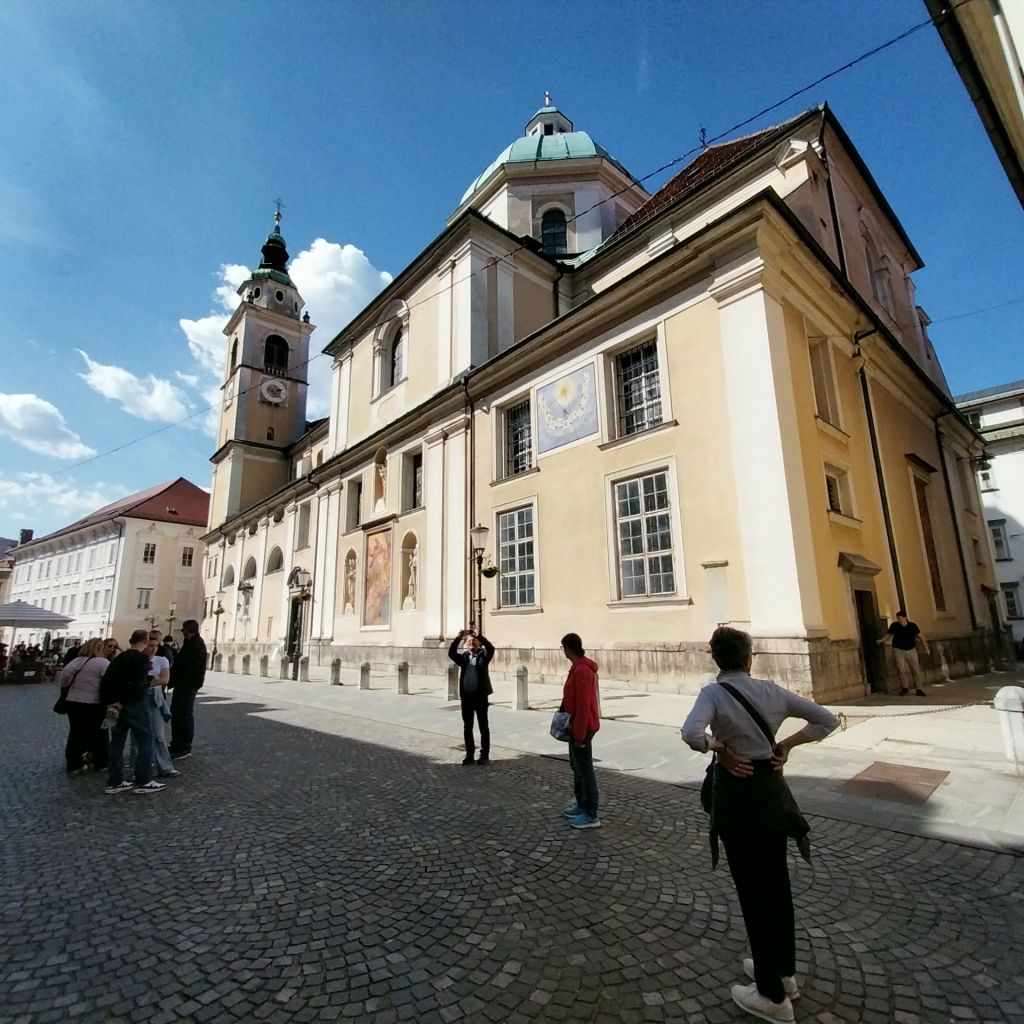
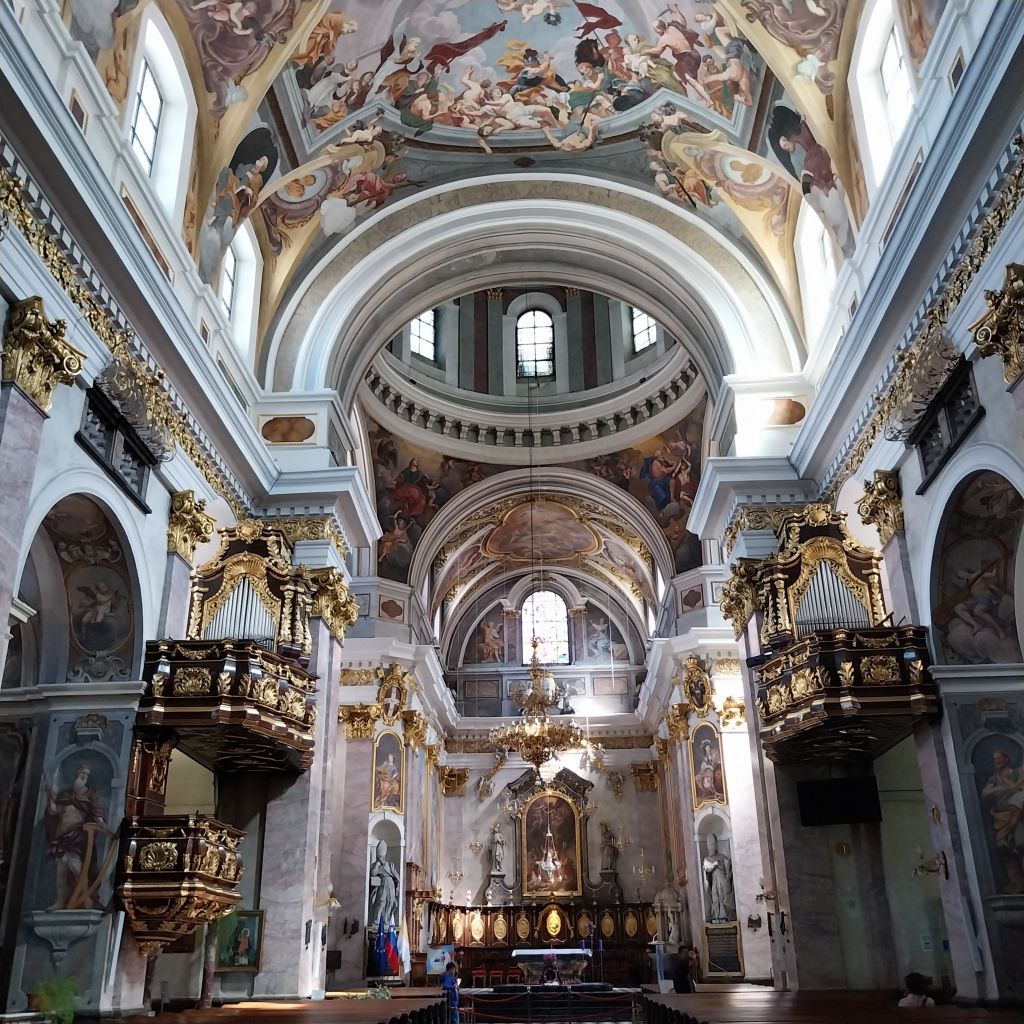
On a Sunday in Ljubljana you are likely to be woken by bells, There are dozens of churches in the city centre, though the grand daddy of them all, St Nicholas Cathedral, is the loudest. You could pay €3 to get into the place on other days, or you could attend one of the many services held throughout Sunday. It’s well worth visiting – and stunning on the inside.
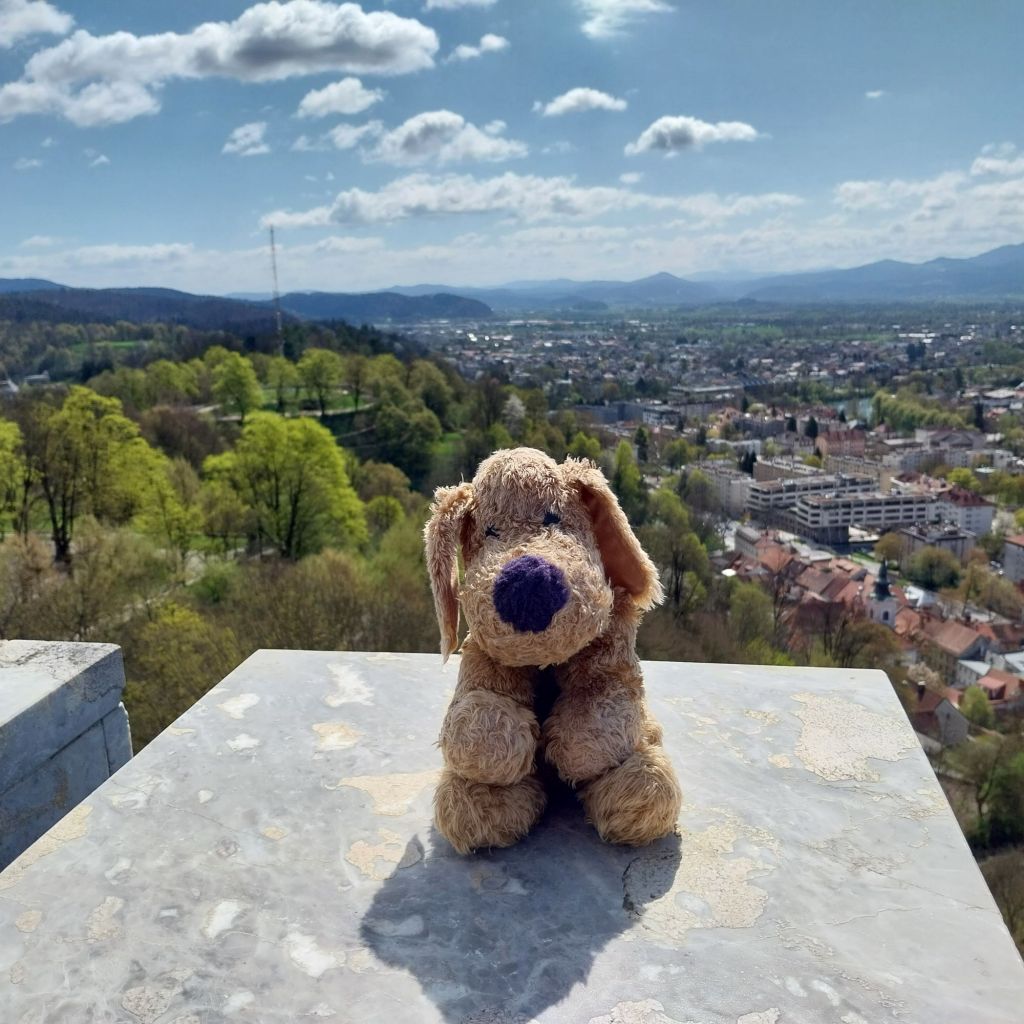
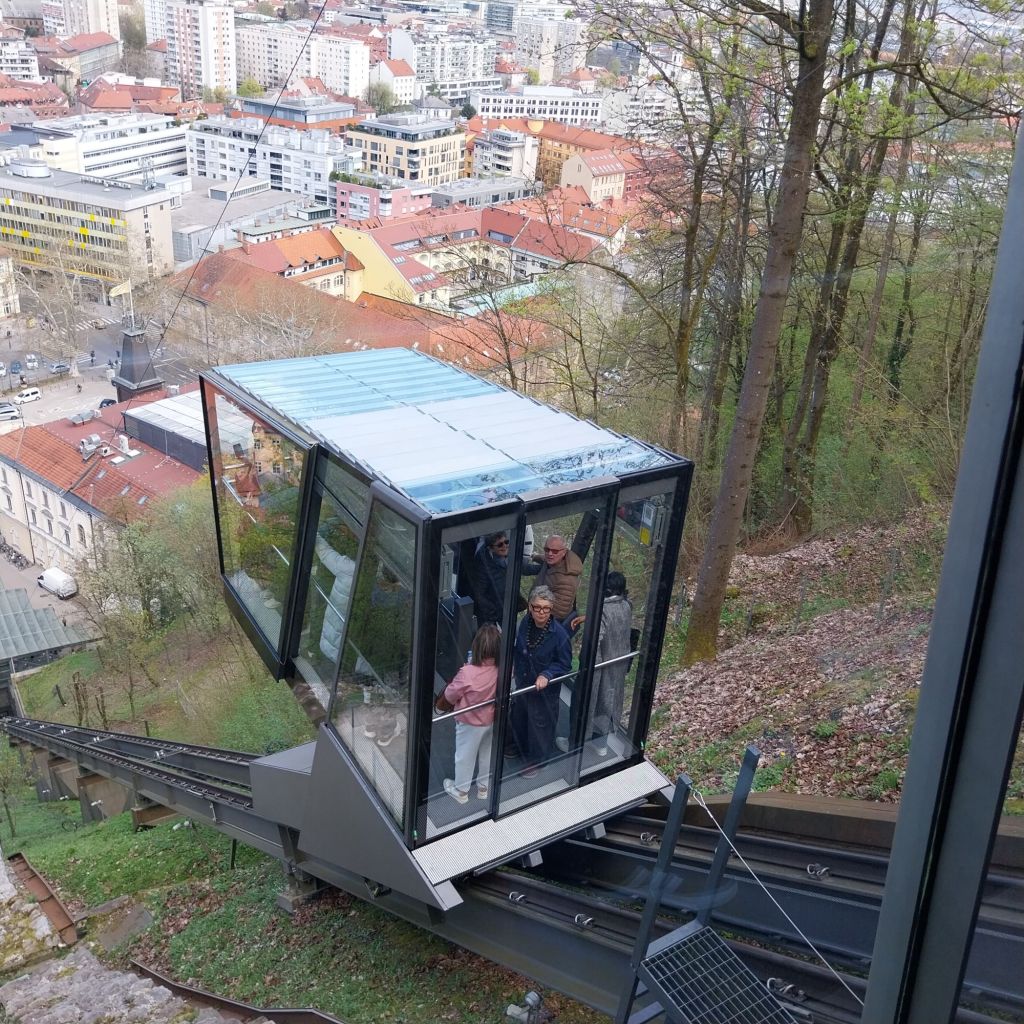
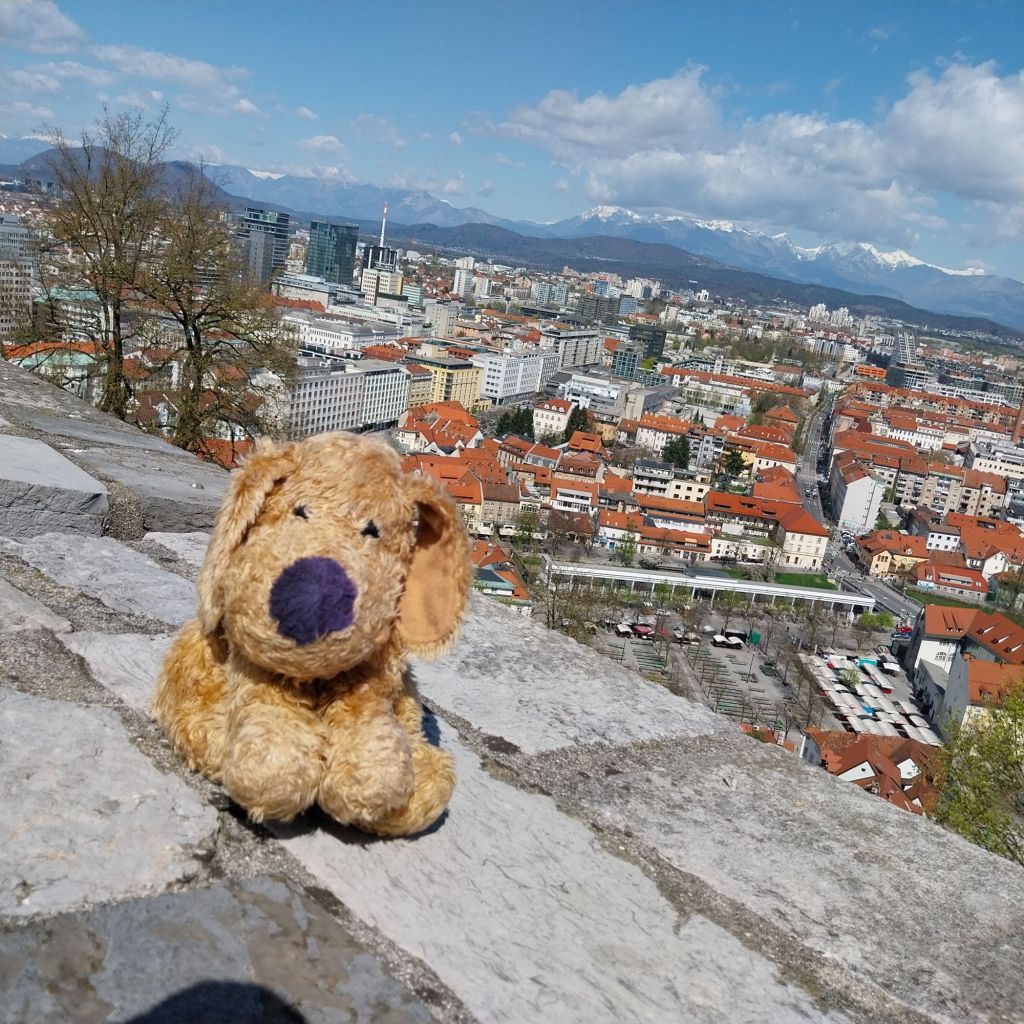
Nearby is another highlight – Ljubljana Castle. If you’re feeling fit you can walk up the hill, but a quirkier way of getting there is by using the Funicular Railway. A combined ticket for the railway and everything the Castle has to offer costs €19 for adults. There are family tickets available too – and for a single attraction, there’s a lot on offer, inlcuding a viewing tower for those ariel views, a historic jail and dungeon with real cells, and a slightly creepy Museum of Pupptery with interactive displays.
Two days is just enough to scratch the surface of this city. You can get more ideas from my previous blog. Now though it’s time to start heading north to one of the prettiest sights in this part of Europe.
TRAVELCASTER TIPS
Getting here : Ljubljana is served by flights from the UK and other European destinations, but one of the best routes here is by train. As mentioned, the connection from Trieste takes three hours (3 trains per day), and you can also easily travel to Zagreb in Croatia, north to Salzburg, or even on to Vienna and Budapest. See the Slovenian Railways website for details. Frequent buses also link to the rest of Europe, and to local attractions like Lake Bled.
Orientation : From the main station, cross the busy road and head immediately south down Kolovoska Street. A 15 minute walk will bring you to the Triple Bridge at the heart of the Old Town. From here, all the main attractions are accessible by foot. To the West of the main station is the enormous Tivoli Park – which actually has its own train station.
Public Transport : As mentioned, most of the Old Town attractions are on your doorstep. However, there are numerous local bus services covering the rest of Ljubljana and the surrounding towns and villages. The local bus website is a great place to buy tickets, though you will need to know where you’re heading.
Food and drink : For a capital city, Ljubljana offers great value. Smaller cafes and bars outside the Old Town offer main courses for between €10-15, and there are also plenty of fast food places ton grab a snack on the go. A standard 0.3 litre beer in the Old Town should cost less than €4. Card payments are accepted in most places though some may insist on cash.
 TravelCaster
Leave a comment