
Distance : 205 Kilometres
Travel time : 7 hours
6am is no joke of a time to start a day while you’re on holiday, not least when it’s 1st April. Numerous emails from Corsica Ferries had urged me to check in in good time at the ferry terminal in Bastia – and given the process had taken two hours in Marseille I assumed the same would be case for this morning’s 8am sailing to Lucca in Italy.
Eventually, at 7.30am, security groaned into action – though it seemed there were only a couple of dozen foot passengers to check in. The crossing from Bastia on Corsica to Livorno takes around five hours. It’s a pleasant by windy morning as Italy slowly came into view to the East,.

I’d chosen Livorno for several reasons. Most practically, sailings to the larger port further north like Genoa didn’t run until the evening, and I wanted to get to my next destination in one day. I’d also visited Livorno the previous summer, so I knew my way around. But importantly, I knew that I could easily hop inland.
Luck was on my side as we docked. There were no security checks so foot passengers simply walked out of the port gate. There, a waiting number 5 bus – not quite good enough to get me to the train station, but a helpful driver told me I could change in the centre of town and connect to a number 1 or 2. I was at Livorno train station within 30 minutes – and in another stroke of luck, a train was about to depart for Pisa.
So I made very good time, taking the short 25 minute connection to Lucca by mid afternoon. It is one of the most famous hill towns in Tuscany, and I landed a decent room at the San Martino and Diana Hotel, where someone took an instant interest in the artwork.
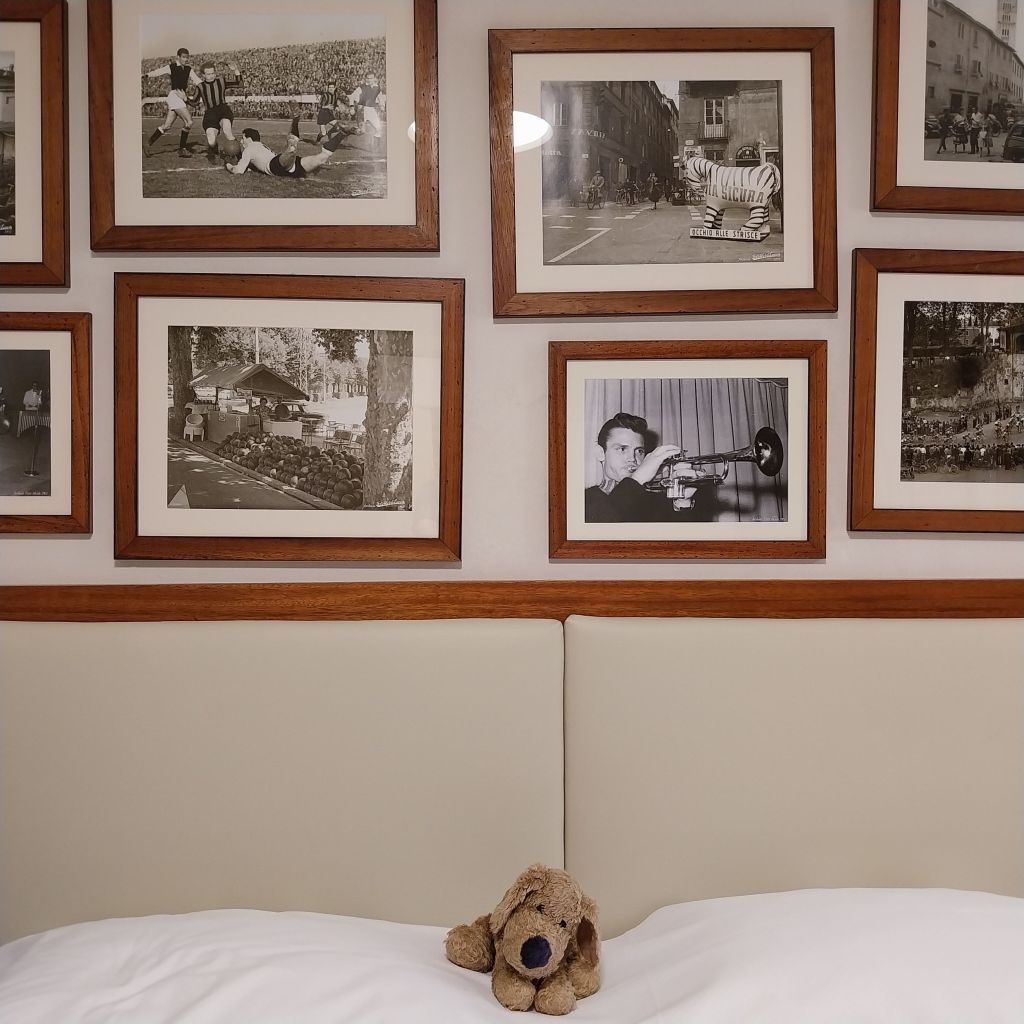
Off season Lucca is still bustling enough by day, but by the evening things get quiet. Very quiet. One of Lucca’s iconic buildings – the church of San Martino – was deserted. A chance to get a rare picture of it without hoards of tourists.

Every Italian has a Nonna – a grandmother figure whose cooking cannot be beaten. And at the Nonna Clara restaurant, that tradition is celebrated with a host of authentic Tuscan dishes. Although it’s firmly within the ancient walls of the old city, it’s sufficiently distant from the main tourist drag – meaning you can get a good value two course meal with wine here for under €50.

A tip if you’re coming here out of season : plan to eat early, because very few as and restaurants are open beyond 9pm. But after two glasses of excellent Vernacchia wine from San Gimignano you’ll be ready for an early night.
Another tip : Lucca is great for walking – the old city is fairly flat and good underfoot, but it’s a good idea to plan a route through it’s narrow and sometimes confusing streets. I’ve asked my AI assistant to design a tour taking in the main sights and it delivers an idea within seconds. This isn’t my first visit to Lucca and I’m impressed wth the itinerary AI provides.
There are more people around San Martino Cathedral this morning – but mostly groups of schoolchildren who seem unimpressed by the sights before them. The solitary souvenir man knows he won’t be making much out of these visitors, and his dog seemed resigned to a slow day in the sun.

Having ascended the San Martino tower before, I opted for a different view of the city. Lucca has at least a dozen towers, most of which can be climbed for a few Euro. But beware – there are no lifts, just lots of narrow stairs. The Gunigi Tower was built in the fourteenth century by the family of the same name; rich merchants who wanted to make their mark on Lucca.

And while most of the towers here are connected to churches or bells, this one has a garden at the top – complete with six oak trees that form a neat canopy on a hot today. It’s slightly windier today, and NewsMutt takes in the few hanging on to the rails.

The saying goes that all roads lead to Rome, and they like to map the most of it here. The Piazza Dell Anfiteatro is designed in a circular shape, based on the Collosseum. But here you won’t fine gladiators or lions; just a tell tale sign of neat tablecloths, menues with pictures of the food and enthusiastic, uniformed staff, urging you to take advantage of today’s special offer.
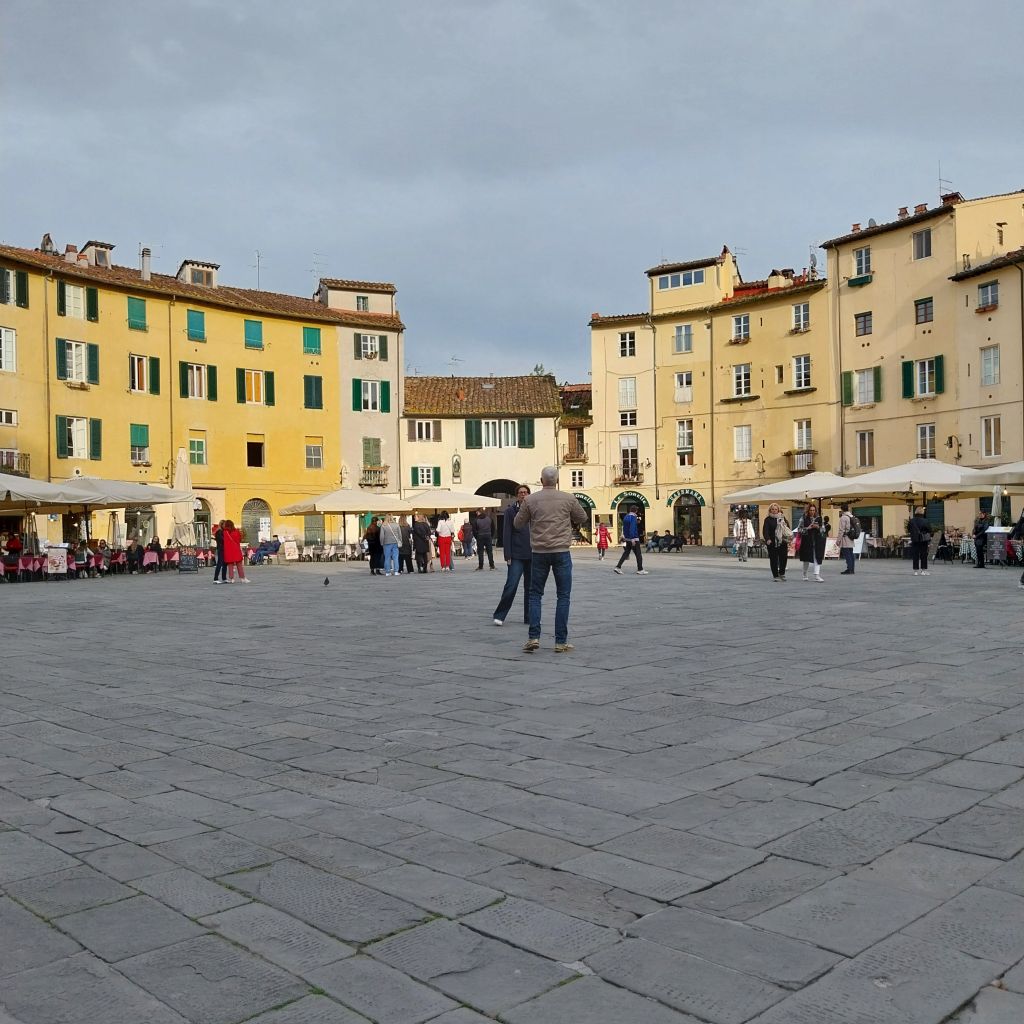
During the summer months this is where the crowds gather to be ripped off. A “€3 Spritz and Snack” will likely cost twice that, once service charges and tips are added. So while this is a piazza for a decent selfie, there are better options – and frankly they have a nicer, more relaxed view.

St Michael’s Church likes to show off. Its towering colonnades paint and impressive display, and just to the corner on the left is the Caffeteria Turandot – named after the most favous work by the composer Puccini, who was born here. In Lucca, that is, not this actual cafe. Don’t be put off by the bad reviews on Trip Advisor; it’s the second time I’ve been here and the service is quick, the foccacia tasty. And it’s a great place to people watch.

If Saint Michael’s church is all about showing off, then the church of San Frediano is the real place to find treasure. Founded in the 6th Century by an Irish bishop, the Catholic basilica was built up over the centuries, and has numerous chapels featuring fine art. You can queue for hours to see this kind of stuff in Florence or Rome – here there’s no wait and a modest entry price of €3.

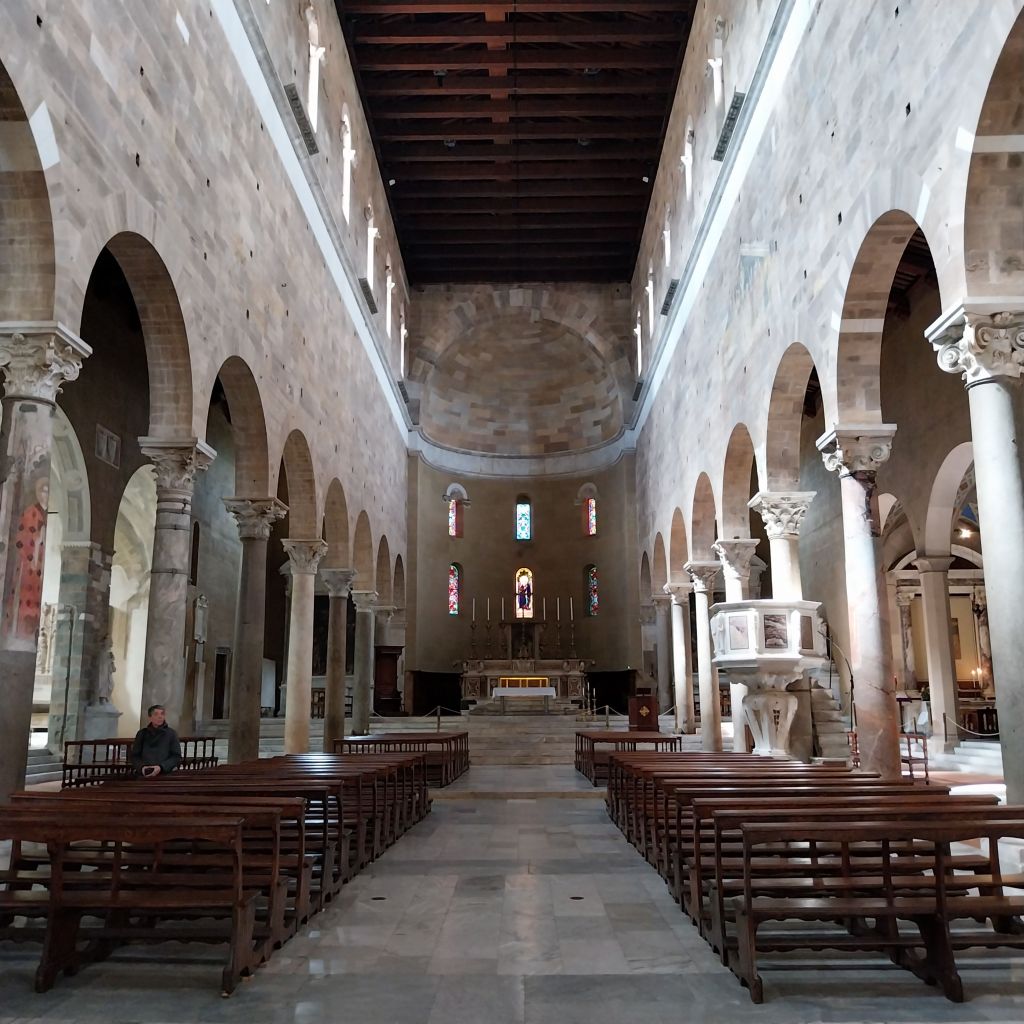
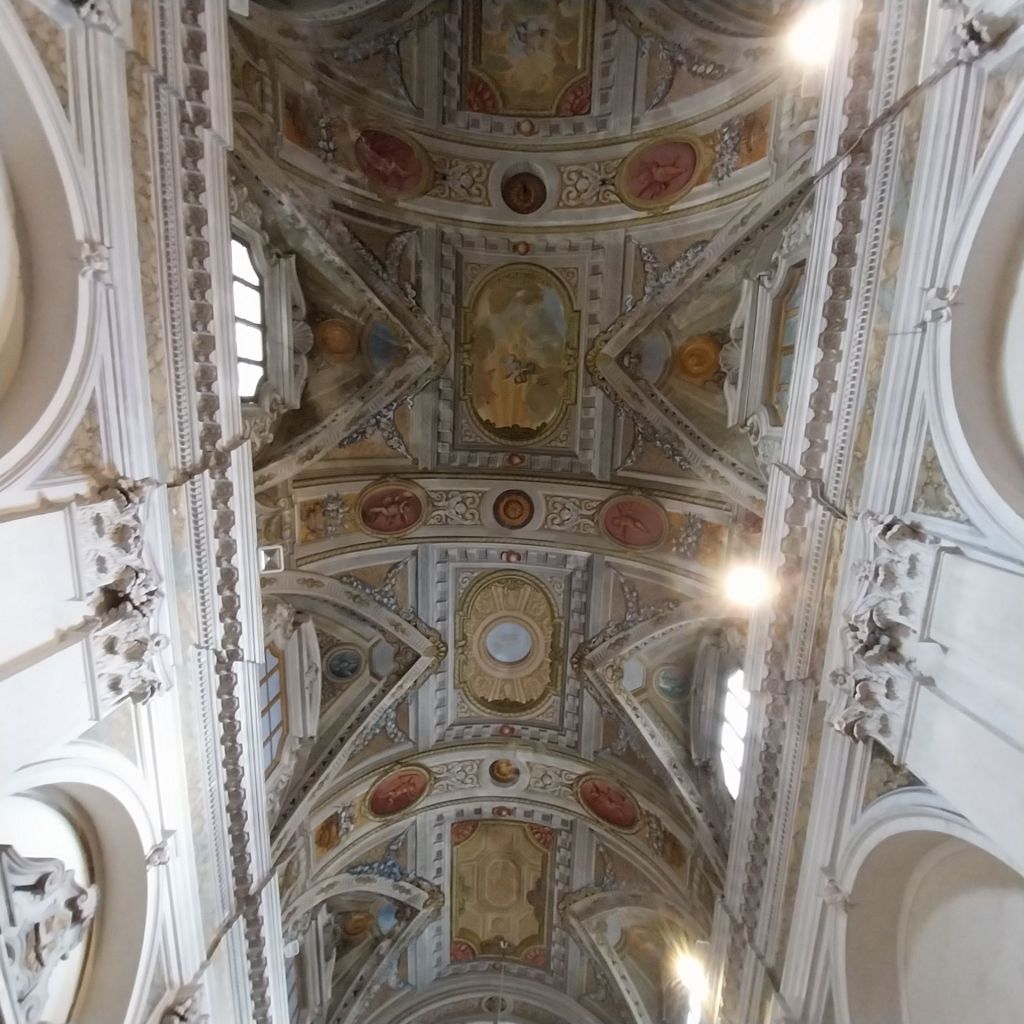
You won’t get that quality of finish in the Sistine Chapel. Puccini isn’t the only famous Luccan musician. AI has directed me to thsu satue of Luigi Boccherini, the renowned cellist. Born in Lucca in 1745, his name is honoured with a Music School. Though from the upside all I can here are drums playing. Clearly something is getting in the way of the string.
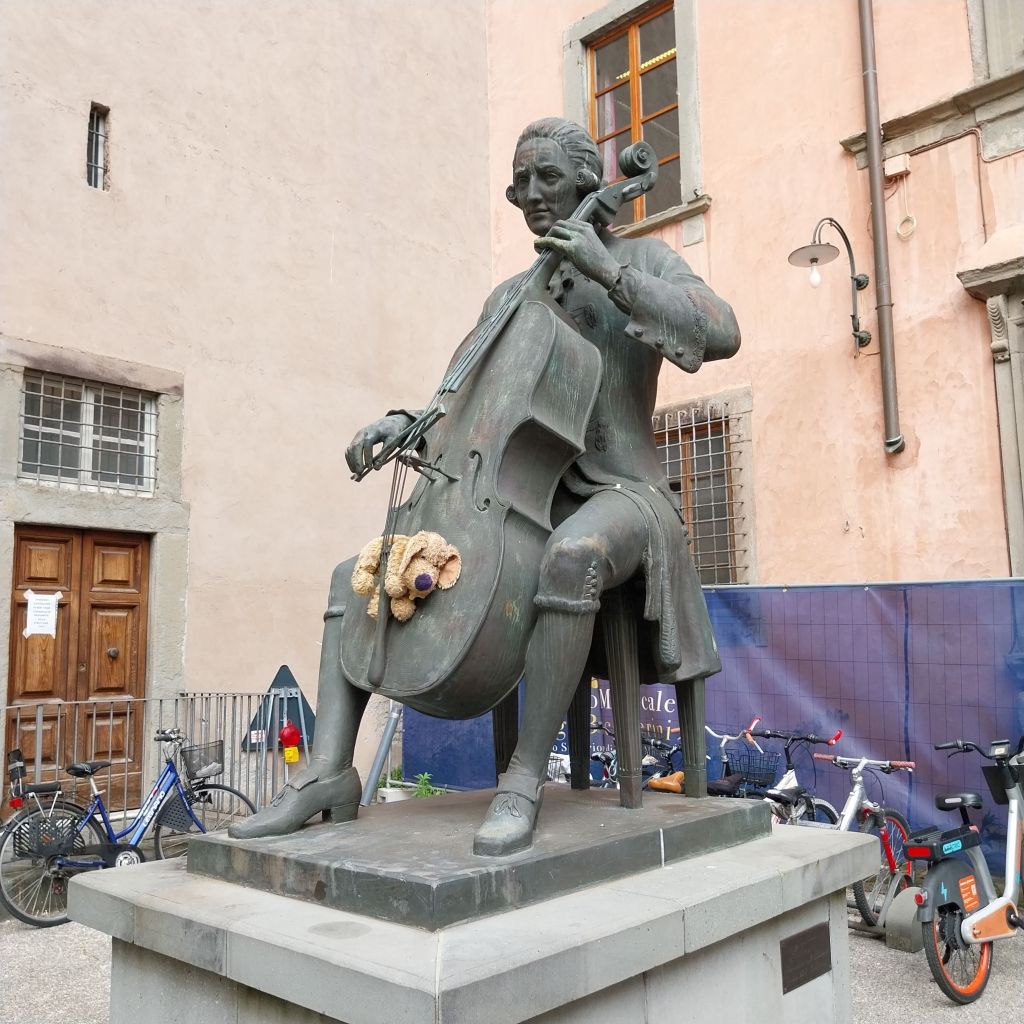
it’s hard not to feel you’re in a film here; every street, every corner, every road is filled with images that could be in an arty movie. There are no corporate names here – the Americans daren’t ask where the nearest Starbucks or McDonalds is. And there’s no big multiplex either – just the modest Astra Cinema, looking a bit lonely in the corner of Garibaldi Square.

But just look at those iron music clefs on the doors – delightful. I am full of gelato and charcuterie. However, there’s always room for one more beer of an evening, and some fine craft beers are to be had in Lucca, At La Tana Del Boia (The Ox’s Den), a lovely IPA comes with the perfect accompaniment.
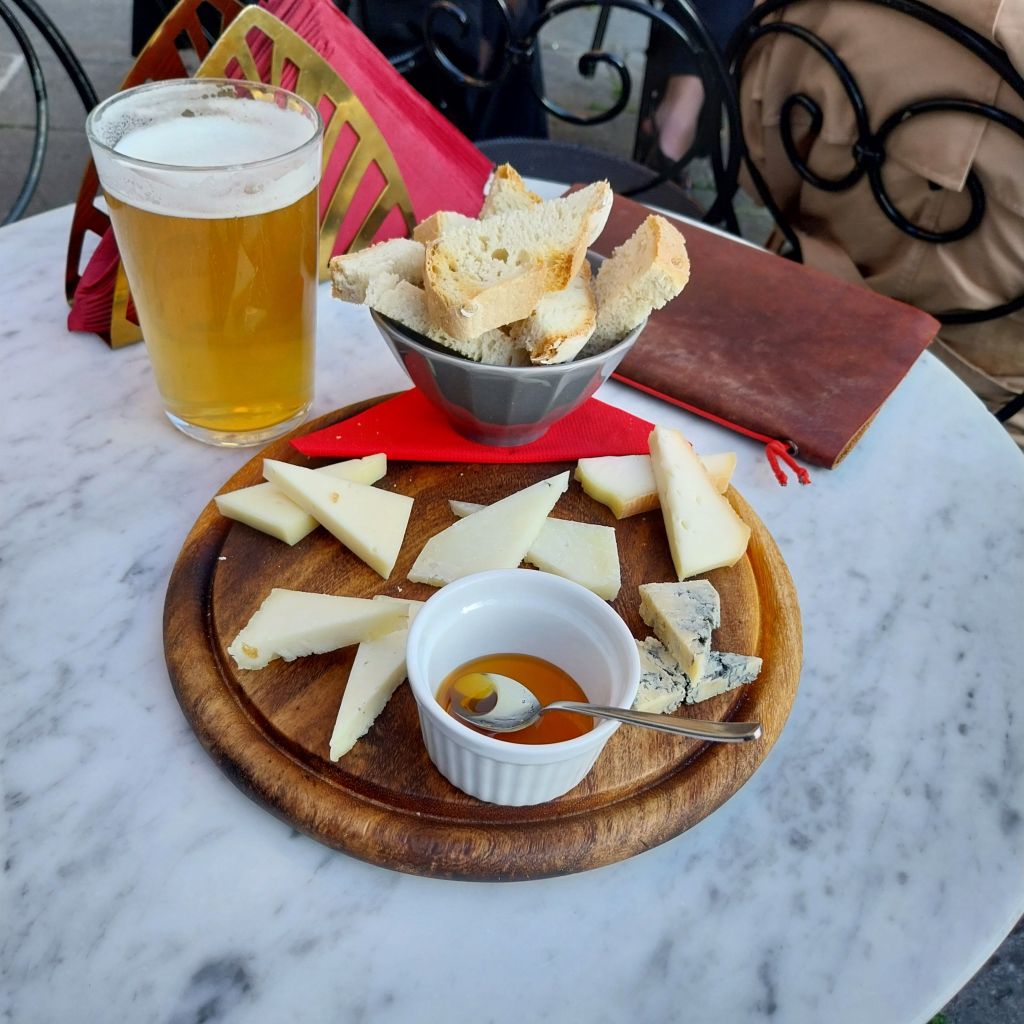
The bowl contains a smattering of local honey. Perhaps not the classic Italian dish you may imagine, but a perfect end to my time here. Lucca is well worth at least two days of your time, perhaps more during the summer. It’s frequent rail connections with Pisa, Florence and the coastal town of Viareggio make it the perfect base for exploring Tuscany.
It’s now time to head North.
TRAVELCASTER TIPS
Getting here : Lucca is easily accessible by train from Pisa and Florence – which itself is a good rail hub to reach most other parts of Italy. There are frequent flights from UK regional airports to Pisa, a good base for exploring the wider regions of Tuscany and Liguria.
Orientation : From Lucca Railway Station, head to the main road and turn left, following the city walls for around a five minute walk to the city gate. Alternatively, immediately cross the road and follow the marked path to enter the city walls from below, allowing you an elevated view of the main sights.
Public transport : Lucca’s old town is mostly flat and walkable, with a couple of circular bus routes leaving from the main gate to various suburban destinations. You’ll probably only need to use these if you’re staying out of town.
Food and drink : Lucca is a hub of Tuscan gastronomic delights; you’ll find an abundance of pavement cafes and outdoor restaurants, though during the high season be prepared to pay upwards of €20 for a main course or around €10 for a coffee and a snack. Come off season and avoid the touristy hubs for better value – heading to the edge of the old town or outside the city walls for the best deals.
 TravelCaster
Leave a comment