

Distance : 339km
Travel time : 14 hours
Marseille had been a delight and it was well worth spending a whole day there before my next move. I’d originally thought about going to Italy through Cannes and Nice by rail, but my AI research threw up and alternative; hopping across the Med via the island of Corsica. It’s one of those places you always see on a map but can probably never quite identify from its outline. It’s part of France, but has a strong Italian influence – and to get there I was taking an overnight ferry.
Travelling as a foot passenger is just as good value as being on a train. A basic ticket for the 14 hour overnight crossing was just €28, though for comfort I added a good double cabin and breakfast, with the total being €135. That’s pretty good value for travel and accommodation, and would mean I’d get a full 24 hours in Corsica before connecting to Italy.
The passenger terminal in Marseille is easy to find and was just a 10 minute walk from the hotel. My ticket had warned me to be there 2 hour before departure, but the reality was a lot of hanging around until security were ready to check everyone though, before a remarkably lengthy bus ride to the boat. It was only then that I realised just how huge the port is – our ferry was about 3km from the terminal. Unlike previous journeys I’d taken, there was no convenient boarding via a footbridge. We were shoved into the hold, walking past hundreds of cars before cramming into the one lift that took us to the main decks. My cabin was spacious enough, giving a fine view right at the front of the boat.

The bar was remarkably quiet by 9pm; passengers had either had an early night or sensibly brought their own provisions on board – a small beer at €6 was about right in a place where they have a captive audience. But this was a small boat – no duty free shopping (since we were technically staying in France) and no tacky souvenirs. And just one vending machine if you get the munchies.

24 hours on Corsica
We were arriving on Corsica at 8am, which meant a very early breakfast, but a great chance to see the sunrise. And what a sight; the tip of the island came into view and the clouds were doing something rather special.
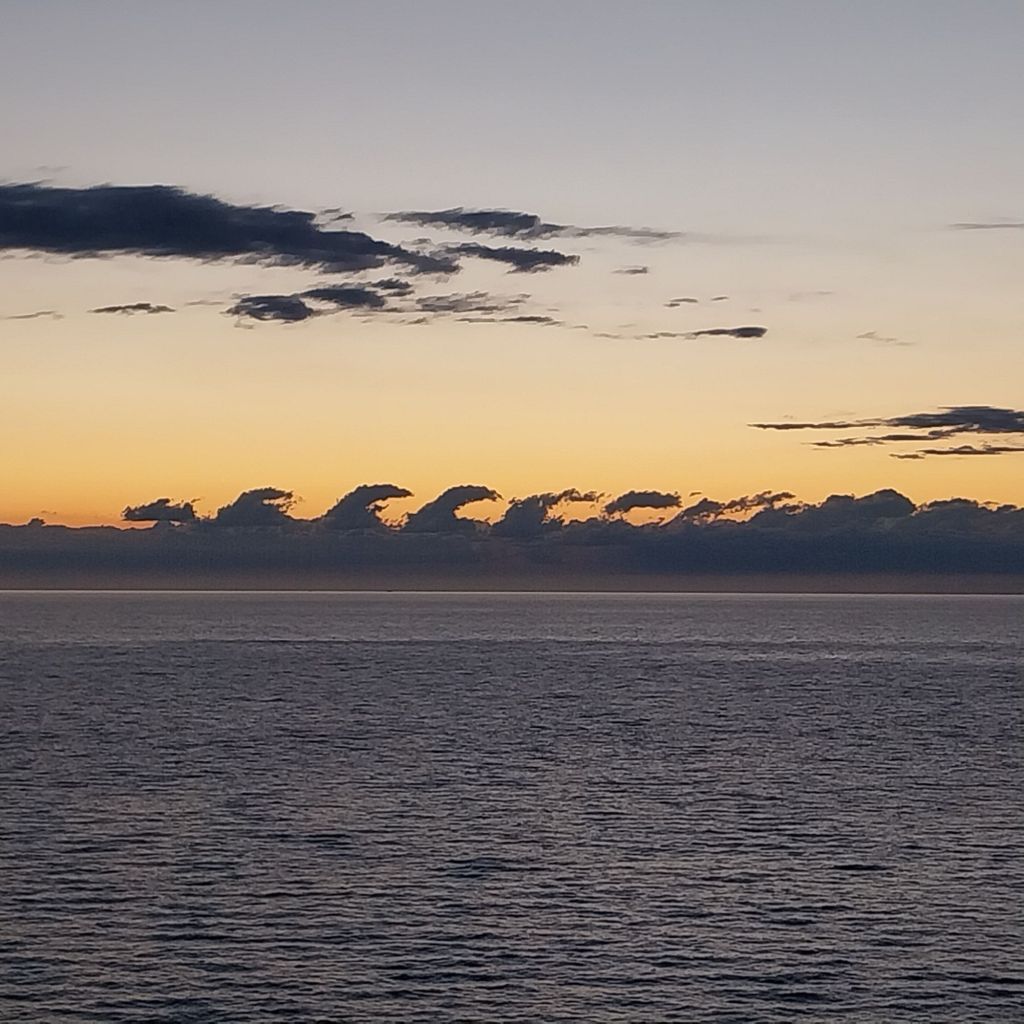
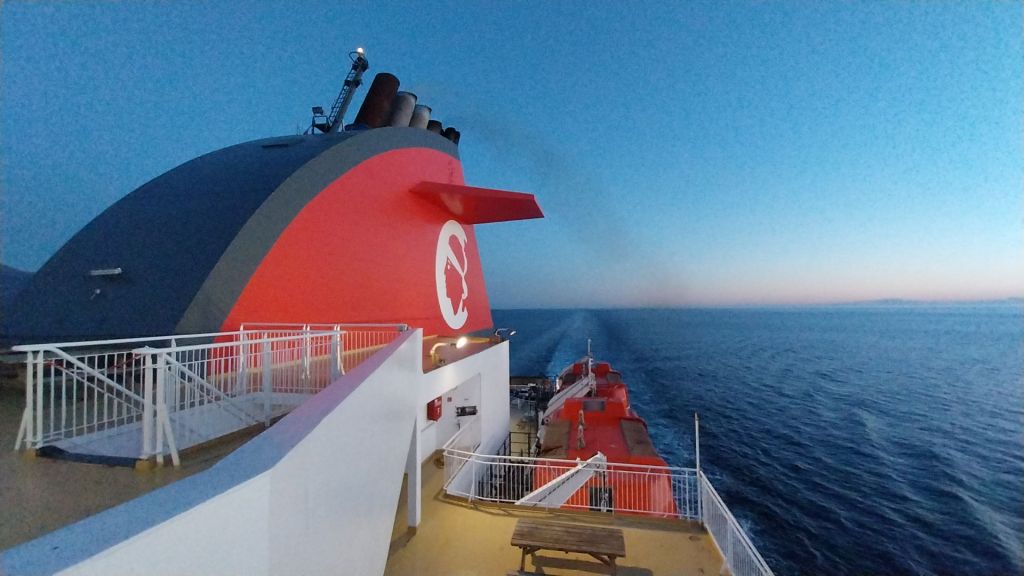
Although I’d had a shower on board, I still felt slightly grubby as we docked in Bastia – a much smaller port than Marseille – and within 15 minutes I was taking the short walk to the Contenantal Hotel. It was too early to check in, so I reluctantly left my main bag in reception and tried to explore.
I say tried because at the end of March, Corsica hasn’t quite woken up or the tourist season, A late Easter this year meant many of the cafes were still closed, and those that were open weren’t exactly doing a roring trade. Given that the island is 150km long and nearly 90km wide I needed some AI guidance for suggestions of what to do. It’s answer was one of the best of the trip.
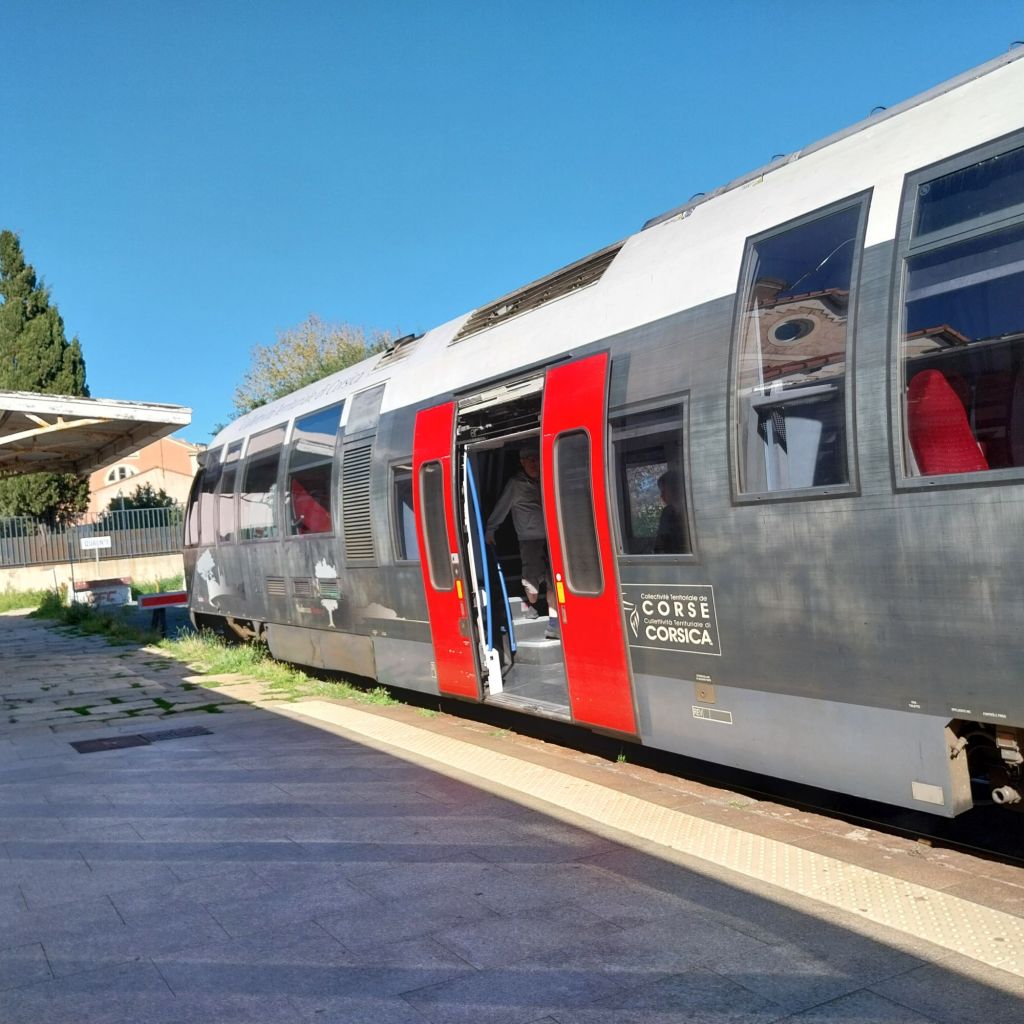
Corsica has a small rail network. It’s not included in the Eurail pass but the fares are modest, given the terrain being covered. From the moment you arrive by sea, you notice how hilly and green the place is. Main roads soon give way to narrow, wining side routes. And it’s the same with the train. My AI assistant said I could visit the capital, Ajaccio – or head over west to Calvi. Both would involve travelling for most of the day ahead, but with nothing to keep me in Bastia, I hopped on the 0941 to Calvi.
Three hours each way is a long trip. And the beginning was uninspiring as we snaked along the coast south of Bastia, passing large industrial units and rocky, dry stretches of waterfront. But then it all changed. After Ponte Leccia, the two carriage train – running on a narrow gauge, starting climbing through the greenery I’d seen from the ferry. Pines and chestnuts are the principal trees here, surrounded by thick green bushes. There’s barely a place you pass where you see open land. Then, climbing ever higher, we crossed wide open valleys filled with grassy pastures and babbling rivers. Cattle grazed at the bottom, while above the scene was complete with Corsica’s mountains, stil covered in the last of the Winter snow.


It could easily have been Austria or Switzerland – but warmer – and with the sudden decent towards the west of the island, the train snaked around hills, through tunnels and eventually to the stunning coast leading to Calvi.
Here, the journey was reminiscent of the coastal railways in Devon and Cornwall, where the tracks hug the beach and sea, darting inland through small villages. Before Calvi itself were several tiny station halts, designed for the tourists during the summer season. Beachfront apartments and campsites dotted the dunes. The whole thing was rather dreamy.

And so to Calvi itself which, like Bastia, wasn’t quite open for business. It didn’t matter, because the restaurants that were open all looked inviting. Yes, there were the classic tourist menus with pictures of dishes, but here the food tastes as good as it looks. My grilled entrecôte with a local beer was the perfect dish to eat on a terrace overlooking the harbour.
The chances are you’ve never heard of Calvi. But my AI assistant did not disappoint. Directing me towards the impressive citadel, it told me that the village is reportedly the birthplace of Christopher Columbus. Which is interesting, because I’ve visited his house – in Genoa, Italy. A bust of Columbus sits atop a stone boat on the approach to the citadel; they’re clearly claiming him as their own.
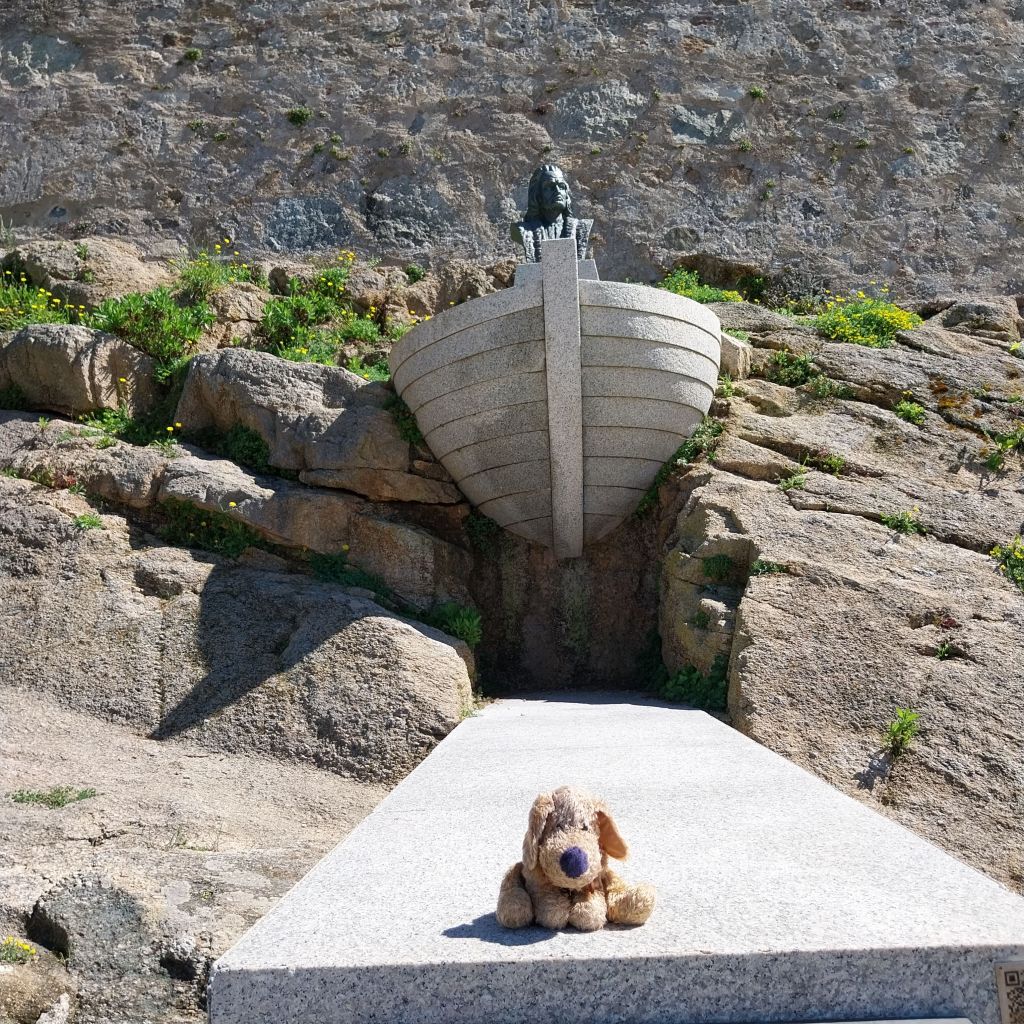
The truth is, Columbus’s early life and precise origin seems to be disputed. And every historian loves a conflicting story, because ucertaintly creates a great story – and great stories become mythical. It really doesn’t matter – because whether Chris crossed here or not, they have another claim to fame in Calvi – it’s where Napoleon came from. And despite his heroic stance for the people of France, his family were originally from Italy, even though Corsica at the time was under French rule.
It’s too warm for such confusing stories, but Calvi’s citadel is worth climbing, if only to discover you can drive up here – and people live in apartment blocks right at the top.
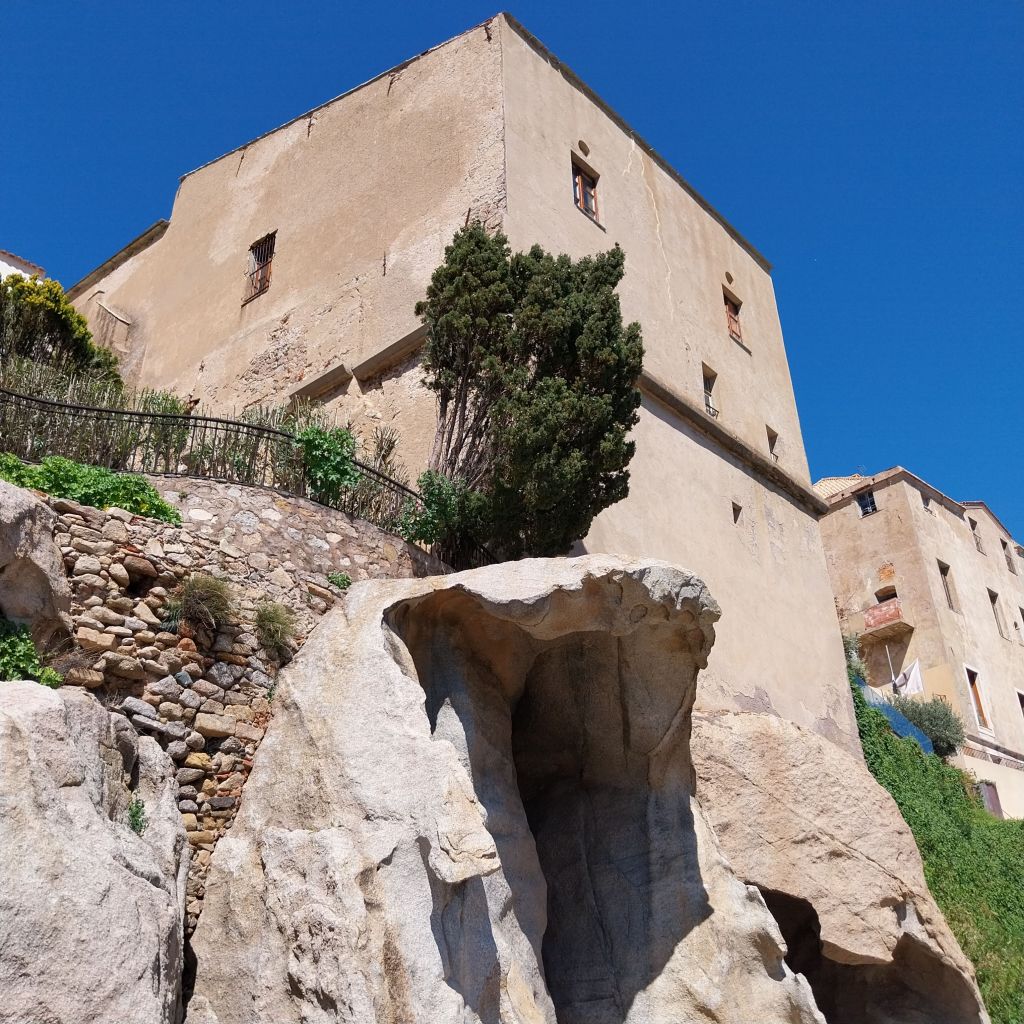
The views are stunning – the Med sparkles in perfecrt azure, the mountains frame neatly behind the water – and on the water itself another piece of fascinating history.

This is the Pogoria – badged with the City of Genoa on its hull, but flying the Polish flag. A quik check with AI tells me that this tall ship was built in 1980 as a way of training young people about seamanship. The date is particularly interesting, since 1980 was around the time that Lech Walesa was pepearing his fellow shipyard workers to lead a revolution against Soviet rule; could the Pogoria be the perfect legacy of the Solidarity movement?
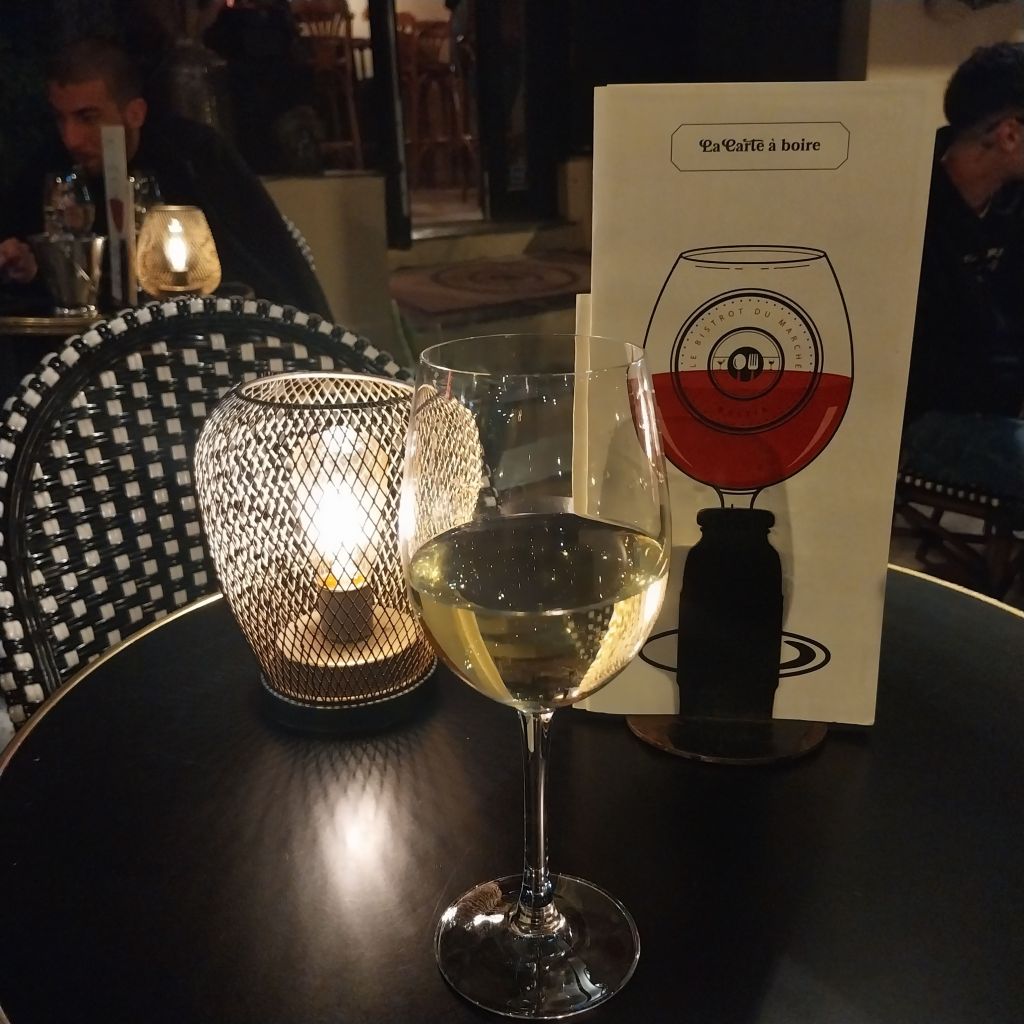
Calvi had provided the perfect day out on Corsica, and the three hour trip back to Bastia was again punctuated by the brilliant views of the moutntain and ravines. It was after dark when I eventually checked into the Continental Hotel. Sadly, Bastia still hadn’t really woken up – in fact most of it was closing down by 9pm, making it hard to find a place to drink. The historic Marche provided sanctuary with a couple of decent bistros – you’d really need to come back in the summer to see Bastia at its best.
TRAVELCASTER TIPS
Getting here : Bastia is one of several ports offering ferry services to and from Italy and France. The FerryHopper website offers a useful search tool to help you find out what is running and when – many routes are seasonal, but there are plenty of options to arrive at one port and leave from another.
Orientation : From the main ferry port in Bastia, head out of the main gate and follow the main road along the waterfront until you reach a traffic island. Head right and you’ll be in the heart of the town where the biggest hotels are and the railway/bus station. A further fifteen minute walk south takes you to the attractive Old Port area
Public transport : As mentioned, Corsica’s rail network can get you to many parts of the island, though even in the peak season, services are infrequent so you’ll need to plan in advance, Use the official website for the latest timetables. Bus services are harder to work out since each part of the island has an array of private operators. Local tourist offices or your hotel may be the best place to ask.
Food and drink : Corsican cuisine – a mixture of Italian, French and North African – is rich and varied. As you’d expect, seafood is a speciality but you’ll be paying premium prices in many places, with a main course starting at over €20. A local beer will come in at around €5.50 or more depending on the establishment and the time of year, while a glass of good local wine is about €6.50. Smaller cafes and beach stalls can offer better value, while the main towns have a selection of cheaper fast food outlets.
 TravelCaster
Leave a comment