

Distance : 662 kilometres
Travel time : 3 hours
The Gare de Lyon in Paris is a vast array of concourses, escalators, walkways and noise. The first time you encounter it, it can be overwhelming. But after a couple of visits you soon get used to the general chaos. There are three main halls with a multitude of platforms, but the majority of high speed trains depart from Hall 1 – home to a railway institution.

Le Train Bleu sits at the top of an elegant double staircase in the middle of Hall 1. It’s a bit pricey for many travellers, but the inside is said to be well worth the hefty cost of a sandwich and a glass of wine. It’s not open at this time of the morning so it’ll have to wait for another time. Equally elegant is the TGV InOui train which will take me to Marseille.
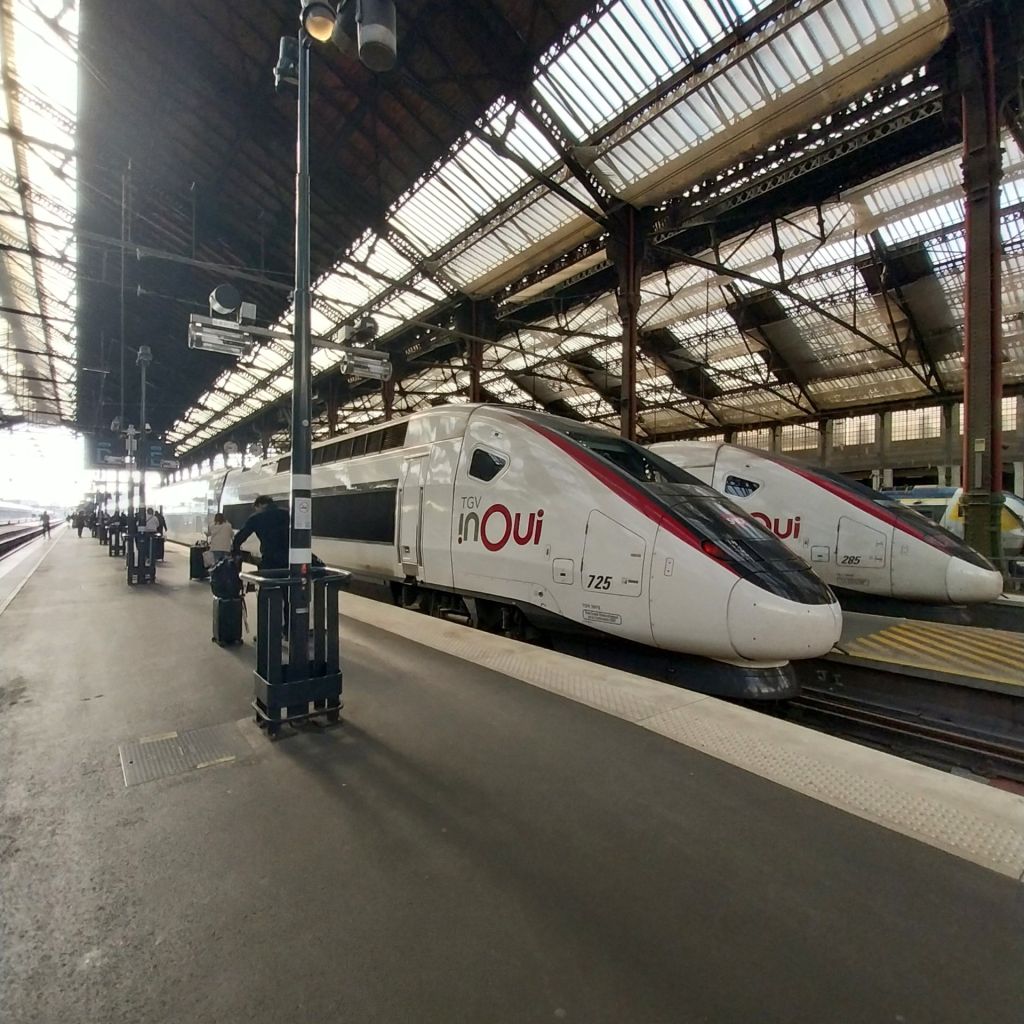
The French have had hgh speed rail sorted for many years, putting the UK to shame. There are a number of factors France has progressed its network so much : the railways are nationalised, and there seems to be much less faff around planning. For many kilometres the tracks are perfectly straight, allowing trains to frequently travel at 200km per hour. And in First Class, there’s brilliant attention to detail in seat design.
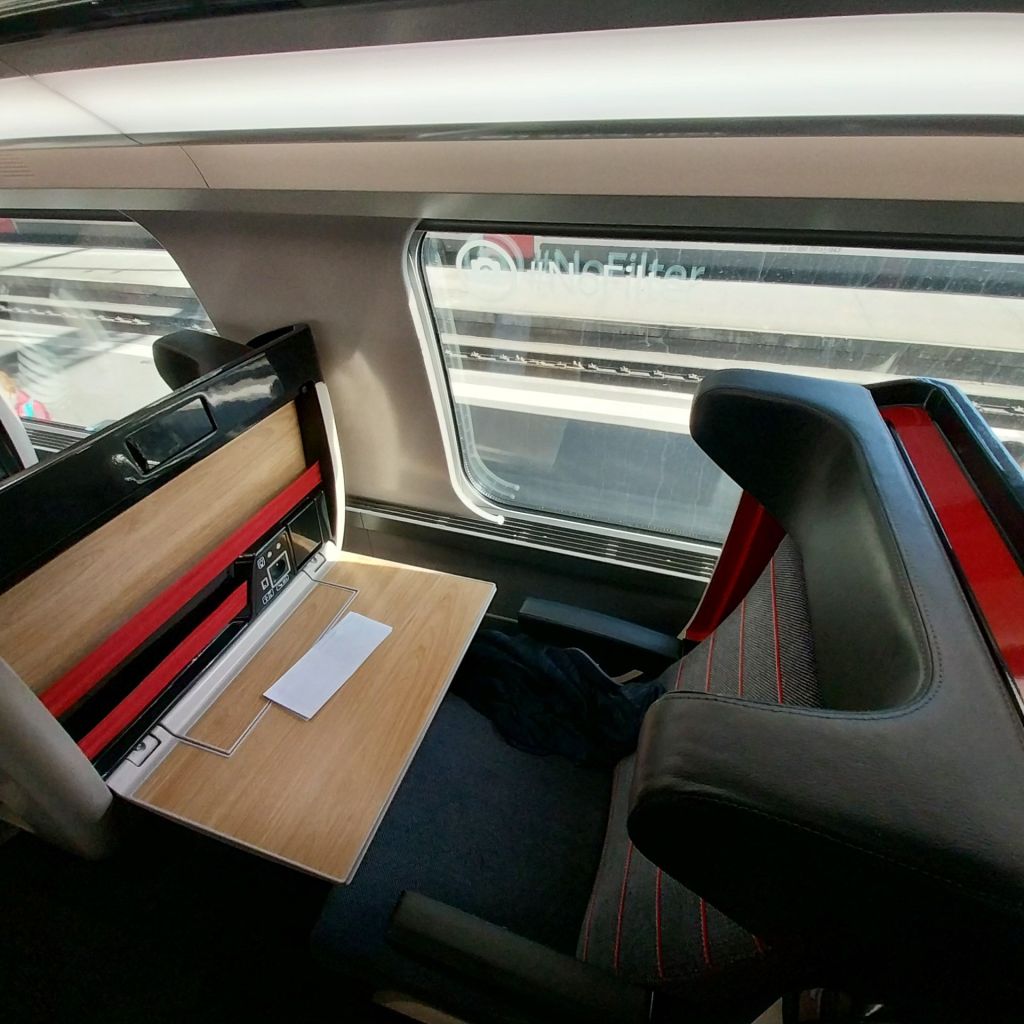

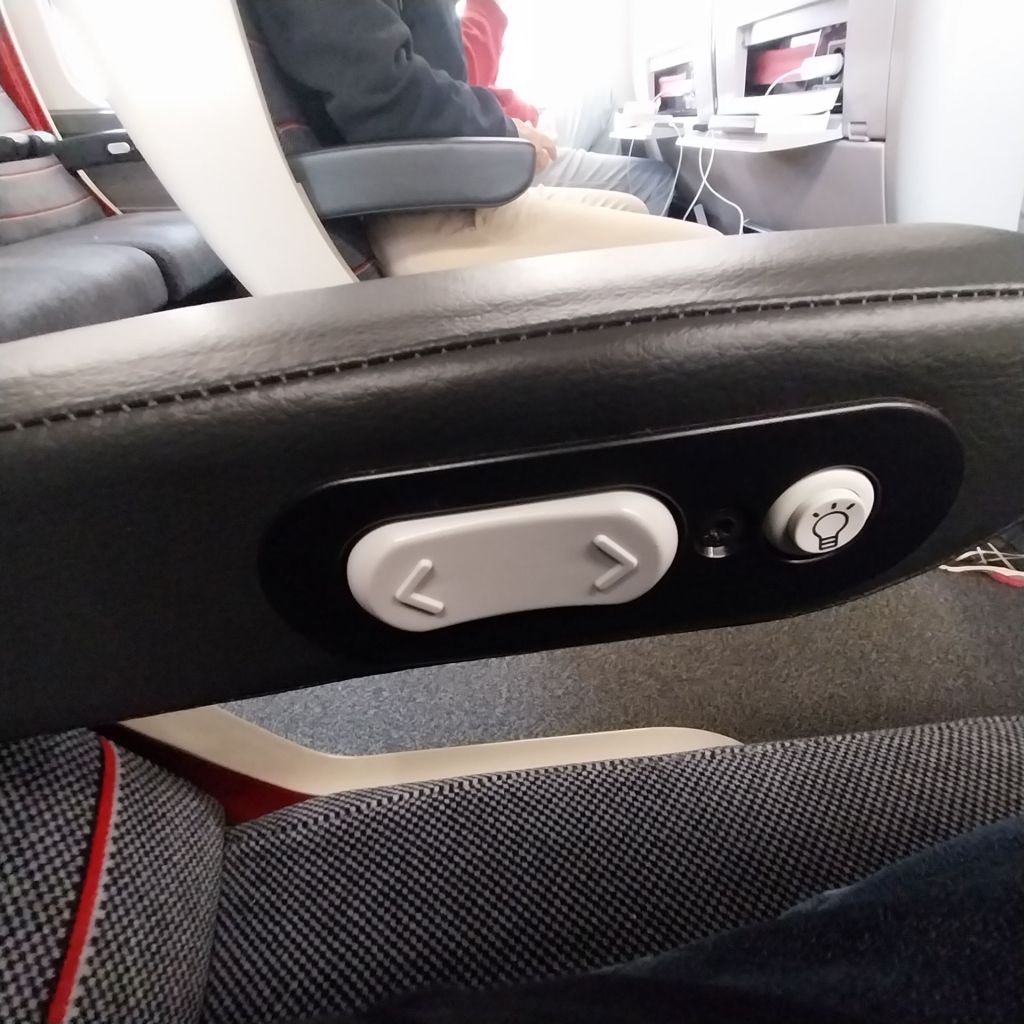
It’s a great way to travel, and as we head south, there are views of the Alps to the north east. The line bypasses Lyon, and soon we are in Provence, arriving at the impressive St Charles station. Before heading down the steps, it’s worth taking in the stunning views from the platform level piazza.


The building on the hill is Notre Dam de la Garde, a church built on the foundations of a fort. After checking into the hotel, it’s a 20 minute bus ride across town to get to the top. It’s the end of March – tomorrow the clocks go forward marking the start of Spring. But a gusty wind makes it feel as cold as November. Visitors shiver for selfies as they attempt to drink in the view of Marseille from the other side of the city.
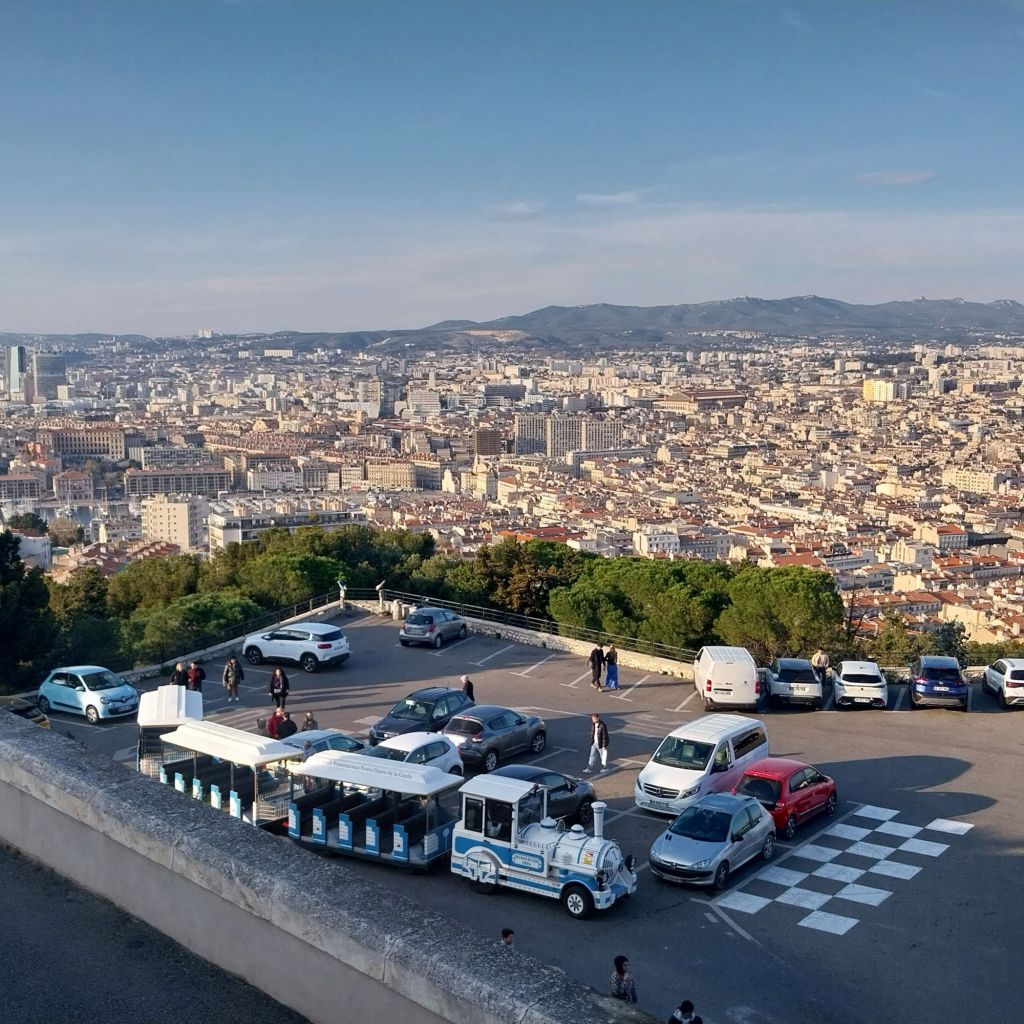
Yes, that is a tacky little tourist train – one of a fleet that ferries people from the Old Port up to the top of the hill. A better way of getting here is by using a local bus – the number 60. A 24 hour pass covering the whole of Marseille’s extensive public transport system is just €5.20.
The oldest city in France, Marseille was founded by the Greeks, occupied by the Romans and, over the centuries, has never been far away from trouble. Its pivotal role in the French Revolution gave the country its rousing national anthem, and its strategic location on the Mediterrean evolved into the significant port we know today.
A walk along the Esplanade is one of contrasts. On the water are huge ferry terminals made of unattractive concrete, on the land are rows of classical buildings now housing bars and shops. Although the structures have a uniform appaerance, many have been restored or rebuilt to fit in with the overall look. But the real sights lie just a couple of blocks back from the waterfront.

Completed in 1893, La Cathedrale Major took forty years to build. The Cateholic church wanted a show of power, and they certainly managed it here. Its location was deliberately chosen so that it could be seen by the thousands of people arriving by ship – a demonstration of confidence, as well as a touch of “look at me”. Unlike some other countries, French churches don’t charge visitors to enter – an the interior is every bit as impressive as the outside.

Although quite hilly, the centre of Marseille is very walkable. Five minutes from the Cathedral takes you to the Viuex (Old) Port. This is arguably the centre of the city’s tourist area, with cafes, bars and restaurants lining the large harbour. Hundreds of boats of all sizes are moored here. So for fishing, some for tourists and some for the extremely rich.
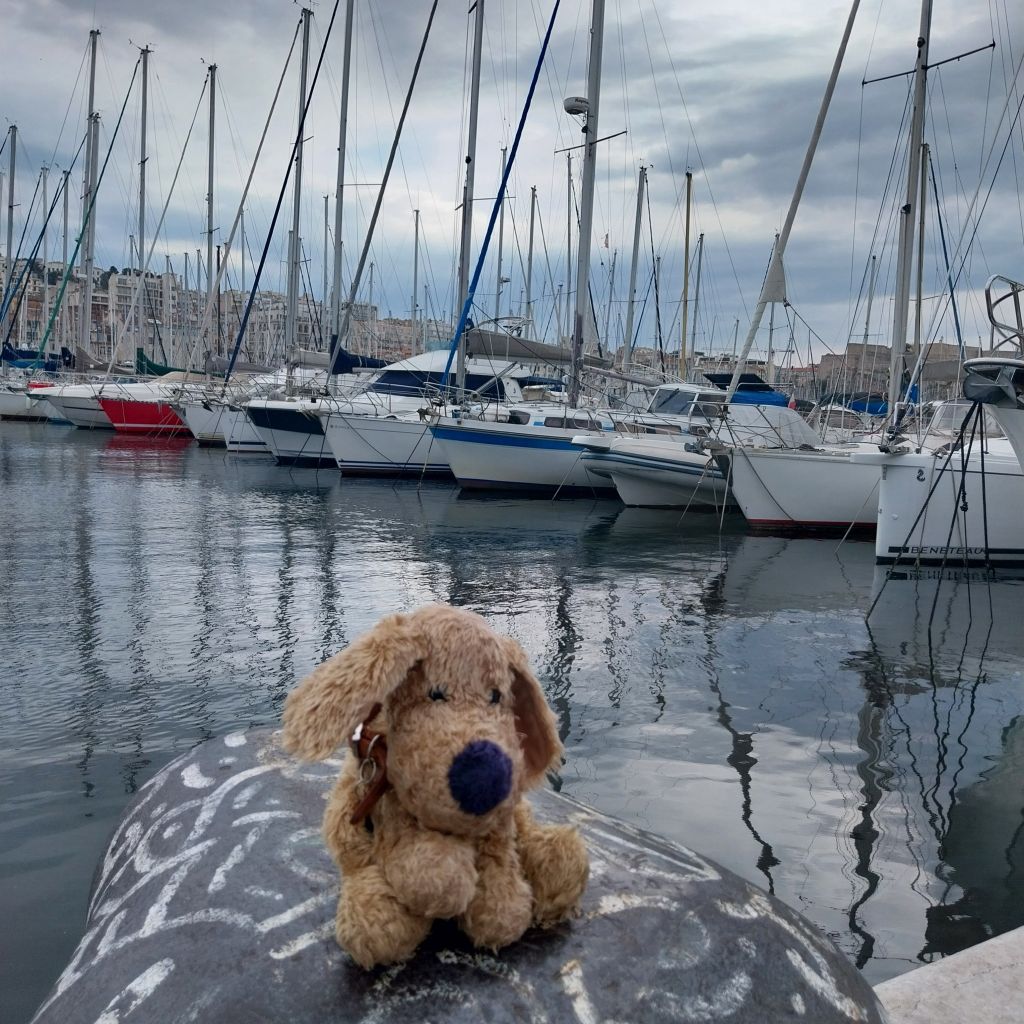
A small ferry links the two sides of the harbour, though today’s windy conditions mean it’s not running. But it doesn’t matter – the sun is trying to shine, the Hotel de Ville is festooned in flags and, behind it, a bull on stilts.


Just out of shot is its twin sculpture, a lion. The pair were commissioned in 2013 when Marseille was the European Capital of Culture. Art is all around in this place, and Le Panier district shows that off to the max. Accessed by narrow stairs or tiny roads, it’s one of the city’s oldest neighbourhoods, characterised by independent bars and shops – and lots of paint.
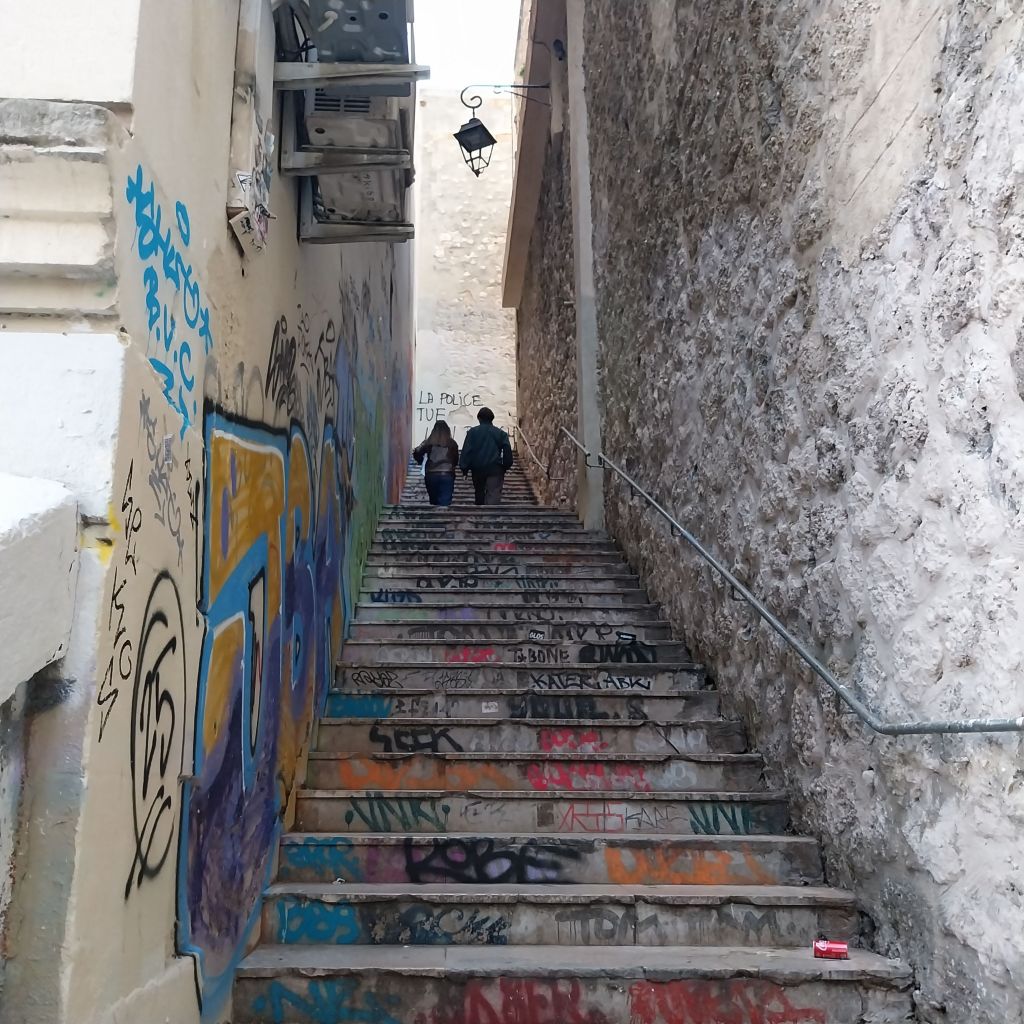

While the Vieux Port may be the centre of entertainment at night, many of the locals drink in Saint Victor, another neighbourhood just ten minutes away from the harbour. The narrow streets here are full of places to eat and drink, like Le Victor – a cosy craft beer bar.

Admittedly the photo doesn’t paint it in te best light – but inside the service is friendly and the prices slightly less than you’d pay down in the port. There’s lots of choice here, which is just as well, as many places are packed with groups of people out for the night. Empty looking tables have reserve signs on them and by 9pm it can be difficult to find a seat. But it’s good to see a place that’s vibrant.

Sunday morning and the wind speed has dropped, giving a pleasant feel to what is officially the first day of Spring. At the Vieux Port, a market is in full swing – offering fresh produce and delicious cooked treats too – everything from croissants and cheese to North African seafood, complete with authetic music by the quayside.

By 11am the place is teeming with tourists and the cafes are doing a booming trade. African music isn’t the only melodic choice today – a brass band knock out some brilliant cover versions of pop tunes – getting the visitors and local dancing and singing with them.

It’s clearly all for the tourists, but the scene reminds me of New Orleans – appropriately, the French Market area – which has a similar vibe on the weekend. And despite its name, the French Quarter in NOLA takes cultural cues from Spain and Africa – a melting pot not unlike here in Marseilles.
Like any city, there is poverty here. It’s common on the side streets to see women with young children huddled around a pram or a pushchair. Some have their worldly belongings crammed into carrier bags, others use the pushchair as an inpromptu stall, selling whatever they can get hold of. Homelessness also appears to be an issue – but it’s no different from most other places in Europe.
Before Ileave there’s time for a quick coffee back in Le Panier. The crowds may be smaller, but the cafes are doing good business today. It’s barely lunchtime, and a guitar player is serenading the early diners.

24 hours in Marseille has been a great introduction to this city. It is compact enough to explore in a relatively short time, and the mix of cultures is a treat for the traveller. The next leg will see another Mediterranean melting pot, as I stand aside two nations in the middle of the sea.
TRAVELCASTER TIPS
Getting here : Marseille is 3.5 hours from Paris on the TGV InOui service, which frequent connections to other destinations such as Nice and Lyon. Details and tickets are available via the SNCF Connect website. Eurail passes are valid on all services though on the high speed connection you’ll need a compulsory reservation which costs around €12. Take a slower route and you can go for free. Flights from the UK and many Euorpean destinations serve Provence Regional Airport, which is 23km from Marseille.
Orientation : Arriving at St Charles railway station, stand on the plaza for a spectacular view and a good idea of where everything is. Marseille is a hilly city, so the best way to reach the main sights is by using a tram or a bus. If the weather is good, siply head downhill towards the water and you’ll reach the Vieux Port in about 20 minutes.
Public transport : Marseille has an excellent bus, tram, metro and ferry service. Full details are on the RTM website. A 24 hour City Pass costs €29, though this includes the entry to the main sights and a ride on the tacky tourist train. You can only buy this from tourist information points. A better option may be the 24 hour transport pass which costs just €5.90 and can be bought at any metro station.
Food and drink : Marseille has a great variety of options for all tastes. As well as French you’ll see a strong North African influence here. A main course can start from as little as €10, though you can expect to pay more around the main Vieux Port area. Head into the Le Panier district for something a little cheaper and more laid back. A local beer will cost about €4-5, though prices can be as high as €7-8 in some of the busier bars.
 TravelCaster
Leave a comment