

It doesn’t take very long to become addicted to the joys of rail travel in Europe. Not only is it sustainable, it’s a no brainer. Which got me thinking : what would happen if we removed the human brain from the planning process? Sure, it can be fun using apps and websites to chart out an itinerary, and there are hundreds of thousands of sources to look at when it comes to preparing for a good day of sightseeing. The smart phone is an excellent way of navigating an unfamiliar destination, or scoping out bars that have just the right atmosphere for whatever mood you’re in.
And yet, that very same smartphone is now crammed with even newer technology that could save you the time of looking stuff up in the first place. Artificial Intelligence is already here and making a huge difference to every aspect of our lives. Everything from police investigations to medical research is assisted by AI, so how about we start using it for the fun stuff too?

The frame of the trip has already been planned. A rail and sea journey across Southern Europe in early Spring. Once again, I’m making use of the Eurail pass, and I know which places I’ll be stopping off at. But the difference this time around is the assistance of AI – to guide me to the sights I might otherwise miss. Yes, there’ll be some obvious locations, but also, I hope, some surprises. What might AI find that I won’t see in a guidebook? Can it really steer me towards places where the locals go to eat and drink? or will it just turn into a bland and cliched trip?
Before going any further, it’s important to acknowledge AI’s limitations. A skeptic will often say “rubbish in, rubbish out” – which is true, to a certain extent. Generative AI apps work through something called a Large Language Model. In very basic terms, it skims what is already known about any given topic. But within that skimming process it may draw upon unreliable information. For example, Wikipedia has its uses, but it’s not a verified source. What’s more, AI can “hallucinate” – mixing up data it thinks is connected but is clearly not. The result of skimming and hallucinating can be wholly inaccurate or misleading information.
So with that scientific disclaimer in place, it’s time ton embark on a journey like no other.
A Cubist Revolution
I’ve never been a fan of packing too much for a trip, but oat the same time I do like my comforts. Clean clothes are essential, but judging precisely how much to take is one of those first world decisions I never seem to get right. During my first interrail trip, I started with a large backpack, but ended up dumping it three days in, opting for a full sized suitcase. But subsequent trips have proved unwieldy – or unwheely – with the modern four wheeled case becoming just as much of a burden.
It was time to give AI its first challenge. Could it help me pack light, yet keep some of the essential comforts I was used to? It came up with what could be a game changer. Packing cubes.
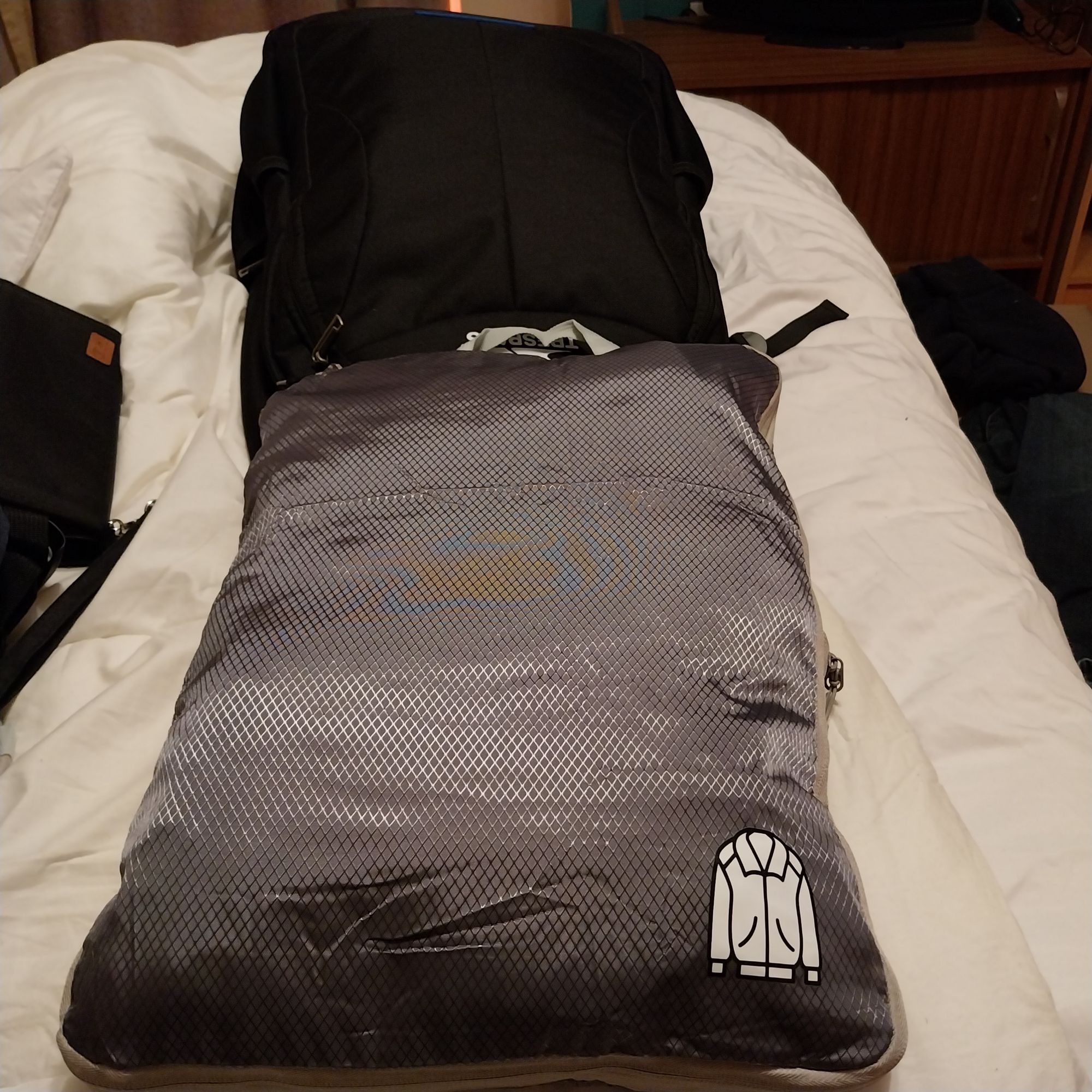
Yes, they have been around for years, but I’d never discovered these neat double zipped pouches that compress your clothes into a small area. More practical than vacuum bags, the cubes not only allow your organise your clothes into their own handy compartments, but also genuinely free up more space. The one in the picture contained three pairs of trousers, three polo shirts and two pairs of shorts. Added to the clothes I was wearing, that would be more than enough daywear for two weeks. The cubes meant I was able to use a compact 39 litre backpack/wheeled case combo for the bulk of my luggage. A second smaller backpack could hold everything else like electronics, cash and a raincoat. Sorted.
All of this may seem like pretty basic stuff; the art of packing smartly comes with frequent travel. What AI adds is a range of different ideas and hints to help inform your processes, and so far I’ve already saved time and space. How would my virtual assistant perform on the road – or more precisely, the rails?
 TravelCaster
Leave a comment