
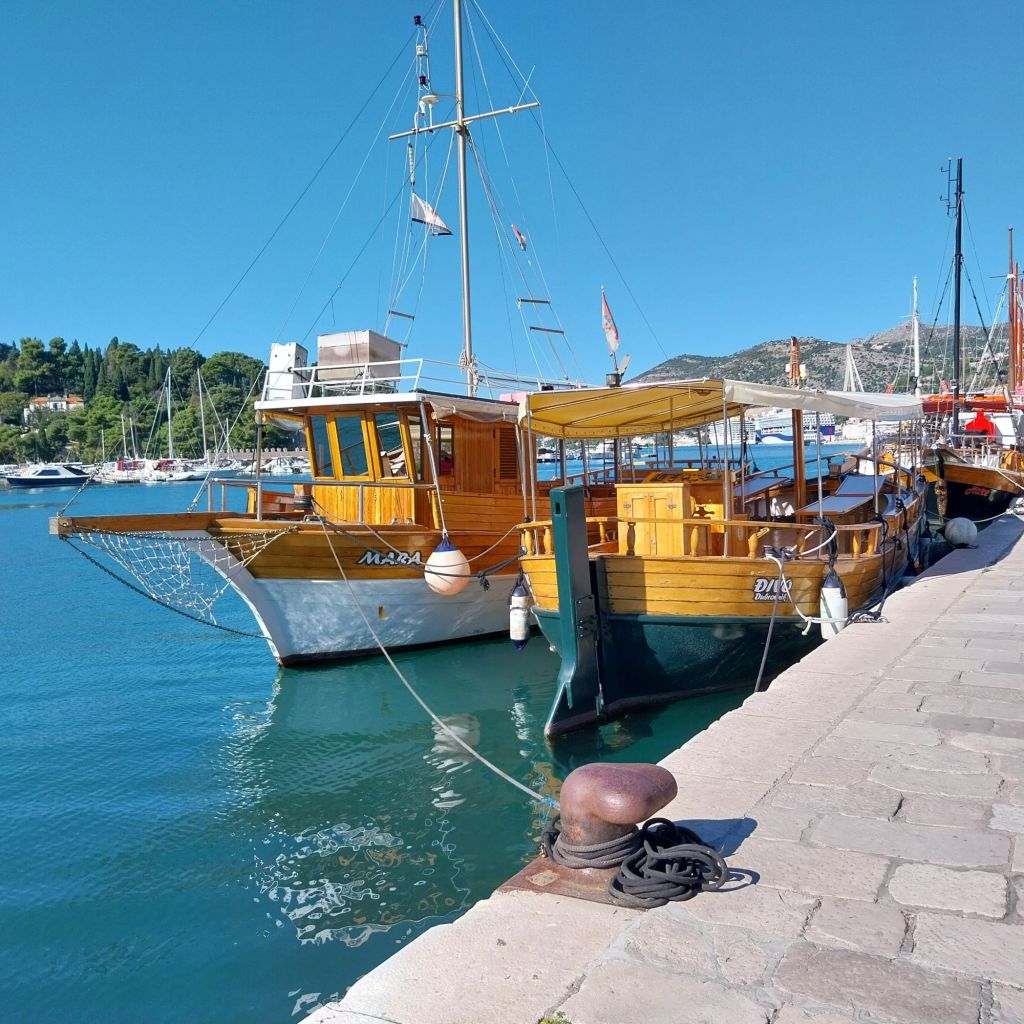
Dubrovnik has proven to be a great base for exploring this part of the Adriatic coastline and it’s many attractions. Before leaving, there’s just time to escape the Old Town and head to the port area. This is a far cry from the little harbour in the Old Town – a huge inlet designed for the biggest of ships. And today, it’s main customers are the cruise liners.
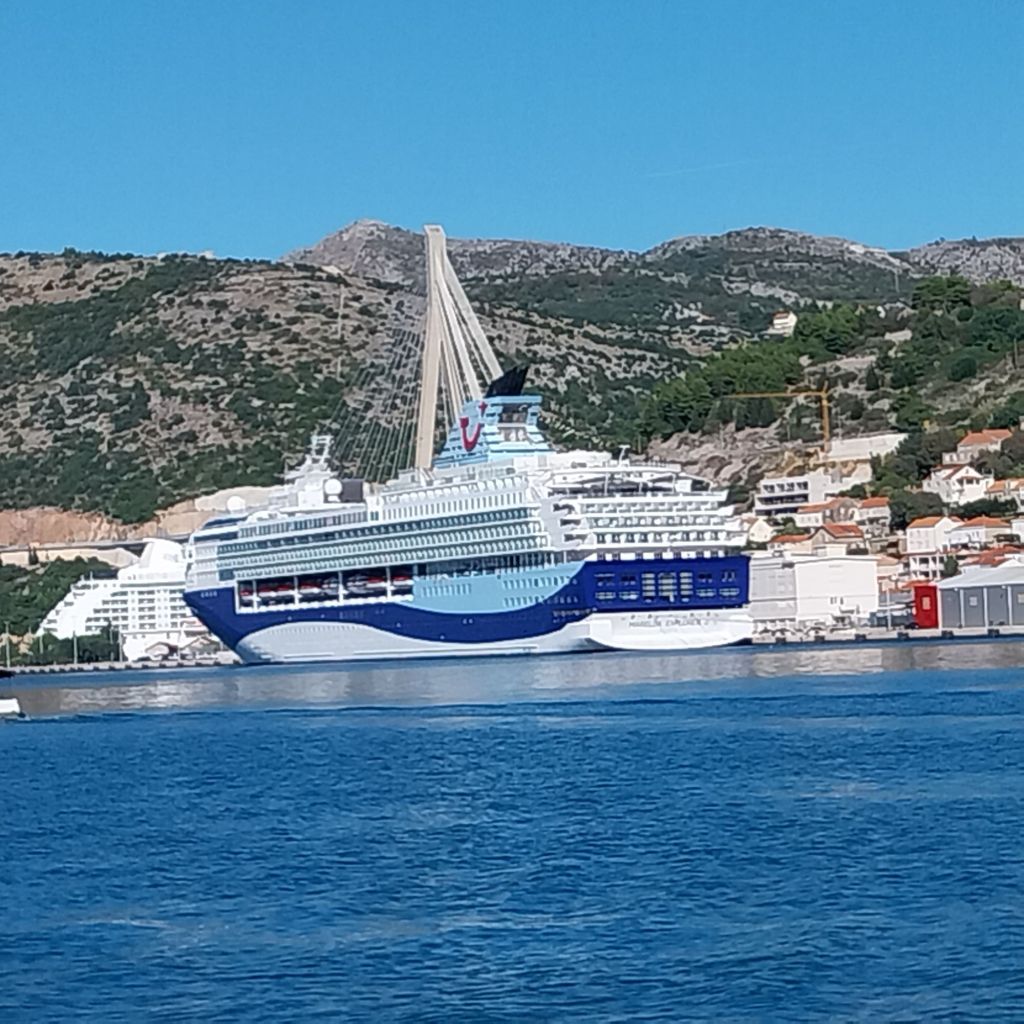
This is by no means the biggest cruise ship I’ve seen here; and as previously mentioned, their inhabitants descent into the Old Town as early at 8.30am. The port lies at the bottom of two suburban districts – Lapad and Baben Kuk – which house the majority of Dubrovnik‘s hotels. There are decent bus connections along the main streets, though ifyou’re staying here it’s worth checking in advance how easy or otherwise it is to get around; an attractive looking hotel might be relatively isolated from the local attractions, which is another reason why the Old Town makes a good base.
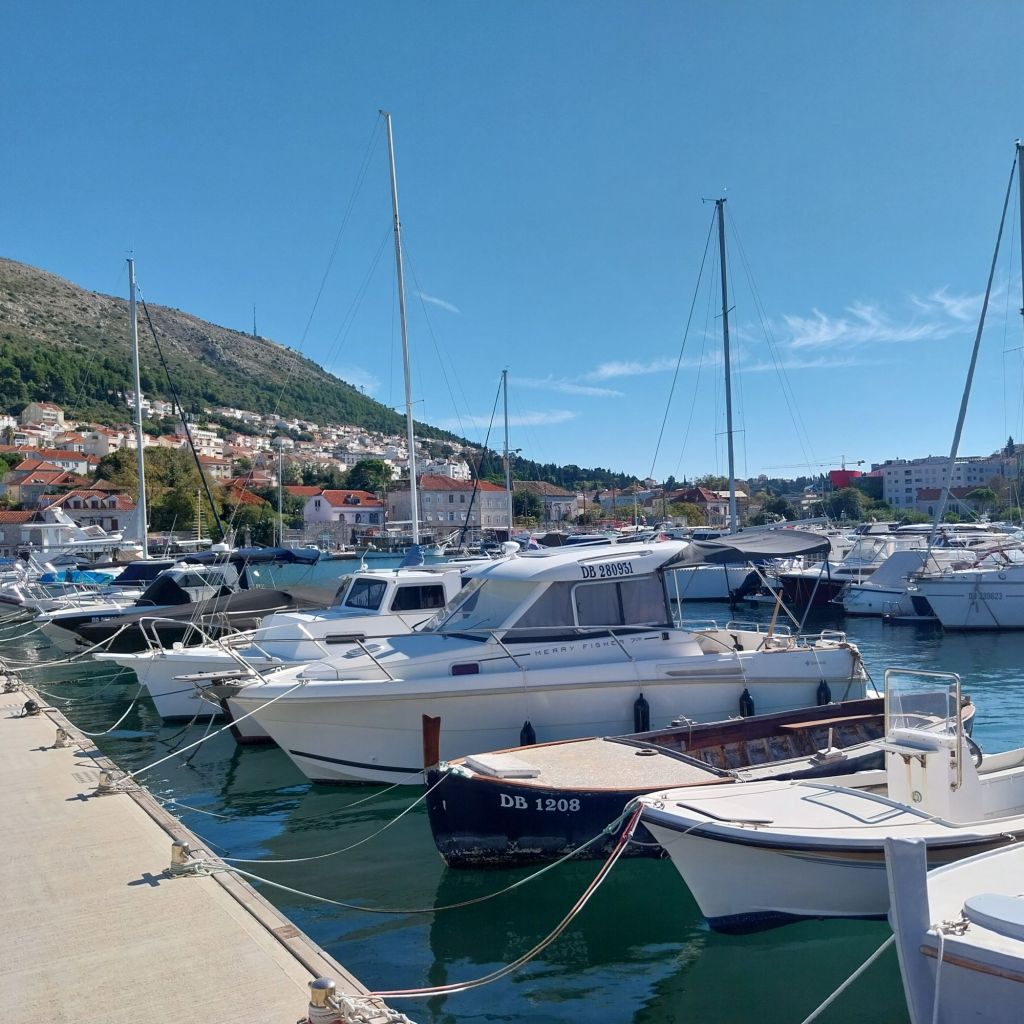
The central area of Lapad has a good selection of cafes, bars and restaurants, and it’s a short downhill walk to the harbour. This part of the port was extensively refurbished in 2023, making it an attractive area to sit on a terrace or waterside cafe and watch the action on the water. At the end of the season, it’s also relatively peaceful, apart from the sound of the occasional boat motor or power tool as the owners do repairs.
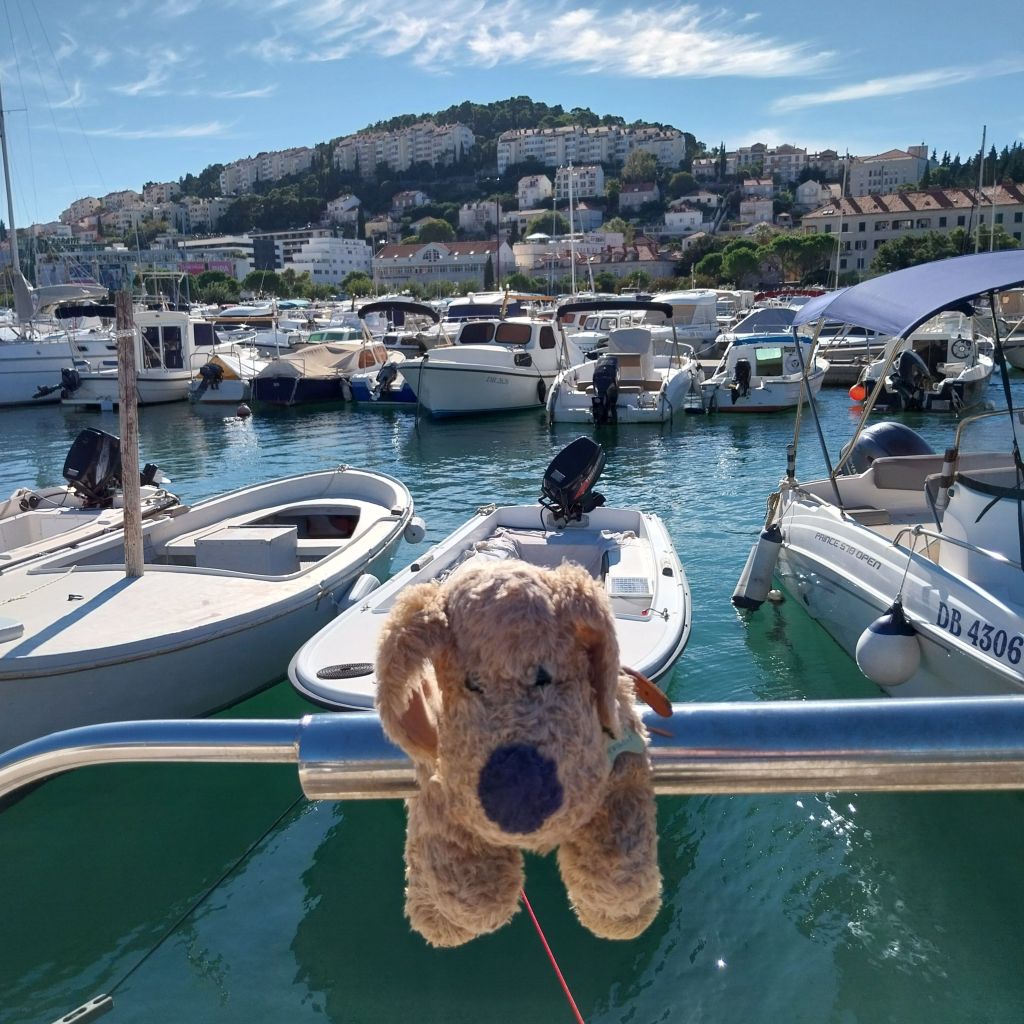
There are lots of leisure activities to do here – from day trips around the nearby islands to speedboat trips – and during the summer the strand is lined with salespeople touting their trade. It’s also worth noting that this is a working port. Whilst people are generally welcoming and friendly,, they have jobs to do – mostly maintaining yachts that are likely owner by billionaires. Historically, Dubrovnik was always a playground for the rich and famous; relatively isolated from more popular spots like the French and Italian Rivieras. You can still smell the money in the air today.
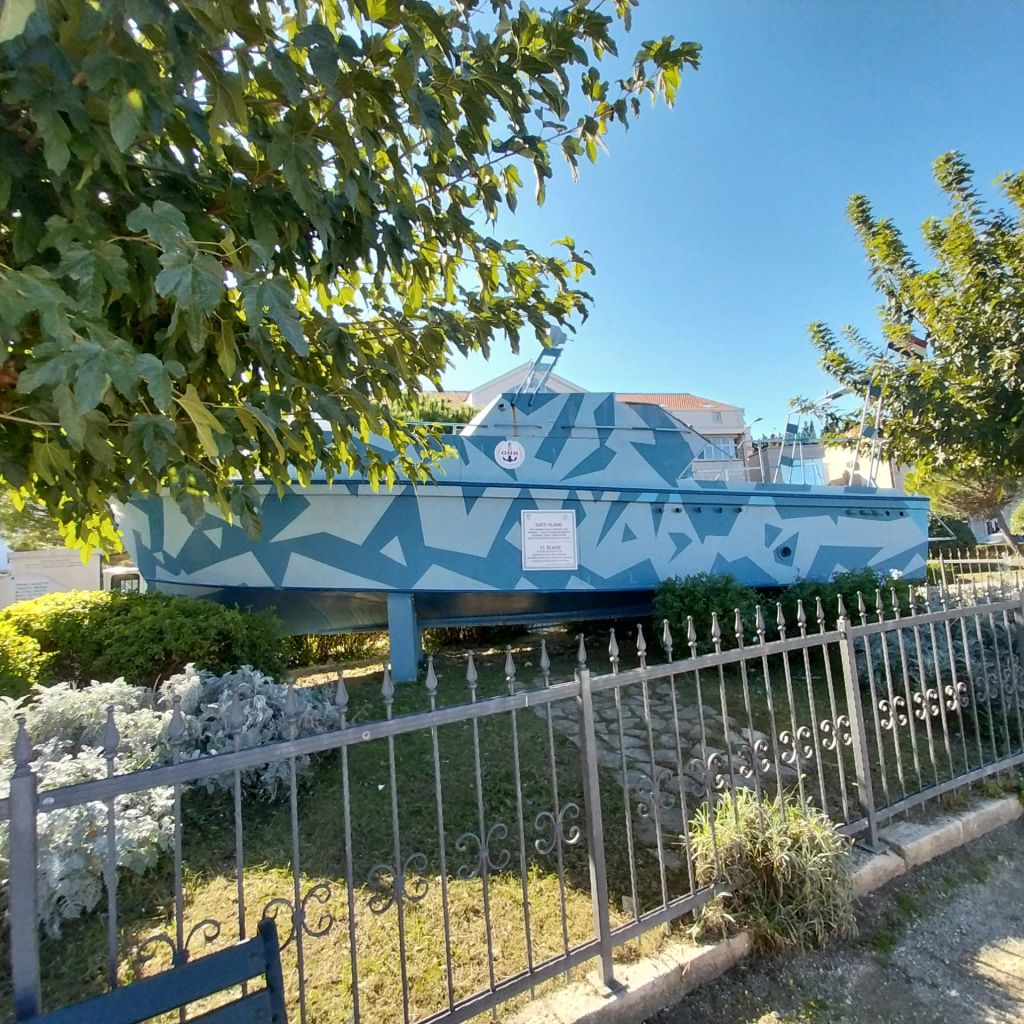
Strategically, of course, the port was hugely important for Croatia’s defences during the war in the 1990s. Next to an unassuming play park between Lapad and Gruz is a replica of teh St Blaise, one of the craft that was part of the conflict.
Opposite the park is the small Mincenta shopping centre. Most of the stores have seen better days, but its biggest customer base is the Cafe Bistro Amici – a great place for coffeee and people watching – even if the noisy traffic and smell of smoking isn’t the most glamorous of locations. And location is important; prices for food and drink in the port are considerably cheaper than those in the Old Town.
It’s almost time to depart, and while this blog is always after a bargain, it’s worth noting that the return bus to the Aiport goes from two blocks up from the Ploce Gate. This may not sound a big deal but it does involve a much bigger, steeper climb. After days of relaxation, I opt instead to take a cab – booked in advance this cost about €25 – cheaper than if you just turn up to the taxis at the Pile Gate.
How to do it
Dubrovnik itself has plenty to offer, and more than enough to keep you occupied for 3-4 days. Depending on your budget, there are numerous day tips which are described in this section of the blog.
Regular flights go from many regional airports in the UK, while scheduled flights depart to Dubrovnik all year round from London. My advice is to shop around – several budget airlines run routes here and there are some real bargains to be found, especially if you’re content to fly with only hand luggage.
You could make the journey by land, by using Eurostar from London, heading south through France, and then crossing Italy before arriving in Croatia. From there you can connect by coach from Split to Dubrovnik. This option would take you about three days, but would have the advantage of being able to stop off in locations like Nice, Turin, Trieste and Zagreb, making the whole thing more of an adventure.
The currency in Croatia is the Euro. Almost all places accept credit cards and – if offered the choice, always pay in the local currency. If you’re travelling into Bosnia-Herzegovina you’re advised to take cash.
Croatia is part of the European Union so if you’re lucky enough to have an EU passport, you can join the shorter queue at immigration on arrival.
Accommodation is easy to find in and around Dubrovnik. In the Old Town you’ll usually be staying in an apartment – prices can vary wildly according to demand – my studio apartment in October cost about €70 per night (2024 prices). Hotels are abundant in Lapad and Babin Kuk, and prices here are generally cheaper than in the Old Town. There’s everything from hostels to al inclusive resorts. A quieter alternative may be Cavtat, a pretty fishing village across the bay. There are regular bus and boat connections into the Old Town, though these run less often during the low season. There are local bars and restaurants to keep you occupied or a few days.
Prices for food and drink vary – but in the Old Town you’re likely to be paying at least €20 for a decent main course, and around €9 Euro for a glass of decent local wine. A large beer will cost between €8 and €10. Prices are cheaper in the port area – or step outside the city walls for something less expensive.
There are lots of convenience stores if you happen to be self catering or just want to stock up on snacks. The largest chains, Kionzum and Studenac, can be found almost everywhere. Bear in mind that Sundays are still sacred for many, so most convenience stores are closed or have very limited opening hours.
Day trips to Montenegro and Bosnia-Herzegovina are best booked once you arrive through official travel agencies. Options can be found online though here you’re likely to incur needless commission fees. There are plenty of activities to be found in and around Dubrovnik, including boat trips, sea kayaking and motorboat hire.
The city is great for families, with plenty to explore on a day trip to Lokrum Island. Beaches tend to be smaller and pebbly, but most have safe bathing spots for all ages. The more adventurous might choose to dive from the cliffs at Buza Beach on the northern side of the Old Town.
 TravelCaster
Leave a comment