
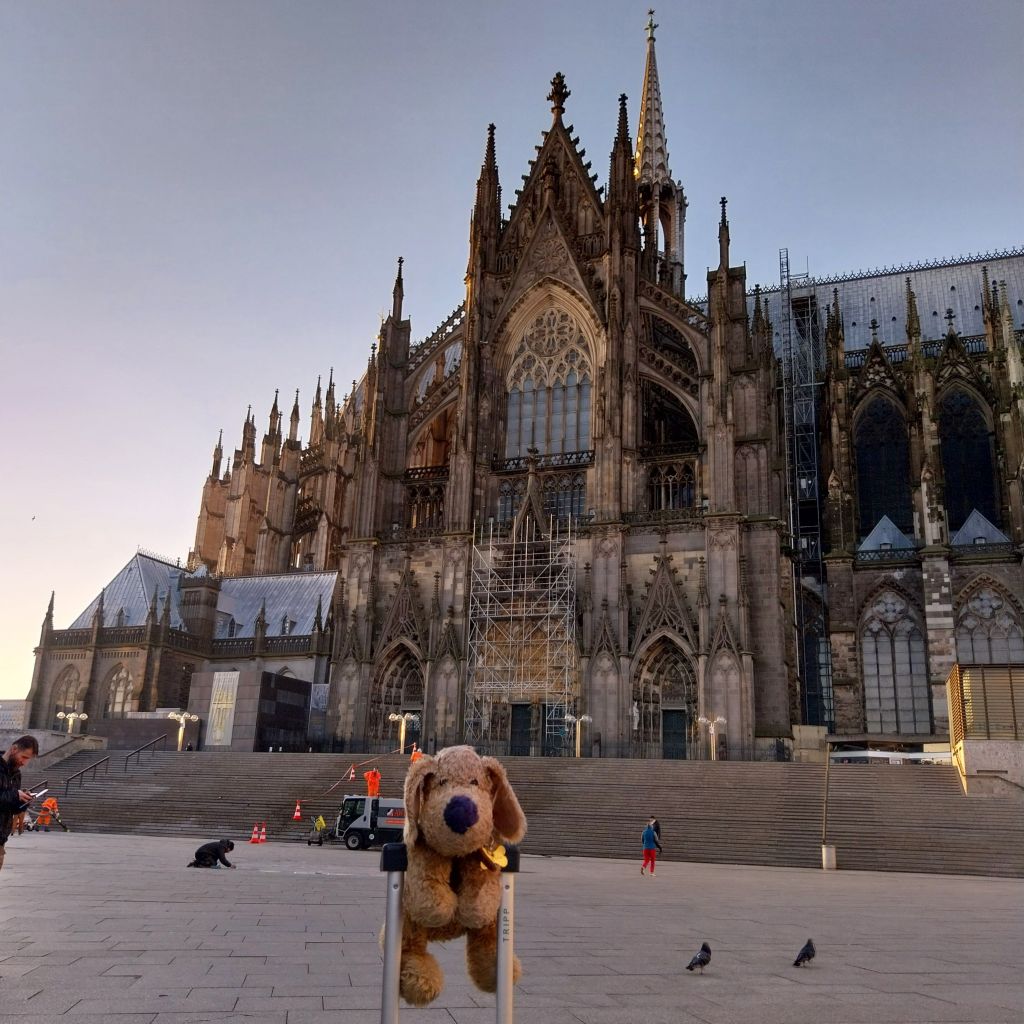
It’s an early start for a Monday morning, but the sun is shining in Cologne. The air is chilly – 5 Celsius – but already there is an air of urgency around the railway station, as morning commuters make their way to work. A small army of workmen run pressure washers and street cleaning machines around the front of the Cathedral, keeping it clean for the tourists.
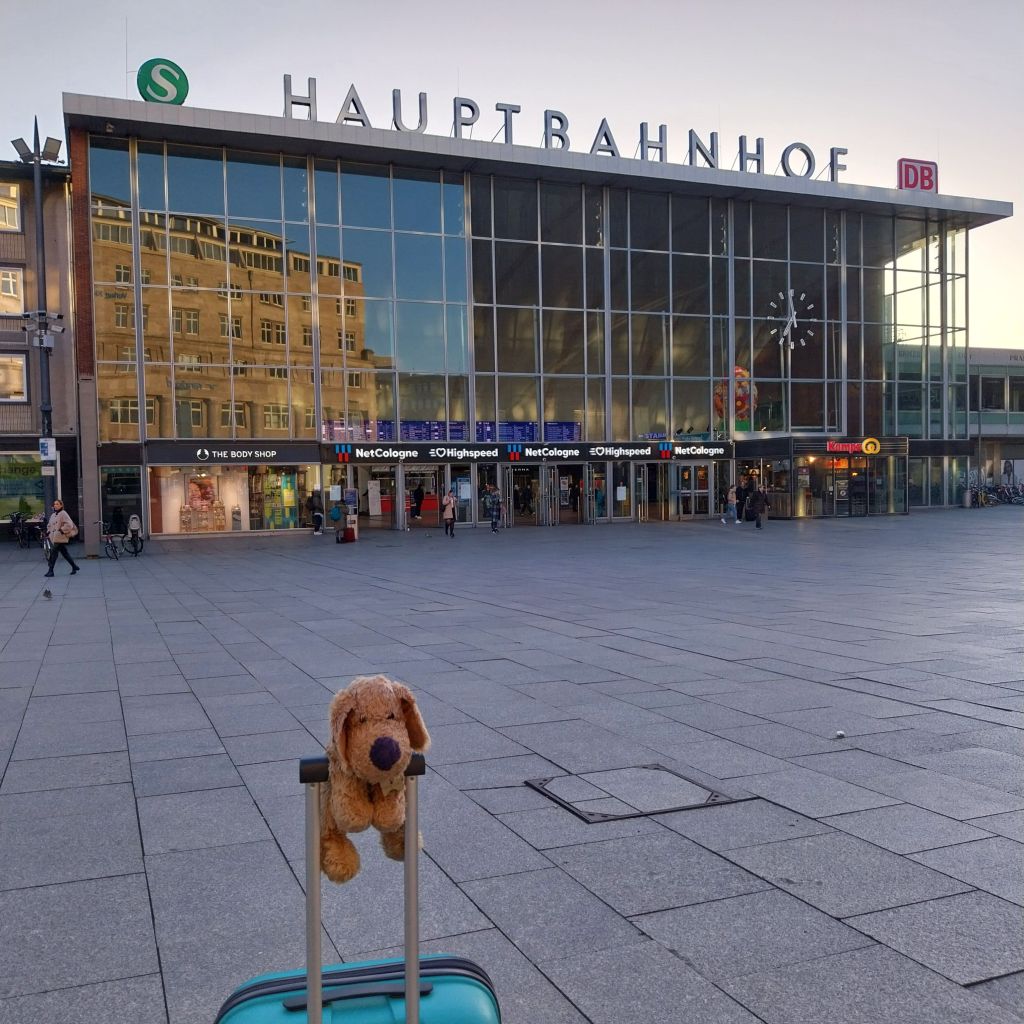
The first of two trains today, the 0748 to Berlin, is on time. But I’ve fallen foul of the German seat reservation system. Convinced I’m in the right part of the train, there is no Seat 71. Another passenger looks at my booking and helpfully informs me that I should be at the other end of the train – in second class.
This is naturally an affront to my status, but checking again, he’s right. However, the clever thing about German trains is you can reserved a seat even when they have left their first destination. A few more clicks and a small fee of 5 Euro secures my seat in luxury. NewsMutt refuses to get on until everything is confirmed.
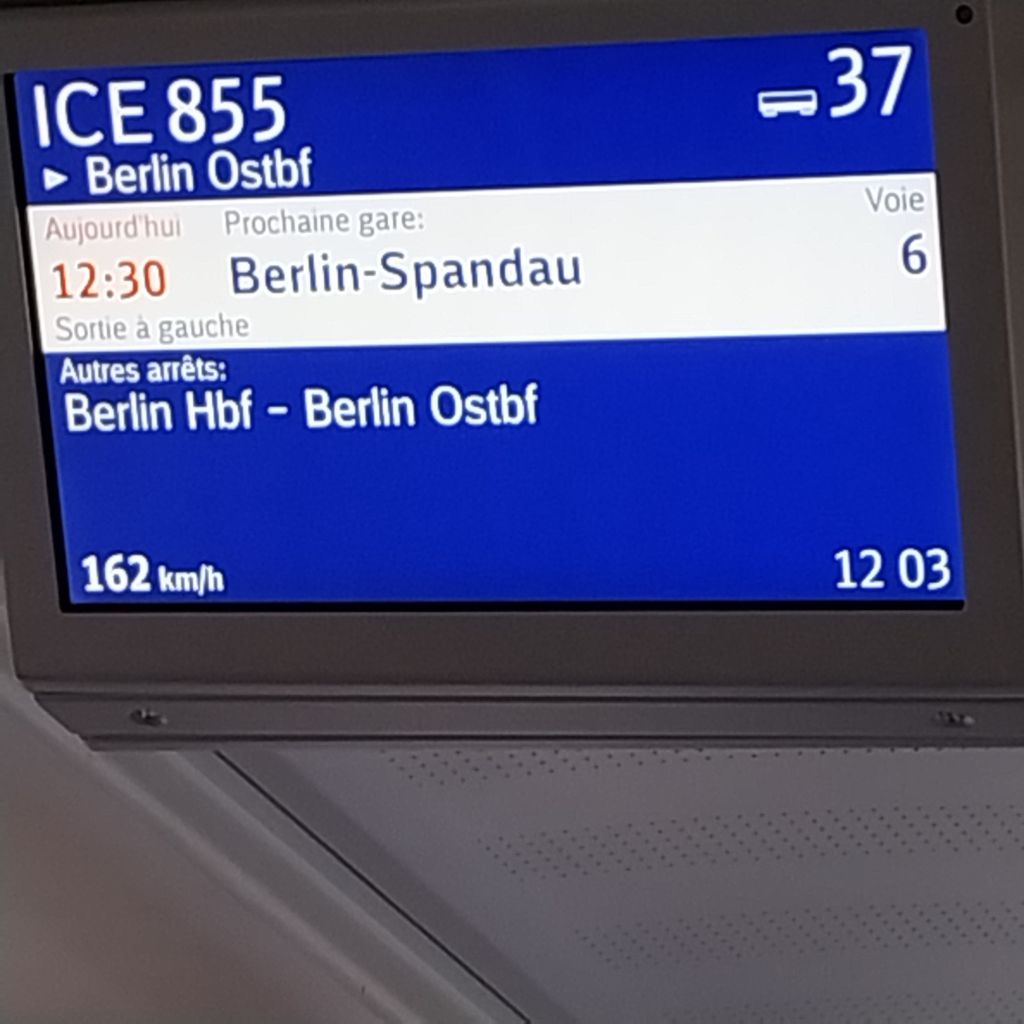
Our progress towards Berlin is initially slow; the ICE train – which can travel at speeds of 250 km/hour, snakes slowly for the first part of the journey, apparently because of a slower train in front. There’s free Wi-Fi, and the useful DB app knows which train you’re on and tells you of any delays. It also provides a helpful list of connections, so you’ll know which platform to head for when you change. It seems like such a simple system and makes me wonder why we can’t do this in the UK. The answer, of course, is our muddled array of private operators and a hopelessly underfunded infrastructure.
Unfortunately the train speed doesn’t improve, and by the time we’ve reached the outskirts of Berlin, we’re about half an hour late. Usually thi wouldn’t be a problem, since the international Euro Cites trains stop close to the ICE platforms at the top of Berlin’s central station.
But not today; Ive managed to pick a date when engineering works mean the onward train to Poland departs from a completely different station – Berlin Gesshundbrunnen. And the late arrival from Cologne means Ive got no chance of descending three sets of escalators to reach it.
The change of departure station could explain why I was unable to book a mandatory reservation. Bookings open 30 days before departure but no matter how much I tried, I couldn’t book a seat either through Eurail, DB or the usually flawless Austrian OBB site. I coulod have taken a risk and just turned up, but instead I ended up buying a stand alone ticket from PKP, the Polish state railway.
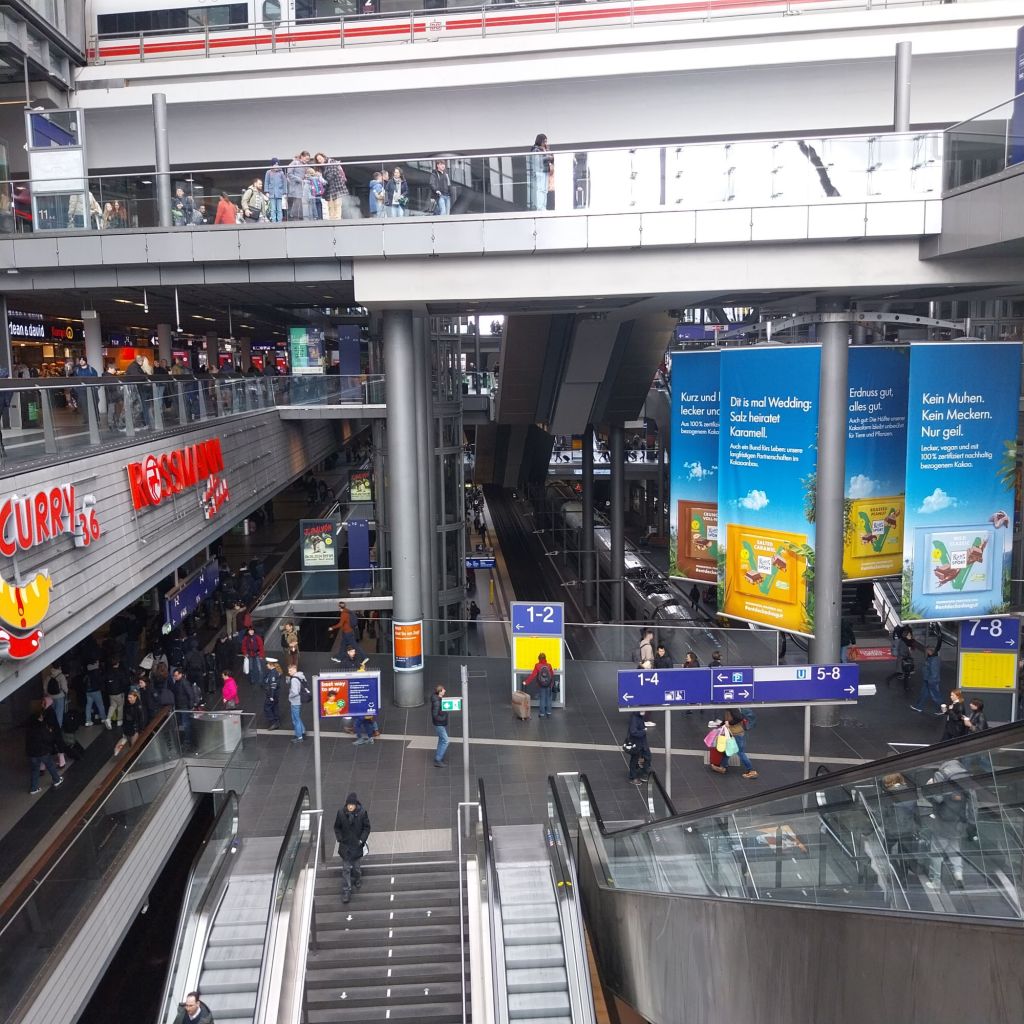
But while DB’s trains may not always run to schedule, their staff at stations are extremely helpful. The next connection is in about 20 minutes, and its just one stop – 5 minutes – to Geshundbrunnen, which by now is starting to sound more like a sneeze than a transport terminal.
West now meets East, as the EC49 service pulls up to the platform. You can tell you’re heading in that direction because the interiors have compartments rather than an open plan carriage. At first it all seems a bit Agatha Christie, because the lights aren’t working, nor are the two small power sockets.
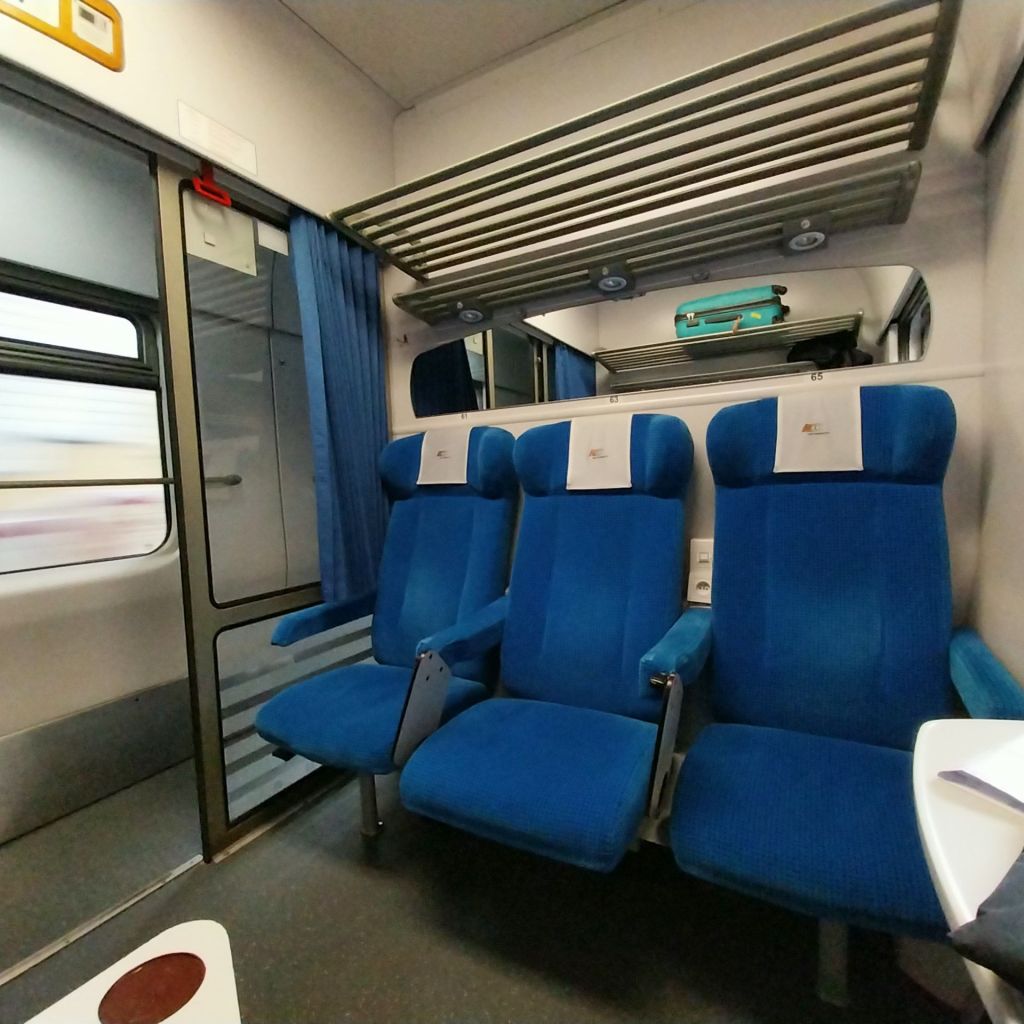
This isn’t the oldest train I’ve encountered in Europe – it looks like the seats have been reupholstered in the last fifteen years and the interior window has a thick plastic panelling to improve the soundproofing. Although partly operating under the DB brand (complete with a Borderestaurant), the seats all have PKP Intercity headrests.
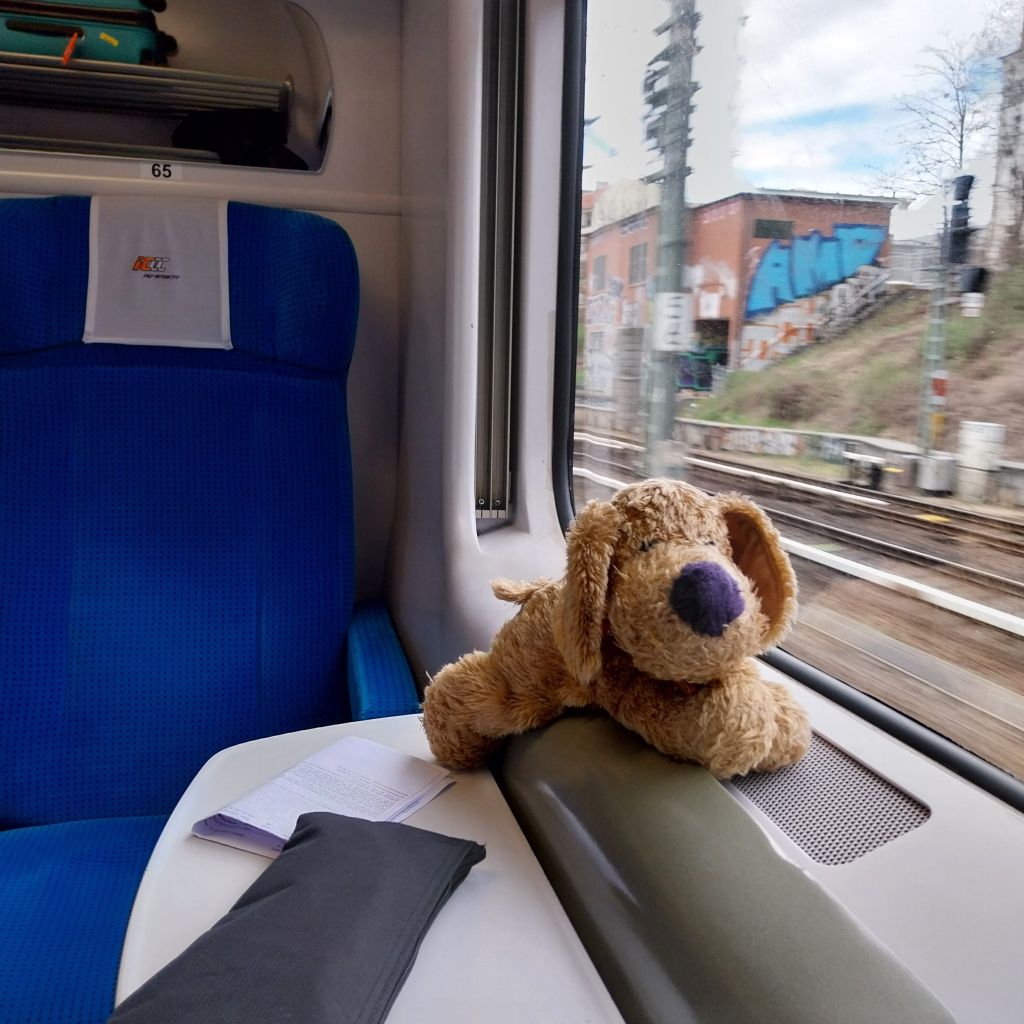
As we cross the border at Rzipen, a mandatory wait. These stops are often accompanied by police or security guards scouring the train for anyone on their nation’s wanted list. But today, complimentary tea is served (at least in first class), together with a dark chocolate bar that tastes like a squished up Snickers.
This part of Poland is fairly flat, with undulating fields interspersed with small towns and villages. Everybody seems to have an allotment, a pretty addition to he otherwise plain landscape. It’s all going very well until we reach Zweibodzin, around 90km from the city of Poznań. The train stops. For a long time.
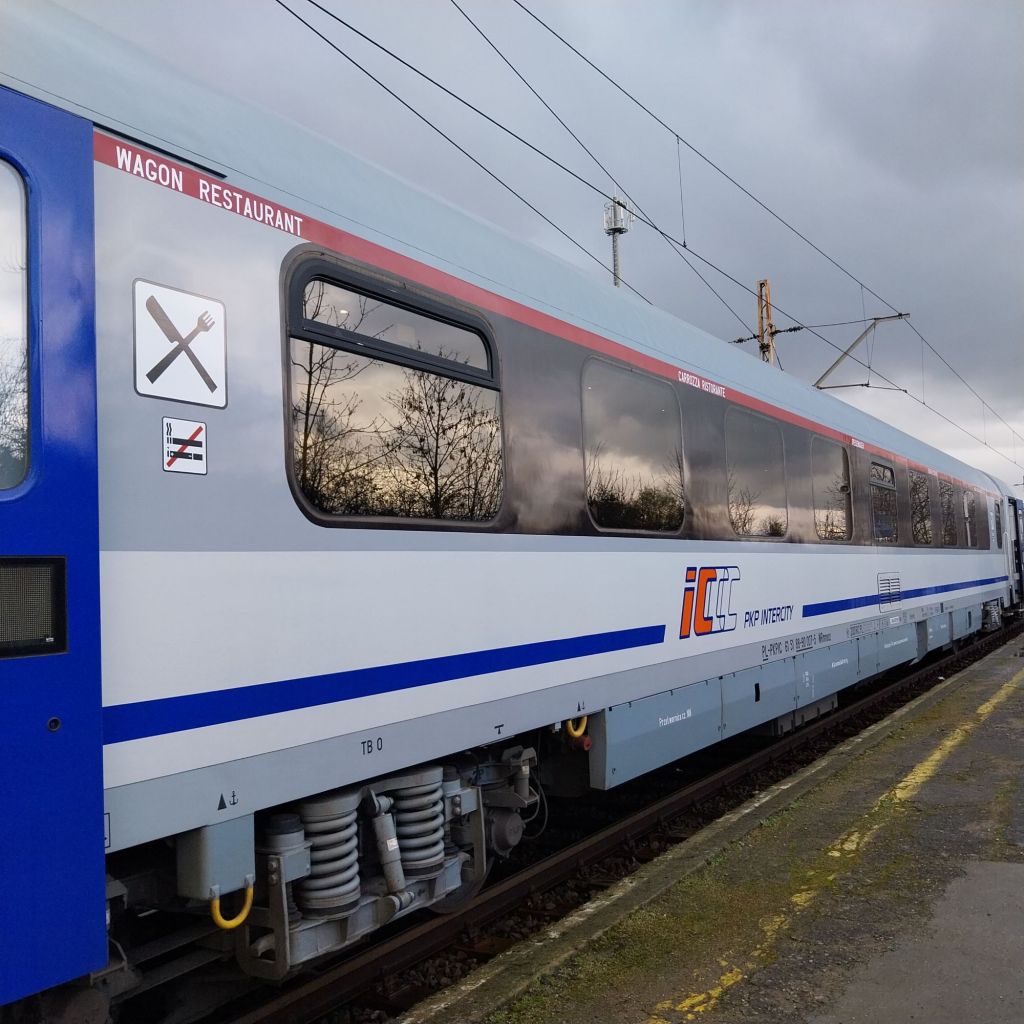
Eventually an announcement : there’s been an accident on the railway further up the line, meaning our train will now take an “alternative route”. The details of this aren’t specified, except that it could add 180 minutes onto the journey time. The mood is reflected as it starts to rain, and a heavy shower exposes a leak in the window next to my seat.
The announcement (about the delay, not the leak) leads to a flurry of worried voices, as passengers call friends and family – not, as it turns out, to warn they’ll be delayed, but to ask them to drive and pick them up. A perplexed English guy tries calling his hotel in Poznań to see if they’ll send a taxi. For me, my destination is a lot further, so sharing a car doesn’t look to be an option.
I’m of the view that there are some things in life you can change, and others that you can’t. This is one such moment. Warsaw gets even further away when the locomotive is detached from the front of the train and sent to the back. When we do eventually get moving, it’s in reverse. This never happens to Michael Portillo.
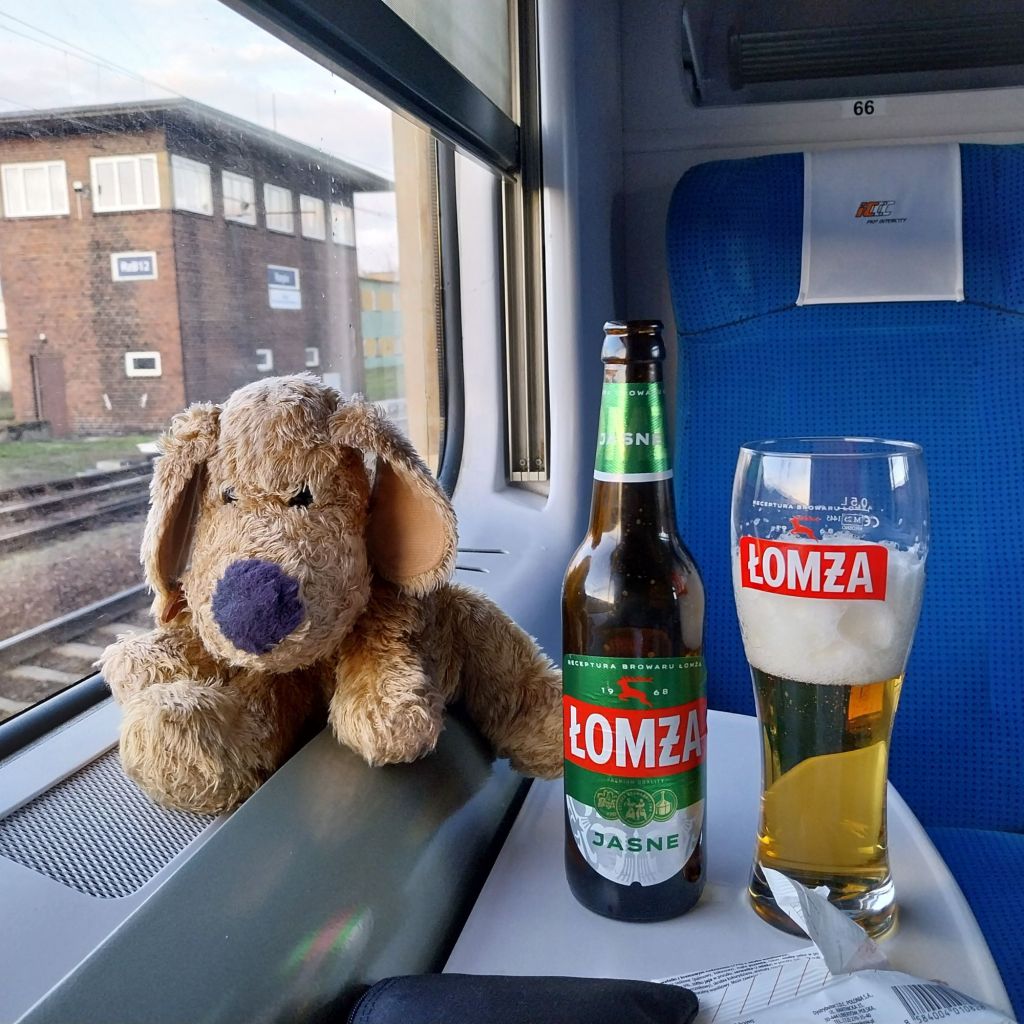
Unfortunately things do not improve. After crawling at a snail’s pace along an alternative route, we finally head in the general direction of Poznań. But it’s about to get worse; an announcement informs us that we have to randomly change trains because of the earlier accident – but this particular train will stop at Paledzie, some 14 km short of Poznań, and connect with a bus.
It’s now after 9pm, and in the dark, cold and badly lit station, hundreds of people make their way to the car park. There are two buses waiting, but they’re already extremely crowded with no prospect of getting on. The angry driver chastises people for trying to take large suitcases on board, having earlier slammed the storage area closed. I calculate that even if I do get to Poznan station this evening, there’s little prospect of completing the journey to Warsaw. I decide to bite the bullet, book a hotel and order an Uber.
It’s not quite the journey I’d hoped for day two – and I’ve optimistically kept the hints of how to get to Warsaw below. But for now, late at night, I’m just pleased for a warm room and a clean bed. Poznan undoubtedly has its delights, but I won’t be seeing them on this trip.
Getting here
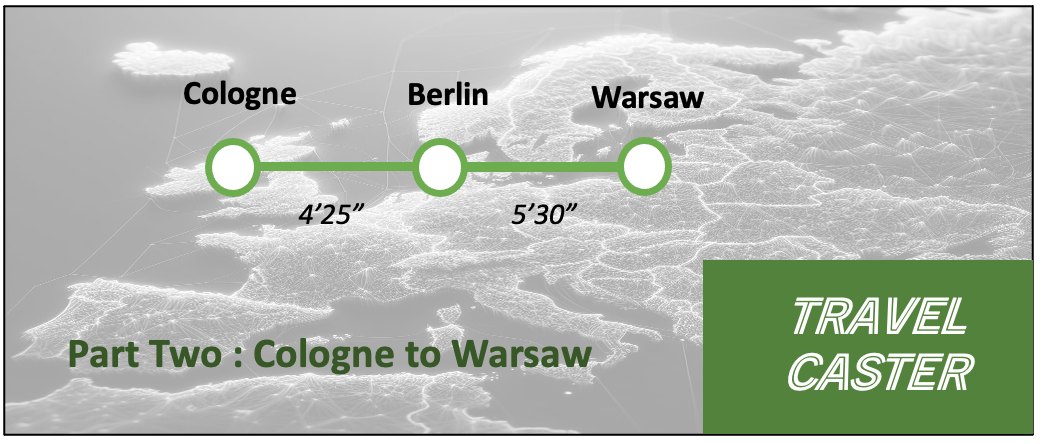
By train : It’s 4.5 hours to Berlin from Cologne and, in normal circumstances, a further 5.45 hours to Warsaw. If time permits, consider stopping for a night or two in Berlin or stop off in the Polish city of Poznan. The Warsaw Express runs up to eight times per day from Berlin HbF.
Tip : Reservations are optional on most internal German trains and the DB website indicates how busy services are likely to be. When using the booking tool, scroll down and check the “reserve seat only” if you’re using a rail pass. Remember, even if a seat is free at the start of your journey, it may be reserved b someone else along the way. That said, First Class is usually pretty quiet. Reservations for the Warsaw leg are compulsory and may sell out quickly. Sales open 30 days before departure.
 TravelCaster
Leave a comment