

It’s a sunny morning in Trieste but the forecast for my journey north is not good. Rain and thunderstorms are forecast for my next destination of Villach, but I’m hoping these will be short, sharp showers rather than prolonged downpours. The first leg today takes me from Trieste to the northern town of Udine, which seems to be a key connection point for rail travel.
First up, a TrenItalia regional service. There’s no First Class today, but these units have a neat combination of single and double deck coaches, which means a great view of the coast as we head out of Trieste.
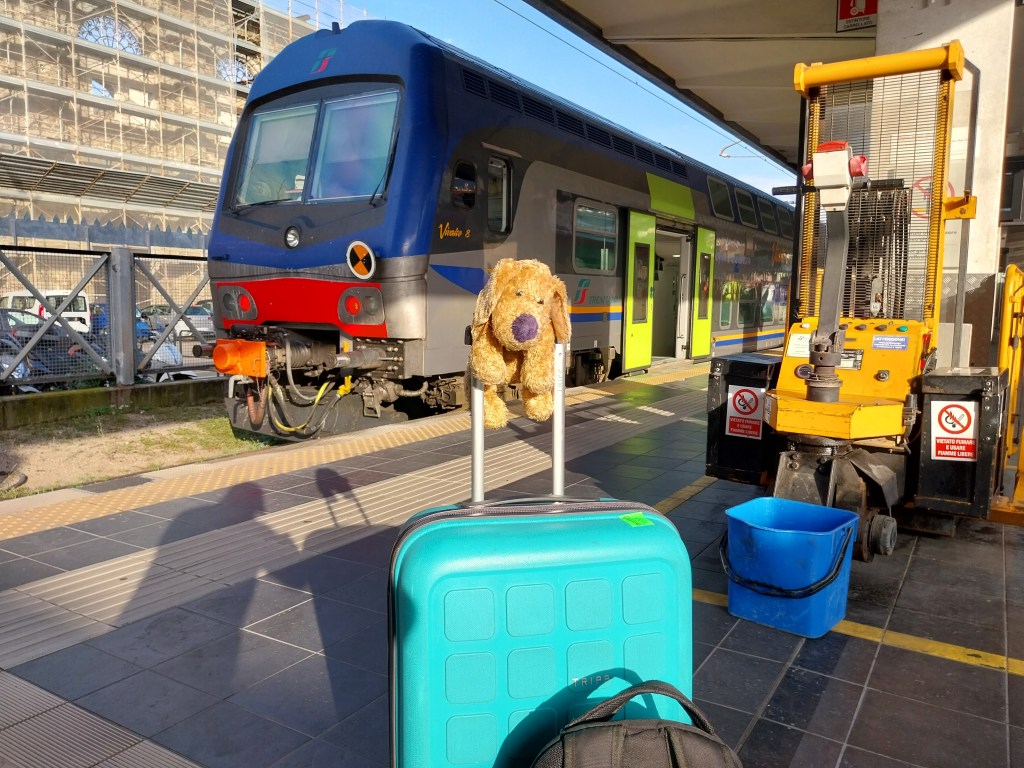

Given half the chance, he’d rather stick his head out of the window. But the neat thing about these trains is that the air conditioning system works its way around the window frames, so you’ve almost always got a comfortable climate.
We’re close to to the Slovenia border here, and at Grozio, which sits on both sides of the frontier, the language changes. It’s Friday, and many people look as if they’re heading away for the weekend. This train goes on to Venice, but connections at Udine give other options, including travel on to Vienna, Salzburg and Munich – all within about half a day’s travel.
At Udine, the heavens open and a thundery downpour scuppers any idea of taking a quick look around the town. In any case, there’s nowhere to leave luggage,/one of the slightly more annoying things about smaller European railway stations. Instead, a sandwich, cake and coffee in the station cafe provides a filling snack for less than €10 – compare this to what you’d pay for the same at an airport.

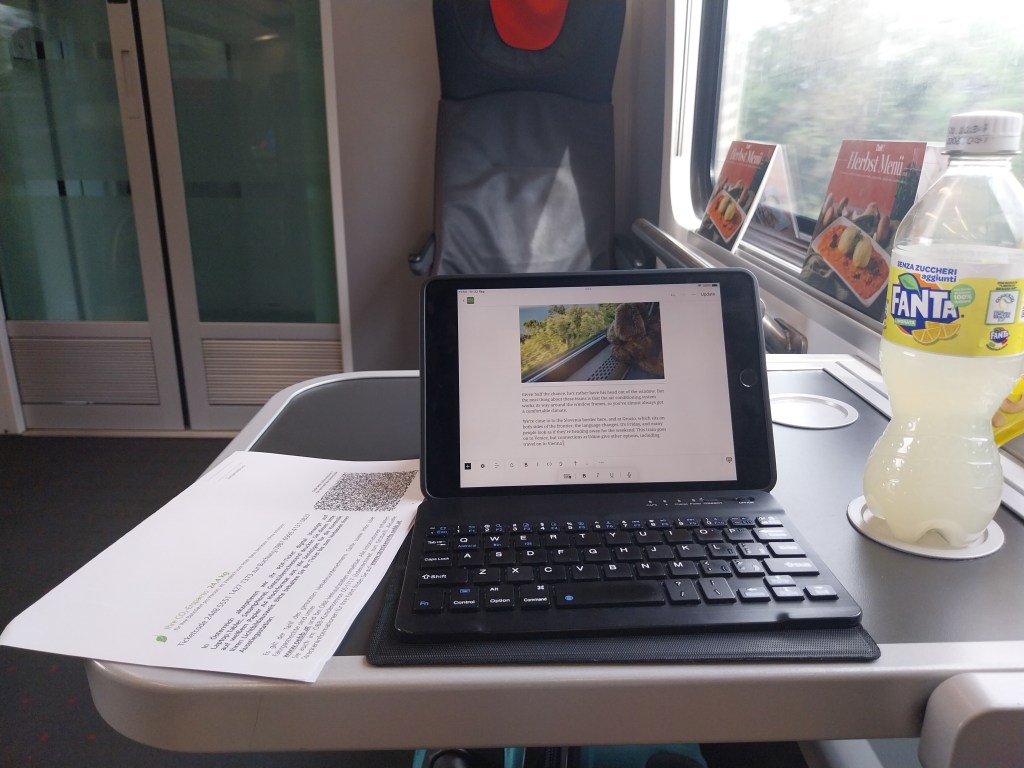
And so to our connection onwards to Villach – aboard one of my favourite services. Austria’s OBB state railway runs the Railjet long distance routes. This one started in Venice and will finish up in Vienna. The Eurail pass gives access to a First Class seat – and while reservations are not mandatory they are advised. The bar is just in the next coach, but here there’s an at seat service for refreshments, though you will have to pay – it’s around €4 for a sandwich, or between €10 and €15 for a hot main course.
24 Hours in Villach
As we head towards the Austrian border, the clouds thicken again and the vies of the mountains become quickly obscured by rain. And it continues on arrival in Villach. On a wet afternoon, the streets are pretty deserted. In between the heavy showers, I take a walk through the city centre. It’s hard to believe that this is Austria’s seventh largest city – through it was of such strategic importance during the Second World War that 42,500 bombs were dropped on it by the Allies, damaging 85% of its buildings. One that survived was St Jacob’s Catholic Church, though today it’s obscured by a giant lampshade hanging across the street.

More apt for the day are the umbrellas decorating Lederergrasse, a narrow street of bars that have yet to spring into life. A quick search shows that many don’t open until 8pm – a possible sign of the ski-ing trade that Villach attracts during the winter. The area is also home to several lakes – the nearby Ossiacher See which pulls in everyone from tourists seeking a leisurely boat cruise to the more adventurous kayakers and paddle boarders. On this wet Friday afternoon, it’s not hard to see where all the water is coming from.

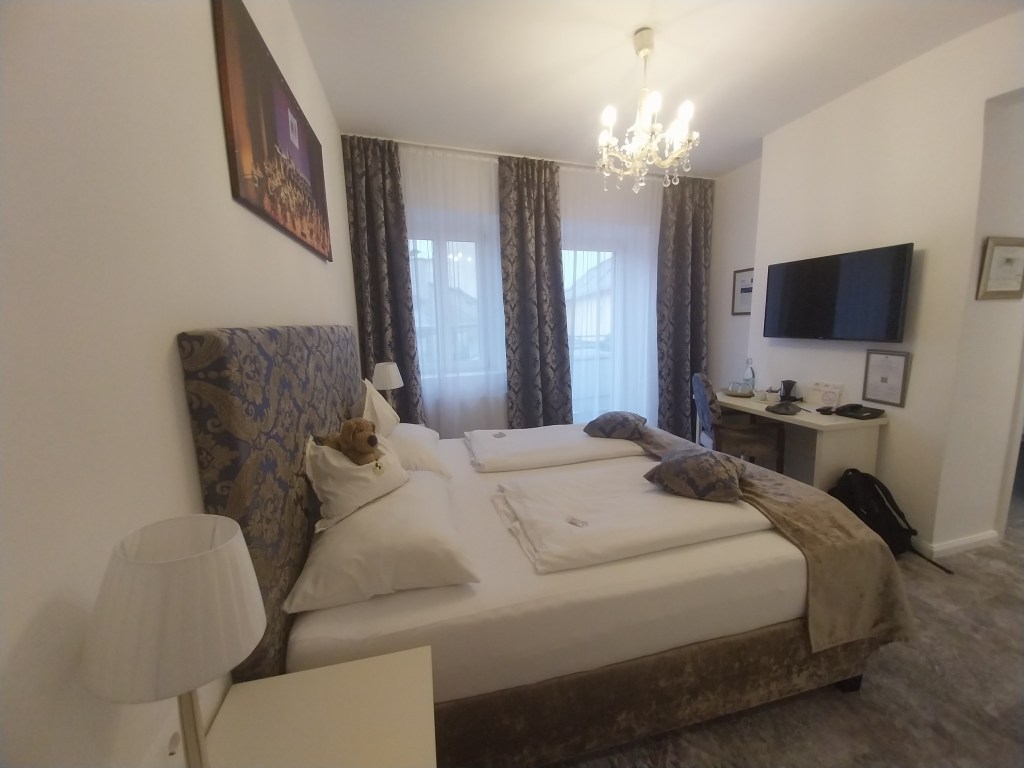
There is, however, a bonus. Days like this mean taking shelter wherever you can, and my hotel – the Goldenes Lamm – offers more than enough space. My room is so big it requires a map of its own, though as usual, someone has got there before me.
Villach by night tries to put on a show. During the summer months there’s a spectacular light display across the river each evening, but it turns out that I’ve missed this by a couple of weeks. It’s still raining heavily as I slosh through the streets. Near St Jacob’s church, tucked away down an alleyway is Turmsturbel, a friendly small bar with a great selection of craft beers. On tap tonight are several brews from Hirter, made around 80km from Villach., The woman behind the bar smiles as she serves customers, providing am ample container of salty snacks to keep everyone drinking.
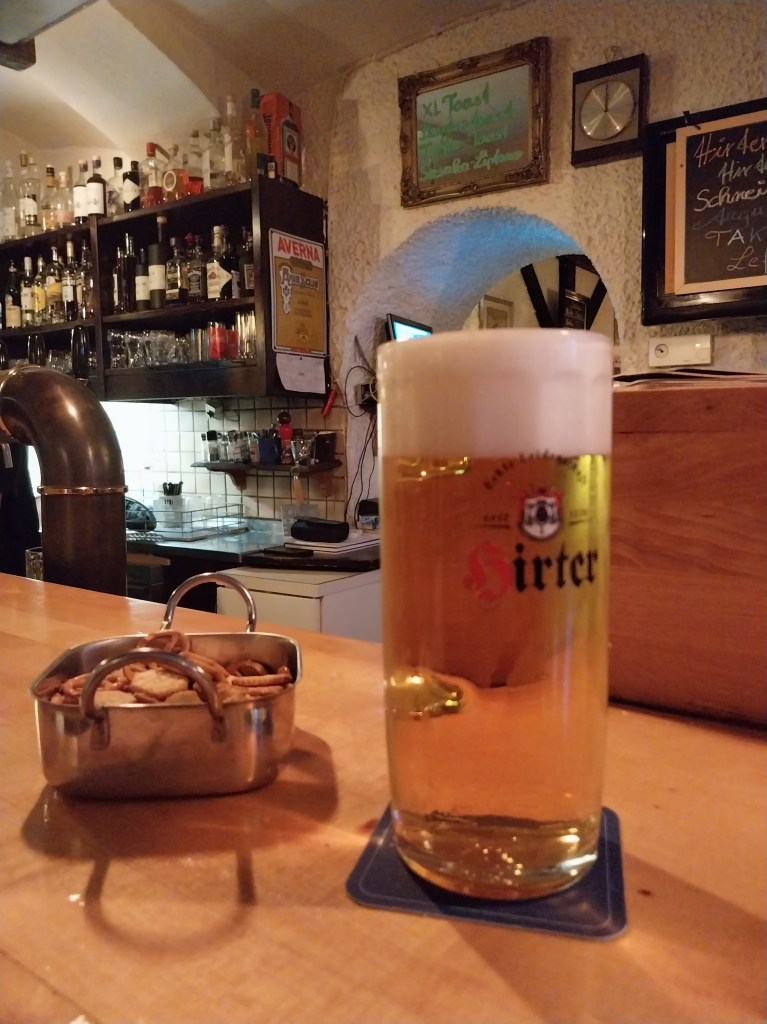

Although the photo makes the place look dead, it son filled up with people taking shelter from the storm. Perhaps it was the weather, perhaps I’d caught things in between the peak hiking season and winter skiing, but the centre of Villach was really quiet. The main “party street” – Ledererstrasse – had a collection of mostly empty bars. A few venues that looked more like nightclubs were optimistically blasting out loud music to try and attract people. But there were few takers.
Fortunately not everywhere was empty. By chance – again down a side street – I found Lucke, and immediately doubled the average age of the customers. It had a student vibe, with groups of young people huddled around board games and probably not drinking nearly enough to make the place profitable. The bar tenders were friendly and efficient, offering table service to try and convince them to buy more. And for once, I was drinking a Guinness somewhere other than an Irish bar.

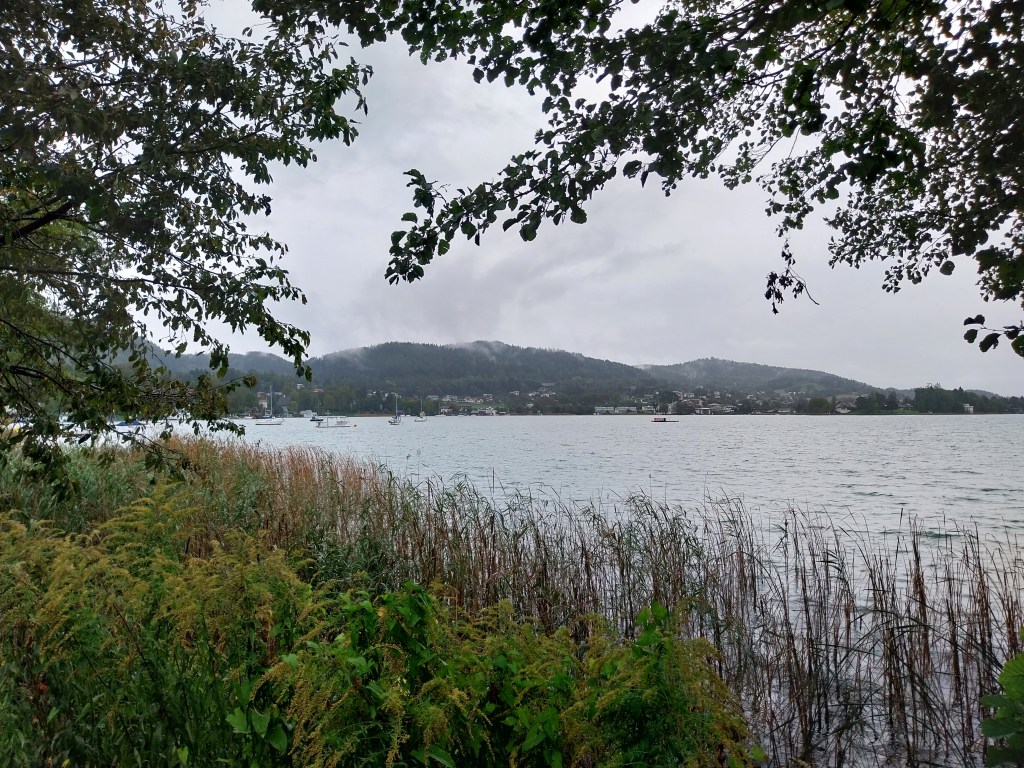
Saturday morning arrives but there’s no sign of the rain letting up. Apart from a couple of churches and the museum, there wasn’t much to do. The true beauty of this area lies in its mountain and lakes – one of the biggest being the Worthersee. Fortunately I’m able to by a rail ticket that gives me travel across the whole region for a day for just €13. En route to Klagenfurt, the area’s capital, I stop off at Portscach, and take a walk down to the lake shore. The rai has started to ease a little, but the spectacular views I’d been hoping for just aren’t there.
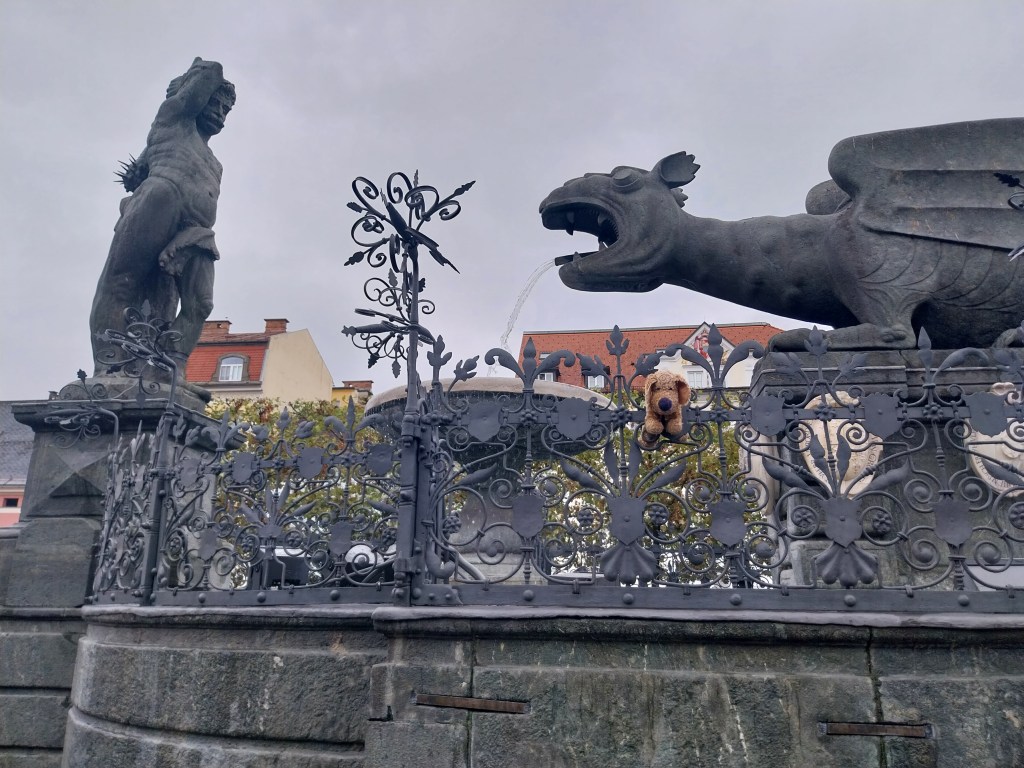
And so to Klagenfurt, a city of 100,000 people – twice the size of Villach but it feels much larger. In the Neuerplatz stands a statue depicting a dragon (the city’s emblem about t be slayed by a Roman warrior. And someone can’t resist getting a selfie.
There are plenty of pretty streets and shops in the centre of the Old Town, despite ii, like Villach, being extensively bombed in the Second World War. Most people seem to be crowded inside a large shopping mall on its perimeter, which looks like every other mall on the planet.Stil, it provides shelter from the rain.
The skies eventually clear for a time in the evening, but once again Ledererstrasse seems devoid of life. It’s baffling that some that were open last night are closed tonight, on a Saturday. But my old trick of following the side streets paid off, in another friendly bar serving tapas and live music. I manage to get a front row seat thanks to two friends of the performers – who have a lad back songbook of oldies, everything from Elvis to Neil Young and Van Morrison.

Villach in the sunshine is probably a much nicer place – let’s face it, everywhere is. You can image the streets busy with their pavement cafes, serving thirsty hikers and cyclists. It’s easy to travel around the area by train or bus, with some pretty sights on the right day. And it’s heart is in the right place.

Getting here
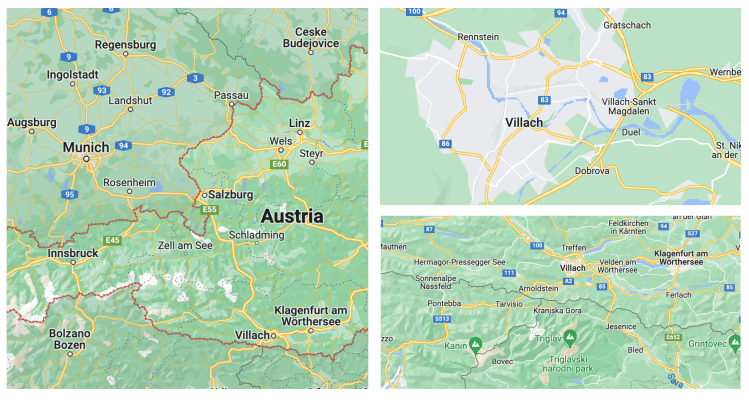
By train : Departing at 0858 (2023 timetable), you Eurail pass will get you from Trieste to Villach in just over four hours – this includes a 90 minute wait at Udine. However, there is a compulsory supplement for travel between Italy and Austria of 10 Euro. Buy in advance via Eurail, at the station, or on board the train (slightly higher fee if you do this).
An alternative route would be to take the morning train from Trieste to Ljubljana in Slovenia. You’ll ahve a three hour wait – just about long enough to store your luggage and walk to the Old Town for lunch – before making the connection on to Villach, where you’ll arrive early evening. If time is on our side, consider staying over in the Slovenian capital – or extend your stay and travel on to Zagreb in Croatia.
Practical stuff
Stay : I stayed at the boutique Hotel Goldeness Lamm in the heart of Villach town centre. It’s a 10 minute walk from the main station and not the cheapest accommodation, but that’s reflected in the ample, spacious rooms if you get to stay in the newer part of the building
Getting around : Villach has excellent bus and train connections to its various lakes and resorts. I took the local S1 service from Villach to Klagenfurt using a regional transport ticket costing €13 for 24 hours. It’s valid on local buses too.
Eat/drink : The heart of Villach’s entertainment is centred around Lederergasse which offers a wide selection of eating and drinking options, though beware that some of the venues are seasonal, so may not be open every night. For friendly local beers head to Turmstuberl in a small alley off Wilmangasse, while Die Lucke on Freihousegasse offers a laid back late night vibe with a younger crowd. Klagenfurt has even more options for refreshments – pick a good spot for people watching at the Stadtcafe on Alterplatz.
 TravelCaster
Leave a comment